Kirjojen hintavertailu. Mukana 11 699 587 kirjaa ja 12 kauppaa.

Kirjahaku

Etsi kirjoja tekijän nimen, kirjan nimen tai ISBN:n perusteella.

1000 tulosta hakusanalla Shi Youwei

Shi'i Scholars of Nineteenth-Century Iraq

Shi'i Scholars of Nineteenth-Century Iraq

Meir Litvak

Cambridge University Press
2002
pokkari
In the nineteenth century, the shrine cities of Najaf and Karbala in Ottoman Iraq emerged as the most important Shi‘i centres of learning. In a major contribution to the study of pre-modern Middle Eastern religious institutions, Meir Litvak analyses the social and political dynamics of these communities. Tracing the historical evolution of Shi‘i leadership, he explores the determinants of social status amongst the ulama, the concept of patronage, the structure of learning, questions of ethnicity, and financial matters. He also assesses the role of the ulama as communal leaders who, in the face of a hostile Sunni government in Baghdad, were often obliged to adopt a more quietest political stance than their counterparts in Iran. This is an important book which sheds light on the formation of contemporary Shi‘ism and the surrounding debates.
Shi'ism

Shi'ism

Hamid Dabashi

The Belknap Press
2012
nidottu
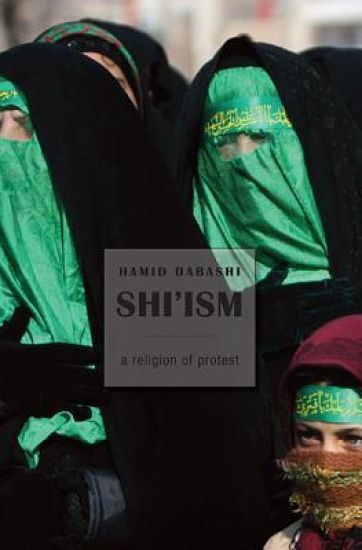
For a Western world anxious to understand Islam and, in particular, Shi’ism, this book arrives with urgently needed information and critical analysis. Hamid Dabashi exposes the soul of Shi’ism as a religion of protest—successful only when in a warring position, and losing its legitimacy when in power.Dabashi makes his case through a detailed discussion of the Shi’i doctrinal foundations, a panoramic view of its historical unfolding, a varied investigation into its visual and performing arts, and finally a focus on the three major sites of its contemporary contestations: Iran, Iraq, and Lebanon. In these states, Shi’ism seems to have ceased to be a sect within the larger context of Islam and has instead emerged to claim global political attention. Here we see Shi’ism in its combative mode—reminiscent of its traumatic birth in early Islamic history. Hezbollah in Lebanon claims Shi’ism, as do the militant insurgents in Iraq, the ruling Ayatollahs in Iran, and the masses of youthful demonstrators rebelling against their reign. All declare their active loyalties to a religion of protest that has defined them and their ancestry for almost fourteen hundred years.Shi’sm: A Religion of Protest attends to the explosive conflicts in the Middle East with an abiding attention to historical facts, cultural forces, religious convictions, literary and artistic nuances, and metaphysical details. This timely book offers readers a bravely intelligent history of a world religion.
Shi'ism

Shi'ism

Heinz Halm

Edinburgh University Press
2004
nidottu
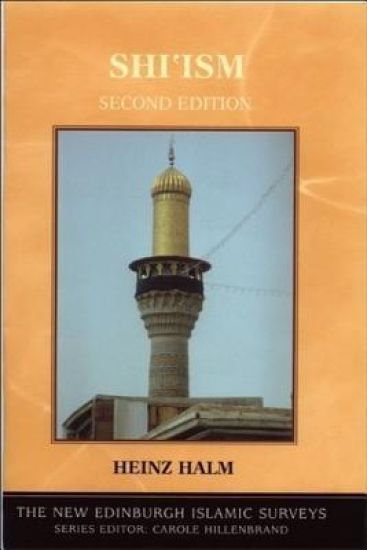
A new edition of Heinz Halm's comprehensive survey of all the Shi'ite groups. It traces the development of all the individual branches from their common origins to their current status in the modern world. The dogmatic and organisational development of each of the various branches of Shi'ism is discussed and is placed in the context of their particular history. Special attention is given to the emergence of the Imamite 'clergy' and the social and political role which has enabled them to establish a revolutionary regime in Iran, and each chapter contains an invaluable bibliography giving easy access to other books and original sources in translation. Key Features: * each branch of Shi'ism placed in its own historical context * bibliographies at the end of each chapter divided into primary and secondary sources * includes chapters on all varieties of Shi'ism * New edition contains new material on the Shi'a in Iraq and on the Iranian Revolution, and up-dated bibliographies
Shi'i Islam and Sufism
I.B. Tauris in association with the Institute of Ismaili StudiesOffering new perspectives on the relationship between Shi'is and Sufis in modern and pre-modern times, this book challenges the supposed opposition between these two esoteric traditions in Islam by exploring what could be called "Shi'i Sufism" and "Sufi-oriented Shi'ism" at various points in history. The chapters are based on new research in textual studies as well as fieldwork from a broad geographical areas including the Indian subcontinent, Anatolia and Iran. Covering a long period stretching from the early post-Mongol centuries, throughout the entire Safawid era (906–1134/1501–1722) and beyond, it is concerned not only with the sphere of the religious scholars but also with different strata of society. The first part of the volume looks at the diversity of the discourse on Sufism among the Shi'i "ulama" in the run up to and during the Safawid period. The second part focuses on the social and intellectual history of the most popular Shi'i Sufi order in Iran, the Ni'mat Allahiyya. The third part examines the relationship between Shi'ism and Sufism in the little-explored literary traditions of the Alevi-Bektashi and the Khaksariyya Sufi order. With contributions from leading scholars in Shi'ism and Sufism Studies, the book is the first to reveal the mutual influences and connections between Shi'ism and Sufism, which until now have been little explored.
Shi'i Islam and Sufism
I.B. Tauris in association with the Institute of Ismaili StudiesOffering new perspectives on the relationship between Shi'is and Sufis in modern and pre-modern times, this book challenges the supposed opposition between these two esoteric traditions in Islam by exploring what could be called "Shi'i Sufism" and "Sufi-oriented Shi'ism" at various points in history. The chapters are based on new research in textual studies as well as fieldwork from a broad geographical areas including the Indian subcontinent, Anatolia and Iran. Covering a long period stretching from the early post-Mongol centuries, throughout the entire Safawid era (906–1134/1501–1722) and beyond, it is concerned not only with the sphere of the religious scholars but also with different strata of society. The first part of the volume looks at the diversity of the discourse on Sufism among the Shi'i "ulama" in the run up to and during the Safawid period. The second part focuses on the social and intellectual history of the most popular Shi'i Sufi order in Iran, the Ni'mat Allahiyya. The third part examines the relationship between Shi'ism and Sufism in the little-explored literary traditions of the Alevi-Bektashi and the Khaksariyya Sufi order. With contributions from leading scholars in Shi'ism and Sufism Studies, the book is the first to reveal the mutual influences and connections between Shi'ism and Sufism, which until now have been little explored.
Shi’ism in Kashmir

Shi’ism in Kashmir

Hakim Sameer Hamdani

BLOOMSBURY PUBLISHING PLC
2022
sidottu
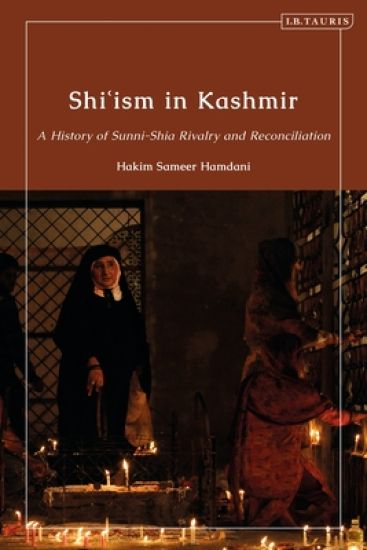
When Muslim rule in Kashmir ended in 1820, Sikh and later Hindu Dogra Rulers gained power, but the country was still largely influenced by Sunni religious orthodoxy. This book traces the impact of Sunni power on Shi'i society and how this changed during the nineteenth and early twentieth centuries. The book identifies a distinctive Kashmiri Shi'i Islam established during this period. Hakim Sameer Hamdani argues that the Shi'i community’s religious and cultural identity was fostered through practices associated with the martyrdom of Imam Husayn and his family in Karbala, as well as other rituals of Islam, in particular, the construction and furore surrounding M'arak, the historic imambada (a Shi'i house for mourning of the Imam) of Kashmir’s Shi'i. The book examines its destruction, the ensuing Shi'i -Sunni riot, and the reasons for the Shi'i community’s internal divisions and rifts at a time when they actually saw the strong consolidation of their identity.
Shi’ism in Kashmir

Shi’ism in Kashmir

Hakim Sameer Hamdani

BLOOMSBURY PUBLISHING PLC
2024
nidottu
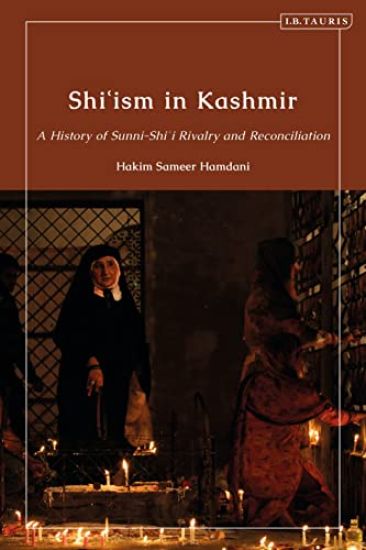
When Muslim rule in Kashmir ended in 1820, Sikh and later Hindu Dogra Rulers gained power, but the country was still largely influenced by Sunni religious orthodoxy. This book traces the impact of Sunni power on Shi'i society and how this changed during the nineteenth and early twentieth centuries. The book identifies a distinctive Kashmiri Shi'i Islam established during this period. Hakim Sameer Hamdani argues that the Shi'i community’s religious and cultural identity was fostered through practices associated with the martyrdom of Imam Husayn and his family in Karbala, as well as other rituals of Islam, in particular, the construction and furore surrounding M'arak, the historic imambada (a Shi'i house for mourning of the Imam) of Kashmir’s Shi'i. The book examines its destruction, the ensuing Shi'i -Sunni riot, and the reasons for the Shi'i community’s internal divisions and rifts at a time when they actually saw the strong consolidation of their identity.
Shi'ism in America

Shi'ism in America

Liyakat Nathani Takim

New York University Press
2009
sidottu
Shi'ism in America provides the first general overview of the Shi'i community in America, tracing its history, its current composition, and how Shi'a have negotiated their identity in the American context. There are over two million Shi'is, who differ from Sunni Muslims in their understandings of the early line of succession after Muhammad, in the United States. With community roots going back sometimes close to one hundred years, Shi'is can be found in major cities like New York, Los Angeles, Chicago, Washington, and Dearborn, Michigan. Early in the century, Shi'is and Sunnis sometimes arrived at the same time, worshipped together, shared similar experiences, and confronted the same challenges despite their sectarian differences. Both tracing the early history and illuminating the more recent past with surveys and interviews, Takim explores the experiences of this community. Filling an important scholarly gap, he also demonstrates how living in the West has impelled the Shi'i community to grapple with the ways in which Islamic law may respond to the challenges of modernity. Shi'ism in America provides a much-needed overview of the history of this United States religious community, from religious, cultural, and political institutions to inter-group relations, to the experience of African American Shi'is.
Shi'ism in America

Shi'ism in America

Liyakat Nathani Takim

New York University Press
2011
pokkari
Shi'ism in America provides the first general overview of the Shi'i community in America, tracing its history, its current composition, and how Shi'a have negotiated their identity in the American context. There are over two million Shi'is, who differ from Sunni Muslims in their understandings of the early line of succession after Muhammad, in the United States. With community roots going back sometimes close to one hundred years, Shi'is can be found in major cities like New York, Los Angeles, Chicago, Washington, and Dearborn, Michigan. Early in the century, Shi'is and Sunnis sometimes arrived at the same time, worshipped together, shared similar experiences, and confronted the same challenges despite their sectarian differences. Both tracing the early history and illuminating the more recent past with surveys and interviews, Takim explores the experiences of this community. Filling an important scholarly gap, he also demonstrates how living in the West has impelled the Shi'i community to grapple with the ways in which Islamic law may respond to the challenges of modernity. Shi'ism in America provides a much-needed overview of the history of this United States religious community, from religious, cultural, and political institutions to inter-group relations, to the experience of African American Shi'is.
Shi'ism

Shi'ism

Variorum
2003
sidottu
This volume brings together seventeen articles reflecting the wide range of scholarly interest in early Shi`ism over the past half century. All major branches of Shi`ism are covered. Some studies are historical in nature, whether dealing with specific events or offering a broad historical perspective. Others focus on literary issues, on the development of doctrine or on the relations between the Shi`a and the non-Shi`i world. The studies have been selected because they represent the best of current scholarship, or are classic works with continuing significance; six appear for the first time in English translation. The editor's introduction reviews the historiography of the field and highlights directions and trends in research and is followed by a bibliography of key further reading.
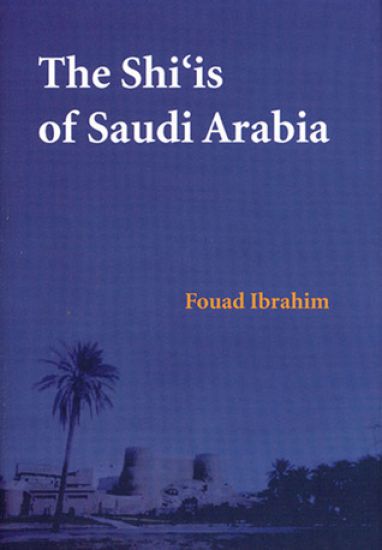
Shi'is of Saudi Arabia

Shi'is of Saudi Arabia

Fouad N. Ibrahim

Saqi Books
2006
sidottu
The Shi'is of Saudi Arabia offers a comprehensive overview of the evolution of Shi'i opposition in the Eastern Province of Saudi Arabia, from the Iranian Revolution in 1979 to the ascension of Abdullah to the throne in August 2005. Fouad Ibrahim examines the Reform Movement, which replaced the Islamic Revolution Organization following the Shi'i uprisings in al-Hasa and Qatif. Since its initiation, the Movement has campaigned for an Islamic state similar to the Iranian model. It became more moderate in the early nineties, when it began advocating democracy, human rights and civil society. It also succeeded in bringing issues of political and individual liberty in Saudi Arabia to the attention of human rights organizations, Western governments and political parties throughout the world. The late King Fahd decreed a general amnesty in 1993, allowing Shi'i dissidents who had fled to return to the country. In return, the Shi'is were required to abandon their political programme of reform. This marked a new era for the Shi'is in the Eastern Province. Ibrahim assesses the leaders' considerable efforts to formulate a new discourse, participating in activities throughout the country with the aim of bringing about political change in the kingdom.
Shi?ite Islam

Shi?ite Islam

Sayyid Mu?ammad ?usayn ?aba?aba'i

State University of New York Press
1979
pokkari
Despite a growing interest in the last hundred years in both orientalism and comparative religions, and the fact that there are over fifty million Shi'a Muslims, until now there has been no thorough and objective study of that part of Islam called Shi'ism for Western scholars. The present work provides a clear account of the origin, history, and doctrines of an important sector of the Muslim religious community. It is written by a distinguished leader of that community, who, in addition to possessing a thorough knowledge of its traditional history and literature, presents its rational-philosophic, traditional-legal, and gnostic-mystical elements with warmth and sympathy. The result is a well-integrated general picture which succeeds in giving the reader a clear and comprehensive picture of how the Shi'ite Muslim views his religion.
Shi-shi-etko

Shi-shi-etko

Nicola Campbell

Groundwood Books Ltd ,Canada
2005
sidottu
Shi-shi-etko, a Native American girl, spends the last four days before she goes to residential school learning valuable lessons from her mother, father, and grandmother, and creating precious memories of home.
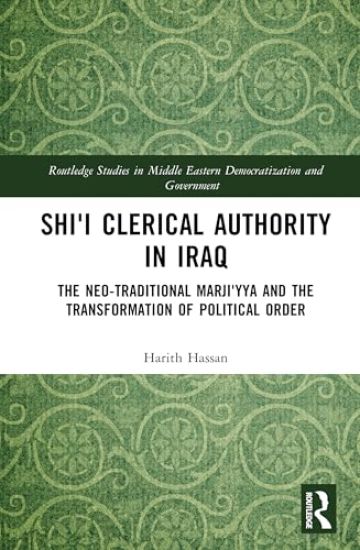
Shi'i Clerical Authority in Iraq

Shi'i Clerical Authority in Iraq

Harith Hasan

TAYLOR FRANCIS LTD
2026
sidottu
Sh’i Clerical Authority in Iraq: The Neo-Traditional Marji’yya and the Transformation of Political Order provides the first comprehensive analysis of the evolving relationship between Shi'i religious authority and the state in Iraq through a distinctive historical sociology framework that illuminates structural and contextual transformations. Spanning decades of complex interaction, it examines the often tense coexistence and rivalry between the state apparatus and the transnational Shi'i Marji'iyya, revealing how their relationship has been fundamentally reshaped by broader historical processes. Through meticulously researched case studies, the volume traces how state-building initiatives, secularization efforts, and shifting conceptions of national community have continuously challenged and reconfigured traditional religious authority. The analysis centers on the watershed moment of 2003, when Saddam Hussein's authoritarian regime collapsed, creating space for Shi'i religious and Islamist actors to emerge as significant political forces amid weakening central authority and a shift from homogenization to communitarianism as the organizing principle of political community. The author introduces the innovative concept of "neo-traditional Marji'iyya" to theorize the transformation in the public presence, political agency, and institutional configuration of Shi'i religious authority in contemporary Iraq. A significant contribution to the fields of Middle Eastern studies, political theology, and state-religion relations, this book offers essential insights for scholars and policymakers seeking to understand the complex interplay between religious institutions and political power in post-authoritarian contexts and fragile states.
Shi Tzu Dog Training Book Train Your Dog Or Eat My Shorts! Not Really, But... Shih Tzu Training
Shih Tzu Training begins From the Car Ride Home. Like, now. When it counts. When it matters to you, your pup, and your family. Day one makes the success difference in training your Shih Tzu. From the car ride home is the critical moment to begin communicating with your dog at your pup's level. There's a name for it too. It's called 'Dogmanship' and your dog craves it. Fact, it's the key difference in the Blue Fence dog training system that creates the Simple Steps that will get you the absolute Quick Results you're looking for - now. Now, and not some time some day in some-future. If this sounds about right to you, take a look at what you're about to learn how to teach your Shih Tzu beginning today Blue Fence dog training is all about rewards-based clicker training using Dogmanship, a clicker, treats, praising and phrasing. Simple steps, Quick results. Included are: Clicker TrainingCombined with Treat Reward TrainingBasic Commands. All of them you could possibly need.Hand Cues for Dog Training Think about it. Have you ever been on the phone, while your dog is barking? Yeah, here's how to stop that nuisance without skipping a beat Socializing Your Dog.Dog's love hanging out with friends too. They can also tell who's a true friend too. If you know what I mean. Dog Behaviors too. Such as: Barking, growling, peeing, pooping, chewing, howling, begging, crying, whimpering, rubbing, nipping, jumping, humping, rubbing, running away, chasing animals, and all the rest that can be replaced with the best. Alpha Dog Yep, your dog craves the Alpha. And from the Car ride home its either going to be him, or you that determines it. Learn how to become and remain alpha from day one. This is one of the most critical things to learn how to do, in the most respectful humane manner possible. It's not yelling Its telling in a certain way with rewards. More on that INSIDE. So, if you are ready to bone UP with the best of them, ( the pros) then try my book right now. Go ahead ORDER NOW and I can promise you later today, (or tomorrow if it suits you better) and stop the peeing today, the pooping now, the chewing, humping, nipping and jumping too. Along with, all the various, yet common, bad behaviors your new puppy instinctively has before you go for myNew, Easy Steps * Fast Results, Train Your Dog or Eat My Shorts DOG Training System, And develop your alpha status, begin command training, and yes perhaps a trick or two - too. Start your mutually respectful, lifelong fun and loving relationship you want with your dog, and your new family, right now.Go ahead Order Today. You'll be glad you Boned-Up on it. I guarantee it. Bonus, I offer a free Jump Start Guide Inside Too And remember, you can always reach me inside, at my website. With Caring love for you and Your New Shih Tzu, I'm, Fanny Doright. Dog Trainer and Lover of Shih TzusShih Tzu Dog, Shih Tzu book, Shih Tzu, Shih Tzu Training Guide: What's Inside? Shih Tzu training, Shih Tzu, Shih Tzu Dog, Shih Tzus for dummies, Shih Tzu savvy, Dog Training, Shih Tzu puppy, Shih Tzu Training
Shi'a Islam in Colonial India

Shi'a Islam in Colonial India

Justin Jones

Cambridge University Press
2011
sidottu
Interest in Shi'a Islam has increased greatly in recent years, although Shi'ism in the Indian subcontinent has remained largely underexplored. Focusing on the influential Shi'a minority of Lucknow and the United Provinces, a region that was largely under Shi'a rule until 1856, this book traces the history of Indian Shi'ism through the colonial period toward independence in 1947. Drawing on a range of new sources, including religious writing, polemical literature and clerical biography, it assesses seminal developments including the growth of Shi'a religious activism, madrasa education, missionary activity, ritual innovation and the politicization of the Shi'a community. As a consequence of these significant religious and social transformations, a Shi'a sectarian identity developed that existed in separation from rather than in interaction with its Sunni counterparts. In this way the painful birth of modern sectarianism was initiated, the consequences of which are very much alive in South Asia today.
Shi'i Islam

Shi'i Islam

Najam Haider

Cambridge University Press
2014
sidottu
During the formative period of Islam, in the first centuries after Muhammad's death, two particular intellectual traditions emerged, Sunnism and Shi'ism. Sunni Muslims endorsed the historical caliphate, while Shi'i Muslims, supporters of 'Ali, cousin of the Prophet and the fourth caliph, articulated their own distinctive doctrines. The Sunni-Shi'i schism is often framed as a dispute over the identity of the successor to Muhammad, whereas in reality, Sunni and Shi'i Muslims also differ on a number of seminal theological doctrines concerning the nature of God and legitimate political and religious authority. This book examines the development of Shi'i Islam through the lenses of belief, narrative, and memory. It also covers a wide range of Shi'i communities from the demographically predominant Twelvers to the transnational Isma'ilis to the scholar-activist Zaydis. The portrait of Shi'ism that emerges is that of a distinctive and vibrant community of Muslims with a remarkable capacity for reinvention and adaptation, grounded in a unique theological interpretation of Islam.
Shi'i Islam

Shi'i Islam

Najam Haider

Cambridge University Press
2014
pokkari
During the formative period of Islam, in the first centuries after Muhammad's death, two particular intellectual traditions emerged, Sunnism and Shi'ism. Sunni Muslims endorsed the historical caliphate, while Shi'i Muslims, supporters of 'Ali, cousin of the Prophet and the fourth caliph, articulated their own distinctive doctrines. The Sunni-Shi'i schism is often framed as a dispute over the identity of the successor to Muhammad, whereas in reality, Sunni and Shi'i Muslims also differ on a number of seminal theological doctrines concerning the nature of God and legitimate political and religious authority. This book examines the development of Shi'i Islam through the lenses of belief, narrative, and memory. It also covers a wide range of Shi'i communities from the demographically predominant Twelvers to the transnational Isma'ilis to the scholar-activist Zaydis. The portrait of Shi'ism that emerges is that of a distinctive and vibrant community of Muslims with a remarkable capacity for reinvention and adaptation, grounded in a unique theological interpretation of Islam.
Shi'i Reformation in Iran

Shi'i Reformation in Iran

Ali Rahnema

Routledge
2018
nidottu
Shi 'ism caught the attention of the world as Iran experienced her revolution in 1979 and was subsequently cast in the mold of a monolithic discourse of radical political Islam. The spokespersons of Shi'i Islam, in or out of power, have not been the sole representatives of the faith. Nonconformist and uncompromising, the Shi’i jurist and reformist Shari’at Sangelaji (1891-1944) challenged certain popular Shi’i beliefs and the mainstream clerical establishment, guarding and propagating it. In Shi'i Reformation in Iran, Ali Rahnema offers a fresh understanding of Sangelaji’s reformist discourse from a theological standpoint, and takes readers into the heart of the key religious debates in Iran in the 1940s. Exploring Sangelaji’s life, theological position and disputations, Rahnema demonstrates that far from being change resistant, debates around why and how to reform the faith have long been at the heart of Shi’i Islam. Drawing on the writings and sermons of Sangelaji, as well as interviews with his son, the book provides a detailed and comprehensive introduction to the reformist’s ideas. As such it offers scholars of religion and Middle Eastern politics alike a penetrating insight into the impact that these ideas have had on Shi’ism - an impact which is still felt today.