
Kirjahaku
Etsi kirjoja tekijän nimen, kirjan nimen tai ISBN:n perusteella.
997 tulosta hakusanalla Shonah Stevens
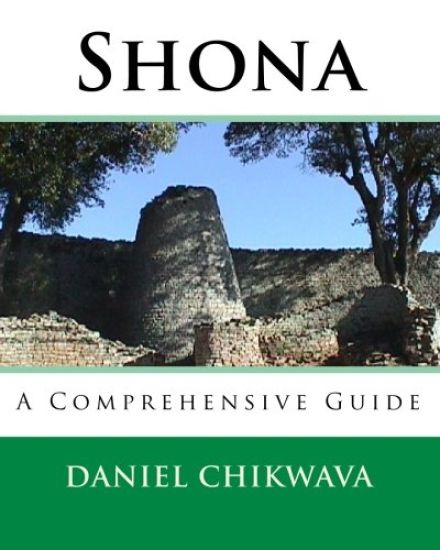
Shona: A Comprehensive Guide
Daniel Chikwava Mba
Createspace Independent Publishing Platform
2010
nidottu


Shona Children's Dictionary
Createspace Independent Publishing Platform
2014
pokkari
Learn more Shona words The Shona Children's Dictionary is an illustrated version of the Shona Learner's Dictionary. It is made especially for your multilingual child to develop their Shona and English reading skills.Contains over 50 simple nouns for every day use.Discover the joy of reading in Shona and English together with your multilingual child.Suitable for children 8 to 11 years old.
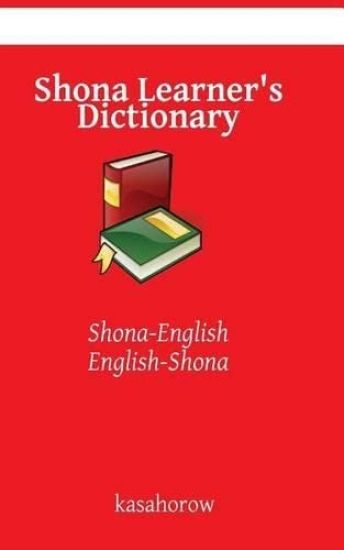
Shona Learner's Dictionary
Createspace Independent Publishing Platform
2014
pokkari
Shona kasahorow. Learn to read Modern Shona The Shona Learner's Dictionary is a beginner's dictionary for your multilingual child to develop their Shona and English reading skills.Contains over 200 nouns, verbs and adjectives to aid fast comprehension of any Modern Shona language book.Discover the joy of reading in Shona and English together with your multilingual child.Suitable for children 8 to 12 years old.
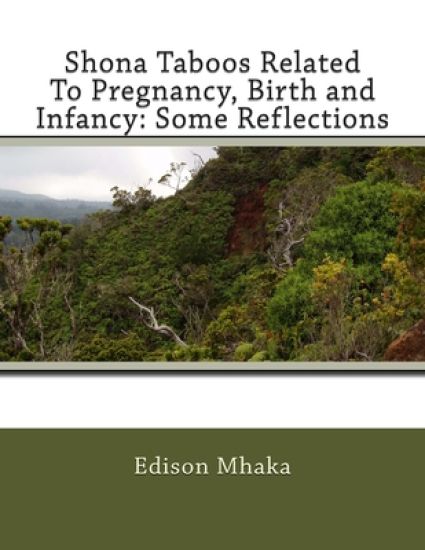
Shona Taboos Related To Pregnancy, Birth and Infancy: Some Reflections
Edison Mhaka
Createspace Independent Publishing Platform
2015
nidottu
According to Hastings (1954), the Polynesian word taboo means that a particular person, object, word or action is to be avoided. Scholars such as Smith (1898) Durkheim (1915) and Radcliffe- Brown (1939) have observed that an important quality of taboo as its association with the sacred. According to this theory, anything taboo is sacred and dangerous and is therefore to be avoided. The Shona term for taboos is zvieraera or zvierwa. The Shona taboo certain persons, objects, words or actions because of their religious beliefs. Taboos are omnipresent in all the spheres of Shona traditional society. One category of Shona taboos is pregnancy, birth and infant taboos. Pregnancy, birth and infant taboos are still observed by the Shona in Zimbabwe by even those who have embraced western science and Christianity. One therefore finds some Shona professionals such as nurses and teachers to be still observing some of the pregnancy, birth and infant taboos. It is important to note that most of the taboos included in this monograph are taken seriously by the Shona. In other words, the Shona consider many of the consequences associated with the taboos to be true. They are not taken to be empty threats. For instance, it is not uncommon to see a pregnant Shona woman conducting a ritual of spitting on her stomach after looking at a person with physical disabilities or an albino. However, the impact of westernization and economic hardships has resulted in some Shona failing to observe some of the pregnant, birth and infant taboos. For instance, the Zimbabwean economic meltdown which started in 2007 resulted in serious food shortages which led pregnant women to break certain food taboos. People were looking for cheap and easily available foods. Urbanization has made the taboos related to the burial of deceased babies difficult to observe.
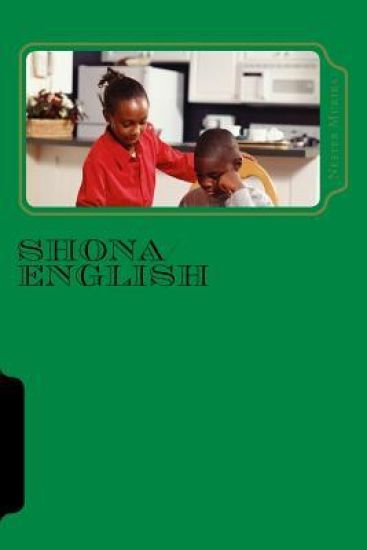
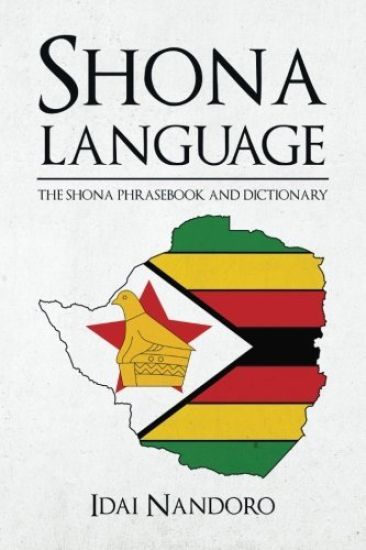
Shona Language: The Shona Phrasebook and Dictionary
Idai Nandoro
Createspace Independent Publishing Platform
2016
nidottu
This guide to Shona language collects the most common Shona phrases and expressions as well as an English-Shona/Shona-English dictionary. This phrasebook includes greetings, food items, directions, sightseeing and many other categories of expressions that will help anyone wanting to learn Shona.

In Shoah Through Muslim Eyes, the author discusses her journey with Judaism as a Muslim. Her book is based on the struggle with antisemitism within Muslim communities and her interviews with Shoah survivors. Rejecting polemical myths about the Holocaust and Jews, Afridi offers a new way of creating understanding between the two communities through the acceptance the enormity of the Shoah. Her journey is both personal and academic: the reader can find nuances of her belief in Islam, principles of justice, and the loneliness of such a journey. The chapters discuss the Holocaust and how it was in truth unprecedented, interviews with survivors, antisemitism and Islamophobia, camps in Arab lands, and Islam and memory. Afridi includes newly-uncovered Muslim-Arab narratives that enhance our understanding of the reach of the Holocaust into Muslim lands under the Vichy and Nazi governments.

In Shoah Through Muslim Eyes, the author discusses her journey with Judaism as a Muslim. Her book is based on the struggle with antisemitism within Muslim communities and her interviews with Shoah survivors. Rejecting polemical myths about the Holocaust and Jews, Afridi offers a new way of creating understanding between the two communities through the acceptance the enormity of the Shoah. Her journey is both personal and academic: the reader can find nuances of her belief in Islam, principles of justice, and the loneliness of such a journey. The chapters discuss the Holocaust and how it was in truth unprecedented, interviews with survivors, antisemitism and Islamophobia, camps in Arab lands, and Islam and memory. Afridi includes newly-uncovered Muslim-Arab narratives that enhance our understanding of the reach of the Holocaust into Muslim lands under the Vichy and Nazi governments.
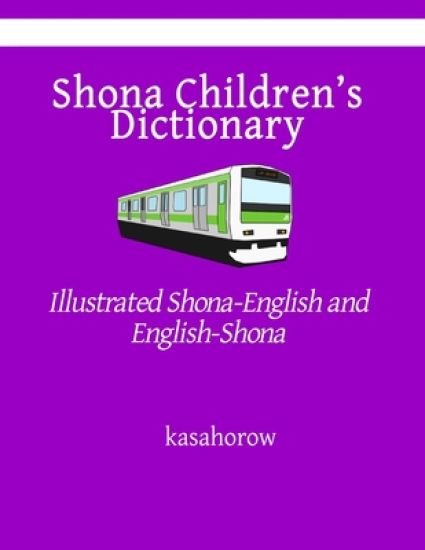
Shona Children's Dictionary: Illustrated Shona-English and English-Shona
Kasahorow
Independently Published
2019
nidottu
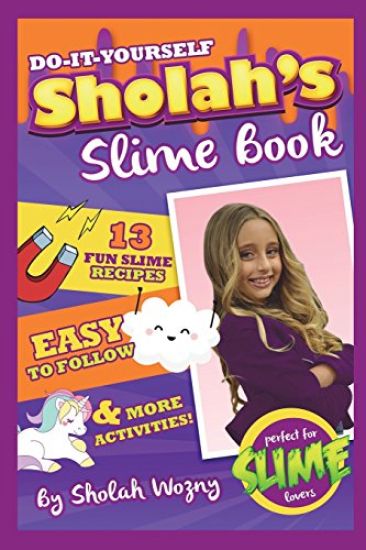
DO-IT-YOURSELF Sholah's Slime Book
Sholah Wozny
Createspace Independent Publishing Platform
2018
nidottu
In this book, you'll get: - Thirteen amazing slime recipes to try out at home - Hours of fun - with so many different slimes to choose from, you'll never get bored - Brilliant slime-related games and puzzles - Clear, easy instructions that can be followed by both kids and adults - Great advice from someone with years of experience making slime - Useful troubleshooting tips for dealing with any problems you might have Enjoy your slime time For more fun with slime, follow Sholah Wozny on YouTube.

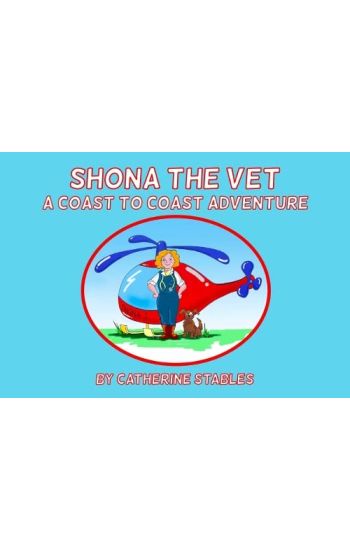
A warm and charming tale of diversity, language, and the shared cultures that make-up modern life. Shona has always loved words. She even has her very own strange word thesaurus! When her and her classmates learn that some languages are dying out, Miss Bates tasks them with becoming top-class word detectives, proving to themselves and their families that there are many beautiful languages still thriving, even within their own classroom. Particularly suitable for readers aged 7+ with a reading age of 7.

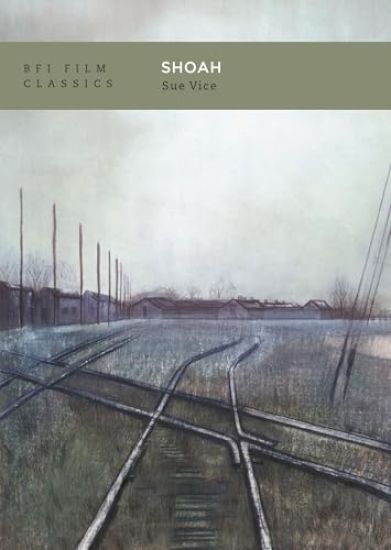
Sue Vice's study explores Claude Lanzmann's epic 1985 film Shoah both as cinema and as an example of Holocaust representation. Shoah, the distillation of more than 350 hours of footage gathered over eleven years, tells the story of the Holocaust through interviews with survivors of the extermination camps, bystanders who watched or participated in mass murder, and some of the perpetrators of genocide. Eschewing staple documentary elements of archival footage or narrating voiceover, the film is composed entirely of eyewitness interviews contrasted with footage of landscape in the present, and the chilling imagery of travelling trains. Shoah's effect is to represent the past, but only as it exists in the present - in Lanzmann's words, a "fiction of the real", and not a simple documentary.In a series of close readings of some of the film's interviews, Sue Vice follows Lanzmann's declaration that "Shoah is a fight against generalities", in emphasising the importance of detail in both dialogue and filmic technique. Through these analyses, Vice explores the background to the film, the difficulties in its financing and production, and the long process of editing that led to Lanzmann's realisation that "the subject of my film is death itself; death and not survival."In her afterword to this new edition, Sue Vice considers developments such as the online availability of the complete ‘Shoah Collection’, Lanzmann’s archive at the United States Holocaust Memorial Museum, and Shoah's continuing influence on films that witness genocides and the Holocaust, including Joshua Oppenheimer's The Look of Silence (2014), and Jonathan Glazer's The Zone of Interest (2023).