Kirjojen hintavertailu. Mukana 11 342 296 kirjaa ja 12 kauppaa.

Kirjahaku

Etsi kirjoja tekijän nimen, kirjan nimen tai ISBN:n perusteella.

1000 tulosta hakusanalla Simon Webb

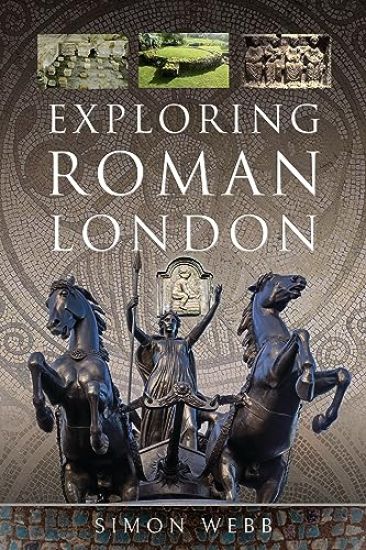
Exploring Roman London

Exploring Roman London

Simon Webb

PEN SWORD BOOKS LTD
2023
nidottu
Much more than a simple guidebook, Exploring Roman London is an indispensable guide for anyone interested in the early history of England's capital city. In addition to containing information on every site in London where Roman remains can be seen, the history of the foundation of the city and its subsequent development is meticulously chronicled. Each chapter deals with a different aspect of the first incarnation of London, when the invading Romans established their settlement in the 1st century CE. Even those who pride themselves on their knowledge of the city will find much here which is new to them, as street-by-street instructions for self-guided walks around central London allow those interested to follow the hidden rivers and lost roads of the Roman town. Exploring Roman London describes the many fragments of Roman London on open display in the city, most of which are quite unknown to the average citizen. From the huge statue of Minerva which was standing unnoticed in a churchyard until two years ago, to the Roman house which lies in a church crypt, this book will allow anyone curious about London's history to examinethe archaeology for themselves.
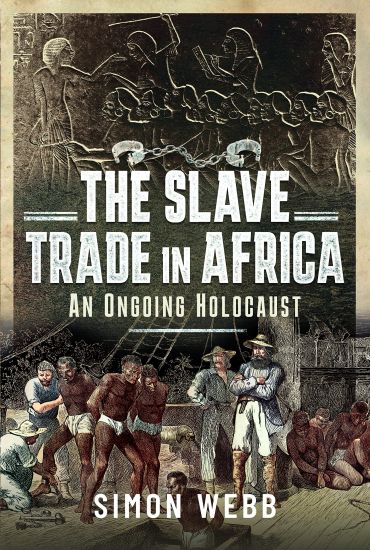
The Slave Trade in Africa

The Slave Trade in Africa

Simon Webb

PEN SWORD BOOKS LTD
2023
sidottu
Is it true that the trans-Atlantic slave trade, about which so much has been heard in recent years, would have been impossible without the willing and enthusiastic cooperation of African leaders? Slavery was a common practice in Africa long before the arrival of Europeans, with the trade in black slaves, who were transported from Africa to America and the islands of the Caribbean, aided by the African traders who benefited from the arrangement. Even when Europe and America outlawed slavery and the slave trade, those living in Africa clung tenaciously to their old ways and refused to relinquish what was, to them, a time-honoured custom. It is for this reason that slavery lingers on in Africa to this day. In this book, Simon Webb explores the history of slavery in Africa and finds that it was not necessarily imposed upon the continent by Europeans, but was rather an integral part of many, perhaps most, cultures. Even when the British deployed their army and navy to try to suppress the trade in slaves during the nineteenth century, their efforts were largely ineffectual because many societies saw no reason to give up such an old, useful and profitable system. At a time when the subject of the trans-Atlantic slave trade is seldom out of the news, this book provides a vital corrective to the popularly accepted view of the matter. Nobody reading it will ever view slavery and the slave trade in quite the same light again.
The Slave Trade in Africa

The Slave Trade in Africa

Simon Webb

PEN SWORD BOOKS LTD
2025
nidottu
Is it true that the trans-Atlantic slave trade, about which so much has been heard in recent years, would have been impossible without the willing and enthusiastic cooperation of African leaders? Slavery was a common practice in Africa long before the arrival of Europeans, with the trade in black slaves, who were transported from Africa to America and the islands of the Caribbean, aided by the African traders who benefited from the arrangement. Even when Europe and America outlawed slavery and the slave trade, those living in Africa clung tenaciously to their old ways and refused to relinquish what was, to them, a time-honoured custom. It is for this reason that slavery lingers on in Africa to this day. In this book, Simon Webb explores the history of slavery in Africa and finds that it was not necessarily imposed upon the continent by Europeans, but was rather an integral part of many, perhaps most, cultures. Even when the British deployed their army and navy to try to suppress the trade in slaves during the nineteenth century, their efforts were largely ineffectual because many societies saw no reason to give up such an old, useful and profitable system. At a time when the subject of the trans-Atlantic slave trade is seldom out of the news, this book provides a vital corrective to the popularly accepted view of the matter. Nobody reading it will ever view slavery and the slave trade in quite the same light again.
British Concentration Camps

British Concentration Camps

Simon Webb

Pen Sword Books Ltd
2016
sidottu
For many of us, the very expression 'Concentration Camp' is inextricably linked to Nazi Germany and the horrors of the Holocaust. The idea of British concentration camps is a strange and unsettling one. It was however the British, rather than the Germans, who were the chief driving force behind the development and use of concentration camps in the Twentieth Century. The operation by the British army of concentration camps during the Boer War led to the deaths of tens of thousands of children from starvation and disease. More recently, slave-labourers confined in a nationwide network of camps played an integral role in Britain's post-war prosperity. In 1947, a quarter of the country's agricultural workforce were prisoners in labour camps. Not only did the British government run their own concentration camps, they willingly acquiesced in the setting up of such establishments in the United Kingdom by other countries. During and after the Second World War, the Polish government-in-exile maintained a number of camps in Scotland where Jews, communists and homosexuals were imprisoned and sometimes killed.This book tells the terrible story of Britain's involvement in the use of concentration camps, which did not finally end until the last political prisoners being held behind barbed wire in the United Kingdom were released in 1975. From England to Cyprus, Scotland to Malaya, Kenya to Northern Ireland; British Concentration Camps; A Brief History from 1900 to 1975 details some of the most shocking and least known events in British history.
The Life and Times of Jeremiah Dixon: Surveyor of the Mason-Dixon Line

The Life and Times of Jeremiah Dixon: Surveyor of the Mason-Dixon Line

Simon Webb

Createspace Independent Publishing Platform
2015
nidottu
An English Quaker from County Durham, in 1763 Jeremiah Dixon became the joint architect of one of the most important boundaries in history: the Mason-Dixon line between Pennsylvania and Maryland, which still marks the division between the North and the South in the United States.The author is a Quaker who lives near Dixon's home at Cockfield in County Durham, and his book offers unique insights into the life and achievements of 'Jerry the Astronomer'.Illustrated.
Elias Hicks: A Controversial Quaker

Elias Hicks: A Controversial Quaker

Simon Webb

Createspace Independent Publishing Platform
2015
nidottu
A highly accessible biography of Elias Hicks, a nineteenth-century Quaker from Long Island who campaigned against slavery and was at the centre of some painful political developments among American Quakers.Revised and corrected edition.
Secret Casualties of World War Two

Secret Casualties of World War Two

Simon Webb

Pen Sword History
2020
sidottu
The London Blitz and the Japanese attack on Pearl Harbour are iconic myths for Britain and America. Few in either nation realise, however, that these artfully constructed narratives of heroic resistance to aerial bombardment both conceal appalling massacres of their own citizens. In Britain, thousands of civilians were killed when the army shelled London and other cities in an effort to prevent those living there from fleeing the German bombs. At Pearl Harbour, American warships fired their heavy guns at the city of Honolulu, with devastating results. In this book, Simon Webb reveals one of the last secrets of the Second World War; the casualties which friendly fire' from heavy artillery inflicted upon British and American civilians. In the case of the British, these deaths were part of a quite deliberate policy which was devised to ensure that those living in big cities remained there, despite the dangers of enemy bombing. There were times during the German bombing of London when more people were being killed by British shells than were dying as a result of enemy bombs. Although this book traces the history of bombing and anti-aircraft guns from the Franco-Prussian War of 1870-1871, through to the First World War, its chief concern is with the events of the Second World War; particularly the Blitz. Nobody reading The Secret Blitz will ever view Pearl Harbour or the Blitz in quite the same way again.
A History of Torture in Britain

A History of Torture in Britain

Simon Webb

Pen Sword History
2019
nidottu
There is an ancient and quite baseless myth that the use of torture has never been legal in Britain. This old wives' tale arose because torture had been neither endorsed nor forbidden by either statute or common law. In other words; the law has, until the late twentieth century, never had anything to say on the subject. In fact, torture, inflicted both as punishment and as an aid to interrogation, has been a constant and recurring feature of British life; from the beginning of the country's recorded history, until well into the twentieth century. Even as late as 1976, the European Court of Human Rights ruled that the British Army was guilty of the systematic torture of suspected terrorists. In 'A History of Torture in Britain' Simon Webb traces the terrible story of the deliberate use of pain on prisoners in Britain and its overseas possessions. Beginning with the medieval trial by ordeal, which entailed carrying a red-hot iron bar in your bare hand for a certain distance, through to the stretching on the rack of political prisoners and the mutilation of those found guilty of sedition; the evidence clearly shows that Britain has relied heavily upon torture, both at home and abroad, for almost the whole of its history. This sweeping and authoritative account of a grisly and distasteful subject is likely to become the definitive history of the judicial infliction of pain in Britain and its Empire.
Suffragette Fascists

Suffragette Fascists

Simon Webb

Pen Sword History
2020
nidottu
Emmeline Pankhurst is seen today as a valiant champion of democracy, but in the 1930s certain prominent former suffragettes were comparing her to Hitler and Mussolini. It was suggested that Mrs Pankhurst and her Women's Social and Political Union could be viewed as a proto-fascist movement; an idea likely to strike the modern reader as grotesque. Yet the WSPU certainly had much in common with the fascist parties that emerged after the end of the First World War. The group was financed by wealthy and aristocratic backers, and terrorism, in the form of bombing and arson, was widely used against working-class men and women. This, together with the rampant anti-Semitism and ambivalent attitude to democracy, all indicate that there was more to the suffragettes than we now realise. Few people today, for example, know that Emmeline Pankhurst was an advocate of ethnic cleansing and the use of concentration camps, nor that her daughter was imprisoned during the Second World War for pro-Nazi activities. This helps to explain how former suffragettes came to hold such important positions in the British Union of Fascists in the years before the Second World War. After all, the ideology and structure of Oswald Mosley's fascist party was so eerily similar to that of Emmeline Pankhurst's Women's Social and Political Union. In this book, Simon Webb explores the real world of the suffragettes and the woman they idolised as 'the Leader', discovering that the movement indeed foreshadowed the rise of fascism during the 1930s.
Fighting for the United States, Executed in Britain
This book relates a chapter of American military history which many people would rather forget. When the United States came to the aid of Britain in 1942, the arrival of American troops was greeted with unreserved enthusiasm, but unfortunately, wartime sometimes brings out the worst, as well as the best, in people. A small number of the soldiers abused the hospitality they received by committing murders and rapes against British civilians. Some of these men were hanged or shot at Shepton Mallet Prison in Somerset, which had been handed over for the use of the American armed forces. Due to a treaty between Britain and America, those accused of such offences faced an American court martial, rather than a British civilian court, which gave rise to some curious anomalies. Although rape had not been a capital crime in Britain for over a century, it still carried the death penalty under American military law and so the last executions for rape in Britain were carried out at this time in Shepton Mallet. _Fighting For America, Executed in Britain_ tells the story of every American soldier executed in Britain during the Second World War. The majority of the executed soldiers were either black or Hispanic, reflecting the situation in the United States itself, where the ethnicity of the accused person often played a key role in both convictions and the chances of subsequently being executed.
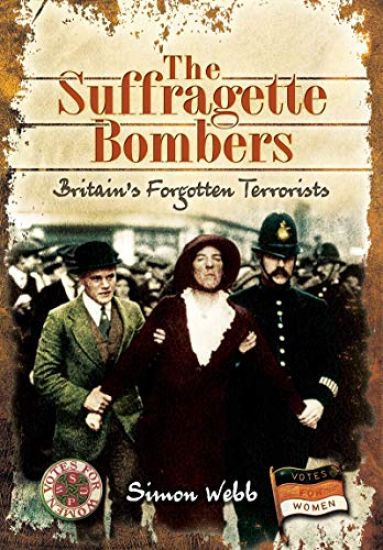
The Suffragette Bombers

The Suffragette Bombers

Simon Webb

Pen Sword History
2021
nidottu
In the years leading up to the First World War, the United Kingdom was subjected to a ferocious campaign of bombing and arson. Those conducting this terrorist offensive were members of the Women's Social and Political Union; better known as the suffragettes. The targets for their attacks ranged from St Paul's Cathedral and the Bank of England in London to theatres and churches in Ireland. The violence, which included several attempted assassinations, culminated in June 1914 with an explosion in Westminster Abbey. Simon Webb explores the way in which the suffragette bombers have been airbrushed from history, leaving us with a distorted view of the struggle for female suffrage. Not only were the suffragettes far more aggressive than is generally known, but there exists the very real and surprising possibility that their militant activities actually delayed, rather than hastened, the granting of the parliamentary vote to British women. AUTHOR: Simon Webb is the author of many non-fiction books, ranging from academic works on education to popular history. He has also written dozens of westerns under both his own name and a variety of pseudonyms, such as Harriet Cade, Fenton Sadler and Jay Clanton. He works as a consultant on the subject of capital punishment to television companies and filmmakers and also writes fro various magazines and newspapers, including the Times educational Supplement, Daily Telegraph and The Guardian. 16 b/w illustrations