

Kirjahaku
Etsi kirjoja tekijän nimen, kirjan nimen tai ISBN:n perusteella.
1000 tulosta hakusanalla Simone Bonomelli
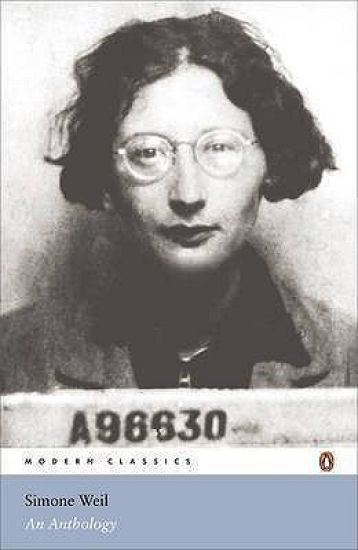
Simone Weil was one of the foremost thinkers of the twentieth century: a philosopher, theologian, critic, sociologist and political activist. This anthology spans the wide range of her thought, and includes an extract from her best-known work 'The Need for Roots', exploring the ways in which modern society fails the human soul; her thoughts on the misuse of language by those in power; and the essay 'Human Personality', a late, beautiful reflection on the rights and responsibilities of every individual. All are marked by the unique combination of literary eloquence and moral perspicacity that characterised Weil's ideas and inspired a generation of thinkers and writers both in and outside her native France.

Sandrine Sanos's biography of Simone de Beauvoir situates Beauvoir's life and works in historical context, charting how she was enmeshed in most 20h century events and developments from WW2, to Decolonization, the Cold War, Socialist Politics, Feminism--as well as topics and ideas of contemporary relevance (war crimes, human rights, the possibilities and limits of political activism in support of social justice). Building on recent scholarship, this biography focuses especially on the colonial, transnational, and postcolonial influences that shaped Beauvoir and emphasizes her paradoxical and complicated relationship to politics. Written in accessible and lively prose, the book is divided in 7 chapters and includes lesser-known photos of Beauvoir, as well as primary sources of both historical and contemporary interest (on the question of justice, complicity with oppressive regimes, torture, gender politics).

This Very Short Introduction provides an overview of the intriguing and provocative life and ideas of twentieth century French philosopher, mystic, and social activist Simone Weil. Weil was not a typical, systematic philosopher. Despite her short life, Weil's philosophy has much to offer us in our times of personal, communal, political, and environmental crises, both in the breath and poignancy of her philosophy, and the topics it covers. In keeping with Weil's spirit to consider and address laypeople, Rozelle-Stone takes readers, including those who have had little or no previous exposure to Weil or philosophy, on an accessible journey of Weil's major philosophical impacts. This exploration consists of seven chapters highlighting: her life and manner of death, both characterized by attention; the influence of ancient Greek ideas on her philosophy; her thoughts on labour and politics; her unique and ecumenical religious inspirations, stemming from Christianity, Hinduism, Buddhism, and Taoism; her ethical philosophy centred on a specific notion of attentiveness; her understanding of beauty as connected to fragility but also eternity; and finally, her legacy and influence on contemporary writers and issues, particularly as she may help us navigate and critically assess the growing convergence between religious fervour, late capitalist and corporate values, and authoritarian politics. ABOUT THE SERIES: The Very Short Introductions series from Oxford University Press contains hundreds of titles in almost every subject area. These pocket-sized books are the perfect way to get ahead in a new subject quickly. Our expert authors combine facts, analysis, perspective, new ideas, and enthusiasm to make interesting and challenging topics highly readable.
Simone de Beauvoir and the Politics of Ambiguity
Sonia Kruks
Oxford University Press Inc
2012
nidottu
Simone de Beauvoir and the Politics of Ambiguity is the first full-length study of Beauvoir's political thinking. Best known as the author of The Second Sex, Beauvoir also wrote an array of other political and philosophical texts that are less well known. Together, these constitute an original contribution to political theory and philosophy. The book both locates Beauvoir in her own intellectual and political context and demonstrates her continuing significance. For, in her unique voice, Beauvoir still speaks to a range of pressing theoretical and practical questions concerning politics. These include the political value and dangers of liberal humanism; how oppressed groups become complicit in their own oppression; how social identities are perpetuated; the limits to rationalism and the place of emotions, such as the desire for revenge, in politics. In discussing Beauvoir's reflections on these and other matters the book puts her ideas into conversation with those of many contemporary thinkers, including feminist and race theorists, as well as with historical figures in the liberal, Hegelian, and Marxist traditions. Beauvoir's political thinking emerges from her fundamental insights into the ambiguity of human existence. Combining phenomenological descriptions with structural analyses, she focuses on the tensions of human action as both free and constrained. To be human is to be an embodied self, to be capable of free choice and yet to be constrained and physically vulnerable. It is also to be in the world with many other such selves, whose relationships may be both reciprocal and conflictual or oppressive. Such ambiguities are intrinsic to politics, and they are not subject to resolution. Beauvoir thus shows us that failure is a necessary part of political action, and she insists that we acknowledge this while also assuming responsibility for the outcomes of what we do.
Simone de Beauvoir and the Politics of Ambiguity
Sonia Kruks
Oxford University Press Inc
2012
sidottu
Simone de Beauvoir and the Politics of Ambiguity is the first full-length study of Beauvoir's political thinking. Best known as the author of The Second Sex, Beauvoir also wrote an array of other political and philosophical texts that are less well known. Together, these constitute an original contribution to political theory and philosophy. The book both locates Beauvoir in her own intellectual and political context and demonstrates her continuing significance. For, in her unique voice, Beauvoir still speaks to a range of pressing theoretical and practical questions concerning politics. These include the political value and dangers of liberal of humanism; how oppressed groups become complicit in their own oppression; how social identities are perpetuated; the limits to rationalism and the place of emotions, such as the desire for revenge, in politics. In discussing Beauvoir's reflections on these and other matters the book puts her ideas into conversation with those of many contemporary thinkers, including feminist and race theorists, as well as with historical figures in the liberal, Hegelian, and Marxist traditions. Beauvoir's political thinking emerges from her fundamental insights into the ambiguity of human existence. Combining phenomenological descriptions with structural analyses, she focuses on the tensions of human action as both free and constrained. To be human is to be an embodied self, to be capable of free choice and yet to be constrained and physically vulnerable. It is also to be in the world with many other such selves, whose relationships may be both reciprocal and conflictual or oppressive. Such ambiguities are intrinsic to politics, and they are not subject to resolution. Beauvoir thus shows us that failure is a necessary part of political action, and she insists that we acknowledge this while also assuming responsibility for the outcomes of what we do.
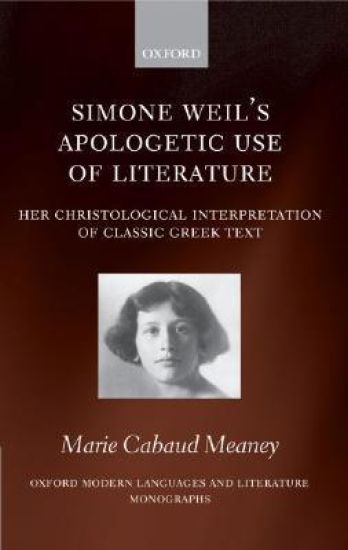
Marie Cabaud Meaney looks at Simone Weil's Christological interpretations of the Sophoclean Antigone and Electra, the Iliad and Aeschylus' Prometheus Bound. Apart from her article on the Iliad, Weil's interpretations are not widely known, probably because they are fragmentary and boldly twist the classics, sometimes even contradicting their literal meaning. Meaney argues that Weil had an apologetic purpose in mind: to the spiritual ills of ideology and fanaticism in World War II she wanted to give a spiritual answer, namely the re-Christianization of Europe to which she (though not baptized herself) wished to contribute in some way. To the intellectual agnostics of her day she intended to show through her interpretations that the texts they cherished so much could only be fully understood in light of Christ; to the Catholics she sought to reveal that Catholicism was much more universal than generally believed, since Greek culture already embodied the Christian spirit - perhaps to a greater extent than the Catholic Church ever had. Despite or perhaps because of this apologetic slant, Weil's readings uncover new layers of these familiar texts: Antigone is a Christological figure, combating Creon's ideology of the State by a folly of love that leads her to a Passion in which she experiences an abandonment similar to that of Christ on the Cross. The Iliad depicts a world as yet unredeemed, but which traces objectively the reign of force to which both oppressors and oppressed are subject. Prometheus Bound becomes the vehicle of her theodicy, in which she shows that suffering only makes sense in light of the Cross. But the pinnacle of the spiritual life is described in Electra which, she believes, reflects a mystical experience - something Weil herself had experienced unexpectedly when 'Christ himself came down and took her' in November 1938. In order to do justice to Weil's readings, Meaney not only traces her apologetic intentions and explains the manner in which she recasts familiar Christian concepts (thereby letting them come alive - something every good apologist should be able to do), but also situates them among standard approaches used by classicists today, thereby showing that her interpretations truly contribute something new.
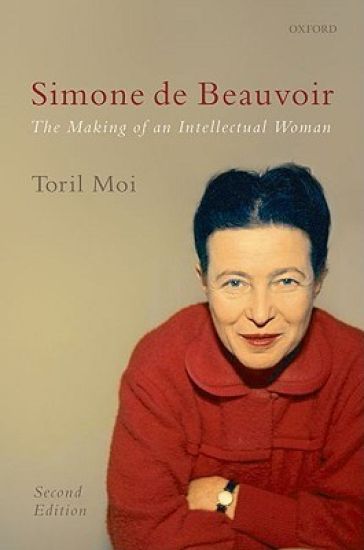
In Simone de Beauvoir: The Making of an Intellectual Woman Toril Moi shows how Simone de Beauvoir became Simone de Beauvoir, the leading feminist thinker and emblematic intellectual woman of the twentieth century. Blending biography with literary criticism, feminist theory, and historical and social analysis, this book provides a completely original analysis of Beauvoir's education and formation as an intellectual. In The Second Sex, Beauvoir shows that we constantly make something of what the world tries to make of us. By reconstructing the social and political world in which Beauvoir became the author of The Second Sex, and by showing how Beauvoir reacted to the pressures of that world, Moi applies Beauvoir's ideas to Beauvoir's own life. Ranging from an investigation of French educational institutions to reflections on the relationship between freedom and flirtation, this book uncovers the conflicts and difficulties of an intellectual woman in the middle of the twentieth century. Through her analysis of Beauvoir's life and work Moi shows how difficult it was - and still is - for women to be taken seriously as intellectuals. Two major chapters on The Second Sex provide a theoretical and a political analysis of that epochal text. The last chapter turns to Beauvoir's love life, her depressions and her fear of ageing. In a major new introduction, Moi discusses Beauvoir's letters to her lovers Jacques-Laurent Bost and Nelson Algren, as well as her recently published student diaries from 1926-27.

In Simone de Beauvoir: The Making of an Intellectual Woman Toril Moi shows how Simone de Beauvoir became Simone de Beauvoir, the leading feminist thinker and emblematic intellectual woman of the twentieth century. Blending biography with literary criticism, feminist theory, and historical and social analysis, this book provides a completely original analysis of Beauvoir's education and formation as an intellectual. In The Second Sex, Beauvoir shows that we constantly make something of what the world tries to make of us. By reconstructing the social and political world in which Beauvoir became the author of The Second Sex, and by showing how Beauvoir reacted to the pressures of that world, Moi applies Beauvoir's ideas to Beauvoir's own life. Ranging from an investigation of French educational institutions to reflections on the relationship between freedom and flirtation, this book uncovers the conflicts and difficulties of an intellectual woman in the middle of the twentieth century. Through her analysis of Beauvoir's life and work Moi shows how difficult it was - and still is - for women to be taken seriously as intellectuals. Two major chapters on The Second Sex provide a theoretical and a political analysis of that epochal text. The last chapter turns to Beauvoir's love life, her depressions and her fear of ageing. In a major new introduction, Moi discusses Beauvoir's letters to her lovers Jacques-Laurent Bost and Nelson Algren, as well as her recently published student diaries from 1926/27.
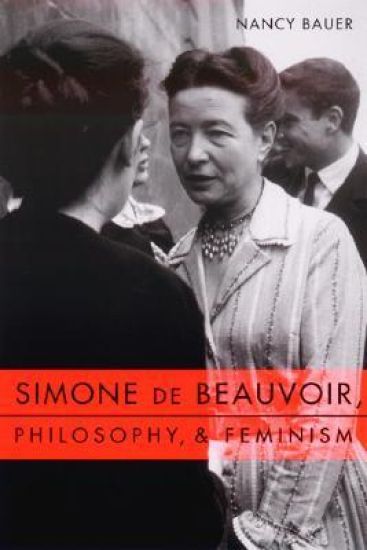
In the introduction to The Second Sex, Simone de Beauvoir notes that "a man never begins by establishing himself as an individual of a certain sex: his being a man poses no problem." Nancy Bauer begins her book by asking: "Then what kind of a problem does being a woman pose?" Bauer's aim is to show that in answering this question The Second Sex dramatizes the extent to which being a woman poses a philosophical problem. This book is a call for philosophers as well as feminists to turn, or return to, The Second Sex. Bauer shows that Beauvoir's magnum opus, written a quarter-century before the development of contemporary feminist philosophy, constitutes a meditation on the relationship between women and philosophy that remains profoundly undervalued. She argues that the extraordinary effect The Second Sex has had on women's lives, then and now, can be traced to Beauvoir's discovery of a new way to philosophize-a way grounded in her identity as a woman. In offering a new interpretation of The Second Sex, Bauer shows how philosophy can be politically productive for women while remaining genuinely philosophical.
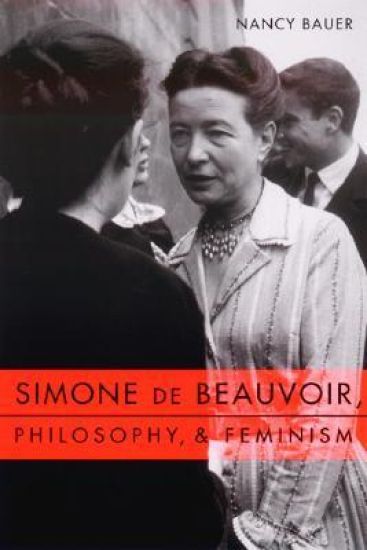
In the introduction to The Second Sex, Simone de Beauvoir notes that "a man never begins by establishing himself as an individual of a certain sex: his being a man poses no problem." Nancy Bauer begins her book by asking: "Then what kind of a problem does being a woman pose?" Bauer's aim is to show that in answering this question The Second Sex dramatizes the extent to which being a woman poses a philosophical problem. This book is a call for philosophers as well as feminists to turn, or return to, The Second Sex. Bauer shows that Beauvoir's magnum opus, written a quarter-century before the development of contemporary feminist philosophy, constitutes a meditation on the relationship between women and philosophy that remains profoundly undervalued. She argues that the extraordinary effect The Second Sex has had on women's lives, then and now, can be traced to Beauvoir's discovery of a new way to philosophize-a way grounded in her identity as a woman. In offering a new interpretation of The Second Sex, Bauer shows how philosophy can be politically productive for women while remaining genuinely philosophical.

Simone De Beauvoir's Political Thinking
University of Illinois Press
2006
nidottu
By exploring the life and work of the influential feminist thinker Simone de Beauvoir, this book shows how each of us lives within political and social structures that we can--and must--play a part in transforming. It argues that Beauvoir’s careful examination of her own existence can also be understood as a dynamic method for political thinking. As the contributors illustrate, Beauvoir's political thinking proceeds from the bottom up, using examples from individual lives as the basis for understanding and transforming our collective existence. For example, she embraced her responsibility as a French citizen as making her complicit in the French war against Algeria. Here, she sees her role as an oppressor. In other contexts, she looks to the lives of individual women, including herself, to understand the dimensions of gender inequality. This volume’s six tightly connected essays home in on the individual’s relationship to community, and how one’s freedom interacts with the freedom of other people. Here, Beauvoir is read as neither a liberal nor a communitarian. The authors focus on her call for individuals to realize their freedom while remaining consistent with ethical obligations to the community. Beauvoir's account of her own life and the lives of others is interpreted as a method to understand individuals in relations to others, and as within structures of personal, material, and political oppression. Beauvoir's political thinking makes it clear that we cannot avoid political action. To do nothing in the face of oppression denies freedom to everyone, including oneself.
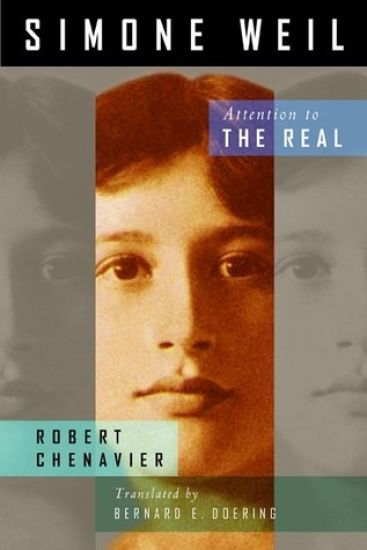
How can we articulate the intimate demand of the spiritual life and the struggle for solidarity? These two issues have often been treated separately; in Simone Weil: Attention to the Real, however, Robert Chenavier explores the work of Simone Weil (1909–1943) and demonstrates how she brought them together in a single movement of thought. "Our time has a unique mission, calling for the creation of a civilization based on the spirituality of work," she wrote near the end of her short life. Her experience as a militant and the call of the divine nurtured in her writing an intense and unwavering defense of this new civilization, backed by her personal sense of intellectual, moral, and political responsibility. Originally published in French in 2009, Simone Weil: Attention to the Real leads the reader through her earliest writing as a perceptive social critic to her work on spirituality and materialism, and finally to her extraordinary concept of decreation, produced before her death at the age of thirty-four. "To an exceptional degree," Chenavier says, "the life of Simone Weil, her personality, her commitment, and her reflection form one single whole." Chenavier argues that Weil's vocation took on a very original form in the history of philosophical thought. He is especially concerned with Weil's philosophical writings on the concept of work, which remain relevant today, and which provide an important key to her thinking throughout her life. Bernard Doering's superb translation brings to English readers Chenavier's succinct account of Simone Weil's life and an illuminating introduction to her philosophical thought.
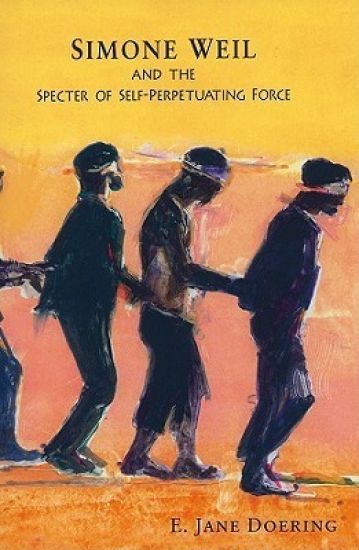
Simone Weil and the Specter of Self-Perpetuating Force
E. Jane Doering
University of Notre Dame Press
2010
nidottu
Simone Weil's philosophical and social thought during her short life (1909-1943) was intimately engaged with the nature of power and force, both human and natural, and the problems inherent in the use of force. Weil argued vehemently for pacifism, then moved toward a guarded acceptance of the use of force under very specific circumstances, in the context of the rise of Nazism. Ultimately she came to a nuanced and unique perspective on force and on the preservation of human dignity, in the aftermath of several profound mystical experiences during the last years of her life. E. Jane Doering carefully examines and analyzes the material in Weil's notebooks and lesser-known essays to illuminate her evolving thought on violence, war, and injustice. In addition, Doering addresses Weil's engagement with the Bhagavad Gita during her final years, a text that reoriented and enlightened Weil's activist and intellectual search for moral value in a violent world. Apart from small excerpts, none of the four volumes of Weil's notebooks, only recently published in French, have been translated into English. Simone Weil and the Specter of Self-Perpetuating Force contains Doering's expert translations of numerous notebook entries. The book will interest Weil scholars, those in French studies, and those who explore interdisciplinary topics in philosophy, religious studies, history, and political science.
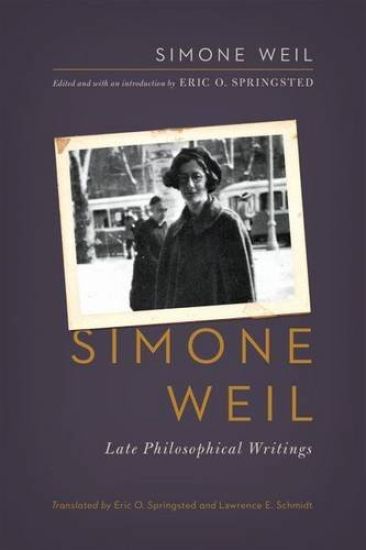
Although trained as a philosopher, Simone Weil (1909–43) contributed to a wide range of subjects, resulting in a rich field of interdisciplinary Weil studies. Yet those coming to her work from such disciplines as sociology, history, political science, religious studies, French studies, and women's studies are often ignorant of or baffled by her philosophical investigations. In Simone Weil: Late Philosophical Writings, Eric O. Springsted presents a unique collection of Weil's writings, one concentrating on her explicitly philosophical thinking. The essays are drawn chiefly from the time Weil spent in Marseille in 1940-42, as well as one written from London; most have been out of print for some time; three appear for the first time; all are newly translated. Beyond making important texts available, this selection provides the context for understanding Weil's thought as a whole. This volume is important not only for those with a general interest in Weil; it also specifically presents Weil as a philosopher, chiefly one interested in questions of the nature of value, moral thought, and the relation of faith and reason. What also appears through this judicious selection is an important confirmation that on many issues respecting the nature of philosophy, Weil, Wittgenstein, and Kierkegaard shared a great deal.

Simone Weil for the Twenty-First Century
Eric O. Springsted
University of Notre Dame Press
2021
sidottu
This in-depth study examines the social, religious, and philosophical thought of Simone Weil. Simone Weil for the Twenty-First Century presents a comprehensive analysis of Weil's interdisciplinary thought, focusing especially on the depth of its challenge to contemporary philosophical and religious studies. In a world where little is seen to have real meaning, Eric O. Springsted presents a critique of the unfocused nature of postmodern philosophy and argues that Weil's thought is more significant than ever in showing how the world in which we live is, in fact, a world of mysteries. Springsted brings into focus the challenges of Weil's original (and sometimes surprising) starting points, such as an Augustinian priority of goodness and love over being and intellect, and the importance of the Crucifixion. Springsted demonstrates how the mystical and spiritual aspects of Weil's writings influence her social thought. For Weil, social and political questions cannot be separated from the supernatural. For her, rather, the world has a sacramental quality, such that life in the world is always a matter of life in God—and life in God, necessarily a way of life in the world. Simone Weil for the Twenty-First Century is not simply a guide or introduction to Simone Weil. Rather, it is above all an argument for the importance of Weil's thought in the contemporary world, showing how she helps us to understand the nature of our belonging to God (sometimes in very strange and unexpected ways), the importance of attention and love as the root of both the love of God and neighbor, the importance of being rooted in culture (and culture's service to the soul in rooting it in the universe), and the need for human beings to understand themselves as communal beings, not as isolated thinkers or willers. It will be essential reading for scholars of Weil, and will also be of interest to philosophers and theologians.
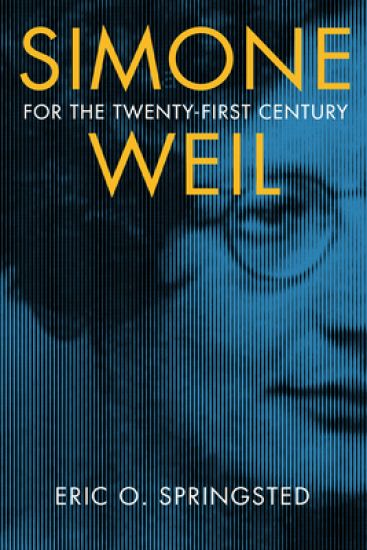
Simone Weil for the Twenty-First Century
Eric O. Springsted
University of Notre Dame Press
2021
nidottu
This in-depth study examines the social, religious, and philosophical thought of Simone Weil. Simone Weil for the Twenty-First Century presents a comprehensive analysis of Weil's interdisciplinary thought, focusing especially on the depth of its challenge to contemporary philosophical and religious studies. In a world where little is seen to have real meaning, Eric O. Springsted presents a critique of the unfocused nature of postmodern philosophy and argues that Weil's thought is more significant than ever in showing how the world in which we live is, in fact, a world of mysteries. Springsted brings into focus the challenges of Weil's original (and sometimes surprising) starting points, such as an Augustinian priority of goodness and love over being and intellect, and the importance of the Crucifixion. Springsted demonstrates how the mystical and spiritual aspects of Weil's writings influence her social thought. For Weil, social and political questions cannot be separated from the supernatural. For her, rather, the world has a sacramental quality, such that life in the world is always a matter of life in God—and life in God, necessarily a way of life in the world. Simone Weil for the Twenty-First Century is not simply a guide or introduction to Simone Weil. Rather, it is above all an argument for the importance of Weil's thought in the contemporary world, showing how she helps us to understand the nature of our belonging to God (sometimes in very strange and unexpected ways), the importance of attention and love as the root of both the love of God and neighbor, the importance of being rooted in culture (and culture's service to the soul in rooting it in the universe), and the need for human beings to understand themselves as communal beings, not as isolated thinkers or willers. It will be essential reading for scholars of Weil, and will also be of interest to philosophers and theologians.
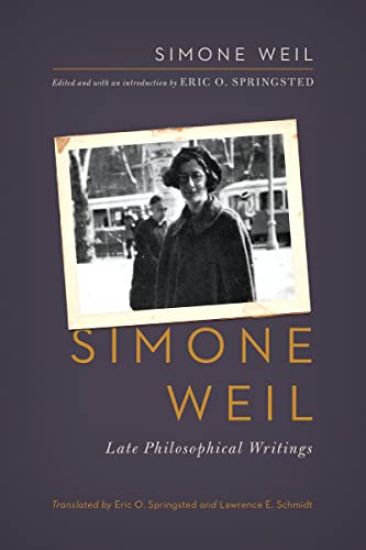
Although trained as a philosopher, Simone Weil (1909–43) contributed to a wide range of subjects, resulting in a rich field of interdisciplinary Weil studies. Yet those coming to her work from such disciplines as sociology, history, political science, religious studies, French studies, and women's studies are often ignorant of or baffled by her philosophical investigations. In Simone Weil: Late Philosophical Writings, Eric O. Springsted presents a unique collection of Weil's writings, one concentrating on her explicitly philosophical thinking. The essays are drawn chiefly from the time Weil spent in Marseille in 1940-42, as well as one written from London; most have been out of print for some time; three appear for the first time; all are newly translated. Beyond making important texts available, this selection provides the context for understanding Weil's thought as a whole. This volume is important not only for those with a general interest in Weil; it also specifically presents Weil as a philosopher, chiefly one interested in questions of the nature of value, moral thought, and the relation of faith and reason. What also appears through this judicious selection is an important confirmation that on many issues respecting the nature of philosophy, Weil, Wittgenstein, and Kierkegaard shared a great deal.

The development of Simone de Beauvoir's notion of self in both her philosophical and autobiographical writings is analyzed in this volume. Two ideas of the self are isolated: the existential notion of the self and the gendered self, which she developed in The Second Sex, and which represents a major departure from existential philosophy. Beginning with a study of her early essays, the author proceeds to discuss Beauvoir's major philosophical works and her autobiographical writings where three personae emerge—the child, the woman in love, and the writer. This analysis highlights the innovative quality of Beauvoir's thought. It also shows that writing an autobiography can be a philosophically inventive enterprise and one in which Beauvoir created her most profound analysis of the self.