Kirjojen hintavertailu. Mukana 11 244 527 kirjaa ja 12 kauppaa.

Kirjahaku

Etsi kirjoja tekijän nimen, kirjan nimen tai ISBN:n perusteella.

1000 tulosta hakusanalla Simone Failla

Simone

Simone

Viet Thanh Nguyen

Astra Publishing House
2024
sidottu
When Simone is awakened by her mom as a wildfire threatens their home, it is the beginning of a life-changing journey. On their way to take shelter in a high school gym, the family passes firefighters from a prison unit battling the fire. Simone’s mom tells her that when she was a girl in Viet Nam, she was forced to evacuate her home after a flood. Joined by other children sheltering in the gym, Simone, a budding artist, encourages everyone to draw as a way to process their situation. After a few days, Simone and her mom are able to return to their home, which is fortunately still standing and her outlook has changed. As Simone begins creating a piece of art with one of her new friends, she realises that even though they are young, they can dream and work together for a more sustainable future. With a poetic, haunting family story by esteemed author Viet Thanh Nguyen and gorgeous art from illustrator Minnie Phan, this powerful tale introduces an unforgettable young heroine who awakens to a new role fighting for her community and for the future of the planet.

Simone

Simone

Kamille Henry

Independently Published
2018
nidottu
Get into the mind of a woman who is out for revenge and will do anything to get it.Simone is the ultimate professional doing her civic duty to rid good wives of their cheating husbands. When she decides to take on a job from an anonymous woman, she soon finds herself wrapped in lives and situations that she wasn't prepared for, and trapped into doing business for a woman with a deadly vendetta.Enter this story of lies, scandal, and manipulation as Simone takes on the journey of her life.
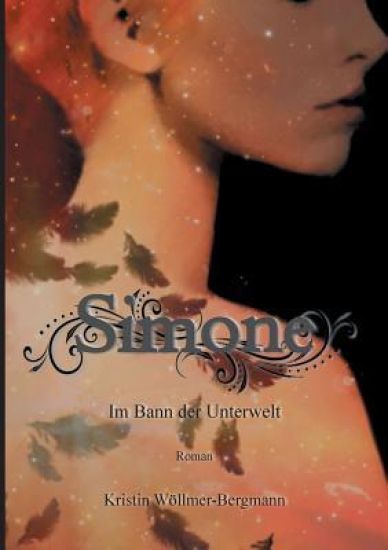
Simone

Simone

Kristin Wöllmer-Bergmann

Books on Demand
2019
pokkari
"Es h ngt alles nur von dir ab, Simone", sagte er ernst und ich wusste, wie Recht er hatte. Wenn ich diejenige, die ich am meisten liebte, retten wollte, musste ich den unbequemen Weg gehen. Doch davor hatte ich kein Angst mehr, denn die Alternative war viel furchterregender. Simones Leben hat sich auf einen Schlag komplett ver ndert: Ihre Schwester Helene hat ihr er ffnet, dass sie die K nigin der H lle und ihr Mann Satan ist. Dem muss Simone auf den Grund gehen und sich ein eigenes Bild machen. Dabei handelt sie nicht ohne Hintergedanken, denn sie hat das deutliche Gef hl, dass da etwas nicht stimmt. Dabei muss sie sich Verlockungen stellen, denen sie kaum widerstehen kann. Pl tzlich zeigt auch der Erzengel Uriel deutlich mehr Interesse an ihr, als gut f r sie ist. Und dann ist da noch dieser Mann... F nfter und letzter Band der Reihe "Im Bann der Unterwelt"
Simone

Simone

Michael Sørensen

BoD - Books on Demand
2024
pokkari
Simone vender hjem til sin barndomsby. Her håber hun på at kunne genfinde den ro og stabilitet, som hun har manglet i sit liv. Hun gemmer dog på en stor hemmelighed, der skal vise sig at forfølge hende. Simone er historien om, hvordan man som menneske kan være tvunget til at navigere mellem sine følelser og sin identitet. Det er samtidig en historie om, hvor svært det kan være at finde mennesker, man kan stole på, og hvor let livet bliver, når man så finder dem. Menneskeskæbner er en serie af noveller, der beskriver en uge i en tilfældig 29-årigs liv. Der er indtil videre planlagt ni noveller i serien, som alle vil blive udgivet i løbet af 2024.
Simone

Simone

Denise Rudberg

Månpocket
2018
pokkari
Simone och Christopher, ensamma mot världen. Visst kändes det så – till en början. Men det som Simone först tolkade som ett charmigt bevis på kärlek blir alltmer ett kontrollerande. Hon undrar om och hur hon ska kunna ta sig ur sitt kvävande förhållande.Som tur är har hon sina vänner. Simone, Disa och Mercedes är Sthlmqueens, ett kompisgäng som hängt ihop i flera år. Med dem är livet mest en fest. Men att tackla både plugg, praktik och pojkvänsproblem blir för mycket, och när Simone får ett dramatiskt besked faller allt.Simone är den andra boken i Sthlmqueens, en gripande och underhållande romanserie om vänskap som består när allt annat i livet rasar.
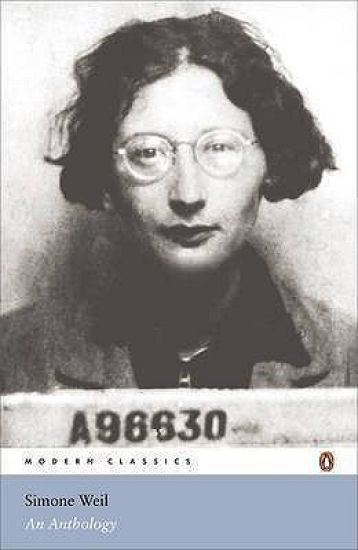
Simone Weil: An Anthology

Simone Weil: An Anthology

Simone Weil

Penguin Classics
2005
pokkari
Simone Weil was one of the foremost thinkers of the twentieth century: a philosopher, theologian, critic, sociologist and political activist. This anthology spans the wide range of her thought, and includes an extract from her best-known work 'The Need for Roots', exploring the ways in which modern society fails the human soul; her thoughts on the misuse of language by those in power; and the essay 'Human Personality', a late, beautiful reflection on the rights and responsibilities of every individual. All are marked by the unique combination of literary eloquence and moral perspicacity that characterised Weil's ideas and inspired a generation of thinkers and writers both in and outside her native France.
Simone de Beauvoir

Simone de Beauvoir

Sandrine Sanos

Oxford University Press Inc
2016
nidottu
Sandrine Sanos's biography of Simone de Beauvoir situates Beauvoir's life and works in historical context, charting how she was enmeshed in most 20h century events and developments from WW2, to Decolonization, the Cold War, Socialist Politics, Feminism--as well as topics and ideas of contemporary relevance (war crimes, human rights, the possibilities and limits of political activism in support of social justice). Building on recent scholarship, this biography focuses especially on the colonial, transnational, and postcolonial influences that shaped Beauvoir and emphasizes her paradoxical and complicated relationship to politics. Written in accessible and lively prose, the book is divided in 7 chapters and includes lesser-known photos of Beauvoir, as well as primary sources of both historical and contemporary interest (on the question of justice, complicity with oppressive regimes, torture, gender politics).
Simone Weil

Simone Weil

A. Rebecca Rozelle-Stone

Oxford University Press
2024
nidottu
This Very Short Introduction provides an overview of the intriguing and provocative life and ideas of twentieth century French philosopher, mystic, and social activist Simone Weil. Weil was not a typical, systematic philosopher. Despite her short life, Weil's philosophy has much to offer us in our times of personal, communal, political, and environmental crises, both in the breath and poignancy of her philosophy, and the topics it covers. In keeping with Weil's spirit to consider and address laypeople, Rozelle-Stone takes readers, including those who have had little or no previous exposure to Weil or philosophy, on an accessible journey of Weil's major philosophical impacts. This exploration consists of seven chapters highlighting: her life and manner of death, both characterized by attention; the influence of ancient Greek ideas on her philosophy; her thoughts on labour and politics; her unique and ecumenical religious inspirations, stemming from Christianity, Hinduism, Buddhism, and Taoism; her ethical philosophy centred on a specific notion of attentiveness; her understanding of beauty as connected to fragility but also eternity; and finally, her legacy and influence on contemporary writers and issues, particularly as she may help us navigate and critically assess the growing convergence between religious fervour, late capitalist and corporate values, and authoritarian politics. ABOUT THE SERIES: The Very Short Introductions series from Oxford University Press contains hundreds of titles in almost every subject area. These pocket-sized books are the perfect way to get ahead in a new subject quickly. Our expert authors combine facts, analysis, perspective, new ideas, and enthusiasm to make interesting and challenging topics highly readable.
Simone de Beauvoir and the Politics of Ambiguity

Simone de Beauvoir and the Politics of Ambiguity

Sonia Kruks

Oxford University Press Inc
2012
nidottu
Simone de Beauvoir and the Politics of Ambiguity is the first full-length study of Beauvoir's political thinking. Best known as the author of The Second Sex, Beauvoir also wrote an array of other political and philosophical texts that are less well known. Together, these constitute an original contribution to political theory and philosophy. The book both locates Beauvoir in her own intellectual and political context and demonstrates her continuing significance. For, in her unique voice, Beauvoir still speaks to a range of pressing theoretical and practical questions concerning politics. These include the political value and dangers of liberal humanism; how oppressed groups become complicit in their own oppression; how social identities are perpetuated; the limits to rationalism and the place of emotions, such as the desire for revenge, in politics. In discussing Beauvoir's reflections on these and other matters the book puts her ideas into conversation with those of many contemporary thinkers, including feminist and race theorists, as well as with historical figures in the liberal, Hegelian, and Marxist traditions. Beauvoir's political thinking emerges from her fundamental insights into the ambiguity of human existence. Combining phenomenological descriptions with structural analyses, she focuses on the tensions of human action as both free and constrained. To be human is to be an embodied self, to be capable of free choice and yet to be constrained and physically vulnerable. It is also to be in the world with many other such selves, whose relationships may be both reciprocal and conflictual or oppressive. Such ambiguities are intrinsic to politics, and they are not subject to resolution. Beauvoir thus shows us that failure is a necessary part of political action, and she insists that we acknowledge this while also assuming responsibility for the outcomes of what we do.
Simone de Beauvoir and the Politics of Ambiguity

Simone de Beauvoir and the Politics of Ambiguity

Sonia Kruks

Oxford University Press Inc
2012
sidottu
Simone de Beauvoir and the Politics of Ambiguity is the first full-length study of Beauvoir's political thinking. Best known as the author of The Second Sex, Beauvoir also wrote an array of other political and philosophical texts that are less well known. Together, these constitute an original contribution to political theory and philosophy. The book both locates Beauvoir in her own intellectual and political context and demonstrates her continuing significance. For, in her unique voice, Beauvoir still speaks to a range of pressing theoretical and practical questions concerning politics. These include the political value and dangers of liberal of humanism; how oppressed groups become complicit in their own oppression; how social identities are perpetuated; the limits to rationalism and the place of emotions, such as the desire for revenge, in politics. In discussing Beauvoir's reflections on these and other matters the book puts her ideas into conversation with those of many contemporary thinkers, including feminist and race theorists, as well as with historical figures in the liberal, Hegelian, and Marxist traditions. Beauvoir's political thinking emerges from her fundamental insights into the ambiguity of human existence. Combining phenomenological descriptions with structural analyses, she focuses on the tensions of human action as both free and constrained. To be human is to be an embodied self, to be capable of free choice and yet to be constrained and physically vulnerable. It is also to be in the world with many other such selves, whose relationships may be both reciprocal and conflictual or oppressive. Such ambiguities are intrinsic to politics, and they are not subject to resolution. Beauvoir thus shows us that failure is a necessary part of political action, and she insists that we acknowledge this while also assuming responsibility for the outcomes of what we do.
Simone Weil's Apologetic Use of Literature

Simone Weil's Apologetic Use of Literature

Marie Cabaud Meaney

Clarendon Press
2007
sidottu
Marie Cabaud Meaney looks at Simone Weil's Christological interpretations of the Sophoclean Antigone and Electra, the Iliad and Aeschylus' Prometheus Bound. Apart from her article on the Iliad, Weil's interpretations are not widely known, probably because they are fragmentary and boldly twist the classics, sometimes even contradicting their literal meaning. Meaney argues that Weil had an apologetic purpose in mind: to the spiritual ills of ideology and fanaticism in World War II she wanted to give a spiritual answer, namely the re-Christianization of Europe to which she (though not baptized herself) wished to contribute in some way. To the intellectual agnostics of her day she intended to show through her interpretations that the texts they cherished so much could only be fully understood in light of Christ; to the Catholics she sought to reveal that Catholicism was much more universal than generally believed, since Greek culture already embodied the Christian spirit - perhaps to a greater extent than the Catholic Church ever had. Despite or perhaps because of this apologetic slant, Weil's readings uncover new layers of these familiar texts: Antigone is a Christological figure, combating Creon's ideology of the State by a folly of love that leads her to a Passion in which she experiences an abandonment similar to that of Christ on the Cross. The Iliad depicts a world as yet unredeemed, but which traces objectively the reign of force to which both oppressors and oppressed are subject. Prometheus Bound becomes the vehicle of her theodicy, in which she shows that suffering only makes sense in light of the Cross. But the pinnacle of the spiritual life is described in Electra which, she believes, reflects a mystical experience - something Weil herself had experienced unexpectedly when 'Christ himself came down and took her' in November 1938. In order to do justice to Weil's readings, Meaney not only traces her apologetic intentions and explains the manner in which she recasts familiar Christian concepts (thereby letting them come alive - something every good apologist should be able to do), but also situates them among standard approaches used by classicists today, thereby showing that her interpretations truly contribute something new.
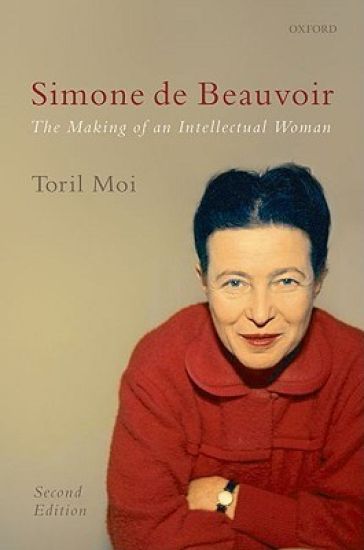
Simone de Beauvoir

Simone de Beauvoir

Toril Moi

Oxford University Press
2008
sidottu
In Simone de Beauvoir: The Making of an Intellectual Woman Toril Moi shows how Simone de Beauvoir became Simone de Beauvoir, the leading feminist thinker and emblematic intellectual woman of the twentieth century. Blending biography with literary criticism, feminist theory, and historical and social analysis, this book provides a completely original analysis of Beauvoir's education and formation as an intellectual. In The Second Sex, Beauvoir shows that we constantly make something of what the world tries to make of us. By reconstructing the social and political world in which Beauvoir became the author of The Second Sex, and by showing how Beauvoir reacted to the pressures of that world, Moi applies Beauvoir's ideas to Beauvoir's own life. Ranging from an investigation of French educational institutions to reflections on the relationship between freedom and flirtation, this book uncovers the conflicts and difficulties of an intellectual woman in the middle of the twentieth century. Through her analysis of Beauvoir's life and work Moi shows how difficult it was - and still is - for women to be taken seriously as intellectuals. Two major chapters on The Second Sex provide a theoretical and a political analysis of that epochal text. The last chapter turns to Beauvoir's love life, her depressions and her fear of ageing. In a major new introduction, Moi discusses Beauvoir's letters to her lovers Jacques-Laurent Bost and Nelson Algren, as well as her recently published student diaries from 1926-27.
Simone de Beauvoir

Simone de Beauvoir

Toril Moi

Oxford University Press
2009
nidottu
In Simone de Beauvoir: The Making of an Intellectual Woman Toril Moi shows how Simone de Beauvoir became Simone de Beauvoir, the leading feminist thinker and emblematic intellectual woman of the twentieth century. Blending biography with literary criticism, feminist theory, and historical and social analysis, this book provides a completely original analysis of Beauvoir's education and formation as an intellectual. In The Second Sex, Beauvoir shows that we constantly make something of what the world tries to make of us. By reconstructing the social and political world in which Beauvoir became the author of The Second Sex, and by showing how Beauvoir reacted to the pressures of that world, Moi applies Beauvoir's ideas to Beauvoir's own life. Ranging from an investigation of French educational institutions to reflections on the relationship between freedom and flirtation, this book uncovers the conflicts and difficulties of an intellectual woman in the middle of the twentieth century. Through her analysis of Beauvoir's life and work Moi shows how difficult it was - and still is - for women to be taken seriously as intellectuals. Two major chapters on The Second Sex provide a theoretical and a political analysis of that epochal text. The last chapter turns to Beauvoir's love life, her depressions and her fear of ageing. In a major new introduction, Moi discusses Beauvoir's letters to her lovers Jacques-Laurent Bost and Nelson Algren, as well as her recently published student diaries from 1926/27.
Simone de Beauvoir, Philosophy, and Feminism

Simone de Beauvoir, Philosophy, and Feminism

Nancy Bauer

Columbia University Press
2001
sidottu
In the introduction to The Second Sex, Simone de Beauvoir notes that "a man never begins by establishing himself as an individual of a certain sex: his being a man poses no problem." Nancy Bauer begins her book by asking: "Then what kind of a problem does being a woman pose?" Bauer's aim is to show that in answering this question The Second Sex dramatizes the extent to which being a woman poses a philosophical problem. This book is a call for philosophers as well as feminists to turn, or return to, The Second Sex. Bauer shows that Beauvoir's magnum opus, written a quarter-century before the development of contemporary feminist philosophy, constitutes a meditation on the relationship between women and philosophy that remains profoundly undervalued. She argues that the extraordinary effect The Second Sex has had on women's lives, then and now, can be traced to Beauvoir's discovery of a new way to philosophize-a way grounded in her identity as a woman. In offering a new interpretation of The Second Sex, Bauer shows how philosophy can be politically productive for women while remaining genuinely philosophical.
Simone de Beauvoir, Philosophy, and Feminism

Simone de Beauvoir, Philosophy, and Feminism

Nancy Bauer

Columbia University Press
2001
pokkari
In the introduction to The Second Sex, Simone de Beauvoir notes that "a man never begins by establishing himself as an individual of a certain sex: his being a man poses no problem." Nancy Bauer begins her book by asking: "Then what kind of a problem does being a woman pose?" Bauer's aim is to show that in answering this question The Second Sex dramatizes the extent to which being a woman poses a philosophical problem. This book is a call for philosophers as well as feminists to turn, or return to, The Second Sex. Bauer shows that Beauvoir's magnum opus, written a quarter-century before the development of contemporary feminist philosophy, constitutes a meditation on the relationship between women and philosophy that remains profoundly undervalued. She argues that the extraordinary effect The Second Sex has had on women's lives, then and now, can be traced to Beauvoir's discovery of a new way to philosophize-a way grounded in her identity as a woman. In offering a new interpretation of The Second Sex, Bauer shows how philosophy can be politically productive for women while remaining genuinely philosophical.