Kirjojen hintavertailu. Mukana 11 244 527 kirjaa ja 12 kauppaa.

Kirjahaku

Etsi kirjoja tekijän nimen, kirjan nimen tai ISBN:n perusteella.

824 tulosta hakusanalla Sivakumar R D

Mastering Practical C Programming Techniques

Mastering Practical C Programming Techniques

Sivakumar R. D.

978-93-6128-231-7
2024
nidottu
I would like to invite you to our delightfully informative session on ""Mastering Practical C Programming Techniques". This book is made with the belief that you don't need a complicated textbook with theoretical concepts to start programming in C language, from zero level up. Whether you are just embarking on your journey into the realm of programming or you are an expert developer wanting to improve your C programming skills, this book is created to be your guide, offering the practical examples needed to develop efficiently and well-organized C programs. Why C?The C programming language, has undoubtedly earned a well-deserved place in the history of programming as one of the most vital and as a result the most used programming languages. This sharpness, efficiency, and proximity-to-the machine characteristics make it fit for system programming included in embedded systems and many applications. Applying of C language to any program can be made well if the several components of that language are understood fully, and with the aim of this book it is to accomplish a full understanding of C language in a way that it can also be enjoyable. What This Book Offers ""Mastering Practical C Programming Techniques" does it very practically by moving on from one practical program to the next, making you a better programmer each time. Every strategy in our programs are supported by in depth instructional material which covers three areas saliently, key concepts, appropriate methods, and what not to do. The examples segment comprise different case studies from the creation of a basic console program up to more complex projects from which you will gain hands-on experience and immediately use it in your own projects. Key Features - Progressive Learning: The organized curriculum is structured in a logical order, first presenting new concepts and then gradually increasing the complexity and adding to the previous items. - Clear Explanations: Every program will have a detailed explanation with it so you not only will know how to do it right but also the concept behind the lines of code. - Practical Tips: As we get through the book, you will encounter various tips, hints, and examples that will improve your coding practices and make your code cleaner and more efficient. - Challenges: By the way, at the end of every chapter, we give you some challenges as well to reinforce your learning. This is aim of the exercises, they are intended for critical thinking and practical application of the principles exposed. Who This Book Is For This book is therefore meant for the general public, including the newbies as well as programmers who want to add C language to their programming skills. Either as a student, an amateur or a professional developer, with the illustrative character of every chapter, you are sure to find something of interest. Programming is a blend of art and science and the more you practice, you will be able to master C operations. Hence, go along on this path with us and let's see what practical C programming scenarios are waiting for us. Happy Coding
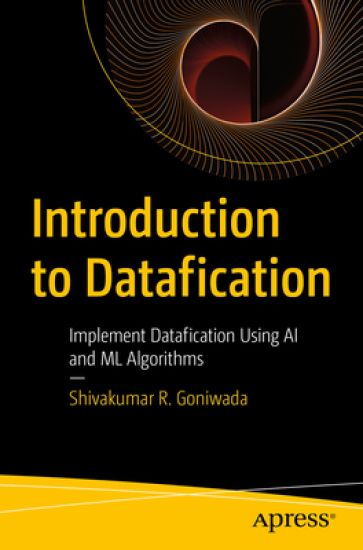
Introduction to Datafication

Introduction to Datafication

Shivakumar R. Goniwada

APRESS
2023
nidottu
This book presents the process and framework you need to transform aspects of our world into data that can be collected, analyzed, and used to make decisions. You will understand the technologies used to gather and process data from many sources, and you will learn how to analyze data with AI and ML models.Datafication is becoming increasingly prevalent in many areas of our lives, from business to education and healthcare. It has the potential to improve decision-making by providing insights into patterns, trends, and correlation between seemingly unconnected pieces of data. This book explains the evolution, principles, and patterns of datafication used in our day-to-day activities. It covers how to collect data from a variety of sources, using technologies such as edge, streaming techniques, REST, and frameworks, as well as data cleansing and data lineage. A data analysis framework is provided to guide you in designing and developing AI and ML projects, including the details of sentiment and behavioral analytics.Introduction to Datafication teaches you how to engineer AI and ML projects by using various methodologies, covers the security mechanisms to be applied for datafication, and shows you how to govern the datafication process with a well-defined governance framework.What You Will LearnUnderstand the principles and patterns to be adopted for dataficationGain techniques for sourcing and mining data, and for sharing data with a data pipelineLeverage the AI and ML algorithms most suitable for dataficationUnderstand the data analysis framework used in every AI and ML projectMaster the details of sentiment and behavioral analytics through practical examplesUtilize development methodologies for datafication engineering and the related security and governance frameworkWho This Book Is ForStudents, data scientists, data analysts, and AI and ML engineers
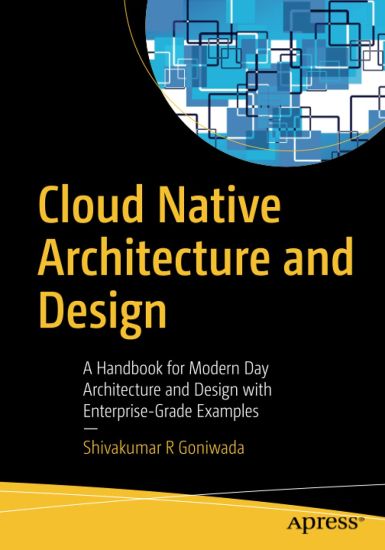
Cloud Native Architecture and Design

Cloud Native Architecture and Design

Shivakumar R Goniwada

APRESS
2021
nidottu
Build enterprise-grade cloud-native systems and learn all about cloud-native architecture and design. This book provides extensive in-depth details of patterns, tools, techniques, and processes with plenty of examples. Cloud Native Architecture and Design begins by explaining the fundamentals of cloud-native architecture and services, what cloud principles and patterns to use, and details of designing a cloud-native element. The book progresses to cover the details of how IT systems can modernize to embrace cloud-native architecture, and also provides details of various enterprise assessment techniques to decide what systems can move and cannot move into the cloud. Architecting and designing a cloud-native system isn’t possible without modernized software engineering principles, the culture of automation, and the culture of innovation. As such, this book covers the details of cloud-native software engineering methodologies, and process, and how to adopt an automated governance approach across enterprises with the adoption of artificial intelligence. Finally, you need your cloud-native applications to run efficiently; this section covers the details of containerization, orchestration, and virtualization in the public, private, and hybrid clouds. After reading this book, you will have familiarity with the many concepts related to cloud-native and understand how to design and develop a successful cloud-native application. Technologies and practices may change over time, but the book lays a strong foundation on which you can build successful cloud-native systems. What You Will Learn Discover cloud-native principles and patterns, and how you can leverage them to solve your business problems Gain the techniques and concepts you need to adapt to design a cloud-native application Use assessment techniques and tools for IT modernization Apply cloud-native engineering principles to the culture of automation and culture of innovation Harness the techniques and tools to run your cloud-native applications and automate infrastructureOperate your cloud-native applications by using AI techniques and zero operation techniques Who This Book Is For Software architects, leaders, developers, engineers, project managers, and students.