This book comprises the fabrication of nanocomposites synthesized by a simple hydrothermal method and characterized by UV-visible, DRS, SEM, and TEM analysis. The photocatalytic activity of the synthesized nanocomposites was evaluated for the degradation of phenol. The photo-induced electron hole pair recombination retards the photocatalytic reaction, which was confirmed by the PL analysis. The improved photocatalytic activities were attributed to the formation of a heterojunction between Ag and SnO2. The photocatalytic mechanism was found through a trapping experiment. The stability of the photocatalyst was evaluated by a reusability experiment. Moreover, both hydroxyl radicals and superoxide radical anions were the key active species in the photodegradation of organic contaminants under visible light illumination.
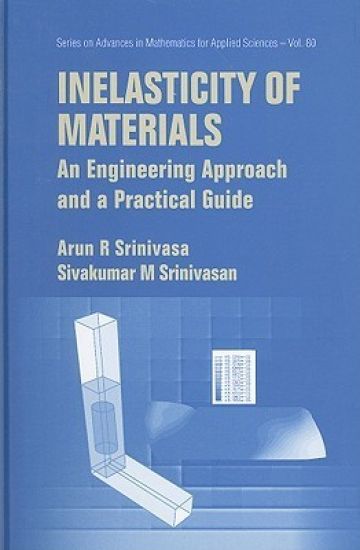
With the advent of a host of new materials ranging from shape memory alloys to biomaterials to multiphase alloys, acquiring the capacity to model inelastic behavior and to choose the right model in a commercial analysis software has become a pressing need for practicing engineers. Even with the traditional materials, there is a continued emphasis on optimizing and extending their full range of capability in the applications. This textbook builds upon the existing knowledge of elasticity and thermodynamics, and allows the reader to gain confidence in extending one's skills in understanding and analyzing problems in inelasticity. By reading this textbook and working through the assigned exercises, the reader will gain a level of comfort and competence in developing and using inelasticity models. Thus, the book serves as a valuable book for practicing engineers and senior-level undergraduate/graduate-level students in the mechanical, civil, aeronautical, metallurgical and other disciplines.The book is written in three parts. Part 1 is primarily focused on lumped parameter models and simple structural elements such as trusses and beams. This is suitable for an advanced undergraduate class with just a strength of materials background. Part II is focused on small deformation multi-dimensional inelasticity and is suitable for a beginning graduate class. Sufficient material is included on how to numerically implement an inelastic model and solve either using a simple stress function type of approach or using commercial software. Case studies are included as examples. There is also an extensive discussion of thermodynamics in the context of small deformations. Part III focuses on more advanced situations such as finite deformation inelasticity, thermodynamical ideas and crystal plasticity. More advanced case studies are included in this part.• This textbook takes a new, task- or scenario-based approach to teaching and learning inelasticity. The book is written in an active learning style that appeals to engineers and students who wish to design or analyze structures and components that are subject to inelasticity.• The book incorporates thermodynamical considerations into the modeling right from an early stage. Extensive discussions are provided throughout the book on the thermodynamical underpinnings of the models.• This textbook is the first to make extensive use of MATLAB to implement many inelasticity models. It includes the use of concepts such as Airy stress functions to solve plane problems for inelastic materials. The MATLAB codes are listed in the appendix for one to modify with their own models and requirements.• Step-by-step procedures for formulations and calculations are provided for the reader to readily adapt to the inelastic problems that he or she attempts to solve.• A large number of problems, exercises and projects for one to teach or learn from are included. These can be assigned as homework, in-class exercises or projects.• The book is written in a modular fashion, which provides adequate flexibility for adaptation in classes that cater to different audiences such as senior-level students, graduate students, research scholars, and practicing engineers.
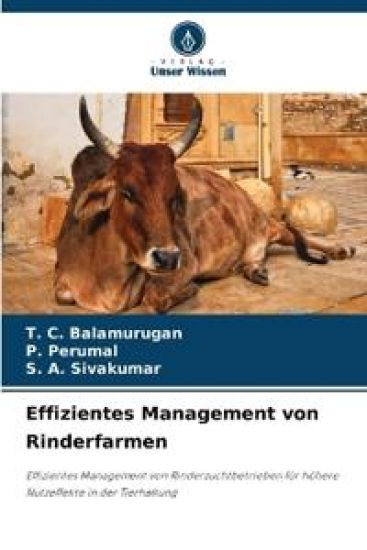
This book provides a comprehensive overview of cattle farm management practices. It addresses key topics such as general management, housing, nutrition, health, and reproduction. It also covers various infectious and metabolic diseases, as well as pre-, peri-, and post-partum disorders. The book explains different nutritional resources and their efficient utilization, alongside guidance on selecting breeding cattle. Additionally, it explores assisted reproductive techniques in dairy husbandry. Routine farm management practices aimed at improving dairy farming outcomes are also discussed. This resource will be invaluable for scientists in cattle production and reproduction, progressive dairy farmers, breeders, and those involved in cattle rearing, helping to improve the socio-economic conditions of cattle owners by enhancing production and reproduction performance in bovine species.
A fresh batch of crosswords is brewing These bite-size 10x10 crosswords offer a lot to chew on. With wide-open grids and twisty, tricky clues, they offer a big challenge in a small, portable package.
Got a newborn in the house? No matter how adorable they may be, when babies start crying just when you're falling asleep or right in the middle of the night or maybe in the wee hours of the morning, you just can't help the frustration and anger at the situation from arising, even just in your head. How can you work the next day?
Selecting the right supervisor is one of the most impactful decisions a student can make in their academic journey. The ideal supervisor is more than just an expert in their field; they are a mentor, guide, and sometimes even a source of inspiration. By carefully evaluating the key attributes discussed in this book, students can choose a supervisor who will provide not only academic support but also professional mentorship and personal encouragement. Let's summarize the essential qualities to seek in a research supervisor and reflect on the lasting impact that a great mentor can have on a student's life.