Kirjojen hintavertailu. Mukana 12 595 353 kirjaa ja 12 kauppaa.

Kirjahaku

Etsi kirjoja tekijän nimen, kirjan nimen tai ISBN:n perusteella.

1000 tulosta hakusanalla Solomon Lewis D.

The Privatization of Space Exploration

The Privatization of Space Exploration

Lewis D. Solomon

Routledge
2017
sidottu
Space was at the center of America's imagination in the 1960s. President John F. Kennedy's visionary statement captured the mood of the day: "We choose to go to the moon in this decade and do the other things, not because they are easy, but because they are hard." The Apollo mission's success in July 1969 made almost anything seem possible, but the Cold War made space flight the province of governmental agencies in the United States. When the Apollo program ended in 1972, space lost its hold on the public interest, as the great achievements wound down.Entrepreneurs are beginning to pick up the slack looking for safer, more reliable, and more cost effective ways of exploring space. Entrepreneurial activity may make create a renaissance in human spaceflight. The private sector can energize the quest for space exploration and shape the race for the final frontier. Space entrepreneurs and private sector firms are making significant innovations in space travel. They have plans for future tourism in space and safer shuttles. Solomon details current US and international laws dealing with space use, settlement, and exploration, and offers policy recommendations to facilitate privatization.As private enterprise takes hold, it threatens to change the space landscape forever. Individuals are designing spacecraft, start-up companies are testing prototypes, and reservations are being taken for suborbital space flights. With for-profit enterprises carving out a new realm, it is entirely possible that space will one day be a sea of hotels and/or a repository of resources for big business. It is important that regulations are in place for this eventuality. These new developments have great importance, huge implications, and urgency for everyone.
Tech Billionaires

Tech Billionaires

Lewis D. Solomon

AldineTransaction
2009
sidottu
In the first decade of the twenty-first century a new wave of thinking has emerged from tech billionaires that may shape the way private capital gets invested to tackle social problems. These entrepreneurs broke the business mold in the 1980s and 1990s and are now trying to break the traditional pattern of philanthropy pioneered by Andrew Carnegie and John D. Rockefeller, Sr. some one hundred years ago. Combining billions of dollars of their personal capital with new ideas, cutting-edge businesslike techniques, media and marketing savvy, the tech benefactors profiled in this book are attacking some of the globe's most intractable societal problems. In trying to make a difference in the world, these new philanthropists, dubbed "philanthrocapitalists" by rhe author seek to break down traditional barriers dividing business, charity, and government.As a result of the rapid wealth creation in recent years, the world now boasts 1,125 billionaires, many of whom are self-made, according to the Forbes' 2008 list, including Bill Gates, Pierre Omidyar, Jeffrey Skoll, Stepehn Case, Sergey Brin, Larry Page, and more. Their massive wealth has created new philanthropic challenges. Imaginative giving by the new billionaires is beginning to transform philanthropy in terms of timing, involvement, strategy, and tactics. How this development impacts society as a whole is the subject of Lewis Solomon's book.As the author notes, the traditional categories of business and philanthropy may no longer serve to meet the challenge of social problems. In the twenty-first century the tools and resources used to solve societal problems will be far more varied and mixed than previously. We now see interesting partnerships and new ways of thinking. The divide between profit and social good will narrow. If successful in using their money in innovative ways, government or for-profit business could scale up the catalytic efforts of the new philanthropists. This volume is a proactive, innovative guide to a new era, not just a new technique of monetary support.
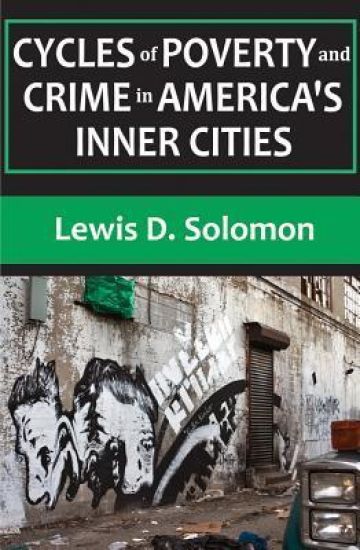
Cycles of Poverty and Crime in America's Inner Cities
Despite the best hopes of the past half century, black urban pathologies persist in America. The inner cities remain concentrations of the uneducated, unemployed, underemployed, and unemployable. Many fail to stay in school and others choose lives of drugs, violence, and crime. Most do not marry, leading to single-parent households and children without a father figure. The cycle repeats itself generation after generation.It is easy to argue that nothing works, given the policy failures of the past. For Lewis D. Solomon, fatalism is not acceptable. A complex and interrelated web of issues plague inner-city black males: joblessness; the failure of public education; crime, mass incarceration, and drugs; the collapse of married, two-parent families; and negative cultural messages. Rather than abandon the black urban underclass, Solomon presents strategies and programs to rebuild lives and revitalize America's inner cities. These approaches are neither government oriented nor dependent on federal intervention, and they are not futuristic.Focusing on rehabilitative efforts, Solomon describes workforce development, prisoner reentry, and the role of nonprofit organizations. Solomon's strategies focus on the need to improve the quality of America's workforce through building human capital at the socioeconomic bottom. The goal is to enable more people to fend for themselves, thereby weaning them from dependency on public sector handouts. Solomon shows a path forward for inner-city black males.
The Privatization of Space Exploration

The Privatization of Space Exploration

Lewis D. Solomon

AldineTransaction
2011
nidottu
Space was at the center of America's imagination in the 1960s. President John F. Kennedy's visionary statement captured the mood of the day: "We choose to go to the moon in this decade and do the other things, not because they are easy, but because they are hard." The Apollo mission's success in July 1969 made almost anything seem possible, but the Cold War made space flight the province of governmental agencies in the United States. When the Apollo program ended in 1972, space lost its hold on the public interest, as the great achievements wound down.Entrepreneurs are beginning to pick up the slack—looking for safer, more reliable, and more cost effective ways of exploring space. Entrepreneurial activity may make create a renaissance in human spaceflight. The private sector can energize the quest for space exploration and shape the race for the final frontier. Space entrepreneurs and private sector firms are making significant innovations in space travel. They have plans for future tourism in space and safer shuttles. Solomon details current US and international laws dealing with space use, settlement, and exploration, and offers policy recommendations to facilitate privatization.As private enterprise takes hold, it threatens to change the space landscape forever. Individuals are designing spacecraft, start-up companies are testing prototypes, and reservations are being taken for suborbital space flights. With for-profit enterprises carving out a new realm, it is entirely possible that space will one day be a sea of hotels and/or a repository of resources for big business. It is important that regulations are in place for this eventuality. These new developments have great importance, huge implications, and urgency for everyone.
America's Water and Wastewater Crisis

America's Water and Wastewater Crisis

Lewis D. Solomon

AldineTransaction
2012
nidottu
This book examines the role of private firms in the American water and wastewater industry. As more water infrastructure shifts from public- to private-sector control, vendors, consultants, and facilities are taking on more importance. Lewis D. Solomon presents an historical overview of water supply and treatment needs and the role of the government, including how water policy has been crafted. He argues that water scarcity is becoming a problem due to groundwater depletion, contamination, and patterns of consumption. He examines the impact of climate change on water availability and quality considering voluntary conservation programs and mandatory restrictions for water use.Solomon points to how for-profit firms can use technology to increase water supply. He describes what privatization would look like in practice and reviews evidence from two case studies. Solomon proposes privatization as a viable response to America's water crisis that can address both scarcity and capital problems.America's Water and Wastewater Crisis presents a careful examination of how the water industry has operated in the United States in the past and how it may work as we move into the future. This book is invaluable to environmental specialists, businessmen, and government officials.
Detroit

Detroit

Lewis D. Solomon

AldineTransaction
2013
sidottu
As America's most dysfunctional big city, Detroit faces urban decay, population losses, fractured neighborhoods with impoverished households, an uneducated, unskilled workforce, too few jobs, a shrinking tax base, budgetary shortfalls, and inadequate public schools. Looking to the city's future, Lewis D. Solomon focuses on pathways to revitalizing Detroit, while offering a cautiously optimistic viewpoint.Solomon urges an economic development strategy, one anchored in Detroit balancing its municipal and public school district's budgets, improving the academic performance of its public schools, rebuilding its tax base, and looking to the private sector to create jobs. He advocates an overlapping, tripartite political economy, one that builds on the foundation of an appropriately sized public sector and a for-profit private sector, with the latter fueling economic growth. Although he acknowledges that Detroit faces a long road to implementation, Solomon sketches a vision of a revitalized economic sector based on two key assets: vacant land and an unskilled labor force.The book is divided into four distinct parts. The first provides background and context, with a brief overview of the city's numerous challenges. The second examines Detroit's immediate efforts to overcome its fiscal crisis. It proposes ways Detroit can be put on the path to financial stability and sustainability. The third considers how Detroit can implement a new approach to job creation, one focused on the for-profit private sector, not the public sector. In the fourth and final part, Solomon argues that residents should pursue a strategy based on the actions of individuals and community groups rather than looking to large-scale projects.
Power Keys Workbook

Power Keys Workbook

John Lewis Solomon

Createspace Independent Publishing Platform
2014
nidottu
Power Keys Workbook is a tool that can be a compliment to Power Keys the book as you read the text or it can stand alone and still be a vital component to expanding your mind. It does this by allowing you to mentally and objectively spar with seemingly personal limitations and unravel what may be obstacles in the way of your personal success through power questions and power steps. The power questions open up your logic via assisting you in viewing angles that may have been blocked by freelance emotions or limiting beliefs and choices at that time. Presenting you with a freedom from guilt and personal browbeating with a "get out of past mistakes jail, free card", that simply affirms, "if you had known better you could have done better." The power steps are the motivating hybrid personal trainers. They combine thought and activity to produce thoughtivity which is the intertwining of philosophy and physiology. This allows you to be total engaged as you are empowered to do something about your negative cycles, seemingly helpless situations, or as some would call it, rotten luck. You now can or should afford the time and space to reason with past or present events and lease for yourself a more powerful and positive conceptual future with the POWER KEYS WORKBOOK.
Wisdom Speaks Vol.1

Wisdom Speaks Vol.1

John Lewis Solomon

Createspace Independent Publishing Platform
2023
pokkari
This work serves as my proverbial experience through life, spirituality, and academia to form a concise inspirational picture of reflection, introspection, and inspection of a life well lived. My book explores and expands on a faith-based concept of wisdom as providing direction for success in various aspects of living and being. I am no expert on life but as a behavior therapist and believer, I know the importance of individuals reaching milestones in life and becoming a better version of themselves. In the spirit of King Solomon, I asked God for wisdom as wisdom is the principal thing, and with all your getting, we are admonished to also get understanding. Wisdom speaks to us in various ways, may you receive wisdom and understand it as it speaks to your life.
An Educator’s Guide to Assessing Threats in Student Writing

An Educator’s Guide to Assessing Threats in Student Writing

Brian Van Brunt; W. Scott Lewis; Jeffrey H. Solomon

Routledge
2020
sidottu
Based on research from the threat-assessment community, this important resource addresses the challenge of assessing concerning online communication, written narratives, and artistic works at schools, colleges, and universities. Drawing from the collective fields of law enforcement, law, and psychology, the authors expand on evidence-based practices to help student affairs staff and K-12 educators best assess the validity of these communications and develop intervention and management plans. Concepts are supported through numerous examples of social media posts, written fiction work, emails and examples from past attacks, as well as averted plans. Appropriate for the classroom, Behavioral Intervention Teams, frontline teaching staff and administrators, this new resource will ensure an evidence-based approach to early assessment and intervention.
An Educator’s Guide to Assessing Threats in Student Writing

An Educator’s Guide to Assessing Threats in Student Writing

Brian Van Brunt; W. Scott Lewis; Jeffrey H. Solomon

Routledge
2020
nidottu
Based on research from the threat-assessment community, this important resource addresses the challenge of assessing concerning online communication, written narratives, and artistic works at schools, colleges, and universities. Drawing from the collective fields of law enforcement, law, and psychology, the authors expand on evidence-based practices to help student affairs staff and K-12 educators best assess the validity of these communications and develop intervention and management plans. Concepts are supported through numerous examples of social media posts, written fiction work, emails and examples from past attacks, as well as averted plans. Appropriate for the classroom, Behavioral Intervention Teams, frontline teaching staff and administrators, this new resource will ensure an evidence-based approach to early assessment and intervention.
Lost and Found In Spain

Lost and Found In Spain

Susan Lewis Solomont

Disruption Books
2019
pokkari
When her husband was appointed by President Barack Obama to be U.S. Ambassador to Spain and Andorra, Susan Solomont uprooted herself. She left her career, her friends and family, and a life she loved to join her husband for a three-and-a-half-year tour overseas. Part memoir and part travelogue, Solomont learns the rules of a diplomatic household; goes on a culinary adventure with some of Spain’s greatest chefs; finds her place in the Madrid Jewish community; and discovers her own voice to create new meaning in her role as a spouse, a community member, and a 21st century woman.
The Last Silver Bullet?

The Last Silver Bullet?

Lewis C. Solmon; R. Chirra Kalyani

Information Age Publishing
2006
nidottu
Originally this book was meant only to recommend a way to pay for placing modern technology into all of our country's public schools. As we began to formulate that financing plan, however, we realized the task was not as straightforward as we had thought. We were struck by the vehement opposition to our basic premise-the importance of using technology in education-voiced by most relevant constituencies: educators, taxpayers, and especially many businesses.
From the Campus

From the Campus

Sol Cohen; Lewis C. Solmon

Praeger Publishers Inc
1989
sidottu
This important new book assembles internationally prominent school-of-education faculty and researchers to provide valuable perspectives on the school reform or excellence movement. From the Campus addresses timely issues in education in a scholarly yet easy-to-read style. The contributors represent a wide variety of disciplines including comparative and international education, history, sociology, political science, curriculum theory, testing and evaluation, school administration, special education and more. They confront the most controversial issues in education of our time; equity and excellence, at-risk children, the education of language-minority students, the governance of education, parental choice, and the importance of home, family, and elementary and preschool education.This book broadens the scope of the debate over school reform to include concerns that the current enthusiasm for excellence will erode earlier gains for equality, and that the reform movement is not paying enough attention to at-risk and disadvantaged children. The contributors examine the need for radical restructuring of schools in order to combine excellence with equality. From the Campus offers insight, values, and pedagogical expertise from education scholars enabling the reader to be well-informed in the school reform debate. Parents, school board members, policy makers, school administrators, teachers, and education students will find From the Campus a source of stimulating ideas as well as a valuable resource.
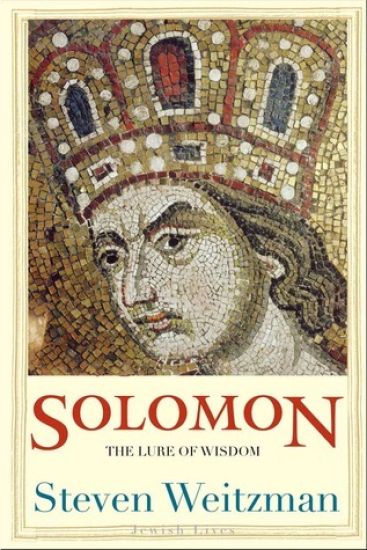
Solomon

Solomon

Steven Weitzman

Yale University Press
2011
sidottu
From the prizewinning Jewish Lives series, an intriguing and unconventional biography about one of the Bible's most elusive figures Tradition has it that King Solomon knew everything there was to know—the mysteries of nature, of love, of God himself—but what do we know of him? Esteemed biblical scholar Steven Weitzman reintroduces readers to Solomon's story and its surprising influence in shaping Western culture, and he also examines what Solomon's life, wisdom, and writings have come to mean for Jews, Christians, and Muslims over the past two thousand years.Weitzman's Solomon is populated by a colorful cast of ambitious characters—Byzantine emperors, explorers, rabbis, saints, scientists, poets, archaeologists, trial judges, reggae singers, and moviemakers among them—whose common goal is to unearth the truth about Solomon's life and wisdom. Filled with the Solomonic texts of the Bible, along with lesser–known magical texts and other writings, this book challenges both religious and secular assumptions. Even as it seeks to tell the story of ancient Israel's greatest ruler, this insightful book is also a meditation on the Solomonic desire to know all of life's secrets, and on the role of this desire in world history.About Jewish Lives: Jewish Lives is a prizewinning series of interpretative biography designed to explore the many facets of Jewish identity. Individual volumes illuminate the imprint of Jewish figures upon literature, religion, philosophy, politics, cultural and economic life, and the arts and sciences. Subjects are paired with authors to elicit lively, deeply informed books that explore the range and depth of the Jewish experience from antiquity to the present. In 2014, the Jewish Book Council named Jewish Lives the winner of its Jewish Book of the Year Award, the first series ever to receive this award.More praise for Jewish Lives: "Excellent." –New York Times "Exemplary." –Wall Street Journal "Distinguished." –New Yorker "Superb." –The Guardian