Kirjojen hintavertailu. Mukana 12 356 339 kirjaa ja 12 kauppaa.

Kirjahaku

Etsi kirjoja tekijän nimen, kirjan nimen tai ISBN:n perusteella.

1000 tulosta hakusanalla Sondra Ray; Markus Ray

Sondra Perry: A Terrible Thing

Sondra Perry: A Terrible Thing

Museum of Contemporary Art Cleveland; Will Brown; Michael Aberman

Hatje Cantz
2022
nidottu
What turns a random space into a place? What inscribes history into it, or lends it significance? These questions occupy the installation artist Sondra Perry in her current piece, A Terrible Thing, for the Museum of Contemporary Art in Cleveland. On Euclid Street in the heart of Cleveland, Perry carries out a kind of archaeological study of the street’s history using video, pictures found online, and digital methods of representation. In doing so, she relates the changing infrastructure of race representation on the street and its gender-political effect in everyday use to each other in order to negotiate issues of identity—of a city, a society, and of individuals. This work became a prism of times and perspectives that can now be imagined with the help of this publication.
Boom! Comics by Sondra: A What Happens Next Comic Book for Budding Illustrators and Story Tellers
Grab This Deal For The Comics Artist In Your Life For Less Than $10See that girl always doodling and dreaming up stories and plots? She's gonna LOVE the What Happens Next Comic Book For Budding Artists edition, created especially for young artists between 9 and 14 years of age.Bokkaku Dojinshi has created this book as a 6 by 9 inch, perfect pocket book form. Plenty of different templates to explore as well as loads of room to keep track of plot ideas.There is even space for special expression studies of the main characters so the budding artist hits the right emotion in her images every single time.This book is perfect for: mangagraphic novelsSunday funniesanimefan fictionParents and teachers love What Happens Next Comics series for these reasons: helps speech developmentincreases literacydevelops a sense of sequencecreates confidencedevelops an appreciation for artboots creativityOnce you get this book, notice how handy it is - perfect pocket book size means no bulky bags on summer trips or lazy afternoons under a willow tree. All you need is your pencil and ink pen Can't wait to see what you make of your And then... comic book
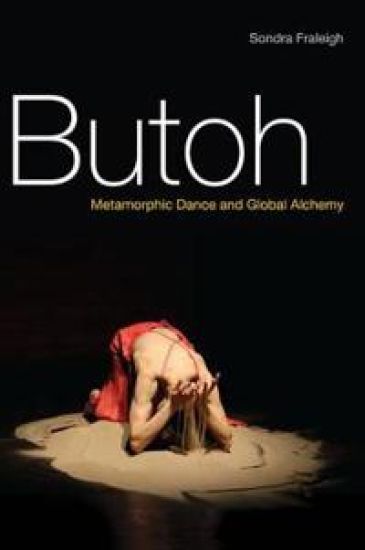
Butoh

Butoh

Sondra Fraleigh

University of Illinois Press
2010
sidottu
Both a refraction of the bombings of Hiroshima and Nagasaki and a protest against Western values, butoh is a form of Japanese dance theater that emerged in the aftermath of World War II. Sondra Fraleigh chronicles the growth of this provocative art form from its mid-century founding under a sign of darkness to its assimilation in the twenty-first century as a poignant performance medium with philosophical and political implications. Through highly descriptive, thoughtful, and emotional prose, Fraleigh traces the transformative alchemy of this metaphoric dance form by studying the international movement inspired by its aesthetic mixtures. While butoh has retained a special identity related to its Japanese background, it also has blossomed into a borderless art with a tolerant and inclusive morphology gaining prominence in a borderless century. Employing intellectual and aesthetic perspectives to reveal the origins, major figures, and international development of the dance, Fraleigh documents the range and variety of butoh artists around the world with first-hand knowledge of butoh performances from 1973 to 2008. Her definitions of butoh's morphology, alchemy, and philosophy set a theoretical framework for poetic and engaging articulations of twenty butoh performances in Japan, Europe, India, and the West. With a blend of scholarly research and direct experience, she also signifies the unfinished nature of butoh and emphasizes its capacity to effect spiritual transformation and bridge cultural differences.
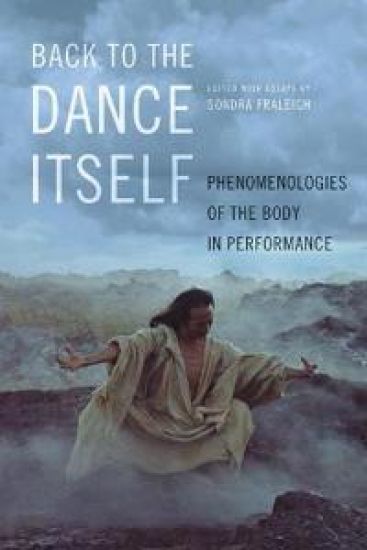
Back to the Dance Itself

Back to the Dance Itself

Sondra Horton Fraleigh

University of Illinois Press
2018
sidottu
In Back to the Dance Itself, Sondra Fraleigh edits essays that illuminate how scholars apply a range of phenomenologies to explore questions of dance and the world; performing life and language; body and place; and self-knowing in performance. Some authors delve into theoretical perspectives, while others relate personal experiences and reflections that reveal fascinating insights arising from practice. Collectively, authors give particular consideration to the interactive lifeworld of making and doing that motivates performance. Their texts and photographs study body and the environing world through points of convergence, as correlates in elemental and constant interchange modeled vividly in dance. Selected essays on eco-phenomenology and feminism extend this view to the importance of connections with, and caring for, all life. Contributors: Karen Barbour, Christine Bellerose, Robert Bingham, Kara Bond, Hillel Braude, Sondra Fraleigh, Kimerer LaMothe, Joanna McNamara, Vida Midgelow, Ami Shulman, and Amanda Williamson.
Butoh

Butoh

Sondra Fraleigh

University of Illinois Press
2010
nidottu
Both a refraction of the bombings of Hiroshima and Nagasaki and a protest against Western values, butoh is a form of Japanese dance theater that emerged in the aftermath of World War II. Sondra Fraleigh chronicles the growth of this provocative art form from its mid-century founding under a sign of darkness to its assimilation in the twenty-first century as a poignant performance medium with philosophical and political implications. Through highly descriptive, thoughtful, and emotional prose, Fraleigh traces the transformative alchemy of this metaphoric dance form by studying the international movement inspired by its aesthetic mixtures. While butoh has retained a special identity related to its Japanese background, it also has blossomed into a borderless art with a tolerant and inclusive morphology gaining prominence in a borderless century. Employing intellectual and aesthetic perspectives to reveal the origins, major figures, and international development of the dance, Fraleigh documents the range and variety of butoh artists around the world with first-hand knowledge of butoh performances from 1973 to 2008. Her definitions of butoh's morphology, alchemy, and philosophy set a theoretical framework for poetic and engaging articulations of twenty butoh performances in Japan, Europe, India, and the West. With a blend of scholarly research and direct experience, she also signifies the unfinished nature of butoh and emphasizes its capacity to effect spiritual transformation and bridge cultural differences.
Back to the Dance Itself

Back to the Dance Itself

Sondra Horton Fraleigh

University of Illinois Press
2018
nidottu
In Back to the Dance Itself, Sondra Fraleigh edits essays that illuminate how scholars apply a range of phenomenologies to explore questions of dance and the world; performing life and language; body and place; and self-knowing in performance. Some authors delve into theoretical perspectives, while others relate personal experiences and reflections that reveal fascinating insights arising from practice. Collectively, authors give particular consideration to the interactive lifeworld of making and doing that motivates performance. Their texts and photographs study body and the environing world through points of convergence, as correlates in elemental and constant interchange modeled vividly in dance. Selected essays on eco-phenomenology and feminism extend this view to the importance of connections with, and caring for, all life. Contributors: Karen Barbour, Christine Bellerose, Robert Bingham, Kara Bond, Hillel Braude, Sondra Fraleigh, Kimerer LaMothe, Joanna McNamara, Vida Midgelow, Ami Shulman, and Amanda Williamson.
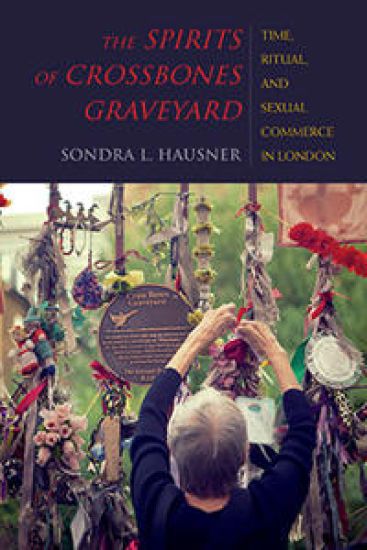
The Spirits of Crossbones Graveyard

The Spirits of Crossbones Graveyard

Sondra L. Hausner

Indiana University Press
2016
sidottu
Every month, a ragtag group of Londoners gather in the site known as Crossbones Graveyard to commemorate the souls of medieval prostitutes believed to be buried there—the "Winchester Geese," women who were under the protection of the Church but denied Christian burial. In the Borough of Southwark, not far from Shakespeare's Globe, is a pilgrimage site for self-identified misfits, nonconformists, and contemporary sex workers who leave memorials to the outcast dead. Ceremonies combining raucous humor and eclectic spirituality are led by a local playwright, John Constable, also known as John Crow. His interpretation of the history of the site has struck a chord with many who feel alienated in present-day London. Sondra L. Hausner offers a nuanced ethnography of Crossbones that tacks between past and present to look at the historical practices of sex work, the relation of the Church to these professions, and their representation in the present. She draws on anthropological approaches to ritual and time to understand the forms of spiritual healing conveyed by the Crossbones rites. She shows that ritual is a way of creating the present by mobilizing the stories of the past for contemporary purposes.
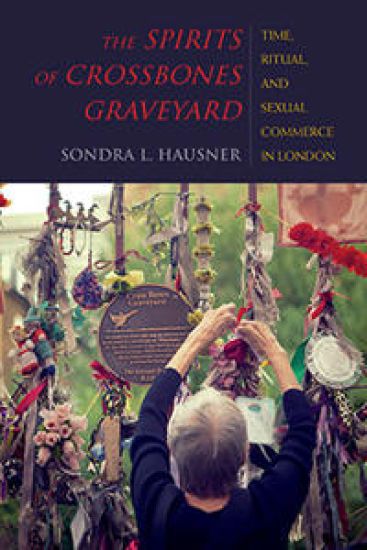
The Spirits of Crossbones Graveyard

The Spirits of Crossbones Graveyard

Sondra L. Hausner

Indiana University Press
2016
pokkari
Every month, a ragtag group of Londoners gather in the site known as Crossbones Graveyard to commemorate the souls of medieval prostitutes believed to be buried there—the "Winchester Geese," women who were under the protection of the Church but denied Christian burial. In the Borough of Southwark, not far from Shakespeare's Globe, is a pilgrimage site for self-identified misfits, nonconformists, and contemporary sex workers who leave memorials to the outcast dead. Ceremonies combining raucous humor and eclectic spirituality are led by a local playwright, John Constable, also known as John Crow. His interpretation of the history of the site has struck a chord with many who feel alienated in present-day London. Sondra L. Hausner offers a nuanced ethnography of Crossbones that tacks between past and present to look at the historical practices of sex work, the relation of the Church to these professions, and their representation in the present. She draws on anthropological approaches to ritual and time to understand the forms of spiritual healing conveyed by the Crossbones rites. She shows that ritual is a way of creating the present by mobilizing the stories of the past for contemporary purposes.
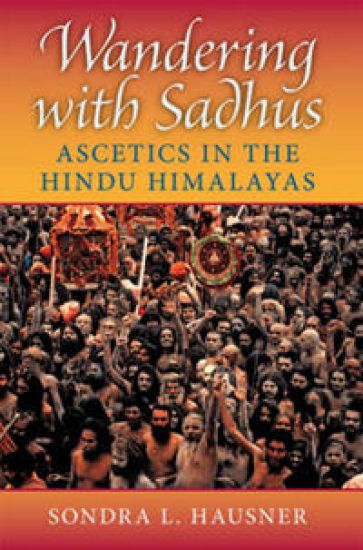
Wandering with Sadhus

Wandering with Sadhus

Sondra L. Hausner

Indiana University Press
2007
pokkari
In this moving ethnographic portrait of Hindu renouncers—sadhus or ascetics—in northern India and Nepal, Sondra L. Hausner considers a paradox that shapes their lives: while ostensibly defined by their solitary spiritual practice, the stripping away of social commitments, and their break with family and community, renouncers in fact regularly interact with "householder" society. They form a distinctive, alternative community with its own internal structure, but one that is not located in any single place. Highly mobile and dispersed across the subcontinent, its members are regularly brought together through pilgrimage circuits on festival cycles. Drawing on many years of fieldwork, Hausner presents intimate portraits of individual sadhus as she examines the shared views of space, time, and the body that create the ground for everyday experience. Written with an extraordinary blend of empathy, compassion, and anthropological insight, this study will appeal to scholars, students, and general readers alike.
Achieving Racial Balance

Achieving Racial Balance

Sondra A. Stave

Praeger Publishers Inc
1995
sidottu
Five case-studies of mid-sized Northeastern communities—Dayton, Hartford, Rochester, Trenton, and Wilmington—are used to examine and analyze school desegregation experiences. Qualities likely to encourage the peaceful achievement of racial balance are described. The study concludes that parents are most concerned about safety, educational quality, and their ability to exert influence over their children's schooling.This study describes and analyzes how five communities in the northeastern United States have addressed the subject of desegregation. Dayton, Ohio; Hartford, Connecticut; Rochester, New York; Trenton, New Jersey; and Wilmington, Delaware share the experience of having increasingly large, poor minority populations surrounded by mostly white, generally affluent suburbs. All five are similar mid-sized urban communities which have been consistently or intermittently involved with school desegregation.Historic and demographic issues, legal considerations, political, administrative, and community responsibility are explored by Stave as factors in the achievement of racial balance. Scores of interviews augment legal decisions and public documents. Stave finds that rapidly shifting populations make projections somewhat risky; however, respecting certain widely held concerns will make desegregation more likely. Parents seek a safe environment for their children and want to have a say in where their children are educated. Committed and charismatic leadership, extensive community participation, the availability of enhanced educational components to guarantee a high quality of education, cooperative city-state relations, and a metropolitan region large enough to discourage white flight are qualities likely to encourage the achievement of racial balance. An important reading for public officials and scholars involved with education policy, and urban and minority affairs.