This book considers the Optional Protocol to the Convention on the Rights of the Child on a communication procedure as a key contributor to the realization of children’s Article 12 Convention on the Rights of the Child participation rights. Weaknesses in the current formulation of the CRC communication procedure (its first iteration since entry into force 14 April, 2014) are examined and suggestions for strengthening of the mechanism in various respects considered. Actual cases concerning children’s fundamental human rights in various domains and brought under various international human rights mechanisms are considered as hypothetical OP3-CRC communications/complaints. In addition certain domestic cases brought to the highest State Court are considered as hypothetical OP3-CRC communications brought after exhaustion of domestic remedies. In this way various significant weaknesses of the OP3-CRC are illustrated in a compelling meaningful case context and needed amendments highlighted.
This casebook addresses selected precedent-setting rulings of various international human rights and international criminal courts with a focus on the child victims of international crimes and human rights abuses. The cases are analysed from the children’s human rights perspective and the question is examined as to what extent the aforementioned courts are according these children justice. The scope of the book is thus limited to the consideration of these representative important cases concerning violations of (a) international human rights and humanitarian law and (b) international criminal law involving child victims and the judicial remedies accorded or denied these victims and their family members. This is not in any way to diminish the suffering and importance of the adult victims of violations of fundamental human rights and grave international crimes. Rather, the book is intended to deal with the restricted and largely neglected topic of to what extent international courts are attending to the implications of there being child victims with respect to the courts’ addressing and handling of, among other matters, the following: (a) the con?rmation of charges relating to child-speci?c international crimes (i. e. recruitment of child soldiers, forced child marriage etc.
This book considers the Optional Protocol to the Convention on the Rights of the Child on a communication procedure as a key contributor to the realization of children’s Article 12 Convention on the Rights of the Child participation rights. Weaknesses in the current formulation of the CRC communication procedure (its first iteration since entry into force 14 April, 2014) are examined and suggestions for strengthening of the mechanism in various respects considered. Actual cases concerning children’s fundamental human rights in various domains and brought under various international human rights mechanisms are considered as hypothetical OP3-CRC communications/complaints. In addition certain domestic cases brought to the highest State Court are considered as hypothetical OP3-CRC communications brought after exhaustion of domestic remedies. In this way various significant weaknesses of the OP3-CRC are illustrated in a compelling meaningful case context and needed amendments highlighted.
This book examines selected legal complexities of the notion of torture and the issue of the proper foundation for legally characterizing certain acts as torture, especially when children are the targeted victims of torture. ICC case law is used to highlight the International Criminal Court’s reluctance in practice to prosecute as a separable offence the crime of torture as set out in one or more of the relevant provisions of the Rome Statute where children are the particularized targets as part of a common plan during armed conflict. Also addressed is the failure of the ICC to consider that the young age of the victims of torture (i.e. children) should be an aggravating factor taken into account in determining the ICC sentence for those convicted of the torture of civilians, including children, in the context of armed conflict as part of a common plan. The six UN-designated grave crimes against children (including child soldiering for State or non-State forces perpetrating mass atrocities, and sexual violence perpetrated on a systematic and widespread basis against children including child soldiers), it is argued, are also instances of the torture of children as part of a common plan such that separate charges of torture are legally supportable (along with the other charges relating to additional Rome Statute offences involved in such circumstances). Useful legal perspectives on the issue of the torture of children in its various manifestations gleaned from the case law of other international judicial forums such as the Inter-American Court of Human Rights and the ICTY are also examined.
Young People’s Human Rights and The Politics of Voting Age explores the broader societal implications of voting age eligibility requirements and the legislative bar against youth voting in North America and in Commonwealth countries (where ‘youth’ is defined as persons 16 and over but under age 18). The issue is raised as to whether the denial of the youth vote undermines democratic principles and values and ultimately the human dignity of youth. This is the first book to address the topic of the youth vote in-depth as a fundamental human rights concern relating to the entitlement in a democracy to societal participation and inclusion in influencing policy and law which profoundly affects one’s life. Also examined are international perspectives on the issue of voting age eligibility. The book would be extremely valuable for instructional purposes as one of the primary texts in undergraduate or graduate courses on children’s human rights, political psychology, political science , sociology of law or society and as a supplementary text for courses on human rights or constitutional law and would be of interest also to members of the general public concerned with children’s human rights issues.
Young People’s Human Rights and The Politics of Voting Age explores the broader societal implications of voting age eligibility requirements and the legislative bar against youth voting in North America and in Commonwealth countries (where ‘youth’ is defined as persons 16 and over but under age 18). The issue is raised as to whether the denial of the youth vote undermines democratic principles and values and ultimately the human dignity of youth. This is the first book to address the topic of the youth vote in-depth as a fundamental human rights concern relating to the entitlement in a democracy to societal participation and inclusion in influencing policy and law which profoundly affects one’s life. Also examined are international perspectives on the issue of voting age eligibility. The book would be extremely valuable for instructional purposes as one of the primary texts in undergraduate or graduate courses on children’s human rights, political psychology, political science , sociology of law or society and as a supplementary text for courses on human rights or constitutional law and would be of interest also to members of the general public concerned with children’s human rights issues.
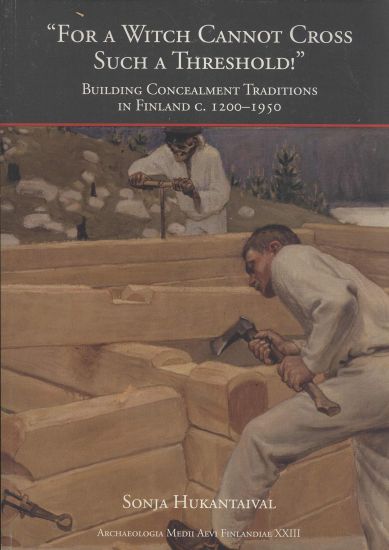
Painoksen viimeiset kappaleet, kaikissa on pieniä kulumisjälkiä erityisesti kulmissa. Turun yliopistossa tarkastettava väitöskirja paljastaa, että Suomessa kätkettiin talojen rakenteisiin vielä 1900-luvun alkupuolella esineitä, joiden tarkoituksena oli suojella rakennusta tulipaloja ja muita onnettomuuksia aiheuttavalta noituudelta. Noituuden vaaraa pidettiin menneisyydessä todellisena, sillä mikä tahansa epäonni tai ikävä sattuma tulkittiin helposti noituudella aiheutetuksi. Sonja Hukantaipaleen arkeologian alan väitöskirjassa suomalainen esimoderni maailmankuva raottuu rakennusten suojelurituaalien kautta. Aineistoina ovat arkeologiset löydöt ja arkistoihin kerätty kansanperinne. Rakennustöiden aikana talon tai esimerkiksi navetan rakenteisiin piilotettiin esineitä tai eläinten luita, joilla uskottiin olevan taikavoimaa. Vaihtoehtoisesti esineet olivat lahjoja, joilla suostuteltiin talon haltiaolentoa huolehtimaan talon onnesta. - Erityisesti rakenteisiin tahallisesti piilotetut rahat olivat usein kodinhaltialle annettuja uhrilahjoja. Kynnyksen alle kätketyn kirveenterän tai veitsen puolestaan uskottiin olevan tehokas ase sisälle pyrkivien pahantahtoisten olentojen ja voimien estämiseen. Uuniin muurattu hevosenkallo sen sijaan karkotti talosta syöpäläiset, kuten luteet ja russakat, Turun yliopistossa väittelevä Hukantaival kertoo. Uskomusten ajatellaan helposti liittyvän vain arkipäivästä eroavaan "tuonpuoleiseen" maailmaan. Väitöstutkimus kuitenkin osoittaa, että rakennuskätköt liittyivät ihmisten jokapäiväisiin huoliin ja erityisesti yhteisöissä oleviin sosiaalisiin jännitteisiin. - Kansanperinneaineistosta käy hyvin ilmi, että pelätty noita ei ollut mikään lastensadun fantasiaolento, vaan ihan tavallinen kateellinen naapuri. Negatiivisten tunteiden, kuten vihan ja kateuden, uskottiin jo sellaisinaan voivan aiheuttaa todellista vahinkoa. Väitöskirjassa rakennuskätköjä on tarkasteltu Suomen historiallisella ajalla, eli keskiajalta eteenpäin. Muualla Euroopassa tehdyt tutkimukset ovat osoittaneet, että tapa kätkeä esineitä rakennuksiin on ollut tunnettu jo kivikaudelta lähtien. - Kätkemisen merkitykset ovat silti voineet muuttua pitkän historiansa aikana moneen otteeseen. Sosiaalisesta paineesta johtuneen noituuden pelko on ollut vähemmän merkittävää yhteisöissä, joissa on ollut mahdollista muuttaa hankalaksi koetusta naapurista kauemmaksi. Väljemmin asutuilla alueilla kätkeminen on suuntautunut enemmän luonnonvoimien kanssa toimeentulemiseen, Hukantaival toteaa. Väitöstutkimuksessa käy ilmi, että kotitalouden kätköperinteen lisäksi myös esimerkiksi kirkkoihin on kätketty esineitä. Näistä erikoisimpia ovat pienoisarkkuihin haudatut sammakot, joita on löytynyt useammasta suomalaisesta kirkosta, mukaan lukien Turun tuomiokirkosta. - Sammakkoarkkutaika on tehty kun jonkin vahingon uskottiin olevan tuntemattoman noidan aiheuttama. Taian ajateltiin lähettävän pahantahtoinen energia takaisin noidalle, aiheuttaen jopa noidan kuoleman, Hukantaival valottaa. FM Sonja Hukantaival on syntynyt vuonna 1977 ja kirjoittanut ylioppilaaksi Puolalanmäen lukiossa vuonna 1997. Korkeakoulututkintonsa (FM) Hukantaival suoritti Turun yliopistossa vuonna 2006. Väittelijän erikoisalana on kansanuskon arkeologia. Väitöksen alana on arkeologia.
Gl cklich f r immer? Ist das denn wirklich m glich? Emotionen und Stimmungen bewusst ndern? Dein Leben selbst bestimmen und nicht von u eren Umst nden abh ngig sein? Geht das denn?Du denkst jetzt vielleicht: "So a Scha Wie soll man f r immer gl cklich sein ..." In diesem Buch erh ltst du von Gl ckscoach und Autorin Sonja Flandorfer die Antworten auf diese Fragen. Auch der Einwand "So a Scha " wird ernsthaft behandelt. Das Thema Gl cklichsein wird genau unter die Lupe genommen.Sie schreibt im ersten Kapitel ehrlich, witzig und selbstkritisch ber ihr eigenes Leben um dir zu zeigen, dass du dich sehr wohl ndern und gl cklich sein kannst, wenn du das willst.Im zweiten und dritten Kapitel findest du das Rezept zum Gl cklichsein oder kurz: Die EFEU Methode(c). Diese ist verbl ffend einfach und leicht umsetzbar.Du lernst: -Wie du auf deine Emotionen achtest und sie bewusst nderst. -Wie du deinen Fokus richtig setzt. -Wie du Entscheidungen wirklich triffst. -Wie du dir bei der Umsetzung deiner Entscheidungen leichter tust. -Wie du ein gl cklicheres und selbstbewussteres Leben lebst. In Kapitel vier erh ltst du viele bungen, die du nach und nach in deinen Alltag integrieren kannst - vorausgesetzt - du willst ein gl cklicheres Leben f hren. Du willst endlich gl cklich sein? Dann lies dieses Buch
Mizuko Ito; Sonja Baumer; Matteo Bittanti; danah boyd; Rachel Cody; Becky Herr Stephenson; Heather A. Horst; Patricia G. Lange; Dilan Mahendran; Katynka Z. Martínez; C. J. Pascoe; Dan Perkel; Laura Robinson; Christo Sims; Lisa Tripp
The tenth-anniversary edition of a foundational text in digital media and learning, examining new media practices that range from podcasting to online romantic breakups.Hanging Out, Messing Around, and Geeking Out, first published in 2009, has become a foundational text in the field of digital media and learning. Reporting on an ambitious three-year ethnographic investigation into how young people live and learn with new media in varied settings-at home, in after-school programs, and in online spaces-it presents a flexible and useful framework for understanding the ways that young people engage with and through online platforms: hanging out, messing around, and geeking out, otherwise known as HOMAGO. Integrating twenty-three case studies-which include Harry Potter podcasting, video-game playing, music sharing, and online romantic breakups-in a unique collaborative authorship style, Hanging Out, Messing Around, and Geeking Out combines in-depth descriptions of specific group dynamics with conceptual analysis. Since its original publication, digital learning labs in libraries and museums around the country have been designed around the HOMAGO mode and educators have created HOMAGO guidebooks and toolkits. This tenth-anniversary edition features a new introduction by Mizuko Ito and Heather Horst that discusses how digital youth culture evolved in the intervening decade, and looks at how HOMAGO has been put into practice.This book was written as a collaborative effort by members of the Digital Youth Project, a three-year research effort funded by the John D. and Catherine T. MacArthur Foundation and conducted at the University of California, Berkeley, and the University of Southern California.
Examines the role marriage played in the lives of Japanese women during periods of racial exclusion in the United States In 1908 the United States and Japan agreed to limit the migration of Japanese laborers to the US. The Gentlemen's Agreement of 1908 ushered in an era of exclusion for the Japanese, but an exception was made for Japanese women who migrated as wives of Japanese men. In 1924 that exception would end with the passage of the National Origins Act. Immediately after World War II, Japanese women were once again permitted to enter the US as brides— this time, however, as the wives of American servicemen stationed throughout Japan. The ban on Japanese immigration would not be lifted until 1952. Picture Bride, War Bride examines how the institution of marriage created pockets of legal and social inclusion for Japanese women during the period of Japanese exclusion. Sonia C. Gomez begins with the first wave of Japanese women's migration in the early twentieth century (picture brides), and ends with the second mass migration of Japanese women after World War II (war brides), to illustrate how popular and political discourse drew on overlapping and conflicting logics to either racially exclude the Japanese or facilitate their inclusion via immigration legislation privileging wives and mothers. Picture Bride, War Bride retells the history of Japanese migration and exclusion by centering women, gender, and sexuality, and in so doing, troubles the inclusion versus exclusion binary. While the Japanese were racially excluded between 1908 and 1952, Japanese wives and mothers were permitted entry because their inclusion served American interests in the Pacific. However, the very rationale enabling their inclusion simultaneously restricted and defined the parameters of their lives within the US. Picture Bride, War Bride serves as a compelling analysis of how the intricate interplay between societal norms and political interests can both harness and contradict the interconnected frameworks of race, gender, and sexuality.
She'd never meant for it to happen. Just one reckless moment had cost Nicky her brother's life and it seemed she would have to endure a lifetime of suffering for her carelessness. Growing up in a North Norfolk hotel, owned by her parents, Nicky's life had been perfect until that fateful day. Then everything fell apart and it wasn't just her own guilt that Nicky had to contend with, it was also the anger of her mother. Isolated and confused, Nicky's life spirals out of control until she despairs of ever being able to smile again. A chain of unconnected events lead her to some serious self-evaluation until it appears that there could be an opportunity to discover some happiness from all the misery which has plagued her existence, but only if she is prepared to let go of the past.
Saved, Sexy, and Satisfied is written to help all women of faith and those who will come into the household of faith, the "Church" to encourage every woman to know her value, to appreciate her worth, her sexiness, and to be satisfied with being the woman GOD created her to be.It is okay to be sexy, classy, and tasteful while confessing your salvation; and still, being completely satisfied with SELF, loving the Lord, and working in His service.
Saved, Sexy, and Satisfied is written to help all women of faith and those who will come into the household of faith, the "Church" to encourage every woman to know her value, to appreciate her worth, her sexiness, and to be satisfied with being the woman GOD created her to be.It is okay to be sexy, classy, and tasteful while confessing your salvation; and still, being completely satisfied with SELF, loving the Lord, and working in His service.
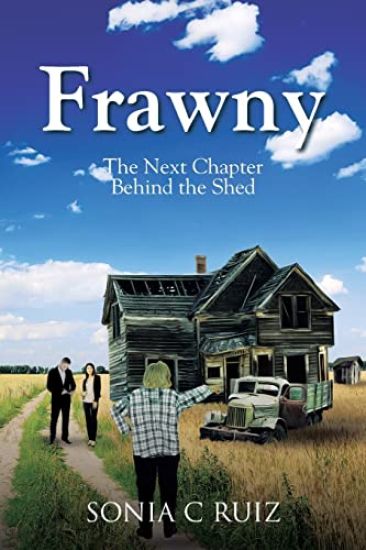
From a small farmhouse in Ashburn, Virginia at only nine years old, Frawny, who was almost abducted and experience an apparition of a young girl at a lake by her farm and helped a detective friend in the captured of her presumed killer on this twenty-five-year-old case. She left the farm, her mother, and friends to attend the University of Karlton, Virginia to pursue her education in criminology; while there she encountered a mysterious enemy, whose intentions to kill her goes after her friends first; injuring one and killing another. In going after her friend's killer and finding clues that leads her to her hometown in Ashburn; she encounters FBI files of cold cases of missing six nine-year-old girls and she decides to follow the clues and, in the process, finds connections to the previous twenty-five year remains of the girl in the lake. Frawny's obsession to find more clues takes her to an elderly lady's old house, a shed behind it and an old green truck. The killer aware of her pursuit tries to find ways to avoid it, but soon falls into her trap.