

Kirjahaku
Etsi kirjoja tekijän nimen, kirjan nimen tai ISBN:n perusteella.
54 tulosta hakusanalla Stashower Daniel

Since the 18th century, artists have played a conflicting role in society. Part of the reason for this, argues this analysis, is the survival of the culture of idolatry in the modern age. They can either paint scenes of worship of the golden calf or they can fabricate the idol themselves.
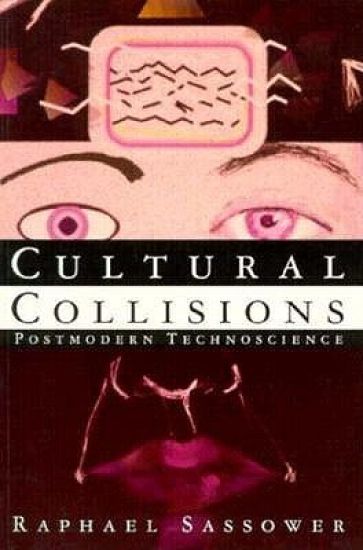
In Cultural Collisions Raphael Sassower brings postmodernism face to face with technoscience and considers the viability of public works, such as the Superconducting Supercollider, in a postmodern age. Contending that technoscientific projects are contingent upon economic and political support, and not simply upon their scientific feasibility, Sassower illuminates the cultural context of postmodern technoscience vis-a-vis an examination of postmodernism and the philosophy of late 20th century science.
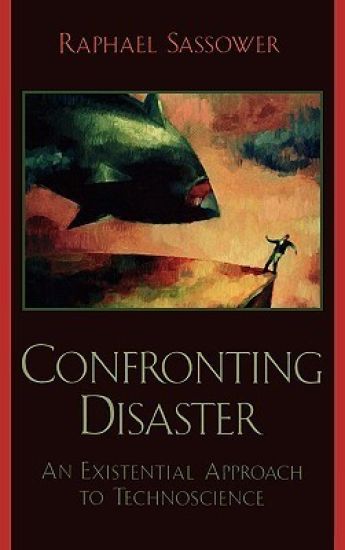
Contemporary society is rife with instability. Our active and invasive study of genetics has given life to one of the great specters of biological science: the clone. The scarcity of natural energy sources has led to an increased manipulation of atomic or nuclear energy and regressive environmental policies, resulting in a greater sense of danger for everyone. The promises of economic globalization have, in some cases, been delivered, but in many other ways globalization has created even greater gaps in social and economic life. Despite the expansion of our productive and technological capabilities, our workdays grow longer, not shorter. We find ourselves in exile from our families, our friends, and from other meaningful forms of social connection. And as "freedom" is bandied about in the popular press and media as the preeminent global social value, it actually seems that the reigning contemporary ethos of our time is stress and anxiety. While Raphael Sassower's previous work has focused extensively on science and technology, this book is significantly different. It is an urgent commentary in the tradition of Herbert Marcuse's One Dimensional Man or even Sigmund Freud's Civilization and Its Discontents; a culmination of many years of research and thought carefully arranged into an extended essay on our contemporary social, cultural, and existential orientation in the modern world. This book is written for advanced graduate students, informed and concerned citizenry, and especially the young student who, in the face of mounting anxiety, must be able to make critical choices towards an uncertain future.
Contemporary society is rife with instability. Our active and invasive study of genetics has given life to one of the great specters of biological science: the clone. The scarcity of natural energy sources has led to an increased manipulation of atomic or nuclear energy and regressive environmental policies, resulting in a greater sense of danger for everyone. The promises of economic globalization have, in some cases, been delivered, but in many other ways globalization has created even greater gaps in social and economic life. Despite the expansion of our productive and technological capabilities, our workdays grow longer, not shorter. We find ourselves in exile from our families, our friends, and from other meaningful forms of social connection. And as 'freedom' is bandied about in the popular press and media as the preeminent global social value, it actually seems that the reigning contemporary ethos of our time is stress and anxiety. While Raphael Sassower's previous work has focused extensively on science and technology, this book is significantly different. It is an urgent commentary in the tradition of Herbert Marcuse's One Dimensional Man or even Sigmund Freud's Civilization and Its Discontents; a culmination of many years of research and thought carefully arranged into an extended essay on our contemporary social, cultural, and existential orientation in the modern world. This book is written for advanced graduate students, informed and concerned citizenry, and especially the young student who, in the face of mounting anxiety, must be able to make critical choices towards an uncertain future.
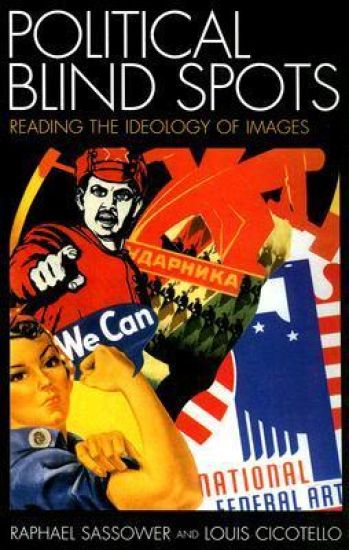
In order to better understand the conditions of the twenty-first century Raphael Sassower and Louis Cicotello revisit the twentieth century in Political Blind Spots: Reading the Ideology of Images. Sassower and Cicotello revisit some of the most significant periods in art and politics in the twentieth century paying close attention to the relationship between aesthetics and politics.

In this book, the authors explore images of war and their effect on society. The authors keep in mind that the experience of being at war is much different from the experience of viewing a war image. Thus it is our responsibility to engage war images critically and personally, because lives are at stake and the future of world peace lies in the balance. The iconic image of any war and its ideological underpinning must be more fully appreciated. This book suggests that consumers of war images must simultaneously pay attention to the details of any given image (and thereby uncover its ideology), while exploring other, alternative images related to the same war, in order to consider other perspectives. The effectiveness of the visual language is such that it demands a careful and critical analysis, such as the one that offered here. The emphasis on the pragmatic reading of images has more to do with the power of images to convey, most commonly, a single idea or value, rather than to engage the observer with an inconsistent or contradictory set of ideas and values. This is where pastiche and collage come into play as compositional strategies through which many images are juxtaposed against each other so as to break the uniformity of an artwork, poster, or photograph. The aesthetic experience, however intense, is not a war experience, and the one could never substitute the other. The visual landscape itself is open to ideological manipulation-selection, framing, focus-so that we end up having to deal with theories and ideas even when we refuse to deal with them at first, for they end up determining and informing what images find their way into our cultural memory.

In this book, the authors explore images of war and their effect on society. The authors keep in mind that the experience of being at war is much different from the experience of viewing a war image. Thus it is our responsibility to engage war images critically and personally, because lives are at stake and the future of world peace lies in the balance. The iconic image of any war and its ideological underpinning must be more fully appreciated. This book suggests that consumers of war images must simultaneously pay attention to the details of any given image (and thereby uncover its ideology), while exploring other, alternative images related to the same war, in order to consider other perspectives. The effectiveness of the visual language is such that it demands a careful and critical analysis, such as the one that offered here. The emphasis on the pragmatic reading of images has more to do with the power of images to convey, most commonly, a single idea or value, rather than to engage the observer with an inconsistent or contradictory set of ideas and values. This is where pastiche and collage come into play as compositional strategies through which many images are juxtaposed against each other so as to break the uniformity of an artwork, poster, or photograph. The aesthetic experience, however intense, is not a war experience, and the one could never substitute the other. The visual landscape itself is open to ideological manipulation-selection, framing, focus-so that we end up having to deal with theories and ideas even when we refuse to deal with them at first, for they end up determining and informing what images find their way into our cultural memory.

Solo: Postmodern Explorations provides a postmodern approach to technoscience and economics. Sassower pulls together postmodern motifs and attitudes with his own experience to provide a unique perspective on political history and economics. Solo raises the question of whether it is possible to be an objective observer and what that means for scholarship, especially when it concerns making assessments of other cultures in the developing world. Sassower questions the usefulness of applying external economic measurements on the economic development of these countries.

Solo: Postmodern Explorations provides a postmodern approach to technoscience and economics. Sassower pulls together postmodern motifs and attitudes with his own experience to provide a unique perspective on political history and economics. Solo raises the question of whether it is possible to be an objective observer and what that means for scholarship, especially when it concerns making assessments of other cultures in the developing world. Sassower questions the usefulness of applying external economic measurements on the economic development of these countries.
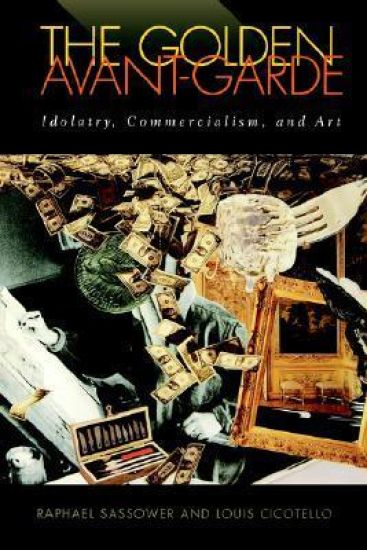
Since the 18th century, artists have played a conflicting role in society. Part of the reason for this, argues this analysis, is the survival of the culture of idolatry in the modern age. They can either paint scenes of worship of the golden calf or they can fabricate the idol themselves.

Reassesses the social and ethical situations of technoscientists.Reassesses the social and ethical situations of technoscientists.What responsibility do the Manhattan Project scientists have for the atomic devastation of Hiroshima? The Krupps scientists for the crematoriums at Auschwitz? Disturbing questions like these are at the heart of this book, a sobering exploration of scientific and intellectual responsibility.Raphael Sassower considers two related phenomena: the positive public image of science as the citadel of truth and objectivity and the angst displayed by scientists over their indirect roles in technological horrors. Largely unexamined, these circumstances provide the opportunity for a wholesale reassessment of the social and ethical situations of science and technology. In a world in which daily technological developments, from the space shuttle to genetic engineering, raise complex political and economic questions, this book provides a framework for assessing the social impact and ethical implications of scientific work. Is there no way, Sassower asks, to revisit the ideals of science-once devoted to creating a more reasonable and open society free from prejudices-when deciding the value of technoscientific projects and policies? His work suggests ways we can both preserve the benefits of enlightenment rationality (so-called scientific objectivity) and overcome the notion of science as our culture’s master narrative.Bringing the tools of postmodern philosophy and criticism to bear on Auschwitz and Hiroshima, the most brutal and incomprehensible instances of scientific modernism, Technoscientific Angst proposes that we change our scientific and philosophical perspectives on the modern world-that we bring them together in a novel and constructive way. 160 pages Translation rights: University of Minnesota Press

What is at stake in compromising the Enlightenment ideals of a liberal education with new educational policies engendered by a neo-liberalized, global marketplace? Richly grounding his arguments in the social philosophy of European and American intellectuals, Raphael Sassower explores Western culture's long-standing ambivalence toward 'the life of the mind.' He shows how and why this historical legacy contributes to today's confusion over goals and values in contemporary education. He sheds new light on many of today's controversies, showing why the demands of technology and a global economy increase society's need for 'educational sanctuaries' of liberal education, intellectual 'play' and social consciousness that may better serve the diverse and often conflicting needs of a changing world.
Manorial Capitalism, Enslavement, and the Logic of Dividuation
Raphael Sassower
TAYLOR FRANCIS LTD
2025
sidottu
Manorial Capitalism, Enslavement, and the Logic of Dividuation proffers three perspectives on the plantation slave economy of the Antebellum South. The first explores the paternal function as exemplified in the structural authority of the lord of the manor both symbolically and operationally. This figure of masculine authority persisted from the Medieval period to orchestrate what is called here Manorial Capitalism. The second examines the exploitation and alienation that epitomize the logic of capitalism from the plantation economy to the present. And the third deploys retroactively the logic of dividuation to the plantation, a logic that draws its inspiration from neoliberal financial capitalism as well as from anthropological accounts (which distinguish the dividual from the Cartesian-Kantian individual). This book argues that reducing individuals to dividuated components continues to enable a dehumanizing capitalist mindset to fixate on abstracted labor power rather than seeing laboring individuals.
Debates over the role of government have intensified in the wake of America's deepest financial crisis since the Depression. This book suggests new ways of moving forward based on the policies and principles that have worked in the past. Sassower shows how American pragmatism has guided the more successful financial policies undertaken during the past century. This means that from the workplace to foreign aid, Americans benefit when they collaborate with each other rather than only pursue their self-interest in competitive ways. Drawing on thinkers from Adam Smith to Keynes to Bernanke, Sassower shows how a new era of postideological capitalism can emerge in the wake of the current economic crisis-renewing America's leadership for the future.

Debates over the role of government have intensified in the wake of America's deepest financial crisis since the Depression. This book suggests new ways of moving forward based on the policies and principles that have worked in the past. Sassower shows how American pragmatism has guided the more successful financial policies undertaken during the past century. This means that from the workplace to foreign aid, Americans benefit when they collaborate with each other rather than only pursue their self-interest in competitive ways. Drawing on thinkers from Adam Smith to Keynes to Bernanke, Sassower shows how a new era of postideological capitalism can emerge in the wake of the current economic crisis-renewing America's leadership for the future.
Envisioning a different mode of economic relations requires a rethinking of the classical frames of references we commonly take for granted. The implicit assumptions that we carry into critical debates are the stumbling blocks for finding useful solutions to age-old economic problems. And these impediments constrict our political imagination. This book asks what are these frames of references? How many of them are worthy of retaining, while others might be discarded? And what new framings should be adopted in order to bring about a less crisis-prone and morally acceptable mode of human interaction? Each chapter interrogates a different frame of reference, including culturally-embedded concepts of human nature, scarcity and abundance, markets, and the human condition. Examining their historical anchoring and the ways in which they have become confining for the realities of the postmodern world in which we currently live, it is shown that they have become so familiar that they are assumed rather than critically examined in most discussions of political economy.
Envisioning a different mode of economic relations requires a rethinking of the classical frames of references we commonly take for granted. The implicit assumptions that we carry into critical debates are the stumbling blocks for finding useful solutions to age-old economic problems. And these impediments constrict our political imagination. This book asks what are these frames of references? How many of them are worthy of retaining, while others might be discarded? And what new framings should be adopted in order to bring about a less crisis-prone and morally acceptable mode of human interaction? Each chapter interrogates a different frame of reference, including culturally-embedded concepts of human nature, scarcity and abundance, markets, and the human condition. Examining their historical anchoring and the ways in which they have become confining for the realities of the postmodern world in which we currently live, it is shown that they have become so familiar that they are assumed rather than critically examined in most discussions of political economy.
The work of Karl Popper has had extraordinary influence across the fields of scientific and social thought. Widely regarded as one of the greatest philosophers of science of the twentieth century, he was also a highly influential social and political philosopher, a proponent and defender of the "open society". "Popper's Legacy" examines Popper in the round, analysing in particular his moral and psychological insights. Once Popper's scientific legacy is couched in political and moral terms, it becomes apparent that his concern for individual autonomy does not come at the expense of institutional guidelines and social conventions. Instead, these guidelines turn out to be essential sanctions for individual freedom. Popper envisions the conduct of the scientific community as paralleling the conduct of any democratically established community. Critical rationality guides the words and actions of all participants and leadership can be replaced without violence. In presenting a critical overview, "Popper's Legacy" reveals the debt many intellectual movements - such as Marxism, feminism, and postmodernism - still owe to Popper.

The work of Karl Popper has had extraordinary influence across the fields of scientific and social thought. Widely regarded as one of the greatest philosophers of science of the twentieth century, he was also a highly influential social and political philosopher, a proponent and defender of the "open society". "Popper's Legacy" examines Popper in the round, analysing in particular his moral and psychological insights. Once Popper's scientific legacy is couched in political and moral terms, it becomes apparent that his concern for individual autonomy does not come at the expense of institutional guidelines and social conventions. Instead, these guidelines turn out to be essential sanctions for individual freedom. Popper envisions the conduct of the scientific community as paralleling the conduct of any democratically established community. Critical rationality guides the words and actions of all participants and leadership can be replaced without violence. In presenting a critical overview, "Popper's Legacy" reveals the debt many intellectual movements - such as Marxism, feminism, and postmodernism - still owe to Popper.