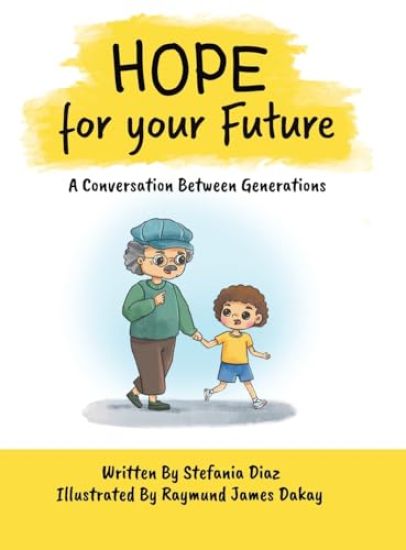
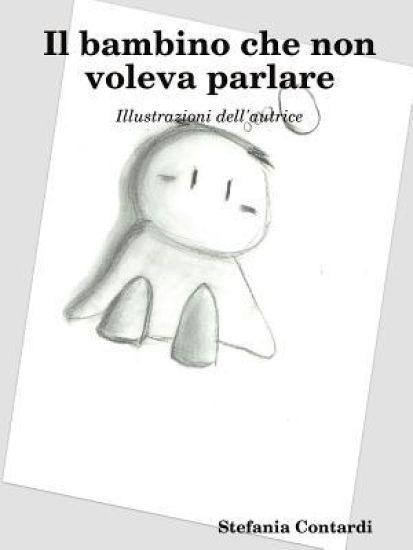
Join Grandpa and his curious grandson on a walk as they explore answers to the questions, "What is life? Where does it end or begin?" With gentle wisdom, Grandpa shares the wonders of our natural world. However, their conversation takes a turn when Grandpa reveals his concerns about pollution's harm to nature. Despite this, he offers hope and guidance, inspiring his grandson to consider ways to protect the Earth. Together, they explore practical steps to reduce their impact on the environment, ensuring a brighter future for generations to come. A heartwarming dialogue of intergenerational connection and environmental stewardship, this story reminds us of the importance of preserving our planet's beauty.
Join Grandpa and his curious grandson on a walk as they explore answers to the questions, "What is life? Where does it end or begin?" With gentle wisdom, Grandpa shares the wonders of our natural world. However, their conversation takes a turn when Grandpa reveals his concerns about pollution's harm to nature. Despite this, he offers hope and guidance, inspiring his grandson to consider ways to protect the Earth. Together, they explore practical steps to reduce their impact on the environment, ensuring a brighter future for generations to come. A heartwarming dialogue of intergenerational connection and environmental stewardship, this story reminds us of the importance of preserving our planet's beauty.
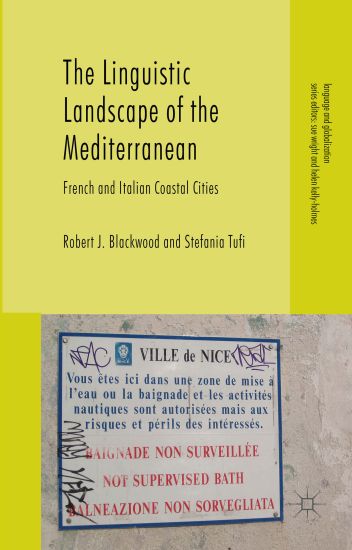
This book explores the Linguistic Landscapes of ten French and Italian Mediterranean coastal cities. The authors address the national languages, the regional languages and dialects, migrant languages, and the English language, as they collectively mark the public space.
Now in paperback for the first time, Social Movements and their Technologies explores the interplay between social movements and their 'liberated technologies'. It analyzes the rise of low-power radio stations and radical internet projects ('emancipatory communication practices') as a political subject, focusing on the sociological and cultural processes at play. It provides an overview of the relationship between social movements and technology, and investigates what is behind the communication infrastructure that made possible the main protest events of the past fifteen years. In doing so, Stefania Milan illustrates how contemporary social movements organize in order to create autonomous alternatives to communication systems and networks, and how they contribute to change the way people communicate in daily life, as well as try to change communication policy from the grassroots. She situates these efforts in a historical context in order to show the origins of contemporary communication activism, and its linkages to media reform campaigns and policy advocacy.
'A collection of intimate and heartfelt confessions of what love means, each with a wonderfully expressive colour portrait' Guardian 'Will restore your faith in the world' New York Post Award-winning journalist and documentary maker Stefania Rousselle had stopped believing in love. She had covered a series of bleak assignments, from terrorist attacks to the rise of the far right. Her relationship had fallen apart. Her faith in humanity was shaken. She decided to set out alone on a road trip across France, sleeping in strangers' homes, asking ordinary men and women the one question everyone wants to know the answer to: what is love? From a baker in Normandy to a shepherd in the Pyrénées, from a gay couple estranged from their families to a widow who found love again at 70, Amour is a treasure trove of poignant and profound stories about love, accompanied by beautiful photographs.'Astonishing. Beautiful. Extraordinary. A couple of times I gasped and choked up. This was really worth reading' A Guardian reader response 'This is one of the best things I have read for a very long time. These wonderful stories really bring out what is important in life' A Guardian reader response'Beautiful. Made me cry a little. Thank you for such honest, diverse and open stories' A Guardian reader response
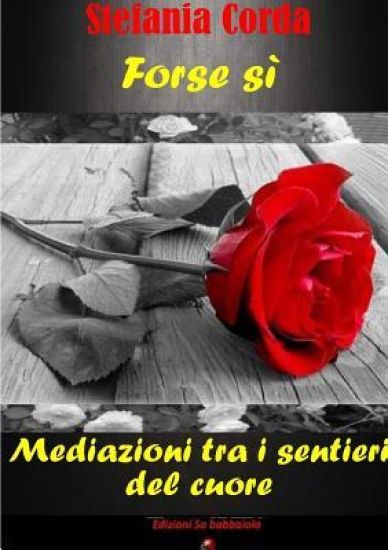
"Forse si" (Mediazione tra i sentieri del cuore)e un romanzo che ha come tema principale il sentimento,sopratutto nel rapporto di coppia.La rabbia, l'orgoglio, la frustazione,il non sentirsi compresi ed appunto l'amore, fanno parte del nostro vissuto. l'autrice li descrive con delicatezza ed ironia, e pur affrontando dinamiche complesse come l'omosessualita, il rapporto Madre/Figlia,oppure situazioni dolorose come il tradimento,non perde il suo caratteristico tocco creativo, fatto di leggerezza,iroia e sensibilita.Lara,la protagonista del romanzo, non riesce a trovare un posto ben definito nella societa. Laureata in psicologia,vorrebbe far tutto ma non quel lavoro. Ha due bambini, il suo orgoglio, ma un marito che non la comprende.Gesuino e Gay ma non riesce aliberarsi dalle sue angosce,per mostrare il suo vero "IO".Marta e convinta che suo marito la tradisca,ed assume un investigatrice privata per pedinarlo.
Nella villa sul lago, la vita dei gemelli italo-americani Lara e Alex Morgan si decide nel tempo di due estati memorabili ma distanti diciannove anni l'una dall'altra...
Breve saggio sulla riscrittura della fiaba in chiave moderna e femminista da parte di una delle pi audaci e geniali scrittrici inglesi del ventesimo secolo, Angela Carter.
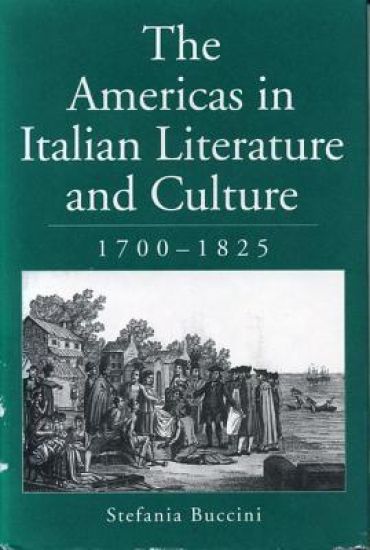
The curiosity with which Europeans approached the New World was reflected in the writings of Italian historians, missionaries, travelers, and explorers, who described with fascination the customs of the peoples they encountered in their travels. In this study Stefania Buccini examines the representation of the Americas in Italian literature during the Age of the Enlightenment. She begins by analyzing the motivations and circumstances behind the emergence of the myth of the "noble savage." Eighteenth-century Italy had a strong orientation toward the more "advanced" American societies of the Incas and the Aztecs, and these pre-Columbian civilizations became the preferred myth, dissociated from any notion of wildness and easily compatible with illuministic canons of progress. However, a new America—revolutionary and democratic, animated by noble principles of liberty and equality—was soon formed, onto which the old Europe projected its dreams of renewal. As the New World came to be associated with the English colonies, Benjamin Franklin, scientist, writer of political and moral works, and founder of the new republic, gained the stature of an illuministic myth in Italy.Buccini finds that the myths of the old and new Americas meshed and created a more complex image of the New World for the Italians.
Contemporary alternative spirituality, as studied by sociologists, is usually seen as a recent phenomenon dating from the 1960s and 1970s. However, when viewed from a longer-term perspective this form of religious expression is actually seen to reintroduce concepts that recur throughout Western cultural history. This book argues, therefore, that spirituality in the 21st Century actually shares many of the same characteristics as Classical, Mediaeval, Renaissance and Modern spiritualities. It is neither entirely new, nor is it clearly alternative to more established religions. The book is divided into two parts. The first sets out the context in which contemporary alternative spirituality has formed, charting its development as an academic term and a social phenomenon. The second part looks at how these two elements have developed in countries that are historically Catholic, focussing on specific examples in contemporary Italy: spiritualities based on the sacralisation of nature; those concerned with health and wellbeing; and those which are fascinated by mystery.Catholic majority countries are particularly interesting in this instance, as the Catholic Church has a unique cultural hegemony with which to compare alternative spiritual practices. It concludes that spirituality, if framed in a longer historical perspective, is a way of acting and seeing the world which was built, and continues to be built upon complex relations with various contradictory sources of authority, such as religion, magic thinking, secularism, rationalism, various spheres of lay culture.This is a bold take on the spirituality milieu and as such will be of great interest to scholars of Religious Studies working on the sociology of religion, contemporary spirituality and the rise of the "spiritual but not religious".
Biopharmaceuticals, the term for genetically engineered therapeutic proteins, monoclonal antibodies, and nucleic acid-based products, have become an increasing part of the pharmaceutical armament. While this category of drugs accounts for approximately 25% of all new drugs coming to market, very few references exist that review these commercially available products. Until now, accessing data on the list of currently approved biopharmaceuticals has been laborious and patchy. Directory of Approved Biopharmaceutical Products brings together key information on various aspects of these compounds, presenting a brief summary of each biopharmaceutical currently approved for medical use. Each summary includes the scientific and trade name, year and regions approved, approved indications, manufacturer, marketing right, method of manufacture, scientific overview, and therapeutic properties. Based on information gathered from regulatory agencies and pharmaceutical manufacturers, the book presents the most comprehensive data currently available in a single, convenient volume. This comprehensive and consistent approach will save professionals in the pharmaceutical industry hours spent trawling the literature - and provides a singular resource for future reference.
Contemporary alternative spirituality, as studied by sociologists, is usually seen as a recent phenomenon dating from the 1960s and 1970s. However, when viewed from a longer-term perspective this form of religious expression is actually seen to reintroduce concepts that recur throughout Western cultural history. This book argues, therefore, that spirituality in the 21st Century actually shares many of the same characteristics as Classical, Mediaeval, Renaissance and Modern spiritualities. It is neither entirely new, nor is it clearly alternative to more established religions. The book is divided into two parts. The first sets out the context in which contemporary alternative spirituality has formed, charting its development as an academic term and a social phenomenon. The second part looks at how these two elements have developed in countries that are historically Catholic, focussing on specific examples in contemporary Italy: spiritualities based on the sacralisation of nature; those concerned with health and wellbeing; and those which are fascinated by mystery.Catholic majority countries are particularly interesting in this instance, as the Catholic Church has a unique cultural hegemony with which to compare alternative spiritual practices. It concludes that spirituality, if framed in a longer historical perspective, is a way of acting and seeing the world which was built, and continues to be built upon complex relations with various contradictory sources of authority, such as religion, magic thinking, secularism, rationalism, various spheres of lay culture.This is a bold take on the spirituality milieu and as such will be of great interest to scholars of Religious Studies working on the sociology of religion, contemporary spirituality and the rise of the "spiritual but not religious".
The book analyses how lines of (non)belonging are traced and how notions of (non)belonging circulate around and are attached to students from immigrant backgrounds. Such circulations coalesce around values and practices linked to gendered, ethnic majority middle-class norms, through which difference is positioned and opposed in hierarchical terms. This project analyses the relationship between teachers’ identities and their attitudes and pedagogic dispositions towards students from immigrant backgrounds, showing how these affect each other, contributing to their state of (non)belonging in the educational setting and in the wider society. Attention is brought to the pervasive and normalised background of neoliberal ideology, permeating the educational environment. In examining the (problematic) relationship between the previous elements, the book uncovers the intersectional reproduction of lines of belonging - and not belonging. While the analysis is centred on a study in Italy, it is situated within and provides links to international connections, facilitating a wider and global understanding of issues related to social justice. The book will be of interest to undergraduate and postgraduate students and researchers across sociology, education, gender, and cultural studies. Due to the intersectional approach and the width of the issues explored, it will be of use to policymakers and practitioners.
The book analyses how lines of (non)belonging are traced and how notions of (non)belonging circulate around and are attached to students from immigrant backgrounds. Such circulations coalesce around values and practices linked to gendered, ethnic majority middle-class norms, through which difference is positioned and opposed in hierarchical terms. This project analyses the relationship between teachers’ identities and their attitudes and pedagogic dispositions towards students from immigrant backgrounds, showing how these affect each other, contributing to their state of (non)belonging in the educational setting and in the wider society. Attention is brought to the pervasive and normalised background of neoliberal ideology, permeating the educational environment. In examining the (problematic) relationship between the previous elements, the book uncovers the intersectional reproduction of lines of belonging - and not belonging. While the analysis is centred on a study in Italy, it is situated within and provides links to international connections, facilitating a wider and global understanding of issues related to social justice. The book will be of interest to undergraduate and postgraduate students and researchers across sociology, education, gender, and cultural studies. Due to the intersectional approach and the width of the issues explored, it will be of use to policymakers and practitioners.
Examining the recent radical re-invention of monastic tradition in the everyday life of New Monastic Communities, Exploring New Monastic Communities considers how, growing up in the wake of Vatican II, new Catholic communities are renewing monastic life by emphasizing the most innovative and disruptive theological aspects which they identify in the Council. Despite freely adopting and adapting their Rule of Life, the new communities do not belong to pre-existing orders or congregations: they are gender-mixed with monks and nuns living under the same roof; they accept lay members whether single, married or as families; they reject enclosure; they often limit collective prayer time in order to increase time for labour, evangelization and voluntary social work; and are actively involved in oecumenical and interreligious dialogue, harbouring thinly-veiled sympathy with oriental religions, from which they sometimes adopt beliefs and practices. Offering unique sociological insights into New Monastic Communities, and shedding light on questions surrounding New Religious Movements more generally, the book asks what 'monastic' means today and whether these communities can still be described as 'monastic'.
This is the first extended treatment of the English translations, stagings, and reception of the political plays of Dario Fo and Franca Rame. Focusing on the United Kingdom and the United States, Stefania Taviano offers a critique of the cultural stereotyping and political conservatism that have pursued these playwrights in translation and argues for the possibility of remaining true to Fo and Rame's political commitment while preserving the comic nature of their plays. Taviano shows how the choices made by the translators and stagers of Fo and Rame's political theatre reveal attitudes toward foreign cultures and theatre generally and Italy in particular. Among the questions she poses are 'What characterizes the process of acculturation that takes place when political theatre is transposed from one culture to another?' 'To what extent are images of foreign literary production affected by dominant translation practices and theatre traditions?' Perhaps most important, 'What constitutes political theatre in a given society, and how are such definitions used to categorize and contain theatre texts that are disturbing, challenging, and difficult to stage?' Her book concludes with an investigation of the meaning of Fo and Rame's political theatre today that points the way for future critical studies of the politics behind the translation and stage production of political theatre outside its culture of origin.
Biopharmaceuticals, the term for genetically engineered therapeutic proteins, monoclonal antibodies, and nucleic acid-based products, have become an increasing part of the pharmaceutical armament. While this category of drugs accounts for approximately 25% of all new drugs coming to market, very few references exist that review these commercially available products. Until now, accessing data on the list of currently approved biopharmaceuticals has been laborious and patchy. Directory of Approved Biopharmaceutical Products brings together key information on various aspects of these compounds, presenting a brief summary of each biopharmaceutical currently approved for medical use. Each summary includes the scientific and trade name, year and regions approved, approved indications, manufacturer, marketing right, method of manufacture, scientific overview, and therapeutic properties. Based on information gathered from regulatory agencies and pharmaceutical manufacturers, the book presents the most comprehensive data currently available in a single, convenient volume. This comprehensive and consistent approach will save professionals in the pharmaceutical industry hours spent trawling the literature - and provides a singular resource for future reference.
Teen TV explores the history of television’s relationship to teens as a desired, but elusive audience, and the ways in which television has embraced youth subcultures, tracing the shifts in American and global televisual and teen media.Organized chronologically to cover each generation since the inception of the medium in the 1940s, the book examines a wide range of historical and contemporary programming: from the broadcast bottleneck, multi-channel era that included youth-targeted spaces like MTV, the WB, and the CW, to the rise of streaming platforms and global crossovers. It covers the thematic concerns and narrative structure of the coming-of-age story, and the prevalent genre formations of teen TV and milestones faced by teen characters. The book also includes interviews with creators and showrunners of hit network television teen series, including Degrassi’s Linda Schuyler, and the costume designer that established a heightened turn in the significance of teen fashion on the small screen in Gossip Girl, Eric Daman.This book will be of interest to students, scholars, and teachers interested in television aesthetics, TV genres, pop culture, and youth culture, as well as media and television studies.