Growing older can be a time of great joy and satisfaction for men as they look back on their accomplishments and gain more free time, but it can also be a challenging and distressing experience, especially for those men raised with the very traditional notions of what it means to be a "real man." This book will help practitioners working with older and aging men understand the eras in which these men were raised, how they view the world, the gender role conflicts they experience, and the physical, mental, and emotional challenges and problems they face during the later stages of their lives. The authors discuss theories of masculinity and aging and therapeutic considerations for working with this special population. Making use of many detailed case studies, they explore the psychological issues that are commonly faced by older men, such as depression, anxiety, cognitive impairment, and substance use and abuse, as well as effective screening and assessment techniques, and treatment approaches. They then conclude with a look at the future directions of psychotherapy with older men.
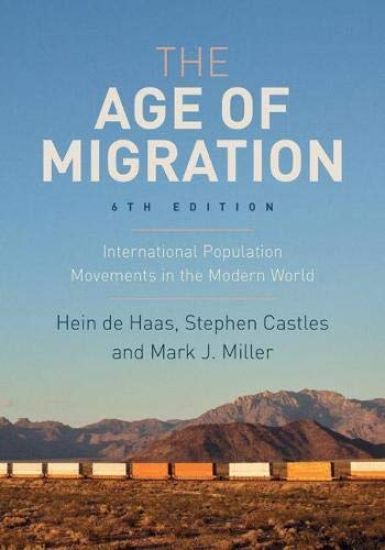
Long established as the leading textbook on migration and used by students and scholars alike all over the world, this fully revised and updated sixth edition continues to offer an authoritative and cutting-edge account of migration flows, why they occur, and their consequences for both origin and destination societies. International migration is one of the most emotive issues of our times, reforging societies around the world and shaping debates on security, national identity and sovereignty in profound ways. The expert authors of this book provide a truly global and interdisciplinary introduction to this perennially important topic, with chapters covering all of the world’s regions and spanning the nineteenth century to the present day. Exploring the significance of migration in relation to recent events and emerging trends, from the policies of the European Union to the Great Recession, this text helps to shed light on the often large gap between the rhetoric and realities of migration.For students of migration studies in disciplines as wide ranging as politics, sociology, geography, area studies, anthropology and history this is an indispensable guide, whether already familiar with the subject matter or approaching the topic for the first time.New to this Edition:- Charts the contemporary politics of migration, including the latest statistical data, summary of policy developments and shifts toward anti-immigrant politics and Islamophobia- A brand new chapter on Categories of Migration used to describe migrants and analyse migration, including a discussion on the topical issue of ‘climate refugees’- Extended discussion of the impacts of migration and development in origin countries in a new separate chapter at the end of the book- Improved coverage of migration trends in the former Soviet Union and Eastern Europe and Central Asia- Offers a better balance between Western and non-Western regions and perspectives on migration- Draws on up-to-date global data on migration and migration policies- A ‘Migration Policy Toolbox’, providing a comprehensive overview of different types of migration policies- A new glossary with definitions of key terms in migration, which are also highlighted throughout the textAccompanying online resources for this title can be found at bloomsburyonlineresources.com/the-age-of-migration-6th-edition. These resources are designed to support teaching and learning when using this textbook and are available at no extra cost.The Age of Migration is published by Bloomsbury Academic. In the United States and its dependencies, Canada, Mexico and the Philippines, it is distributed under licence by Guildford Press.
Migration is a central dynamic in globalization that is recasting contemporary states and societies in distinctive, powerful ways. Now with more balanced coverage of Western and non-Western regions, this leading text has been revised and updated with the latest theories, policy information, and interdisciplinary research. The book explores the causes, dynamics, and consequences of international population movements, as well as the experiences of migrants themselves. Chapters examine migration trends and patterns in all major world regions, how migration transforms both destination and origin societies, and the effects of migration and increasing ethnic diversity on national identity and politics. Useful pedagogical features include boxed case studies; extensive tables, graphs, and maps; end-of-chapter Guides to Further Reading; and a companion website (www.age-of-migration.com) with additional case studies, interactive flashcards, and other resources for students and instructors. New to This Edition *A wealth of new data, increased attention to non-Western regions and perspectives, and stronger analysis of long-term trends. *Chapter critically evaluating different categories used to describe migrants and analyze migration, including a myth-busting discussion of "climate refugees." *Chapter on the evolution and effectiveness of migration policies. *Chapter on how migration affects origin countries. *Expanded coverage of the former Soviet Union and Eastern Europe. *Analyses of timely topics, including anti-immigrant politics and Islamophobia; migration policies under Trump; large-scale refugee movements; the growth of new types of mobility for such purposes as education, marriage or retirement; and the tools governments use to control migration (the "Migration Policy Toolbox"). *Glossary of key terms, which are highlighted throughout the text.
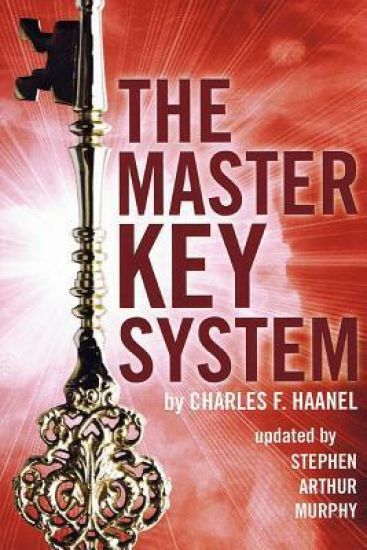
This book is a process where thoughts of courage, power, inspiration, harmony; are substituted for thoughts of failure, despair, lack, limitation, discord and we see life in a new light. Life has a new meaning for us; we are reconstructed and filled with joy, confidence, hope, and energy. We see opportunities for success where we were blind. We recognize possibilities which before had no meaning and they in turn help us onward and upward and this in turn changes our environment. So by these simple exercises of thought, we change not only ourselves but our environment, circumstances, and conditions.Charles F. Haanel published his book in 1912, and it continues to be beneficial today. This update keeps the essence of Charles Hannel's thoughts by using language which may help you better understand, in this new millennium. This book is a book which discusses the Law of Attraction and its true nature - which is Love. The author was moved by The Master Key System, which helped him gain awareness and is grateful for Charles's wonderful thoughts. He experienced an unfolding of his awareness which he wrote about in his first book, My Journey of Self - Awareness.
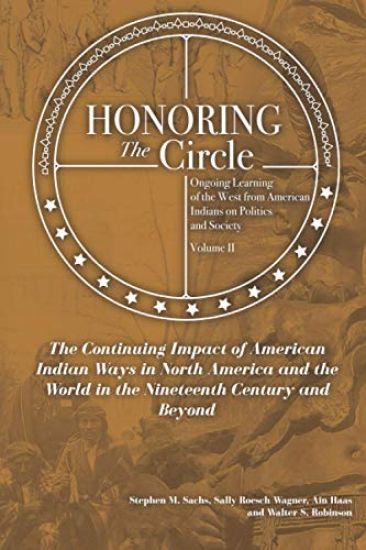
Honoring the Circle: Ongoing Learning from American Indians on Politics and Society, Volume II: The Continuing Impact of American Indian Ways in North America and the World in the Nineteenth Century and Beyond shows the continuing dynamics of the strands of American Indian influenced thought, begun among colonists and founding Americans, shaping the U.S. with new Native influences. This was well recognized among Americans in 1800, who considered themselves a fusion of the European and the Indian. Andrew Jackson's forced removal of Indians to the west began to hide that reality. This can be seen with European image of the Indian Goddess, first envisioned as dressed in buckskins and feathers; by the time her statue was placed atop the U.S. capitol in 1863 as the Goddess of Liberty, the outer clothing had become that of a Roman Goddess, but the Indian Woman remained beneath.Early in the nineteenth century Indian influences were plainly visible in the writings of John C. Calhoun and in the many Tammany Societies, including New York's Tammany Hall, founded to promote discussion of issues of the day and named in honor of a Delaware chief. Building on the influence of Franklin, Jefferson and others, an American Philosophy of Pragmatism developed, with strong Native roots among its interacting strands. Important contributors were Emerson and Thoreau, who had considerable contact with Indians, and later Jane Addams, James, Peirce and Dewey. Indian voices that shaped U.S. affairs included those of William Apess, Black Hawk, Elias Boudinot and George Copway. Indian influences have continued in Pragmatism's off-shoots and interactions, blossoming in the twenty-first century with President Obama and the current progressive movement.The Women's liberation movement began at contact, as Europeans saw the balanced reciprocity of women and men in Native communities. Among its early advocates who had close relations with Indians were Lydia Maria Child and Catharine Maria Sedgwick. Later, Matilda Joslyn Gage and others were inspired by Haudenosaunee women, as the women's movement became a major force. From the start, the women's movement was involved with civil rights broadly, including Indian rights, with women forming much of the core of anti-slavery movement. The movement for African-American rights has long had Native and Pragmatic roots in the valuing of diversity, as seen in the work of W. E. B. Du Bois, Martin Luther King Jr., Richard Wright and Cornell West. The more recent gay, lesbian, and transgender movement also has inspiration from Native practice.Over time, a growing number of Indigenous Americans have become active in the U.S. mainstream. Charles Eastman, Ella Deloria and Nick Black Elk were early contributors to mainstream understanding of Indians, while Vine Deloria Jr. was one of those contributing directly to the Pragmatic tradition. A major stimulus for American and world appreciation of Indigenous American ways was the counterculture movement of the 1960s. Many young people sought out Indians, and took interest in Indian ways as a positive alternative to mainstream western culture. This, along with the civil rights movement. contributed greatly to a larger public interest in Native ways and assisted Indian renewal and the shift in U.S. Indian policy to self-determination.The environmental movement has been influenced since contact by Indigenous concerns for maintaining balance with nature. But it began with Indian-influenced Thoreau and Emerson. A significant number of environmentalists and activists, such as Baird Callicott and Gary Snyder, have stirred interest in Native relations with nature. There have been an increasing number of Native environmental professionals and activists. Indians have become leaders in the movement, as seen the recent oil pipeline protests at Standing Rock, while Native voices have been more prevalent in public life.
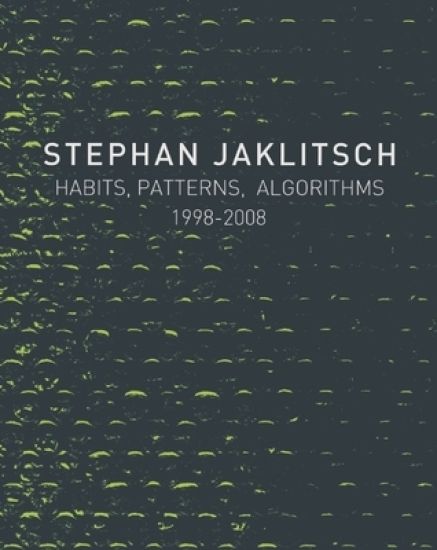
Best known for designing a wide variety of commercial spaces for Marc Jacobs, Stephan Jaklitsch seeks to explore the poetry of architecture through the manipulation of space and light to create rigorously detailed spaces that convey a sense of meaning and purpose to their respective contexts. Organized in a rough chronological sequence, the projects in Jaklitsch's Habits, Patterns, Algorithms range in scale from small interior-oriented retail constructions and free-standing residential work, which engages the surrounding landscape, to larger urban transformations both built and speculative. The primary focus is on the process of the design and construction of each work as well as the strict limitations presented by programme, site, code, or client conditions. Each project is presented with detailed drawings, sketches, models, and photographs.
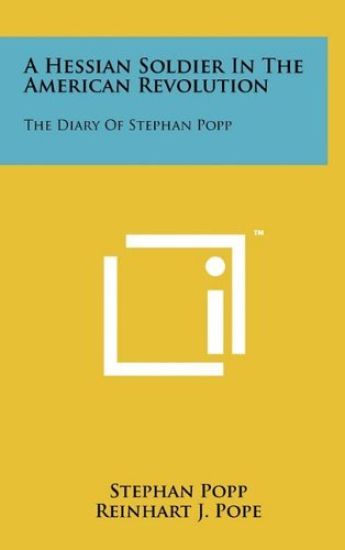
""A Hessian Soldier In The American Revolution: The Diary Of Stephan Popp"" is a historical account of the American Revolution from the perspective of a Hessian soldier named Stephan Popp. Popp was a young man from Hesse-Kassel, a German state that supplied soldiers to the British army during the American Revolution. He was sent to America in 1776 to fight for the British against the colonists.The book is a compilation of Popp's diary entries, which provide a unique insight into the life of a soldier during the American Revolution. Popp's diary entries describe his experiences during battles, his interactions with other soldiers, and his thoughts and feelings about the war.The book also provides historical context for Popp's experiences, explaining the political and military events of the American Revolution. It covers major battles such as the Battle of Saratoga and the Battle of Yorktown, as well as the broader political and social issues of the time.Overall, ""A Hessian Soldier In The American Revolution: The Diary Of Stephan Popp"" is a fascinating historical account that sheds light on the experiences of a soldier during the American Revolution. It is an important resource for anyone interested in the history of the American Revolution and the experiences of soldiers during wartime.This scarce antiquarian book is a facsimile reprint of the old original and may contain some imperfections such as library marks and notations. Because we believe this work is culturally important, we have made it available as part of our commitment for protecting, preserving, and promoting the world's literature in affordable, high quality, modern editions, that are true to their original work.
Stephan Beneking, composer, is based in Berlin, Germany. Beneking s orginal compositions are in neo-classical, melodic style for piano solo. His repertoire comprises more than 350 piano works so far and his music is being played by hobby and professional pianists in many countries. All scores/sheet music can be downloaded for free on www.beneking.com to make the music available to all interested pianists. The unique melodies and melancholy in his pieces attract listeners all over the world, even comparing him with the likes of Chopin, Schuman and Schubert. Pianists appreciate the sudden changes, little surprises and sparkling creativity, that make the pieces enjoyable to play. Beneking s style of "pure piano" means literally "crafted" piano works, that concentrate on the pure melody aspect, while the omission of any tempo, dynamics and pedal markings gives every pianist the possiblity to develop his/her own understanding of the work, thus making every single interpretation an unique piece of art, joint product of composer and pianist. His most famous works are the series of 10 Valses melancoliques, of which the"Valse melancolique No. VIII - le desir eternel" won the international Free-Scores Classical Piano contest in 2013. Many of his works are called "R ves" (dreams) or "Petits R ves" (dreamlets, little dreams) and refer to relatively short musical ideas, even miniatures, like a short musical "breath". Other works were inspired by Nature (Printemps, Little spring, The last flight of the Cranes, Dances on icy waters), Poetry and Myths (Melusine, Valkyries), the Death (Sprudelnder Geist in memory of his father) or the dramatic events of the Shoah (Petr Ginz, Kristallnacht). Beneking mainly composes in series of works with a certain theme or connection, often in combination with a compositional challenge (e.g. compositions for one hand alone or piano works on black or white keys only).









![Stephan Langton. [A Tale.]](/covers/9781240867059.jpg)
![Stephan Langton. [A Tale.]](/covers/9781240867073.jpg)