Kirjojen hintavertailu. Mukana 11 699 587 kirjaa ja 12 kauppaa.

Kirjahaku

Etsi kirjoja tekijän nimen, kirjan nimen tai ISBN:n perusteella.

1000 tulosta hakusanalla Stephen C Craig

Signature in the Cell

Signature in the Cell

Stephen C. Meyer

HarperOne
2010
nidottu
"Signature in the Cell is a defining work in the discussion of life's origins and the question of whether life is a product of unthinking matter or of an intelligent mind. For those who disagree with ID, the powerful case Meyer presents cannot be ignored in any honest debate. For those who may be sympathetic to ID, on the fence, or merely curious, this book is an engaging, eye-opening, and often eye-popping read" -- American Spectator Named one of the top books of 2009 by the Times Literary Supplement (London), this controversial and compelling book from Dr. Stephen C. Meyer presents a convincing new case for intelligent design (ID), based on revolutionary discoveries in science and DNA. Along the way, Meyer argues that Charles Darwin's theory of evolution as expounded in The Origin of Species did not, in fact, refute ID. If you enjoyed Francis Collins's The Language of God, you'll find much to ponder--about evolution, DNA, and intelligent design--in Signature in the Cell.
Darwin's Doubt

Darwin's Doubt

Stephen C. Meyer

HarperCollins
2014
pokkari
When Charles Darwin finished The Origin of Species, he thought that he had explained every clue, but one. Though his theory could explain many facts, Darwin knew that there was a significant event in the history of life that his theory did not explain. During this event, the -Cambrian explosion, - many animals suddenly appeared in the fossil record without apparent ancestors in earlier layers of rock. In Darwin's Doubt, Stephen C. Meyer tells the story of the mystery surrounding this explosion of animal life--a mystery that has intensified, not only because the expected ancestors of these animals have not been found, but because scientists have learned more about what it takes to construct an animal. During the last half century, biologists have come to appreciate the central importance of biological information--stored in DNA and elsewhere in cells--to building animal forms.Expanding on the compelling case he presented in his last book, Signature in the Cell, Meyer argues that the origin of this information, as well as other mysterious features of the Cambrian event, are best explained by intelligent design, rather than purely undirected evolutionary processes.
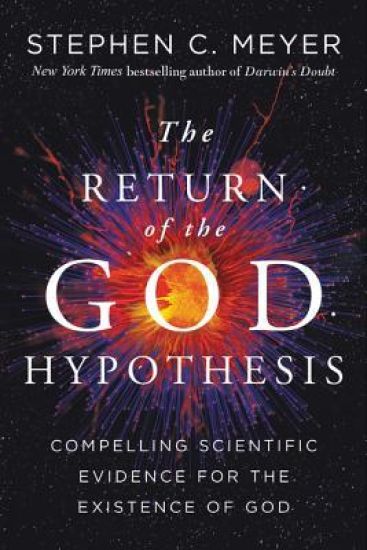
Return of the God Hypothesis

Return of the God Hypothesis

Stephen C. Meyer

HARPERCOLLINS PUBLISHERS INC
2023
pokkari
The New York Times bestselling author of Darwin’s Doubt presents groundbreaking scientific evidence of the existence of God, based on breakthroughs in physics, cosmology, and biology.Beginning in the late 19th century, many intellectuals began to insist that scientific knowledge conflicts with traditional theistic belief—that science and belief in God are “at war.” Philosopher of science Stephen Meyer challenges this view by examining three scientific discoveries with decidedly theistic implications. Building on the case for the intelligent design of life that he developed in Signature in the Cell and Darwin’s Doubt, Meyer demonstrates how discoveries in cosmology and physics coupled with those in biology help to establish the identity of the designing intelligence behind life and the universe. Meyer argues that theism—with its affirmation of a transcendent, intelligent and active creator—best explains the evidence we have concerning biological and cosmological origins. Previously Meyer refrained from attempting to answer questions about “who” might have designed life. Now he provides an evidence-based answer to perhaps the ultimate mystery of the universe. In so doing, he reveals a stunning conclusion: the data support not just the existence of an intelligent designer of some kind—but the existence of a personal God.
Basic Statistics with R

Basic Statistics with R

Stephen C. Loftus

Academic Press Inc
2021
nidottu
Basic Statistics with R: Reaching Decisions with Data provides an understanding of the processes at work in using data for results. Sections cover data collection and discuss exploratory analyses, including visual graphs, numerical summaries, and relationships between variables - basic probability, and statistical inference - including hypothesis testing and confidence intervals. All topics are taught using real-data drawn from various fields, including economics, biology, political science and sports. Using this wide variety of motivating examples allows students to directly connect and make statistics essential to their field of interest, rather than seeing it as a separate and ancillary knowledge area. In addition to introducing students to statistical topics using real data, the book provides a gentle introduction to coding, having the students use the statistical language and software R. Students learn to load data, calculate summary statistics, create graphs and do statistical inference using R with either Windows or Macintosh machines.
Growing Moral

Growing Moral

Stephen C. Angle

OXFORD UNIVERSITY PRESS INC
2022
sidottu
Ancient and enduring, rich and wide-ranging, the tradition of Confucianism offers profound insights into how we can lead good lives--lives built on understanding that we are deeply connected to one another. For thousands of years, Confucian thinkers have carefully honed a philosophy for living fully, passing that knowledge along to their students over generations. Kongzi, also known as Confucius (551-479 BCE), is the most famous of the 2500-year-long tradition's philosophers. Though Kongzi lived more than two millennia ago and on the other side of the earth from many picking up this book, his teachings about how to live reverberate everywhere there are parents, children, and families; everywhere people feel stirrings of compassion for others, but sometimes selfishly ignore them; everywhere people wonder how they should interact with their environment. In Growing Moral, philosopher Stephen C. Angle engages readers to reflect on and to practice the teachings of Confucianism in the contemporary world. Angle draws on the whole history of Confucianism, focusing on three thinkers from the classical era (Kongzi, Mengzi, and Xunzi) and two from the Neo-Confucian era (Zhu Xi and Wang Yangming). While laying out the fundamental teachings of Confucianism, the book highlights the enduring lessons that the philosophy offers contemporary readers. Although the book reveals the many helpful ways we can engage Confucian philosophy in our modern lives, it also scrutinizes those elements of Confucianism that may not align with 21st-century standpoints. Angle questions whether Confucianism, historically affiliated with patriarchal societies and monarchical governments, genuinely can be attractive to those committed to gender equality and democratic politics, and points the way towards a progressive, evolving version of Confucianism that is nonetheless consistent with the principles it has upheld over the centuries. At its core, Confucianism describes a way for humans to live and grow together in our world--a way characterized at its best by joy, beauty, and harmony. This book builds a case for modern Confucianism as a way of life well worth the attention of reflective modern readers no matter their age, where they live, or the paths they've taken so far.
Evolutionary Medicine

Evolutionary Medicine

Stephen C. Stearns; Ruslan Medzhitov

Oxford University Press
2024
sidottu
Evolutionary thinking provides insights into many different areas in the research and practice of medicine and public health. It takes specialties such as medical microbiology, epidemiology, oncology, gynecology, and psychiatry that had become increasingly siloed and places them in a larger framework. This foundational structure enables students to view medical knowledge as an integrated whole, underpinned by general principles rather than a loose collection of disparate facts. The discipline of evolutionary medicine continues to advance rapidly as new results come in showing where the insights pay off and where they do not. Its conceptual foundations have also been strengthened in papers not yet reflected in the textbooks, so a new edition is therefore timely. At the same time, the teaching of evolutionary medicine has also been steadily gaining momentum both in courses that prepare undergraduates for medical school in North America and in other contexts worldwide. Evolutionary Medicine is intended for undergraduate students preparing for careers in medicine and public health, students in schools of medicine and public health, and medical professionals curious about the insights that evolutionary thinking can bring to their field. It will also be relevant to students and researchers in the fields of evolutionary biology, anthropology, developmental biology, and genetics. It highlights the most important insights in a relatively brief and compelling book that does not attempt encyclopedic coverage of a rapidly changing field.
Evolutionary Medicine

Evolutionary Medicine

Stephen C. Stearns; Ruslan Medzhitov

Oxford University Press
2024
nidottu
Evolutionary thinking provides insights into many different areas in the research and practice of medicine and public health. It takes specialties such as medical microbiology, epidemiology, oncology, gynecology, and psychiatry that had become increasingly siloed and places them in a larger framework. This foundational structure enables students to view medical knowledge as an integrated whole, underpinned by general principles rather than a loose collection of disparate facts. The discipline of evolutionary medicine continues to advance rapidly as new results come in showing where the insights pay off and where they do not. Its conceptual foundations have also been strengthened in papers not yet reflected in the textbooks, so a new edition is therefore timely. At the same time, the teaching of evolutionary medicine has also been steadily gaining momentum both in courses that prepare undergraduates for medical school in North America and in other contexts worldwide. Evolutionary Medicine is intended for undergraduate students preparing for careers in medicine and public health, students in schools of medicine and public health, and medical professionals curious about the insights that evolutionary thinking can bring to their field. It will also be relevant to students and researchers in the fields of evolutionary biology, anthropology, developmental biology, and genetics. It highlights the most important insights in a relatively brief and compelling book that does not attempt encyclopedic coverage of a rapidly changing field.
The History of the Buddha's Relic Shrine

The History of the Buddha's Relic Shrine

Stephen C. Berkwitz

Oxford University Press Inc
2007
sidottu
Buddhist chronicles have long been a subject of central importance in the study of Buddhism. But while scholars have acknowledged the importance of Theravada chronicles for reconstructing the history of Buddhism and South Asia, they have relied almost exclusively on Pali works such as the Mahavamsa as sources of historical information. In this book Stephen Berkwitz offers the first complete English translation of the Buddhist chronicle called the Sinhala Thupavamsa, composed by Parakama Pandita in thirteenth-century Sri Lanka. One of the first Buddhist histories of its kind to be written in the language of Sinhala, this work represents a substantially longer and embellished version of an older Pali language work called the Thupavamsa. Unlike the Pali sources that were composed by elites for learned audiences throughout the Buddhist world, this text is an important example of the large number of Buddhist histories written in local languages for popular consumption. From this work, we learn how elite Buddhist narratives were often refashioned into Sinhala works that drew upon stories of the past to edify and entertain a wider audience. As a text written in a literary dialect of the vernacular Sinhala language, the Sinhala Thupavamsa contains a richly descriptive account of how Buddhism spread outside of India, replete with poetic embellishments and interpolations not found in other accounts of those events. Aside from being an important literary work, the Sinhala Thupavamsa is a text of considerable historical and religious significance. The local nature of its language and vision gives it contemporary relevance in Sri Lanka. The text celebrates devotionalism and seeks to persuade its audience to embody the same virtues of generosity and piety exemplified by the heroes of Buddhist history. There are at least three Sinhala editions currently in print in Sri Lanka and widely available in bookstores for students and practitioners. The text is also among those works that inform public discussion and debate over the place of Buddhism in the Sri Lankan nation state and the role of Buddhist monks in contemporary politics. The Sinhala Thupavamsa comprises several narrative strands that relate the life story of the Buddha and the manner in which the teachings and institutions he founded were established on the island of Sri Lanka in ancient times. The central focus of this work concerns the variety of relics associated with the historical Buddha, particularly how the relics were acquired and the presumed benefits of venerating them.The text also relates the mythological history of the Buddhas previous lives as a bodhisattva and concludes with a prediction about the future Buddha Maitreya. Renowned Buddhist kings such as King Ashoka and King Dutthagamani (Sinhala: Dutugamunu) are celebrated in this work for their prowess in war and their exemplary acts of religious giving. Reflection on Buddhist ethics and instruction on the Dharma, or the Buddhas teaching, are found throughout the work, indicating that this historical narrative was meant both to recall the past and give rise to religious practice among contemporary readers and listeners. The publication of this translation for the first time in the west adds to the knowledge of how local Buddhist communities imagined and represented their religious and cultural heritages in written works.
Sagehood

Sagehood

Stephen C. Angle

Oxford University Press Inc
2009
sidottu
Neo-Confucianism is the sophisticated revival of Confucian theorizing, responding to challenges from Buddhism and Daoism, which began around 1000 C.E. and came to dominate the Chinese intellectual scene for centuries thereafter. What would happen if we took Neo-Confucianism and its central ideal of sagehood seriously as contemporary philosophy? Sagehood represents supreme human virtue: a flawless, empathetic responsiveness to every situation in which one finds oneself. How could this be possible? How might one work toward such a state? According to Neo-Confucians, we should all strive to become sages, whether or not we ultimately achieve it. Taking neo-Confucianism seriously means to explore the ways that its theories of psychology, ethics, education, and politics engage with the views of contemporary philosophers. Angle's book is therefore both an exposition of Neo-Confucian philosophy and a sustained dialogue with many leading Western thinkers--and especially with those philosophers leading the current renewal of interest in virtue ethics. The book's significance is two-fold: it argues for a new stage in the development of contemporary Confucian philosophy, and it demonstrates the value to Western philosophers of engaging with the Neo-Confucian tradition.
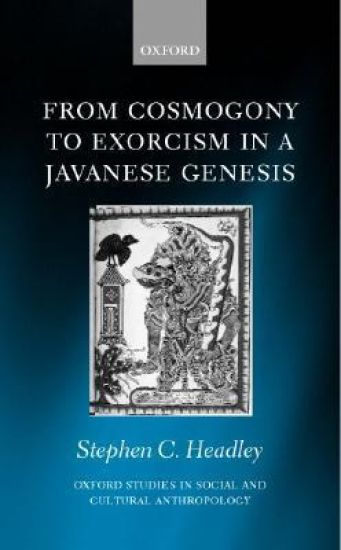
From Cosmogony to Exorcism in a Javavese Genesis

From Cosmogony to Exorcism in a Javavese Genesis

Stephen C. Headley

Oxford University Press
2001
sidottu
In 1925 the influential Dutch anthropologist W. H. Rassers posed the question of the relationship of myth to ritual, taking as his case study the Javanese myth of the birth of the man-eating demon, Kala. The light shed by this myth, and its re-enactment, on the social morphology of Java was immediately the subject of debate among students of Javanese culture. Stephen C. Headley translates and studies ritual and myth in their variant forms. He expands illuminatingly upon Rasser's general proposition, that the movement from cosmogony to exorcism founds fundamental social forms within which values circulate in Javanese society. Richly detailed descriptions confirm the permanence of these networks of circulating values in modern-day Java, and their persistence in the face of contemporary individualism.
The Evolution of Life Histories

The Evolution of Life Histories

Stephen C. Stearns

Oxford University Press
1992
nidottu
This book introduces life history evolution to postgraduate students just beginning their research in population biology, ecology, or evolutionary biology. It discusses major analytical tools, gives examples of their applications, and provides problems for discussion at the end of each chapter. It will interest all biologists wishing to understand the evolution of the life cycle and the causes of phenotypic variation in fitness, and it contains the seeds of applications of life history theory to population dynamics, behaviour, and community ecology. Care is taken in Part I to build up the tools needed for a well-rounded evolutionary explanation: demography, quantitative genetics, reaction norms, trade offs and phylogenetic/comparative analysis. Part II discusses the evolution of major life history traits. This is a comprehensive, up-to-date text in a field that holds a central position in modern ecology and evolution.
The Law of International Watercourses

The Law of International Watercourses

Stephen C. McCaffrey

Oxford University Press
2019
sidottu
The Law of International Watercourses is an authoritative guide to the rules of international law governing the navigational and non-navigational uses of international rivers, lakes, and groundwater. The continued growth of the world's population places increasing demands on Earth's finite supplies of fresh water. Because two or more States share many of the world's most important drainage basins - including the Danube, the Ganges, the Indus, the Jordan, the Mekong, the Nile, the Rhine and the Tigris-Euphrates - competition for increasingly scarce fresh water resources will only increase. Agreements between the States sharing international watercourses are negotiated, and disputes over shared water are resolved, against the backdrop of the rules of international law governing the use of this precious resource. The basic legal rules governing the use of shared freshwater for purposes other than navigation are reflected in the 1997 UN Convention on the Law of the Non-Navigational Uses of International Watercourses. This book devotes a chapter to the 1997 Convention but also examines the factual and legal context in which the Convention should be understood, considers the more important rules of the Convention in some depth, and discusses specific issues that could not be addressed in a framework instrument of that kind. The book reviews the major cases and controversies concerning international watercourses as a background against which to consider the basic substantive and procedural rights and obligations of States in the field. The third edition covers the implications of the 1997 Convention coming into force in August 2014, and the compatibility of the 1997 and 1992 Conventions. This edition also updates the entire book, adds new material to many of the chapters, and adds a number of new case studies, including Pulp Mills on the River Uruguay (Argentina v. Uruguay) and Certain Activities carried out by Nicaragua in the Border Area (Costa Rica v. Nicaragua), amongst others.
Lectures on Light

Lectures on Light

Stephen C. Rand

Oxford University Press
2016
sidottu
This book attempts to bridge in one step the enormous gap between introductory quantum mechanics and the research front of modern optics and scientific fields that make use of light. Hence, while it is suitable as a reference for the specialist in quantum optics, it will also be useful to the non-specialists from other disciplines who need to understand light and its uses in research. With a unique approach it introduces a single analytic tool, namely the density matrix, to analyze complex optical phenomena encountered in traditional as well as cross-disciplinary research. It moves swiftly in a tight sequence from elementary to sophisticated topics in quantum optics, including laser tweezers, laser cooling, coherent population transfer, optical magnetism, electromagnetically induced transparency, squeezed light, quantum information science and cavity quantum electrodynamics. A systematic approach is used that starts with the simplest systems - stationary two-level atoms - then introduces atomic motion, adds more energy levels, and moves on to discuss first-, second-, and third-order coherence effects that are the basis for analyzing new optical phenomena in incompletely characterized systems. Unconventional examples and original problems are used to engage even seasoned researchers in exploring a mathematical methodology with which they can tackle virtually any new problem involving light. An extensive bibliography makes connections with mathematical techniques and subject areas which can extend the benefit readers gain from each section. This revised edition includes over 40 new problems (for a total of 110 original problems with an instructor's solution manual), as well as completely new sections on quantum interference, Fano resonance, optical magnetism, quantum computation, laser cooling of solids, and irreducible representation of magnetic interactions. Literature references to current ultrafast science, nonlinear optics, x-ray and high-field physics topics have doubled at the end of chapters 5, 6, and 7; the subject index has also been significantly expanded.
Lectures on Light

Lectures on Light

Stephen C. Rand

Oxford University Press
2019
nidottu
This book attempts to bridge in one step the enormous gap between introductory quantum mechanics and the research front of modern optics and scientific fields that make use of light. Hence, while it is suitable as a reference for the specialist in quantum optics, it will also be useful to the non-specialists from other disciplines who need to understand light and its uses in research. With a unique approach it introduces a single analytic tool, namely the density matrix, to analyze complex optical phenomena encountered in traditional as well as cross-disciplinary research. It moves swiftly in a tight sequence from elementary to sophisticated topics in quantum optics, including laser tweezers, laser cooling, coherent population transfer, optical magnetism, electromagnetically induced transparency, squeezed light, quantum information science and cavity quantum electrodynamics. A systematic approach is used that starts with the simplest systems - stationary two-level atoms - then introduces atomic motion, adds more energy levels, and moves on to discuss first-, second-, and third-order coherence effects that are the basis for analyzing new optical phenomena in incompletely characterized systems. Unconventional examples and original problems are used to engage even seasoned researchers in exploring a mathematical methodology with which they can tackle virtually any new problem involving light. An extensive bibliography makes connections with mathematical techniques and subject areas which can extend the benefit readers gain from each section. This revised edition includes over 40 new problems (for a total of 110 original problems with an instructor's solution manual), as well as completely new sections on quantum interference, Fano resonance, optical magnetism, quantum computation, laser cooling of solids, and irreducible representation of magnetic interactions. Literature references to current ultrafast science, nonlinear optics, x-ray and high-field physics topics have doubled at the end of chapters 5, 6, and 7; the subject index has also been significantly expanded.
Evolution

Evolution

Stephen C. Stearns; Rolf Hoekstra

Oxford University Press
2005
nidottu
Since Charles Darwin's masterpiece 'The origin of Species by natural selection' was published in 1859, evolution has become an established science that illuminates and informs our understanding of many central biological issues from animal development to animal behaviour. Evolution 2/e stands alone amongst the major textbooks by focusing on key principles to offer a truly accessible, unintimidating treatment of this fascinating subject Part One introduces the basic mechanisms of microevolution: selection, inheritance, and development. Part Two considers how natural selection has designed organisms for reproductive success. Part Three explores macroevolutionary processes such as speciation and extinction and the techniques which are used to study these. Part Four examines key events in evolution throughout the geological record. Finally, Part Five discusses two subjects, coevolution and evolutionary medicine, which integrate and contrast micro- and macroevolution. The book closes with a chapter that recapitulates major issues, discusses unsolved problems, and looks ahead to future developments in this dynamic field. Recent advances in molecular biology and genetics have fuelled a renewed interest in evolutionary biology, and have given us new tools with which to explore the field, revolutionising our understanding of how evolutionary processes impact upon many aspects of biology. A rigorous yet engaging text, Evolution 2/e is perfect for any student wishing to gain a sound understanding of the subject. Online Resource Centre: - Figures available to download, to facilitate lecture preparation, - Self test questions linked to each chapters in the textbook - Key glossary terms in an interactive crossword format
The King and the Land

The King and the Land

Stephen C. Russell

Oxford University Press Inc
2016
sidottu
This is an open access title available under the terms of a CC BY-NC-ND 4.0 International license. It is free to read at Oxford Scholarship Online and offered as a free PDF download from OUP and selected open access locations. In The King and the Land, Stephen C. Russell offers a history of space and power in the biblical world by demonstrating how the monarchies in ancient Israel and Judah asserted their power over strategically important spaces such as privately-held lands, religious buildings, collectively-governed towns, and urban water systems. Case studies in the book treat Solomon's use of foreign architecture (1 Kings 5-8), David's dedication of land to Yahweh (2 Samuel 24), Jehu's decommissioning of Baal's temple (2 Kings 10), Absalom's navigation of the collective politics of Levantine towns (2 Samuel 15), and Hezekiah's reshaping of the tunnels that supplied Jerusalem with water (2 Kings 20; 2 Chronicles 32). Steeped in archaeological and textual evidence, this book contextualizes Israelite and Judahite royal and tribal politics within broader patterns of ancient Near Eastern spatial power. By providing a historical investigation into the nature of power and physical space in the Iron Age Levant, this book also offers fresh literary readings of the biblical texts that anchor its theses.
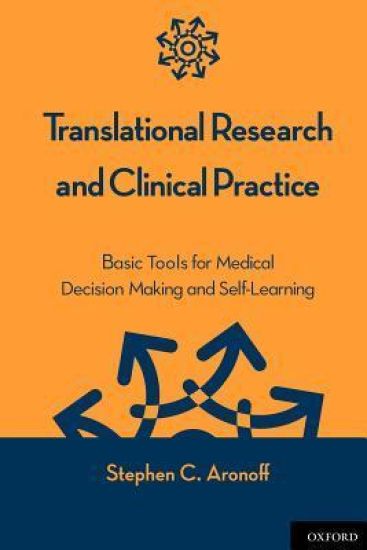
Translational Research and Clinical Practice

Translational Research and Clinical Practice

Stephen C. Aronoff

Oxford University Press Inc
2010
nidottu
Translational Research and Clinical Practice offers a clear and comprehensive introduction to evidence-based medicine. The use of medical literature has always been an integral tool for patient care, yet recently the modern processes of question formulation, literature search, and study evaluation have changed with the advent of the internet and technology. The physician must be able to find empirical evidence from the appropriate study using a searchable question and then determine its impact on patient care. The book provides the general framework for such medical decision making; it covers all kinds of cases and strategies, including questions of diagnosis, therapy, prognosis, differential diagnosis, clinical presentation, and causality. The tested material and approaches in this book are based on a course developed and taught by the author at Temple University School of Medicine. Organized for ease of use, accessibly written, and replete with clinically germane examples, Translational Research and Clinical Practice is a concise guide for medical students and clinicians seeking to effectively interpret and apply medical evidence in daily practice.
Sagehood

Sagehood

Stephen C. Angle

Oxford University Press Inc
2012
nidottu
Neo-Confucianism is the sophisticated revival of Confucian theorizing, responding to challenges from Buddhism and Daoism, which began around 1000 C.E. and came to dominate the Chinese intellectual scene for centuries thereafter. What would happen if we took Neo-Confucianism and its central ideal of sagehood seriously as contemporary philosophy? Sagehood represents supreme human virtue: a flawless, empathetic responsiveness to every situation in which one finds oneself. How could this be possible? How might one work toward such a state? According to Neo-Confucians, we should all strive to become sages, whether or not we ultimately achieve it. Taking neo-Confucianism seriously means to explore the ways that its theories of psychology, ethics, education, and politics engage with the views of contemporary philosophers. Angle's book is therefore both an exposition of Neo-Confucian philosophy and a sustained dialogue with many leading Western thinkers--and especially with those philosophers leading the current renewal of interest in virtue ethics. The book's significance is two-fold: it argues for a new stage in the development of contemporary Confucian philosophy, and it demonstrates the value to Western philosophers of engaging with the Neo-Confucian tradition. "Rarely is a work in comparative philosophy itself an original philosophical contribution. But that is the case in this instance in which Angle brings Neo-Confucian philosophy into fruitful conversation with contemporary Western, virtue-ethics based analytic philosophers.The result is a presentation of Neo-Confucianism that advances it beyond any previous Neo-Confucian: Angle is the best in the line so far, at least among those writing or written about in English." - Robert Cummings Neville, The Review of Metaphysics "This book does an outstanding job of engaging a wide range of sources not only from different areas of philosophy (such as virtue ethics and Chinese philosophy) but also from the disciplines of religious studies and Asian studies. Indeed, one thing that makes this book worth reading is the way it puts new and interesting sources into conversation with one another in order to shed new light on the topics at hand. While this work is certainly recommended for specialists in comparative ethics and Chinese philosophy, it is also a resource for philosophers interested in learning how non-Western philosophy might potentially contribute to work in ethics today." - Eric Cline, Mind "Throughout the book, Angle makes good use of recent empirical studies. His book is very accessible for readers with a wide variety of backgrounds. Philosophers with no background in Chinese thought will find challenging and interesting discussions of many issues relevant to their own work. Furthermore, I think this book is also quite appropriate to assign to strong undergraduate students. I recommend it highly." - Bryan W. van Norden, Notre Dame Philosophical Reviews