Eighteenth-century poetry was dominated by men of education and wealth, and bookcases sagged under the weight of volumes by Swift, Johnson and Pope. When Stephen Duck's The Thresher's Labour was published in 1730, however, it was a sensation - highlighting the plight of the working class in verse was hereto simply unthought of.Duck's poem came to the attention of Mary Collier, a washerwoman working in Hampshire, who was astounded to read Duck's dismissal of women as work-shy layabouts who indulged in 'noisy prattle', and she penned a stinging riposte, The Woman's Labour, which reframed Duck's relation of harvest-time toil from a woman's perspective.This edition of The Woman's Labour seeks to give a wider view of the conversation, and includes The Thresher's Labour, 'The Three Wise Sentences' (which Collier included in the first publication of her reply), 'An Epistolary Answer to an Exciseman Who Doubted Her Being the Author' and the elegy she wrote for Stephen Duck after he died.
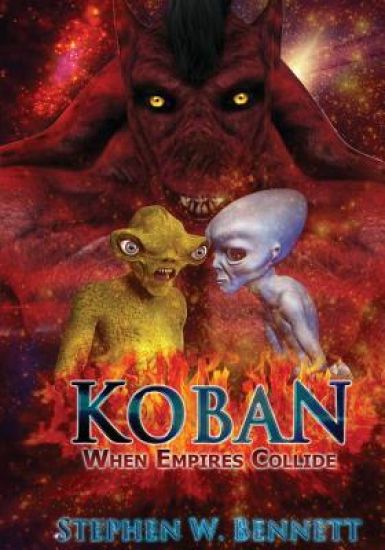
Koban Book 7: When Empires CollideThe end of the main series: Under threat of destruction or servitude to the Empire, facing the fleets of the Ragnar, Finth, and Thack Delos, and the larger force of the Thandol, Mirikami prepares the Federation for all-out war. The Planetary Union, allied with the Federation, receives a squadron of new technology Federation Scouts, equipped with gravity controlled weapons. They conduct a preemptive strike on a Thandol base. The Emperor blames it on the Federation, unaware of the PU's existence, and orders simultaneous attacks.Mirikami sends teams of Federation Scouts to the Security forces, to subvert them. They carry diplomat-soldiers, with tough messages. The messages are not well received, and the Kobani must improvise, in their typically hostile manner. Unexpectedly, a mystery silver alien, The Silha, demands a meeting with Mirikami and the Olt'kitapi. It seems there are restrictions for species once they achieve advanced gravity control. The Kobani are told of limits they must obey, or else. To a god-like elevated species, survival of primitives is not their concern, so long as they don't use gravity technology in forbidden ways. After Security force fleets attack Federation and PU worlds, Mirikami leads a combined fleet against the Thandol Capitol world. He uses a new tactic that bypasses the weapons limits of The Silha. Vastly outnumbered, he faces the Thandol fleet with a great defense. Book 1 - KobanBook 2 - The Mark of KobanBook 3 - Rise of the KobaniBook 4 - Shattered WorldsBook 5 - A Federation Forged in Fire Book 6 - Conflict and Empire
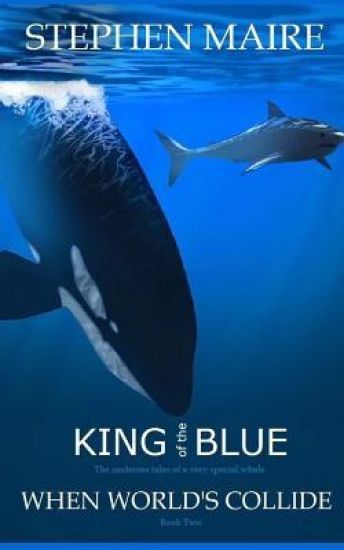
For those who have a passion for the ocean and for all those creatures who live theirlives beneath the waves, the author of 'King of the Blue' will submerge the readerbeneath the sea and away from the reassuring heat of the sun. Plunging into thecool, pitch blackness of a moonless ocean, the strong taste of salt will invade yourevery pore, as your senses blur and your ears echo to an unmistakable sound; asound that makes the hairs upon the back of your neck stand on end Where you sense no life, there hides a multitude.Where you see no eyes, eyes are upon you.Where you sense no danger, there danger lurks 'When world's collide' is the second story following in the wake of Torryn, the youngOrca bull and his close knit aquatic family of wild Orca.This is a story about growing up. It is a story about maturity and the demands ofresponsibility, and of learning to do what is right. But most of all, it is a story aboutthe importance of trust in a cold and unforgiving sea, where there can be no survivalwithout it.Swimming with his elder and more capable brother, Rally, Torryn soon finds himselfsmelling and tasting the all invading presence of the 'Two-Legs'. This is to be Torryn'sfirst encounter with these always highly unpredictable creatures that make theirlives on the shores of the Terra.With his brother crippled by the harsh effects of man's presence on the seas, Torrynfinds that he and he alone must swim to the rescue of his young and foolish cousin.Saving her from near certain death at the hands of the two-legs, he learns quicklyfrom his first and nearly deadly encounter with humans. Finding himself swimmingalone in the very shallow waters, Torryn soon discovers that not all of these thin, frailcreatures would wish to do him and his kind harm.Having now reached the second year of his life beneath the waves, Torryn continuesto swim and to learn the many guarded secrets that will one day see him becomeone of 'The Chosen.' Swimming under the strict guidance of his mentor Sirion, Torryncomes to realise that he still has much to learn of the ways of all those, who just likehim, make their lives beneath the cruel and sometimes unforgiving sea.Using his quick mind and his always energetic tail, Torryn swims to a second rescuebeneath the noses of the constantly curious Two-legs. Uncovering the presence of asecond deadly threat to his father's otherwise peaceful waters, Torryn faces certaindeath as he again swims into the unknown, only this time with his powerful fatherthe Tor's reluctant permission.'When world's collide' brings Torryn into first time contact with others of his ownkind who do not share the same ways and customs as that of the Tor-Gah.Through his rather unfortunate and ill-timed actions, Torryn finds himself swimmingalone and vulnerable in waters that harbour deadly new perils, as he is forced topractice his newly acquired skills to save his own life and those that he loves.
Durante la Guerra Fredda nessuno avrebbe immaginato che il crollo dell'Unione Sovietica sarebbe stato scatenato da dinamiche interne, e nemmeno che sarebbe avvenuto in relativa calma, senza grandi conflitti. > Il lavoro di Stephen Kotkin mostra che la prima causa del collasso sovietico non e stata la competizione militare ma, paradossalmente, il nucleo ideale dell'ideologia comunista: il sogno di un socialismo dal volto umano capace di migliorare la vita dei cittadini senza rinunciare ai principi di giustizia e uguaglianza. Le riforme neo-liberali non sono mai state davvero messe in atto nella Russia post-sovietica, ne avrebbero potuto esserlo, considerato il fardello dell'eredita sovietica in ambito istituzionale, politico, economico e sociale. > Il libro ricostruisce in modo chiaro e conciso il dramma di una superpotenza di 285 milioni di abitanti che si e sgretolata pur avendo a disposizione un immenso esercito, sostanzialmente fedele allo Stato, e uno spaventoso arsenale di armi nucleari e chimiche. E lo ha fatto evitando non solo l'Apocalisse, ma anche esplosioni di violenza potenzialmente destabilizzanti per l'intero scenario geopolitico internazionale. >
During his years in graduate school, Nathan publishes articles in some of the most prestigious scientific journals - but he does not believe that his articles are published legitimately. He's aware of problems with the work, and as he struggles to understand why his articles are being accepted, he realizes that the only reasonable explanation is that his co-author (the professor with whom he was working) is an African American. In time, he stops caring about any of the work - including the one project that has actual scientific merit. He leaves academics shortly after receiving his Ph.D. and takes an entry-level position in manufacturing. Along the way, Nathan tells about handling a high-school bullying issue, belonging to a para-military organization, and knowing the Unabomber. He also discusses his thoughts on human nature/free will, the wording of The 6th Commandment, public education, and the philosophy of science. Additionally, after the novel, there are some pages of non-fiction material that discuss two of the author's actual articles (written for the non-expert). One of the articles was published in the journal "Physical Review A" and the other in the journal "Proceedings of the National Academy of Sciences". For each of these two articles, a description of the work is followed by an explanation of why that article should never have been published. Speculation as to why those two articles were actually published is left up to the reader.
Ugo Amaldi; Norbert Angert; Klaus Bethge; Frederick Bordry; Werner Herr; Friedhelm Caspers; Jean-Pierre Delahaye; Wolfram Fischer; Etienne Forest; Brennan Goddard; Markus Brugger; Helmut Burkhardt; Susanna Guiducci; Klaus Hanke; Jim Hinton; Werner Hofmann; Stephen D. Holmes; Kurt Hübner; Yacine Kadi; Michael Lamont; Ralph Wolfgang Assmann; Oliver Brüning; Roland Garoby; Ralph Steinhagen; Rogelio Tomás García; Jörg Wenninger; Luca Bottura Bottura; Erk Jensen; Jose Miguel Jimenez; Owain Rhodri Jones; Bernhard Holzer; John Jowett
After a historical consideration of the types and evolution of accelerators the physics of particle beams is provided in detail. Topics dealt with comprise linear and nonlinear beam dynamics, collective phenomena in beams, and interactions of beams with the surroundings. The design and principles of synchrotrons, circular and linear colliders, and of linear accelerators are discussed next. Also technological aspects of accelerators (magnets, RF cavities, cryogenics, power supply, vacuum, beam instrumentation, injection and extraction) are reviewed, as well as accelerator operation (parameter control, beam feedback system, orbit correction, luminosity optimization). After introducing the largest accelerators and colliders of their times the application of accelerators and storage rings in industry, medicine, basic science, and energy research is discussed, including also synchrotron radiation sources and spallation sources. Finally, cosmic accelerators and an outlook for the future are given.
The Soviet Union created a unique form of urban modernity, developing institutions of social provisioning for hundreds of millions of people in small and medium-sized industrial cities spread across a vast territory. After the collapse of socialism these institutions were profoundly shaken--casualties, in the eyes of many observers, of market-oriented reforms associated with neoliberalism and the Washington Consensus. In Post-Soviet Social, Stephen Collier examines reform in Russia beyond the Washington Consensus. He turns attention from the noisy battles over stabilization and privatization during the 1990s to subsequent reforms that grapple with the mundane details of pipes, wires, bureaucratic routines, and budgetary formulas that made up the Soviet social state. Drawing on Michel Foucault's lectures from the late 1970s, Post-Soviet Social uses the Russian case to examine neoliberalism as a central form of political rationality in contemporary societies. The book's basic finding--that neoliberal reforms provide a justification for redistribution and social welfare, and may work to preserve the norms and forms of social modernity--lays the groundwork for a critical revision of conventional understandings of these topics.
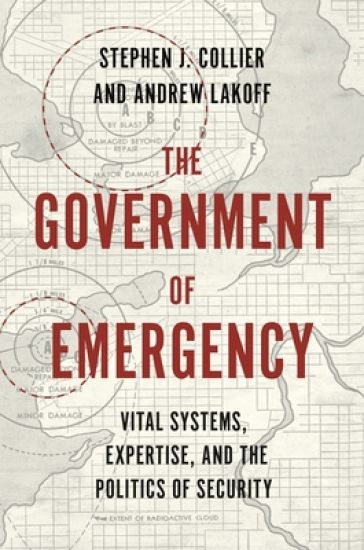
The origins and development of the modern American emergency stateFrom pandemic disease, to the disasters associated with global warming, to cyberattacks, today we face an increasing array of catastrophic threats. It is striking that, despite the diversity of these threats, experts and officials approach them in common terms: as future events that threaten to disrupt the vital, vulnerable systems upon which modern life depends.The Government of Emergency tells the story of how this now taken-for-granted way of understanding and managing emergencies arose. Amid the Great Depression, World War II, and the Cold War, an array of experts and officials working in obscure government offices developed a new understanding of the nation as a complex of vital, vulnerable systems. They invented technical and administrative devices to mitigate the nation’s vulnerability, and organized a distinctive form of emergency government that would make it possible to prepare for and manage potentially catastrophic events.Through these conceptual and technical inventions, Stephen Collier and Andrew Lakoff argue, vulnerability was defined as a particular kind of problem, one that continues to structure the approach of experts, officials, and policymakers to future emergencies.
The origins and development of the modern American emergency stateFrom pandemic disease, to the disasters associated with global warming, to cyberattacks, today we face an increasing array of catastrophic threats. It is striking that, despite the diversity of these threats, experts and officials approach them in common terms: as future events that threaten to disrupt the vital, vulnerable systems upon which modern life depends.The Government of Emergency tells the story of how this now taken-for-granted way of understanding and managing emergencies arose. Amid the Great Depression, World War II, and the Cold War, an array of experts and officials working in obscure government offices developed a new understanding of the nation as a complex of vital, vulnerable systems. They invented technical and administrative devices to mitigate the nation’s vulnerability, and organized a distinctive form of emergency government that would make it possible to prepare for and manage potentially catastrophic events.Through these conceptual and technical inventions, Stephen Collier and Andrew Lakoff argue, vulnerability was defined as a particular kind of problem, one that continues to structure the approach of experts, officials, and policymakers to future emergencies.
Short Stories is a collection of eleven powerful short stories, written between the ninteenth century and the present day. These stories are mostly very short, but unabridged. They can be used to stimulate reading and fluency skills, as well as to explore literary aspects of English. Short Stories contains – stories by a wide variety of authors from very different backgrounds, from Leonora Carrington to Peter Carey – creative activities before, during and after reading – a creative development section at the end of each unit to extend the themes and the reader's involvement with the story – notes on the authors and stories, and notes for the teacher on using the material. The book is accompanied by a cassette containing recordings of all the stories, as well as extra material for listening activities.
This is a practical guide for practising teachers of English and teachers in training. It offers teachers a rationale and a variety of imaginative techniques for integrating literature work with language teaching. It is divided into three sections: Part I discusses the questions: Why teach literature? What should we teach? How should we teach it?; Part II outlines and illustrates a wealth of student-centred class and homework activities appropriate to each stage of the study of a literary work. Detailed descriptions of the activities are accompanied by numerous sample worksheets; Part III demonstrates techniques for working with complete texts, and shows how the activities outlined in Part II can be applied to particular novels, plays, short stories and poems. All activities described have been used successfully with a wide range of classes from intermediate level up.
The editor and forger John Payne Collier (1789–1883) claimed to have discovered a Second Folio of Shakespeare which had been 'corrected' in a mid-seventeenth-century hand. He published this catalogue of the emendations, including his commentary on them, in 1852. Collier then presented the so-called 'Perkins Folio' to the Duke of Devonshire, whose successor allowed it to be loaned in 1859 to the British Museum, where a thorough examination exposed it as a forgery. A storm of controversy followed and three of the key documents in the debate, all published in 1860, are also reissued here: 'An Inquiry into the Genuineness of the Manuscript Corrections in Mr. J. Payne Collier's Annotated Shakspere Folio, 1632' by Nicholas Hamilton (d.1915), assistant keeper of manuscripts at the British Museum; Collier's attempt to refute Hamilton's findings; and 'A Review of the Present State of the Shakespearian Controversy' by Thomas Duffus Hardy (1804–78).
The period from 1960 to 2000 was one of remarkable growth and transformation in the world economy. Why did most of Sub-Saharan Africa fail to develop over this period? Why did a few small African economies succeed spectacularly? The Political Economy of Economic Growth in Africa, 1960–2000 is by far the most ambitious and comprehensive assessment of Africa's post-independence economic performance to date. Volume 1 examines the impact of resource wealth and geographical remoteness on Africa's growth and develops a new dataset of governance regimes covering all of Sub-Saharan Africa. Separate chapters analyze the dominant patterns of governance observed over the period and their impact on growth, the ideological formation of the political elite, the roots of political violence and reform, and the lessons of the 1960–2000 period for contemporary growth strategy.
Bringing together the work of nine leading historians, and superbly illustrated with contemporary photography and colour maps, The Second World War gives readers a comprehensive understanding of all aspects of history’s greatest conflict.The period from 1939 to 1945 saw some of the most devastating and remarkable events in living memory. Labouring beneath a daily burden of fear, sacrifice, deprivation and uncertainty, soldiers and civilians of all nationalities were driven to extremes of selfless loyalty, dogged determination or bitter cruelty by the demands of a world at war. This book tells the stories of the men and women who lived and died during the Second World War, from politicians to factory workers, and from High Command to the conscripted men on the front lines. The experience of war is brought to life through a wealth of contemporary documentation, private writings and historical research, whilst the political, military and historical significance of the war is assessed and examined. From Europe's Western and Eastern Fronts to the war at sea, and from the Pacific to the Mediterranean and North Africa, every fighting front of the Second World War is covered in this truly comprehensive volume.