Kirjojen hintavertailu. Mukana 11 244 527 kirjaa ja 12 kauppaa.

Kirjahaku

Etsi kirjoja tekijän nimen, kirjan nimen tai ISBN:n perusteella.

1000 tulosta hakusanalla Stephen Cooper

Ambrosiaster's Commentary on the Pauline Epistles

Ambrosiaster's Commentary on the Pauline Epistles

Theodore S de Bruyn; Stephen a Cooper; David G Hunter

Society of Biblical Literature
2017
sidottu
The ancient writer dubbed Ambrosiaster was a pioneer in the revival of interest in the Pauline Epistles in the fourth century. He was read by later Latin writers, including Pelagius and Augustine, and his writings, passed on pseudonymously, had a long afterlife in the biblical commentaries, theological treatises, and canonical literature of the medieval and the early modern periods. In addition to his importance as an interpreter of scripture, Ambrosiaster provides unique perspectives on many facets of Christian life in Rome, from the emergence of clerical celibacy to the development of liturgical practices to the subordination of women. His commentary on the Pauline Epistles will be of interest to students of biblical interpretation and ancient Christianity.
Ambrosiaster's Commentary on the Pauline Epistles

Ambrosiaster's Commentary on the Pauline Epistles

Theodore S de Bruyn; Stephen a Cooper; David G Hunter

Society of Biblical Literature
2017
pokkari
The ancient writer dubbed Ambrosiaster was a pioneer in the revival of interest in the Pauline Epistles in the fourth century. He was read by later Latin writers, including Pelagius and Augustine, and his writings, passed on pseudonymously, had a long afterlife in the biblical commentaries, theological treatises, and canonical literature of the medieval and the early modern periods. In addition to his importance as an interpreter of scripture, Ambrosiaster provides unique perspectives on many facets of Christian life in Rome, from the emergence of clerical celibacy to the development of liturgical practices to the subordination of women. His commentary on the Pauline Epistles will be of interest to students of biblical interpretation and ancient Christianity.
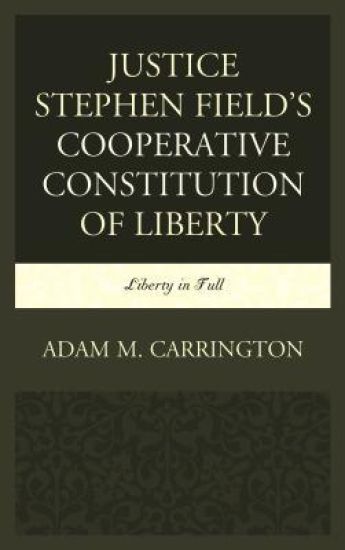
Justice Stephen Field's Cooperative Constitution of Liberty
This book examines liberty’s Constitutional meaning through the jurisprudence of Justice Stephen Field, one of the late-Nineteenth Century’s most influential Supreme Court Justices. A Lincoln appointee who served on the Court from 1863-1897, Field articulated a view of Constitutional liberty that speaks to contemporary disputes. Today, some see liberty as protection through government regulation against private oppression. Others see liberty as protection from government through limits on governmental power. Justice Field is often viewed as siding against government power to regulate, acting as a pre-cursor to the infamous “Lochner” Era of the Court. This work explains how Field instead saw both these competing conceptions of liberty as legitimate. In fact, the two cooperated toward a common end. In his opinions, Field argued that protections through and from government worked in tandem to guard fundamental individual rights. In describing this view of liberty, Field addressed key Constitutional provisions that remain a source of debate, including some of the earliest interpretations of the Due Process Clause, its relationship to state police power and civil rights, and some of the earliest assertions of a national police power through the Commerce Clause. This work furthermore addresses the underpinnings of Field’s views, namely that he grounded his reading of the Constitution in the context of the common law and the Declaration of Independence. In his principles as well as his approach, this book argues, Justice Field presents a helpful discussant in ongoing debates regarding the meaning of liberty and of the Constitution.
Justice Stephen Field's Cooperative Constitution of Liberty
This book examines liberty’s Constitutional meaning through the jurisprudence of Justice Stephen Field, one of the late-Nineteenth Century’s most influential Supreme Court Justices. A Lincoln appointee who served on the Court from 1863-1897, Field articulated a view of Constitutional liberty that speaks to contemporary disputes. Today, some see liberty as protection through government regulation against private oppression. Others see liberty as protection from government through limits on governmental power. Justice Field is often viewed as siding against government power to regulate, acting as a pre-cursor to the infamous “Lochner” Era of the Court. This work explains how Field instead saw both these competing conceptions of liberty as legitimate. In fact, the two cooperated toward a common end. In his opinions, Field argued that protections through and from government worked in tandem to guard fundamental individual rights. In describing this view of liberty, Field addressed key Constitutional provisions that remain a source of debate, including some of the earliest interpretations of the Due Process Clause, its relationship to state police power and civil rights, and some of the earliest assertions of a national police power through the Commerce Clause. This work furthermore addresses the underpinnings of Field’s views, namely that he grounded his reading of the Constitution in the context of the common law and the Declaration of Independence. In his principles as well as his approach, this book argues, Justice Field presents a helpful discussant in ongoing debates regarding the meaning of liberty and of the Constitution.
Fenimore Cooper

Fenimore Cooper

Stephen Railton

Princeton University Press
2015
pokkari
The oddly diverse character of James Fenimore Cooper's writings and activities has led many critics to view his career as fragmentary. Stephen Railton takes a psychoanalytic approach to the novelist's most important works and the most significant events in his life. By showing how the aesthetic struggle to create reflected attempts to reconcile conflicting emotional needs, the author is able to provide a much-needed coherent interpretation of Cooper's achievement. Professor Railton's analysis shows that an awareness of the extent to which Cooper's father dominated his life is central to an understanding of his novels and his often contradictory behavior. Originally published in 1978. The Princeton Legacy Library uses the latest print-on-demand technology to again make available previously out-of-print books from the distinguished backlist of Princeton University Press. These editions preserve the original texts of these important books while presenting them in durable paperback and hardcover editions. The goal of the Princeton Legacy Library is to vastly increase access to the rich scholarly heritage found in the thousands of books published by Princeton University Press since its founding in 1905.
Fenimore Cooper

Fenimore Cooper

Stephen Railton

Princeton University Press
2016
sidottu
The oddly diverse character of James Fenimore Cooper's writings and activities has led many critics to view his career as fragmentary. Stephen Railton takes a psychoanalytic approach to the novelist's most important works and the most significant events in his life. By showing how the aesthetic struggle to create reflected attempts to reconcile conflicting emotional needs, the author is able to provide a much-needed coherent interpretation of Cooper's achievement. Professor Railton's analysis shows that an awareness of the extent to which Cooper's father dominated his life is central to an understanding of his novels and his often contradictory behavior. Originally published in 1978. The Princeton Legacy Library uses the latest print-on-demand technology to again make available previously out-of-print books from the distinguished backlist of Princeton University Press. These editions preserve the original texts of these important books while presenting them in durable paperback and hardcover editions. The goal of the Princeton Legacy Library is to vastly increase access to the rich scholarly heritage found in the thousands of books published by Princeton University Press since its founding in 1905.
The Corpse Bridge: A Cooper & Fry Mystery

The Corpse Bridge: A Cooper & Fry Mystery

Stephen Booth

William Morrow Company
2015
nidottu
When it comes to murder, nothing is sacred . . .For centuries, mourners in Derbyshire have used the Corpse Bridge to cross the River Dove and reach their village burial grounds.When a developer plans to deconsecrate the land by turning it into a parking lot for his resort cottages, bodies begin to litter the road to the Corpse Bridge.Are these warnings to stay away from the sacred plots--or something much, much worse: a terrifying serial killer at work?After recuperating from a traumatic event, Detective Cooper is finally back at work, and he knows that solving the mystery of the Corpse Bridge is exactly what he needs to feel like himself again.But if Cooper can't overcome his own personal demons and focus on the case, he could put everything--and everyone--he cares about at risk . . .
The Murder Road: A Cooper & Fry Mystery

The Murder Road: A Cooper & Fry Mystery

Stephen Booth

William Morrow Company
2015
nidottu
For fans of Broadchurch, Louise Penny, and Peter Robinson comes a spellbinding new novel from internationally bestselling author Stephen BoothWelcome to the picturesque English village of Shawhead, where there's one road in and one road out. And on that road this morning is an abandoned vehicle...with an ominous bloodstain inside.It's a mystery. It could be a murder. Where--and who--is the driver? Whose blood has been discovered? Why are the people of Shawhead so hostile toward Detective Ben Cooper, sent in to take charge of the investigation?As Cooper peels back layers of lies and exposes dark secrets to the light, he draws ever closer to a killer hiding in plain sight. Packed with atmosphere, suspense, and surprises, The Murder Road is Stephen Booth's most unforgettable novel yet.
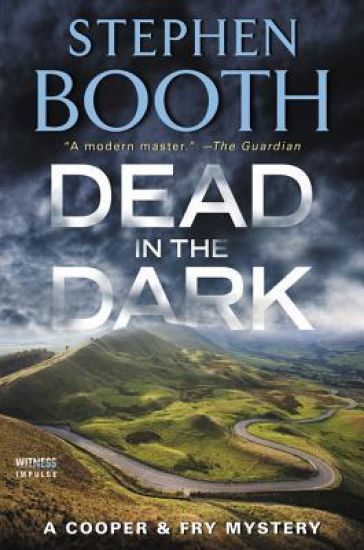
Dead in the Dark: A Cooper & Fry Mystery

Dead in the Dark: A Cooper & Fry Mystery

Stephen Booth

William Morrow Company
2018
nidottu
How do you prove a murder without a body?Ten years ago, Reece Bower was accused of killing his wife, a crime he always denied. Extensive police searches near his home in Bakewell found no trace of Annette Bower's remains, and the case against him collapsed.But now memories of the original investigation have been resurrected for Detective Inspector Ben Cooper - because Reece Bower himself has disappeared, and his new wife wants answers.Cooper can't call on the Major Crime Unit and DS Diane Fry for help unless he can prove a murder took place - impossible without a body. As his search moves into the caves and abandoned mines in the isolated depths of Lathkilldale, the question is: who would want revenge for the death of Annette Bower?
Fall Down Dead: A Cooper & Fry Mystery

Fall Down Dead: A Cooper & Fry Mystery

Stephen Booth

Witness Impulse
2019
nidottu
The dramatic, gripping new Cooper & Fry crime thriller from bestseller Stephen Booth sees the stunning Peak District backdrop prove fatal for one walking partyThey knew the danger, but they went anyway..."Almost before she'd stopped breathing, a swirl of mist snaked across her legs and settled in her hair, clutching her in its chilly embrace, hiding her body from view. It would be hours before she was found."The mountain of Kinder Scout offers the most incredible views of the Peak District, but when thick fog descends there on a walking party led by enigmatic Darius Roth, this spectacular landscape is turned into a death trap that claims a life.For DI Ben Cooper however, something about the way Faith Matthew fell to her death suggests it was no accident, and he quickly discovers more than one of the hikers may have had reason to murder their companion.To make things worse, his old colleague DS Diane Fry finds herself at centre of an internal investigations storm that threatens to drag Cooper down with it.
Visualising the Charge and Cooper-Pair Density Waves in Cuprates

Visualising the Charge and Cooper-Pair Density Waves in Cuprates

Stephen Edkins

Springer International Publishing AG
2017
sidottu
This thesis reports on the use of scanning tunnelling microscopy to elucidate the atomic-scale electronic structure of a charge density wave, revealing that it has a d-symmetry form factor, hitherto unobserved in nature. It then details the development of an entirely new class of scanned probe: the scanning Josephson tunnelling microscope. This scans the Josephson junction formed between a cuprate superconducting microscope tip and the surface of a cuprate sample, thereby imaging the superfluid density of the sample with nanometer resolution. This novel method is used to establish the existence of a spatially modulated superconducting condensate, something postulated theoretically over half a century ago but never previously observed.
Visualising the Charge and Cooper-Pair Density Waves in Cuprates

Visualising the Charge and Cooper-Pair Density Waves in Cuprates

Stephen Edkins

Springer International Publishing AG
2018
nidottu
This thesis reports on the use of scanning tunnelling microscopy to elucidate the atomic-scale electronic structure of a charge density wave, revealing that it has a d-symmetry form factor, hitherto unobserved in nature. It then details the development of an entirely new class of scanned probe: the scanning Josephson tunnelling microscope. This scans the Josephson junction formed between a cuprate superconducting microscope tip and the surface of a cuprate sample, thereby imaging the superfluid density of the sample with nanometer resolution. This novel method is used to establish the existence of a spatially modulated superconducting condensate, something postulated theoretically over half a century ago but never previously observed.
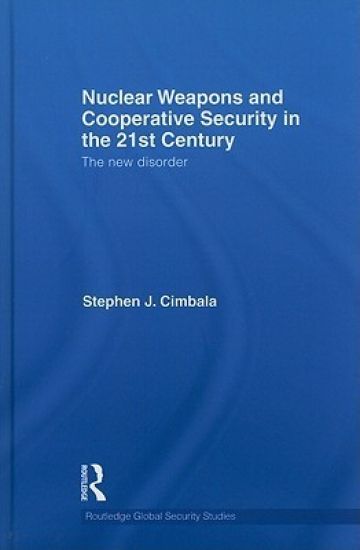
Nuclear Weapons and Cooperative Security in the 21st Century
This book looks at the prospects for international cooperation over nuclear weapons proliferation in the 21st century.Nuclear weapons served as stabilizing forces during the Cold War, or the First Nuclear Age, on account of their capability for destruction, the fear that this created among politicians and publics, and the domination of the nuclear world order by two superpowers: the United States and the Soviet Union. The end of the Cold War, the dissolution of the Soviet Union, and the potential for nuclear weapons acquisition among revisionist states, or even non-state actors including terrorists, creates the possibility of a 'wolves eat dogs' phenomenon in the present century. In the 21st century, three forces threaten to undo or weaken the long nuclear peace and fast-forward states into a new and more dangerous situation: the existence of large US and Russian nuclear weapons arsenals; the potential for new technologies, including missile defenses and long-range, precision conventional weapons, and a collapse or atrophy of the nuclear nonproliferation regime, and the opening of the door for nuclear weapons to spread among more than the currently acknowledged nuclear states.This book explains how these three 'weakening' forces interact with one another and with US and Russian policy-making in order to create an environment of large possibilities for cooperative security - but also of considerable danger. Instead, the choices made by military planners and policy-makers will create an early twenty-first century story privileging nuclear stability or chaos. The US and Russia can, and should, make incremental progress in arms control and nonproliferation. This book will be of much interest to students of nuclear proliferation and arms control, strategic studies, international security and IR in general.Stephen J. Cimbala is Distinguished Professor of Political Science at Pennsylvania State University. He is the author of numerous works in the fields of international security, defense studies, nuclear arms control and other topics. He has consulted for various US government agencies and defense contractors.
Nuclear Weapons and Cooperative Security in the 21st Century
This book looks at the prospects for international cooperation over nuclear weapons proliferation in the 21st century.Nuclear weapons served as stabilizing forces during the Cold War, or the First Nuclear Age, on account of their capability for destruction, the fear that this created among politicians and publics, and the domination of the nuclear world order by two superpowers: the United States and the Soviet Union. The end of the Cold War, the dissolution of the Soviet Union, and the potential for nuclear weapons acquisition among revisionist states, or even non-state actors including terrorists, creates the possibility of a 'wolves eat dogs' phenomenon in the present century. In the 21st century, three forces threaten to undo or weaken the long nuclear peace and fast-forward states into a new and more dangerous situation: the existence of large US and Russian nuclear weapons arsenals; the potential for new technologies, including missile defenses and long-range, precision conventional weapons, and a collapse or atrophy of the nuclear nonproliferation regime, and the opening of the door for nuclear weapons to spread among more than the currently acknowledged nuclear states.This book explains how these three 'weakening' forces interact with one another and with US and Russian policy-making in order to create an environment of large possibilities for cooperative security - but also of considerable danger. Instead, the choices made by military planners and policy-makers will create an early twenty-first century story privileging nuclear stability or chaos. The US and Russia can, and should, make incremental progress in arms control and nonproliferation. This book will be of much interest to students of nuclear proliferation and arms control, strategic studies, international security and IR in general.Stephen J. Cimbala is Distinguished Professor of Political Science at Pennsylvania State University. He is the author of numerous works in the fields of international security, defense studies, nuclear arms control and other topics. He has consulted for various US government agencies and defense contractors.