Kirjojen hintavertailu. Mukana 11 627 833 kirjaa ja 12 kauppaa.

Kirjahaku

Etsi kirjoja tekijän nimen, kirjan nimen tai ISBN:n perusteella.

1000 tulosta hakusanalla Stephen G Perry

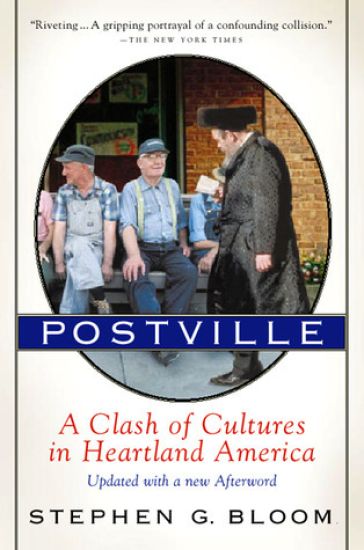
Postville: A Clash of Cultures in Heartland America
In 1987, a group of Lubavitchers, one of the most orthodox and zealous of the Jewish sects, opened a kosher slaughterhouse just outside tiny Postville, Iowa (pop. 1,465). When the business became a worldwide success, Postville found itself both revived and divided. The town's initial welcome of the Jews turned into confusion, dismay, and even disgust. By 1997, the town had engineered a vote on what everyone agreed was actually a referendum: whether or not these Jews should stay. The quiet, restrained Iowans were astonished at these brash, assertive Hasidic Jews, who ignored the unwritten laws of Iowa behavior in almost every respect. The Lubavitchers, on the other hand, could not compromise with the world of Postville; their religion and their tradition quite literally forbade it. Were the Iowans prejudiced, or were the Lubavitchers simply unbearable? Award-winning journalist Stephen G. Bloom found himself with a bird's-eye view of this battle and gained a new perspective on questions that haunt America nationwide. What makes a community? How does one accept new and powerfully different traditions? Is money more important than history? In the dramatic and often poignant stories of the people of Postville - Jew and gentile, puzzled and puzzling, unyielding and unstoppable - lies a great swath of America today.
America Abroad

America Abroad

Stephen G. Brooks; William C. Wohlforth

Oxford University Press Inc
2018
nidottu
A decade and a half of exhausting wars, punishing economic setbacks, and fast-rising rivals has called into question America's fundamental position and purpose in world politics. Will the US continue to be the only superpower in the international system? Should it continue advancing the world-shaping grand strategy it has followed since the Cold War? Or should it focus on internal problems? America Abroad takes stock of these debates and provides a powerful defense of American globalism. Since the end of World War Two, world politics has been shaped by two constants: America's position as the most powerful state, and its strategic choice to be deeply engaged in the world. But if America disengages from the world and reduces its footprint overseas, core US security and economic interests would be jeopardized. While America should remain globally engaged, it has to focus primarily on its core interests or run the risk of overextension. A bracing rejoinder to the critics of American globalism-a more potent force than ever in the Trump era-America Abroad is a powerful reminder that a robust American presence is crucial for maintaining world order.
Energy and Power

Energy and Power

Stephen G. Gross

OXFORD UNIVERSITY PRESS INC
2023
sidottu
A novel exploration of the deeper political, economic, and geopolitical history behind Germany's daring campaign to restructure its energy system around green power. Since the 1990s, Germany has embarked on a daring campaign to restructure its energy system around renewable power, sparking a global revolution in solar and wind technology. But this pioneering energy transition has been plagued with problems. In Energy and Power, Stephen G. Gross explains the deeper origins of the Energiewende--Germany's transition to green energy--and offers the first comprehensive history of German energy and climate policy from World War II to the present. The book follows the Federal Republic as it passed through five energy transitions from the dramatic shift to oil that nearly wiped out the nation's hard coal sector, to the oil shocks and the rise of the Green movement in the 1970s and 1980s, the co-creation of a natural gas infrastructure with Russia, and the transition to renewable power today. He shows how debates over energy profoundly shaped the course of German history and influenced the landmark developments that define modern Europe. As Gross argues, the intense and early politicization of energy led the Federal Republic to diverge from the United States and rethink its fossil economy well before global warming became a public issue, building a green energy system in the name of many social goals. Yet Germany's experience also illustrates the difficulty, the political battles, and the unintended consequences that surround energy transitions. By combining economy theory with a study of interest groups, ideas, and political mobilization, Energy and Power offers a novel explanation for why energy transitions happen. Further, it provides a powerful lens to move beyond conventional debates on Germany's East-West divide, or its postwar engagement with the Holocaust, to explore how this nation has shaped the contemporary world in other important ways.
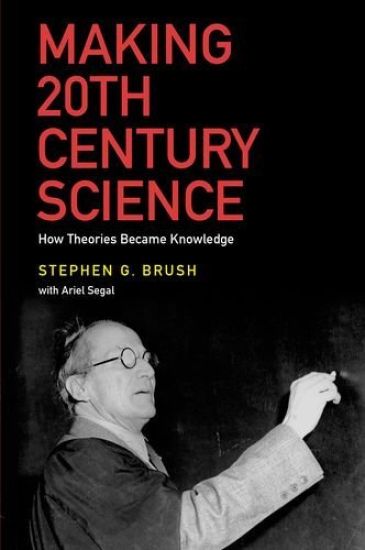
Making 20th Century Science

Making 20th Century Science

Stephen G. Brush

Oxford University Press Inc
2015
sidottu
Historically, the scientific method has been said to require proposing a theory, making a prediction of something not already known, testing the prediction, and giving up the theory (or substantially changing it) if it fails the test. A theory that leads to several successful predictions is more likely to be accepted than one that only explains what is already known but not understood. This process is widely treated as the conventional method of achieving scientific progress, and was used throughout the twentieth century as the standard route to discovery and experimentation. But does science really work this way? In Making 20th Century Science, Stephen G. Brush discusses this question, as it relates to the development of science throughout the last century. Answering this question requires both a philosophically and historically scientific approach, and Brush blends the two in order to take a close look at how scientific methodology has developed. Several cases from the history of modern physical and biological science are examined, including Mendeleev's Periodic Law, Kekule's structure for benzene, the light-quantum hypothesis, quantum mechanics, chromosome theory, and natural selection. In general it is found that theories are accepted for a combination of successful predictions and better explanations of old facts. Making 20th Century Science is a large-scale historical look at the implementation of the scientific method, and how scientific theories come to be accepted.
Peasants Against the State

Peasants Against the State

Stephen G. Bunker

University of Chicago Press
1991
nidottu
Stephen Bunker challenges the image of peasants as passive victims and argues that coffee growers in the Bugisu District of Uganda, because they own land and may choose which crops to produce, maintain an unusual degree of economic and political independence. Focusing on peasant struggles for market control over coffee exports in Bugisu from colonial times through the reign and overthrow of Idi Amin, Bunker shows that these freeholding peasants acted collectively and used the state's dependence on coffee export revenues to effectively influence and veto government programs inimical to their interests. Bunker's work vividly portrays the small victories and great trials of ordinary people struggling to control their own economic destiny while resisting the power of the world economy.
Underdeveloping the Amazon

Underdeveloping the Amazon

Stephen G. Bunker

University of Chicago Press
1990
nidottu
Underdeveloping the Amazon shows how different extractive economies have periodically enriched various dominant classes but progressively impoverished the entire region by disrupting both the Amazon Basin's ecology and human communities. Contending that traditional models of development based almost exclusively on the European and American experience of industrial production cannot apply to a regional economy founded on extraction, Stephen G. Bunker proposes a new model based on the use and depletion of energy values in natural resources as the key to understanding the disruptive forces at work in the Basin.
Steel Giants

Steel Giants

Stephen G. McShane; Gary Wilk

Indiana University Press
2009
sidottu
At the turn of the 20th century, an army of workers descended upon the northwest Indiana dunes to forge a world-class steel industry for America. As a result of the mills constructed by companies such as U.S. Steel and Inland Steel, grid-like cities on the shoreline of Lake Michigan grew into prosperous steel towns, drawing workers from all over the country and beyond. The Calumet region became one of the most heavily populated and ethnically diverse regions in the nation. The story of its phenomenal growth was captured by photographers from U.S. Steel in Gary and Inland Steel in East Chicago. Steel Giants presents a selection of these dramatic photographs, with detailed captions, showing the construction of the steel mills and steel towns, the early production of steel, and the people who lived and worked in the industry.
Chasing Men on Fire

Chasing Men on Fire

Stephen G. Waxman; James E. Rothman

MIT Press
2018
sidottu
A thirty-year quest, from genes to pain-signaling neurons to people with a rare genetic disorder that makes them feel they are on fire.Two soldiers, both with wounds injuring the same nerve, show very different responses: one is disabled by neuropathic pain, unable to touch the injured limb because even the lightest contact triggers excruciating discomfort; the other notices numbness but no pain at all. Could the difference lie in their genes? In this book, described in the foreword by Nobel Laureate James Rothman as "so well written that it reads like a detective novel," Stephen Waxman recounts the search for a gene that controls pain-a search spanning more than thirty years and three continents. The story moves from genes to pain-signaling neurons that scream when they should be silent to people with a rare genetic disorder who feel they are on fire. Waxman explains that if pain-signaling neurons are injured by trauma or disease, they can become hyperactive and send pain signals to the brain even without external stimulus. Studying the hyperactive mutant pain gene in man on fire syndrome has pointed the way to molecules that produce pain more broadly within the general population, in the rest of us. Waxman's account of the many steps that led to discovery of the pain gene tells the story behind the science, of how science happens.
Form and Function in the Brain and Spinal Cord

Form and Function in the Brain and Spinal Cord

Stephen G. Waxman; W. I. McDonald

Bradford Books
2003
pokkari
This book reflects Stephen Waxman's three decades of research on the form and functions of the brain and spinal cord. Building on his experience as a neuroscientist studying model systems as primitive as eels and as a neurologist studying humans, Waxman discusses a wide variety of topics, including the design principles that optimize neural function; molecular and cellular substrates of behavior; the role of glial cells in the brain; the molecular basis for pain; plasticity in the brain and spinal cord; strategies for promoting functional recovery in disorders such as multiple sclerosis, spinal cord injury, and stroke; and prospects for rebuilding the brain and spinal cord. The pieces provide example after example of the elegance of design of the nervous system, of the intricate interplay between structure and function in health and disease, and of the rich borderland between neuroscience and neurology.
Human Nature and the Freedom of Public Religious Expression

Human Nature and the Freedom of Public Religious Expression

Stephen G. Post

University of Notre Dame Press
2003
nidottu
Drawing on current research in science and religion, distinguished bioethicist Stephen G. Post provocatively argues that human beings are, by nature, inclined toward a presence in the universe that is higher than their own. In consequence, the institutions of everyday life, such as schools, the workplace, and the public square, are not justified in censoring the spiritual and religious expression that freely arises from the wellspring of the human spirit. Post believes that the privatization of religious expression, coupled with the imposition of a secular monism, is a departure from true liberal democracy in which citizens are free to assert themselves in ways that manifest their full nature. Utilizing research in the neurosciences, psychiatry, the social sciences, and evolutionary psychology, he provides scientific information supporting the idea, familiar to theories of natural law, that religious expression and freedom are essential human goods. In developing this perspective, Post also engages in a critical conversation with secular existentialism. Human Nature and the Freedom of Public Religious Expression offers an alternative to the views of political philosophers such as Richard Rorty, and educators such as John Dewey, who fail to acknowledge the unique contribution that religious language, when thoughtfully implemented, makes to the tone and content of public debate and education. Post's perspective privileges no particular religion, but rather asks that adherents to all faiths, including secularism, be allowed freely to express their core values in a civil, respectful, and public manner. Post calls for a recovery of the full meaning of liberal democracy in all domains of public life, so that we might again discover the value of freedom of expression.
Human Nature and the Freedom of Public Religious Expression

Human Nature and the Freedom of Public Religious Expression

Stephen G. Post

University of Notre Dame Press
2003
sidottu
Drawing on current research in science and religion, distinguished bioethicist Stephen G. Post provocatively argues that human beings are, by nature, inclined toward a presence in the universe that is higher than their own. In consequence, the institutions of everyday life, such as schools, the workplace, and the public square, are not justified in censoring the spiritual and religious expression that freely arises from the wellspring of the human spirit. Post believes that the privatization of religious expression, coupled with the imposition of a secular monism, is a departure from true liberal democracy in which citizens are free to assert themselves in ways that manifest their full nature. Utilizing research in the neurosciences, psychiatry, the social sciences, and evolutionary psychology, he provides scientific information supporting the idea, familiar to theories of natural law, that religious expression and freedom are essential human goods. In developing this perspective, Post also engages in a critical conversation with secular existentialism. Human Nature and the Freedom of Public Religious Expression offers an alternative to the views of political philosophers such as Richard Rorty, and educators such as John Dewey, who fail to acknowledge the unique contribution that religious language, when thoughtfully implemented, makes to the tone and content of public debate and education. Post's perspective privileges no particular religion, but rather asks that adherents to all faiths, including secularism, be allowed freely to express their core values in a civil, respectful, and public manner. Post calls for a recovery of the full meaning of liberal democracy in all domains of public life, so that we might again discover the value of freedom of expression.
Market Domination!

Market Domination!

Stephen G. Hannaford

Praeger Publishers Inc
2007
sidottu
An oligopoly (from the Greek, few sellers) is a market that is dominated by a few large and powerful players. As Steve Hannaford documents with numerous examples, virtually every industry today—from medical equipment to airlines, toy retailing to oil—is trending in this direction, in the greatest movement toward industry consolidation since the turn of the 20th century. Charting the course of this trend around the world, Hannaford examines the motivations behind consolidation resulting from mergers, acquisitions, buyouts, and alliances; how companies exert political pressure to their advantage; and how the actions of the most dominant players—such as Coca-Cola, Wal-Mart, Viacom, Dell, ExxonMobil, Citigroup, and others—affect the choices we make at the supermarket, the drugs we are prescribed, and the movies we watch. Everyone who reads the newspapers is aware of the dizzying pace of mergers, acquisitions, buyouts, and alliances, between big companies and small companies in every industry. Such deals, along with the growing social and political clout of the biggest companies, are critical issues for the economy and for our future as consumers. Charting the course of this trend around the world, Hannaford examines the motivations behind consolidation into corporate empires, how companies exert political pressure to their advantage, and how the actions of the most dominant players, such as Coca-Cola, Wal-Mart, Viacom, Dell, ExxonMobil, Citigroup, and others, affect the choices we have at the supermarket, the drugs we are prescribed, and the movies we watch. Considering the implications of industry concentration on competition, technological innovation, business management, strategy, consumer behavior, and politics, Hannaford paints a provocative, but ultimately balanced, picture of big business and its impact on society.
The Road to OPEC

The Road to OPEC

Stephen G. Rabe

University of Texas Press
1982
nidottu
On September 10, 1960, Venezuela spearheaded the formation of the Organization of Petroleum Exporting Countries (other original members included Saudi Arabia, Iran, Iraq, and Kuwait). However, in a world abundantly supplied with oil, the United States could and did ignore Venezuelan suggestions that OPEC and the consuming nations work together to control production and to increase prices. Then, in late 1973, OPEC sent shudders throughout the world economy, and an energy crisis struck with full force. Emboldened by the power of their oil cartel, Venezuelan leaders denounced the old economic relationship with the United States, nationalized U.S. oil and steel holdings, and fashioned a foreign economic policy that differed sharply from Washington's.The Road to OPEC is the story of the fiery debates among U.S. oil companies, the Department of State, and the Venezuelan government over oil policies—clashes that led Venezuela to establish OPEC and to nationalize U.S.-owned properties. In addition, this is the first study of twentieth-century Venezuelan-U.S. relations. Its focus on oil diplomacy is placed within the context of key U.S. policies toward Latin America and such programs as the Open Door, the Good Neighbor, and the Alliance for Progress. The author also provides insight into both the politics of the contemporary energy crisis and the growing split between raw-material producers and their industrial customers.The Road to OPEC is based on extensive archival research, as well as the author's successful use of the Freedom of Information Act to declassify files of such agencies as the National Security Council and the CIA.
Pictorial Anatomy of the Fetal Pig

Pictorial Anatomy of the Fetal Pig

Stephen G. Gilbert

University of Washington Press
1966
pokkari
Stephen G. Gilbert adds to his acclaimed series of dissection guides with Pictorial Anatomy of the Fetal Pig.Through his book on fetal pig anatomy, Stephen G. Gilbert begins to explain the important differences of warm and cold-blooded animals. He treats his guide as a tool to further understand explanations of fetal pig form and function; and how the internal environment (the biological systems inside the animal) interacts with the external environment. Gilbert uses this guide not only to teach anatomy, but also to give a sufficient vocabulary to students so they can use it to explain biological processes of the organism.In detailed, elaborate drawings of the various biological systems of the fetal pig, instructors are able to point out anatomical features that cannot be dissected in detail by the learning student. Nor is any student of pig anatomy left without a sufficient means to know and communicate the layers of fetal pig form.
Pictorial Anatomy of the Dogfish

Pictorial Anatomy of the Dogfish

Stephen G. Gilbert

University of Washington Press
1973
pokkari
Two new laboratory manuals, Pictorial Anatomy of the Dogfish and Pictorial Anatomy of the Necturus, have just been added to the highly acclaimed series of dissection guides by Stephen G. Gilbert.The new manuals contain all the features of those already published and widely adopted as textbooks throughout the English-speaking world:--Realistic illustrations drawn directly from dissections--Integrated text and self-explanatory plates so that no other textbook is required--Complete dissection instructions--Anatomical relationshs fully described and illustrated--Structures indicated by numbers; arteries, veins, and nerves shown in red, blue, and yellow, respectively, for easy identification--Numerous lateral views showing relationships not seen in the standard ventral dissection--Each subject illustrated by a small marginal diagram so that the student never has to turn another page to see an illustration of the subject under discussion
Pictorial Anatomy of the Cat

Pictorial Anatomy of the Cat

Stephen G. Gilbert

University of Washington Press
1975
pokkari
This book is designed for use as a dissection guide in comparative vertebrate anatomy or in mammalian anatomy. The material covered and the time allotted to such courses varies considerably, and the illustrations are therefore designed to enable the instructor to point out the important features of areas which cannot be dissected in detail by every student.
Outline of Cat Anatomy with Reference to the Human

Outline of Cat Anatomy with Reference to the Human

Stephen G. Gilbert

University of Washington Press
2000
pokkari
The cat has been used as a subject for dissection in the study of mammalian anatomy for almost two centuries. The very popular Pictorial Anatomy of the Cat by Stephen G. Gilbert, originally published in 1967 and now in its 12th printing, has been used in countless laboratories as a guide to dissection and supplement to introductory textbooks.Outline of Cat Anatomy is an abridged version of the original guide, modified for practical use in one-semester courses. It employs anatomical terms used in human rather than veterinary anatomy and includes illustrations of human anatomy that may be compared with those of the cat, especially useful for the many students who do not have access to human dissections.Gilbert's earlier Pictorial Anatomy of the Cat is "an excellent, well-illustrated dissection guide for use in courses in comparative anatomy. The text is informative and accurate, and instructions for dissection are clear and helpful. . . . Highly recommended." —Choice
Space and Transport in the World-System

Space and Transport in the World-System

Stephen G. Bunker; Paul S. Ciccantell

Praeger Publishers Inc
1998
sidottu
Key metaphors in world-system analysis are profoundly spatial, but there have been few attempts to understand how space, location, and topography affect world-system organization and process. To fill this gap, this book examines case studies of the restructuring of space and transport in core, semiperipheral, and peripheral economies. It addresses such topics as the role of ocean transport in linking terrestrially based units of the capitalist world economy, the role of land transport systems in the construction and restructuring of relationships between raw materials peripheries and core economies, and the role of the airplane in transforming and representing changing spatial, economic, and social relations in the capitalist world economy.World-systems theory and many other perspectives on the world economy, including international political economy and analysis of globalization, typically pay only limited attention to issues of space, location, and the role of transportation in the world economy. This book identifies key theoretical and empirical issues and provides the basis for formulating research strategies to address this gap in our understanding.