Shakespeare in the Theatre: Mark Rylance at the GlobeEach volume in the Shakespeare in the Theatre series focuses on a director or theatre company who has made a significant contribution to Shakespeare production, identifying the artistic and political/social contexts of their work. The series introduces readers to the work of significant theatre directors and companies whose Shakespeare productions have been transformative in our understanding of his plays in performance. Each volume examines a single figure or company, considering their key productions, rehearsal approaches and their work with other artists.Since its opening in the late 1990s, the reconstructed Shakespeare’s Globe Theatre has made an indelible impression on the contemporary British theatre scene. This book explores the theatre’s first decade of productions under the pioneering leadership of Sir Mark Rylance. Drawing upon an extensive range of material from the theatre’s archive, interviews with Globe practitioners, and Rylance’s own personal archive, this book argues that the Rylance era was a ground-breaking and important period of recent theatre history. It concludes with an in-depth interview with Rylance himself. The book gives a unique insight into Rylance’s practice and impact, and will be of interest to anyone studying Shakespeare in performance.Stephen Purcell is Associate Professor of English at the University of Warwick. His research focuses on the performance of the work of Shakespeare and his contemporaries on the modern stage and screen, and his publications include the books Popular Shakespeare and Shakespeare and Audience in Practice. He also directs for the open-air theatre company The Pantaloons.Series Editors: Bridget Escolme, Queen Mary University of London, UK, Peter Holland, University of Notre Dame, USA and Farah Karim-Cooper, Shakespeare’s Globe, London ,UK.
Shakespeare in the Theatre: Mark Rylance at the GlobeEach volume in the Shakespeare in the Theatre series focuses on a director or theatre company who has made a significant contribution to Shakespeare production, identifying the artistic and political/social contexts of their work. The series introduces readers to the work of significant theatre directors and companies whose Shakespeare productions have been transformative in our understanding of his plays in performance. Each volume examines a single figure or company, considering their key productions, rehearsal approaches and their work with other artists.Since its opening in the late 1990s, the reconstructed Shakespeare’s Globe Theatre has made an indelible impression on the contemporary British theatre scene. This book explores the theatre’s first decade of productions under the pioneering leadership of Sir Mark Rylance. Drawing upon an extensive range of material from the theatre’s archive, interviews with Globe practitioners, and Rylance’s own personal archive, this book argues that the Rylance era was a ground-breaking and important period of recent theatre history. It concludes with an in-depth interview with Rylance himself. The book gives a unique insight into Rylance’s practice and impact, and will be of interest to anyone studying Shakespeare in performance.Stephen Purcell is Associate Professor of English at the University of Warwick. His research focuses on the performance of the work of Shakespeare and his contemporaries on the modern stage and screen, and his publications include the books Popular Shakespeare and Shakespeare and Audience in Practice. He also directs for the open-air theatre company The Pantaloons.Series Editors: Bridget Escolme, Queen Mary University of London, UK, Peter Holland, University of Notre Dame, USA and Farah Karim-Cooper, Shakespeare’s Globe, London ,UK.
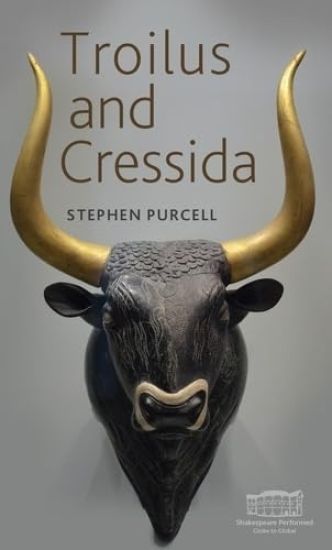
A history of Shakespeare’s play in performance, from John Dryden’s Restoration adaptation to the rediscovery of the play in the twentieth century. What made this play so relevant to audiences who had lived through the horrors of two world wars and the rise of fascism? Why did it speak so directly to the ‘angry young men’ of the post-war generation and to the countercultural movements of the 1960s? This book investigates the many ways in which modern directors and actors have found their own world reflected in the play, from anti-war protests and the sexual revolution to feminism and postcolonialism. In doing so, it explores the play’s own complexity and its refusal to give easy answers.
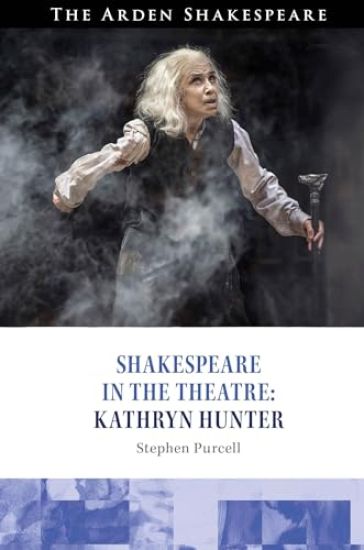
Kathryn Hunter is one of the most distinctive performers on the modern stage. Her shapeshifting abilities have seen her play Shakespearean roles as diverse as King Lear, Richard III, Katharina, Cleopatra, Puck, and Timon of Athens. Her role as the witches in Joel Coen’s The Tragedy of Macbeth introduced her distinctive approach to Shakespeare to a wider audience, winning her the 2021 New York Film Critics Circle Award for Best Supporting Actress. She is also an accomplished Shakespearean director, having directed productions for theatres including Shakespeare’s Globe and the Royal Shakespeare Company. This study situates her Shakespearean work within the context of her wider career, including her Olivier award-winning work with Complicite and her frequent collaborations with Peter Brook. It is based on a series of nine interviews with Hunter that were conducted over Zoom during the 2020 lockdown, and draws upon archival material from Shakespeare’s Globe, the RSC and elsewhere.
Object Lessons is a series of short, beautifully designed books about the hidden lives of ordinary things. Concrete has an image problem. Portrayed as boring, cheap, and thoughtless, it is often considered synonymous with bad architecture. For many, concrete is architecture gone wrong – dogmatic, ugly, and as miserably grey as English drizzle. Stephen Parnell’s Concrete is an apologia of concrete, second only to water as the world’s most consumed material. From the personal, intimate scale of jewelry to the monumental scale of Brutalist architecture, Parnell explores the personality of concrete and how it is embedded and embodied in everyday and familiar objects. He revels in concrete’s ambiguity and contradictory qualities, from its sensitivity to the tiniest imprint to its immense compressive strength in hydroelectric dams, and traces how concrete is both the ultimate unaesthetic material as well as the quintessential building block of modernity.
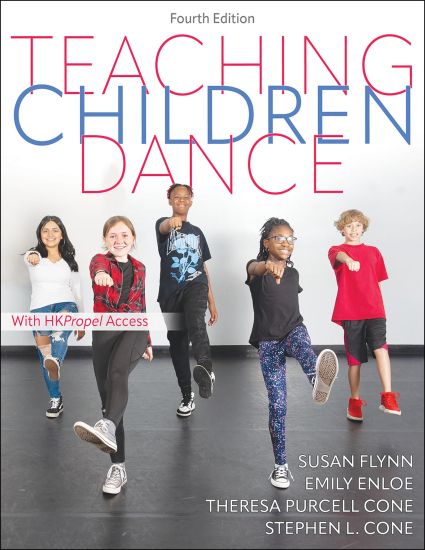
Teaching Children Dance is back and better than ever. The fourth edition of this text retains everything dance educators have loved in previous editions while providing significant updates and new material.What’s New in This Edition? New material in the text-which contains learning experiences for physical education, dance, and classroom settings and is geared toward K-12 students of all ability levels-includes the following: Two new chapters that feature 32 new learning experiences for popular, fitness, and social dances, as well as for folk and cultural dances based on traditional movements and songs from around the globe Instructional videos of teaching techniques, movements, and dances from the two new chapters Online resources, accessed through HKPropel, that include PowerPoint presentations, gradable assessments, and forms that can be used as is or adapted Other new material includes suggested answers to chapter-ending reflection questions; updates to discussions on dance and the whole-child education initiative; new material on how 21st-century skills promote creative thinking, collaboration, communication, global awareness, and self-direction; and a description of the link between dance and the 2018 Physical Activity Guidelines for Americans.Dance an Inherent Component of Education “This latest edition of Teaching Children Dance brings a new perspective focused on dance as an inherent component of a child’s education,” says coauthor Susan Flynn. “Since our last edition, educational issues have refocused on students gaining knowledge and skills that can be applied to all aspects of their lives. Dance is one mode for learning that involves using the body and the senses to gather information, communicate, and demonstrate conceptual understandings.”Book Organization The text is organized into two parts, with part I’s seven chapters providing the foundation for developing dance learning experiences and offering ideas for planning a yearlong program, a unit, or a single lesson. Part II contains two chapters of creative dance learning experiences and two chapters on choreographed learning experiences. Each learning experience includes learning outcomes; ideas for the introduction and warm-up, development, and culminating dance; variations and adaptations; and assessment suggestions that are directly linked to each outcome.Fun Learning for All Ability LevelsTeaching Children Dance offers dance instructors insight into designing lessons for students of all skill levels, including those with disabilities, and provides a variety of teaching strategies, assessment tools, and instruction on effective demonstrations-all to make the learning experience fun and motivating for the dancers. “We’ve developed learning experiences that encourage creativity, positive social interaction, and motor skill development,” says Flynn. “Students view dance as a way to have fun. This opens the door for dance to be a welcomed activity in the school curriculum.”Note: A code for accessing HKPropel is included with this ebook.
Living off the grid has grown to be a very popular option for people who want to express their independence and break free from fossil fuel dependency.Adopting this lifestyle must be a really beneficial option if you want to lower your monthly expenses and demonstrate your extreme concern for Mother Earth.As you begin your off-grid life, this book will be your road map to success. Discover the solutions to every query you have. So go ahead and enjoy your reading
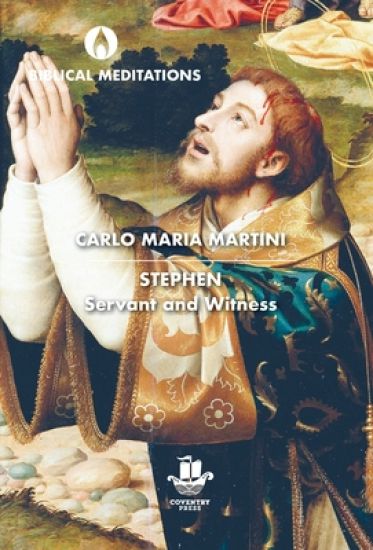
Cardinal Martini approaches the figure of Stephen, the first martyr, by beginning with what is described in Chapters 6-8 of the Acts of the Apostles, 'an impressive document of a man's retrospective view in the face of death, of himself, the history of salvation, of what Christ has meant for him and the future to which he has been called.' Reflection on the figure of Stephen is important for the entire community of believers; in fact with Stephen 'the Church feels the seriousness of being both witness and servant: It understands that abandoning oneself to God does not save one from death, but it does allow one to pass through death, contemplating the glory of God; it recognises what it is that God saves us and does not save us from and what he prepares us for.'The richness of these meditations lies in this summary of things. It lies in the experience of a man who is approaching the revelation of the proximity of a transcendent and immanent God and at the same time arrives 'at the culmination of his mission as servant witness, ' experiencing the mystery that he proclaims, contemplates and adores, in his very own body.
Stephen Mangham is dead, brutally murdered in his apartment, but George, his father, has no tears to shed, no grief in his heart. He despised his son, despises the mourners, but a stranger in the cemetery, watching from afar, gives him pause for thought, and unsettles him.The Beeches, geriatric wing of a local hospital, is closed for refurbishment. Stan Perkins, a former nurse, is on the verge of marriage, but undecided as to whether or not to return to his career once the renovation is complete. Memories of recent horrors, and the death of a colleague, haunt him. D.C. Robin Coldwell is suspended from active duty and drinking heavily, but husband, Oliver, is sure that solving the Mangham murder would give her purpose and focus.Neither is prepared for the awful truth. Are you?
In 2483, a cyborg attack by the Rouges maroons 3-year-old Stephen on Terra 3. He grows up to eventually lead defense of the small colony thirty years later. Unfortunately, a violent dispute forces him flee to Terra 12 in a rickety starship. There he makes friends with Jack the barkeep, Matou the enhanced tomcat, and Nova, a mysterious young woman with a hidden past. Rouge agents force Stephen and Nova to flee, with cyborg soldiers threatening every step. When a familiar starship from Earth enters the fray, the battle truly begins. Stephen will do everything he can to save his friends, or die trying.
Stephen, an emperor goose in Hope, Alaska, doesn't quite fit in with his family. But more surprisingly he doesn't like the water. What goose doesn't like the water? Find out more in Stephen.