
Kirjahaku
Etsi kirjoja tekijän nimen, kirjan nimen tai ISBN:n perusteella.
1000 tulosta hakusanalla Stephen T. Davis

U.S. Government Officials Commend Work of Mormon Church: Talks Given by Hubert Work, Elwood Mead, Stephen T. Mather, Bishop C.W. Nibley and Priest Ant
Hubert Mead Elwood Mather Work
Hassell Street Press
2021
nidottu

7 things you CAN'T do to raise well behaved children
Stephen T. Graf
Createspace Independent Publishing Platform
2012
nidottu
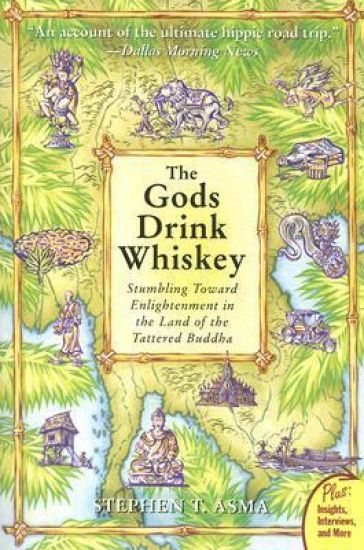
Buddhism, Booze, and the Four Noble Truths
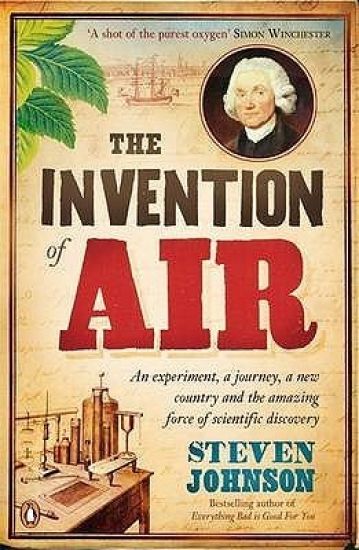
From the bestselling author of Everything Bad is Good for You, Steven Johnson's The Invention of Air tells the incredible story of scientist and radical Joseph Priestley, who invented soda water, discovered oxygen, and incited rioting with his political views. In 1794, Joseph Priestley - amateur scientist, ordained minister and radical thinker - set sail for America to escape persecution. Steven Johnson tells his incredible story: the discovery of oxygen, the invention of a science, the founding of a church, and, with the great minds of his time, the development of the United States itself. But Priestley's revolutionary ideas put him in terrible danger. Johnson uses the progress of Priestley and his colleagues not merely to describe the wonder of discovery, but to show us how we have come to understand the world, how far we have travelled with the power of human enquiry - and how one man's curiosity can help build an entire country. 'A shot of the purest oxygen' Simon Winchester 'Packed with excellent stuff' Russell Davies 'Entertaining ... clear-sighted and intelligent' New Yorker 'As full of ingenuity and as delightful as its subject' Financial Times 'Brilliant' The New York Times 'Johnson paints Priestley not as a man of the past but precisely the sort of figure the world needs more than ever' New York Post Steven Johnson is the author of the acclaimed books Everything Bad is Good for You, Mind Wide Open, Where Good Ideas Come From, The Ghost Map, Emergence and Interface Culture. His writing appeared in the Guardian, the New Yorker, Nation and Harper's, as well as the op-ed pages of The New York Times and the Wall Street Journal. He is a Distinguished Writer In Residence at NYU's School Of Journalism, and a Contributing Editor to Wired.
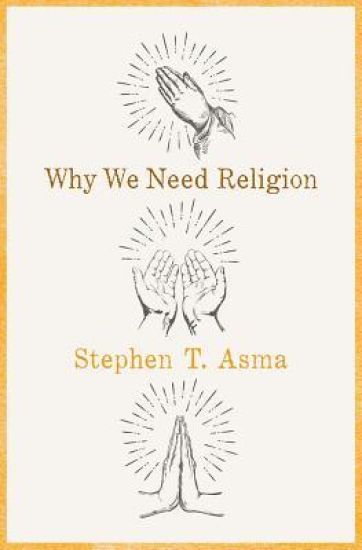
How we feel is as vital to our survival as how we think. This claim, based on the premise that emotions are largely adaptive, serves as the organizing theme of Why We Need Religion. This book is a novel pathway in a well-trodden field of religious studies and philosophy of religion. Stephen Asma argues that, like art, religion has direct access to our emotional lives in ways that science does not. Yes, science can give us emotional feelings of wonder and the sublime --we can feel the sacred depths of nature-- but there are many forms of human suffering and vulnerability that are beyond the reach of help from science. Different emotional stresses require different kinds of rescue. Unlike secular authors who that praise religion's ethical and civilizing function, Asma argues that its core value lies in its emotionally therapeutic power. No theorist of religion has failed to notice the importance of emotions in spiritual and ritual life, but truly systematic research has only recently delivered concrete data on the neurology, psychology, and anthropology of the emotional systems. This very recent "affective turn" has begun to map out a powerful territory of embodied cognition. Why We Need Religion incorporates new data from these affective sciences into the philosophy of religion. It goes on to describe the way in which religion manages those systems--rage, play, lust, care, grief, and so on. Finally, it argues that religion is still the best cultural apparatus for doing this adaptive work. In short, the book is a Darwinian defense of religious emotions and the cultural systems that manage them.

Monsters. Real or imagined, literal or metaphorical, they have exerted a dread fascination on the human mind for many centuries. They attract and repel us, intrigue and terrify us, and in the process reveal something deeply important about the darker recesses of our collective psyche. Stephen Asma's On Monsters is a wide-ranging cultural and conceptual history of monsters--how they have evolved over time, what functions they have served for us, and what shapes they are likely to take in the future. Asma begins with a letter from Alexander the Great in 326 B.C. detailing an encounter in India with an "enormous beast--larger than an elephantthree ominous horns on its forehead." From there the monsters come fast and furious--Behemoth and Leviathan, Gog and Magog, the leopard-bear-lion beast of Revelation, Satan and his demons, Grendel and Frankenstein, circus freaks and headless children, right up to the serial killers and terrorists of today and the post-human cyborgs of tomorrow. Monsters embody our deepest anxieties and vulnerabilities, Asma argues, but they also symbolize the mysterious and incoherent territory just beyond the safe enclosures of rational thought. Exploring philosophical treatises, theological tracts, newspapers, pamphlets, films, scientific notebooks, and novels, Asma unpacks traditional monster stories for the clues they offer about the inner logic of an era's fears and fascinations. In doing so, he illuminates the many ways monsters have become repositories for those human qualities that must be repudiated, externalized, and defeated. Asma suggests that how we handle monsters reflects how we handle uncertainty, ambiguity, insecurity. And in a world that is daily becoming less secure and more ambiguous, he shows how we might learn to better live with monsters--and thereby avoid becoming one.

Hailed as "a feast" (Washington Post) and "a modern-day bestiary" (The New Yorker), Stephen Asma's On Monsters is a wide-ranging cultural and conceptual history of monsters--how they have evolved over time, what functions they have served for us, and what shapes they are likely to take in the future. Beginning at the time of Alexander the Great, the monsters come fast and furious--Behemoth and Leviathan, Gog and Magog, Satan and his demons, Grendel and Frankenstein, circus freaks and headless children, right up to the serial killers and terrorists of today and the post-human cyborgs of tomorrow. Monsters embody our deepest anxieties and vulnerabilities, Asma argues, but they also symbolize the mysterious and incoherent territory beyond the safe enclosures of rational thought. Exploring sources as diverse as philosophical treatises, scientific notebooks, and novels, Asma unravels traditional monster stories for the clues they offer about the inner logic of an era's fears and fascinations. In doing so, he illuminates the many ways monsters have become repositories for those human qualities that must be repudiated, externalized, and defeated. Asma suggests that how we handle monsters reflects how we handle uncertainty, ambiguity, and insecurity. And in a world that is daily becoming less secure and more ambiguous, he shows how we might learn to better live with monsters--and thereby avoid becoming one.

From the school yard to the workplace, there's no charge more damning than "You're being unfair!" Born out of democracy and raised in open markets, fairness has become our de facto modern creed. The very symbol of American ethics - Lady Justice - wears a blindfold as she weighs the law on her impartial scale. In our zealous pursuit of fairness, we have banished our urges to like one person more than another, one thing over another, hiding them away as dirty secrets of our humanity. In "Against Fairness", polymath philosopher Stephen T. Asma drags them triumphantly back into the light. Through playful, witty, but always serious arguments and examples, he vindicates our unspoken and undeniable instinct to favor, making the case that we would all be better off if we showed our unfair tendencies a little more kindness - indeed, if we favored favoritism. Asma makes his point by synthesizing a startling array of scientific findings, historical philosophies, cultural practices, analytic arguments, and a variety of personal and literary narratives to give a remarkably nuanced and thorough understanding of how fairness and favoritism fit within our moral architecture. Examining everything from the survival-enhancing biochemistry that makes our mothers love us to the motivating properties of our "affective community," he not only shows how we favor but the reasons we should. Drawing on thinkers from Confucius to Tocqueville to Nietzsche, he reveals how we have confused fairness with more noble traits, like compassion and open-mindedness. He dismantles a number of seemingly egalitarian pursuits, from classwide Valentine's Day cards to civil rights, to reveal the envy that lies at their hearts, going on to prove that we can still be kind to strangers, have no prejudice, and fight for equal opportunity at the same time we reserve the best of what we can offer for those dearest to us. "Against Fairness" resets our moral compass with favoritism as its lodestar, providing a strikingly new and remarkably positive way to think through all our actions, big and small.
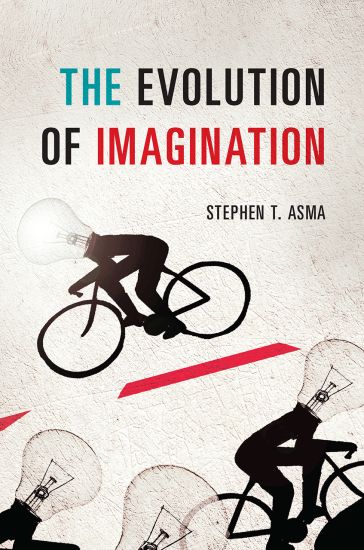
Consider Miles Davis, horn held high, sculpting a powerful musical statement full of tonal patterns, inside jokes, and thrilling climactic phrases all on the fly. Or think of a comedy troupe riffing on a couple of cues from the audience until the whole room is erupting with laughter. Or maybe it's a team of software engineers brainstorming their way to the next Google, or the Einsteins of the world code-cracking the mysteries of nature. Maybe it's simply a child playing with her toys. What do all of these activities share? With wisdom, humor, and joy, philosopher Stephen T. Asma answers that question in this book: imagination. And from there he takes us on an extraordinary tour of the human creative spirit. Guided by neuroscience, animal behavior, evolution, philosophy, and psychology, Asma burrows deep into the human psyche to look right at the enigmatic but powerful engine that is our improvisational creativity the source, he argues, of our remarkable imaginational capacity. How is it, he asks, that a story can evoke a whole world inside of us? How are we able to rehearse a skill, a speech, or even an entire scenario simply by thinking about it? How does creativity go beyond experience and help us make something completely new? And how does our moral imagination help us sculpt a better society? As he shows, we live in a world that is only partly happening in reality. Huge swaths of our cognitive experiences are made up by "what-ifs," "almosts," and "maybes," an imagined terrain that churns out one of the most overlooked but necessary resources for our flourishing: possibilities. Considering everything from how imagination works in our physical bodies to the ways we make images, from the mechanics of language and our ability to tell stories to the creative composition of self-consciousness, Asma expands our personal and day-to-day forms of imagination into a grand scale: as one of the decisive evolutionary forces that has guided human development from the Paleolithic era to today. The result is an inspiring look at the rich relationships among improvisation, imagination, and culture, and a privileged glimpse into the unique nature of our evolved minds.

From the school yard to the workplace, there’s no charge more damning than “you’re being unfair!” Born out of democracy and raised in open markets, fairness has become our de facto modern creed. The very symbol of American ethics—Lady Justice—wears a blindfold as she weighs the law on her impartial scale. In our zealous pursuit of fairness, we have banished our urges to like one person more than another, one thing over another, hiding them away as dirty secrets of our humanity. In Against Fairness, polymath philosopher Stephen T. Asma drags them triumphantly back into the light. Through playful, witty, but always serious arguments and examples, he vindicates our unspoken and undeniable instinct to favor, making the case that we would all be better off if we showed our unfair tendencies a little more kindness—indeed, if we favored favoritism. Conscious of the egalitarian feathers his argument is sure to ruffle, Asma makes his point by synthesizing a startling array of scientific findings, historical philosophies, cultural practices, analytic arguments, and a variety of personal and literary narratives to give a remarkably nuanced and thorough understanding of how fairness and favoritism fit within our moral architecture. Examining everything from the survival-enhancing biochemistry that makes our mothers love us to the motivating properties of our “affective community,” he not only shows how we favor but the reasons we should. Drawing on thinkers from Confucius to Tocqueville to Nietzsche, he reveals how we have confused fairness with more noble traits, like compassion and open-mindedness. He dismantles a number of seemingly egalitarian pursuits, from classwide Valentine’s Day cards to civil rights, to reveal the envy that lies at their hearts, going on to prove that we can still be kind to strangers, have no prejudice, and fight for equal opportunity at the same time we reserve the best of what we can offer for those dearest to us. Fed up with the blue-ribbons-for-all absurdity of "fairness" today, and wary of the psychological paralysis it creates, Asma resets our moral compass with favoritism as its lodestar, providing a strikingly new and remarkably positive way to think through all our actions, big and small. Watch an animated book trailer here: http://www.youtube.com/watch?v=GjPhTQ9zi5Q

Between 1790 and 1850, waves of Anglo-Americans, African Americans, and European immigrants flooded the Old Northwest (modern-day Ohio, Indiana, Michigan, Illinois, and Wisconsin). They brought with them a mosaic of Christian religious belief. Stephen T. Kissel draws on a wealth of primary sources to examine the foundational role that organized religion played in shaping the social, cultural, and civic infrastructure of the region. As he shows, believers from both traditional denominations and religious utopian societies found fertile ground for religious unity and fervor. Able to influence settlement from the earliest days, organized religion integrated faith into local townscapes and civic identity while facilitating many of the Old Northwest's earliest advances in literacy, charitable public outreach, formal education, and social reform. Kissel also unearths fascinating stories of how faith influenced the bonds, networks, and relationships that allowed isolated western settlements to grow and evolve a distinct regional identity. Perceptive and broad in scope, America’s Religious Crossroads illuminates the integral relationship between communal and spiritual growth in early Midwestern history.

Between 1790 and 1850, waves of Anglo-Americans, African Americans, and European immigrants flooded the Old Northwest (modern-day Ohio, Indiana, Michigan, Illinois, and Wisconsin). They brought with them a mosaic of Christian religious belief. Stephen T. Kissel draws on a wealth of primary sources to examine the foundational role that organized religion played in shaping the social, cultural, and civic infrastructure of the region. As he shows, believers from both traditional denominations and religious utopian societies found fertile ground for religious unity and fervor. Able to influence settlement from the earliest days, organized religion integrated faith into local townscapes and civic identity while facilitating many of the Old Northwest's earliest advances in literacy, charitable public outreach, formal education, and social reform. Kissel also unearths fascinating stories of how faith influenced the bonds, networks, and relationships that allowed isolated western settlements to grow and evolve a distinct regional identity. Perceptive and broad in scope, America’s Religious Crossroads illuminates the integral relationship between communal and spiritual growth in early Midwestern history.
This work presents a new and important paradigm modification in psychology that attempts to incorporate ideas from quantum physics and postmodern culture. The author feels that the current diagnostic model of the mental health establishment is too entwined with political and economic factors to represent a valid method for healing psychological problems. The predominant model is too linear, reductionist, normative, and based upon an abnormal view of behavior. Exacerbating this problem is our highly accelerated present-day lifestyle in which new processes and interactions are constantly emerging. The postmodern self is evolving into a manipulative, situational self with no authentic core values.Quantum psychology is a psychology of consciousness and experience and is reflective of the entire process of being. It is a holistic, dynamic, and synergistic model, designed to augment the classical model. It involves non-linear as well as linear models of description, with non-linearity having an association with intuitive and irrational thought. Quantum psychology also attempts to describe the complex reciprocal relationship that exists among consciousness, community, and culture. In part, it is culture that forms our consciousness and consciousness that modifies our culture, with community being the vehicle by which these transactions take place. Quantum psychology represents an emergent system of understanding a consciousness that has been exposed to the complex and accelerating effects of a postmodern culture.
The Externalization of Consciousness and the Psychopathology of Everyday Life
Stephen T. Deberry
Praeger Publishers Inc
1990
sidottu
Are we oblivious to the wonders of human consciousness? Stephen DeBerry suggests that we must reintegrate the concept of consciousness into mainstream psychology. He develops, from a general systems perspective, a model of consciousness which he uses to explore the effects of technology - the accelerated and pervasive television video universe - on the quality of our lives. What role has modern technology played in the shifting of human consciousness from intrapersonal and interpersonal dimensions to the predominantly impersonal dimension where only the material world matters? The intent of this volume is to provoke questions and dialogue. A cross-disciplinary study of the relationship of human consciousness and cultural pathology, it is intended for anyone who critically thinks that life has more purpose than we allow it.DeBerry's book presents a new model of human consciousness. It also takes a penetrating look at one of the most serious cultural changes of contemporary life: the relationship of consciousness and technology. The first six chapters function as building blocks that construct DeBerry's model by exploring the use of scientific paradigms to study consciousness; by offering a scientific and philosophic background; by introducing a general systems theory; and by describing concepts of perspective and focus, time and space, values and reality assumptions, and language. Chapter seven demonstrates how concept distortions have externalized consciousness. DeBerry's model is then related to issues of contemporary culture and community. Technology's contribution to distortions in consciousness is explored in chapter nine. The volume concludes with a discussion of the contemporary psychopathology of everyday life. Intended for courses in graduate psychology, this volume's interdisciplinary perspective makes it equally relevant for courses in sociology, anthropology, humanistic philosophy, human studies, and social ecology.

Dental Secrets
Stephen T. Sonis; Jennifer Anne Magee
Elsevier - Health Sciences Division
2024
nidottu
Offering practical tips and expert answers to topics in dentistry, oral medicine, and patient management, Dental Secrets, 5th Edition serves as an ideal preparation tool for exams, clinical rotations, and board certification. A concise, illustrated Q&A format covers key areas such as oral pathology, radiology, periodontology, endodontics, restorative dentistry, prosthodontics, orthodontics, infection control, and oral and maxillofacial surgery. This mini reference makes it easier to prepare for real-world clinical scenarios and review for the INBDE and other certification exams! Dentistry's best "secrets" are shared by experts specializing in various areas of dentistry and oral medicine. Concise answers to more than 2,000 questions in dentistry and oral medicine provide valuable pearls, tips, memory aids, and "secrets" in an easy-to-read, numbered format. More than 100 illustrations, tables, and boxes highlight key takeaways. NEW! Brand-new chapter reveals "secrets" surrounding orofacial pain. NEW! Questions and examples are prepared with the new INDBE exam content in mind. NEW! A new group of contributing authors and a new co-editor - all leaders in the field of dentistry - bring a fresh perspective and valuable expertise to the text. NEW! An enhanced eBook, included with print purchase, provides access to all the text, figures, and references, plus the ability to search, customize content, make notes and highlights, and have content read aloud. UPDATED! Fresh revisions with the most current clinical information keep students, practitioners, and those preparing for recertification up to date on key advances in the practice of dentistry.
Lower Your Blood Pressure in Eight Weeks: A Revolutionary Program for a Longer, Healthier Life
Stephen T. Sinatra
Ballantine Books
2003
nidottu
Learn how to lower high blood pressure with this step-by-step eight-week plan The numbers speak for themselves. More than 50 million Americans suffer from high blood pressure--and yet despite the billions we spend on medication, the death rate from high blood pressure has risen 36 percent in the past decade. Clearly, the time has come for a radical new treatment plan. And that's exactly what Dr. Stephen T. Sinatra delivers in this invaluable new book. All too often people with high blood pressure get the same frustrating advice from their doctors: lose some weight, lay off the salt, and fill a bunch of prescriptions. One of the nation's leading authorities on cardiovascular disease, Dr. Sinatra offers a different approach. Through an eight week plan that takes into account your lifestyle, medical history, and special needs, this book will dramatically lower your blood pressure while at the same time reducing or even eliminating your need for medications. Inside you will discover - How to diagnose high blood pressure and get the help you need fast - A meal-by-meal diet plan you can start following today - The relationship between hypertension, cholesterol, heart disease, and stroke - The special risk factors for women, the elderly, and African Americans - Easy, enjoyable exercises you can make part of your daily routine - How dietary supplements work and which ones are best for you - Which medications to use--and which to avoid - Finding the stress-reduction program that works for you Clearly written, user friendly, grounded in science and common sense, and full of inspiring case histories and delicious recipes, Lower Your Blood Pressure in Eight Weeks is the one book that deals with all the factors involved in hypertension. This program has worked wonders with hundreds of Dr. Sinatra's patients. Now it will do the same for you

This volume offers a new translation of Plutarch’s three treatises on animals—On the Cleverness of Animals, Whether Beasts Are Rational, and On Eating Meat—accompanied by introductions and explanatory commentaries. The accompanying commentaries are designed not only to elucidate the meaning of the Greek text, but to call attention to Plutarch’s striking anticipations of arguments central to current philosophical and ethological discourse in defense of the position that non-human animals have intellectual and emotional dimensions that make them worthy of inclusion in the moral universe of human beings. Plutarch’s Three Treatises on Animals will be of interest to students of ancient philosophy and natural science, and to all readers who wish to explore the history of thought on human–non-human animal relations, in which the animal treatises of Plutarch hold a pivotal position.
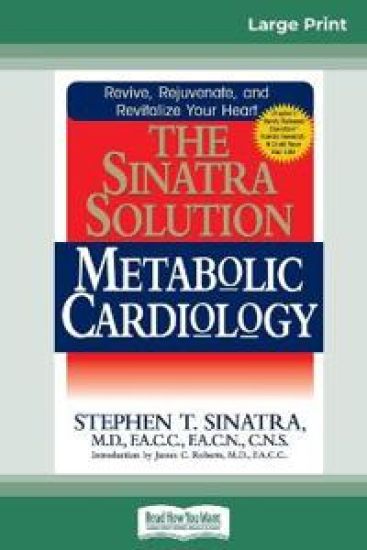
Board-certified cardiologist Dr. Stephen T. Sinatra discusses the importance of energy metabolism on cardiovascular health and the positive impact these three energy-supplying nutrients have on the cardiovascular system. He guides you through the basics of energy metabolism and cardiac bioenergetics, and clearly explains the role of coenzyme Q10, L-carnitine, and D-ribose in the body and specifically how they affect your heart health. He also provides concise and informative examples of case histories and scientific studies that are testament to the important contribution the supplemental use of these energy-supplying nutrients make in the lives of people with heart disease every day.

These pages present a collection of recent papers primarily documenting the nascent science of neutrino geophysics. Most of the papers followed from talks given at 1 Neutrino Sciences 2005: Neutrino Geophysics held at the University of Hawaii in December 2005. Several papers were solicited later in an e?ort to make the collection as comprehensive as possible. Every paper was scrutinized by an external reviewer to assure the quality of scienti?c content. These reviewers are thanked for lending their scienti?c expertise through their many thoughtful comments and suggestions. All authors are commended for providing excellent manuscripts of their important work while maintaining a spirit of cooperative collaboration throughout. Although every attempt was made to produce a thoroughly accurate volume, it is the accepted responsibility of the associate editor for any mistakes, errors, or omissions in the p- sented material. The recommendations, advice, and wisdom of John Learned and Sandip Pakvasa were indispensable in organizing and completing this project. P- duction charges were generously provided by the University of Hawaii. The support of Hawaii Paci?c University, which contributed teaching release time, is gratefully - knowledged. Stephen T. Dye Associate Editor November 28, 2006 Stephen T. Dye is an associate professor of physics at Hawaii Paci?c University and an a?liate to the graduate faculty of the Department of Physics and Astronomy at the University of Hawaii at Manoa. 1 See www. phys. hawaii. edu/~sdye/hnsc. html Earth, Moon, and Planets (2006) 99:1–15 Springer 2006 DOI 10.