Kirjojen hintavertailu. Mukana 11 342 296 kirjaa ja 12 kauppaa.

Kirjahaku

Etsi kirjoja tekijän nimen, kirjan nimen tai ISBN:n perusteella.

1000 tulosta hakusanalla Stevan

Safeguarding Cultural Properties

Safeguarding Cultural Properties

Stevan P. Layne

Butterworth-Heinemann Inc
2014
nidottu
Safeguarding Cultural Properties is a step-by-step guide for creating and maintaining a comprehensive security program in any cultural facility or public institution. Author Stevan P. Layne, the leading expert in the field of cultural property protection, draws from his many years of experience providing protection training and planning to more than 350 cultural and public institutions around the world. Designed especially for those with limited security budgets, the book provides a proven and effective program for hiring the right security personnel, selecting the appropriate electronic security systems, and coordinating critical emergency response, along with all the other security issues unique to the needs of a cultural institution. For individuals responsible for the protection of the people, assets, and collections, Safeguarding Cultural Properties saves time and money by providing the essential resources needed for creating a short- and long-term protection plan.
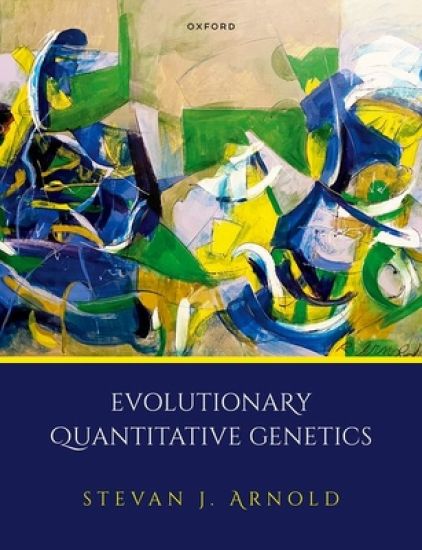
Evolutionary Quantitative Genetics

Evolutionary Quantitative Genetics

Stevan J. Arnold

Oxford University Press
2023
sidottu
Evolutionary quantitative genetics (EQG) provides a formal theoretical foundation for quantitatively linking natural selection and genetic variation to the rate and expanse of adaptive evolution. It has become the dominant conceptual framework for interpreting the evolution of quantitative traits in terms of elementary forces (mutation, inheritance, selection, and drift). Despite this success, the relevance of EQG to many biological scenarios remains relatively unappreciated, with numerous fields yet to fully embrace its approach. Part of the reason for this lag is that conceptual advances in EQG have not yet been fully synthesized and made accessible to a wider academic audience. A comprehensive, accessible overview is therefore now timely, and Evolutionary Quantitative Genetics provides this much-needed synthesis. The central argument of the book is that an adaptive landscape concept can be used to understand both evolutionary process within lineages and the pattern of adaptive radiations. In particular, it provides a convincing argument that models with a moving adaptive peak carry us further than any other conceptual approach yet devised. Although additive theory holds center stage, the book mentions and references departures from additivity including non-Gaussian distributions of allelic effects, dominance, epistasis, maternal effects and phenotypic plasticity. This accessible, advanced textbook is aimed principally at students (from senior undergraduate to postgraduate) as well as practising scientists in the fields of evolutionary biology, ecology, physiology, functional morphology, developmental biology, comparative biology, paleontology, and beyond who are interested in how adaptive radiations are produced by evolutionary and ecological processes.
Evolutionary Quantitative Genetics

Evolutionary Quantitative Genetics

Stevan J. Arnold

Oxford University Press
2023
nidottu
Evolutionary quantitative genetics (EQG) provides a formal theoretical foundation for quantitatively linking natural selection and genetic variation to the rate and expanse of adaptive evolution. It has become the dominant conceptual framework for interpreting the evolution of quantitative traits in terms of elementary forces (mutation, inheritance, selection, and drift). Despite this success, the relevance of EQG to many biological scenarios remains relatively unappreciated, with numerous fields yet to fully embrace its approach. Part of the reason for this lag is that conceptual advances in EQG have not yet been fully synthesized and made accessible to a wider academic audience. A comprehensive, accessible overview is therefore now timely, and Evolutionary Quantitative Genetics provides this much-needed synthesis. The central argument of the book is that an adaptive landscape concept can be used to understand both evolutionary process within lineages and the pattern of adaptive radiations. In particular, it provides a convincing argument that models with a moving adaptive peak carry us further than any other conceptual approach yet devised. Although additive theory holds center stage, the book mentions and references departures from additivity including non-Gaussian distributions of allelic effects, dominance, epistasis, maternal effects and phenotypic plasticity. This accessible, advanced textbook is aimed principally at students (from senior undergraduate to postgraduate) as well as practising scientists in the fields of evolutionary biology, ecology, physiology, functional morphology, developmental biology, comparative biology, paleontology, and beyond who are interested in how adaptive radiations are produced by evolutionary and ecological processes.
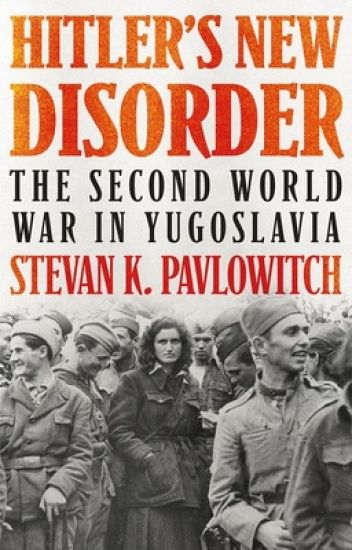
Hitler's New Disorder: The Second World War in Yugoslavia

Hitler's New Disorder: The Second World War in Yugoslavia

Stevan Pavlowitch

Oxford University Press, USA
2020
nidottu
The history of the Second World War in Yugoslavia was for a long time the preserve of the Communist regime led by Marshal Tito. It was written by those who had battled hard to come out on top of the many-sided war fought across the territory of that Balkan state after the Axis Powers had destroyed it in 1941, just before Hitler's invasion of the USSR. It was an ideological and ethnic war under occupation by rival enemy powers and armies, between many insurgents, armed bands and militias, for the survival of one group, for the elimination of another, for belief in this or that ideology, for a return to an imagined past within the Nazi New Order, or for the reconstruction of a new Yugoslavia on the side of the Allies. In fact, many wars were fought alongside, and under cover of, the Great War waged by the Allies against Hitler's New Order which, in Yugoslavia at least, turned out to be a "new disorder". Most surviving participants have since told their stories; most archival sources are now available. Pavlowitch uses them, as well as the works of historians in several languages, to understand what actually happened on the ground. He poses more questions than he provides answers, as he attempts a synoptic and chronological analysis of the confused yet interrelated struggles fought in 1941-5, during the short but tragic period of Hitler's failed "New Order", over the territory that was no longer the Kingdom of Yugoslavia and not yet the Federal Peoples' Republic of Yugoslavia, but that is now definitely "former Yugoslavia".
Discrete Communication Systems

Discrete Communication Systems

Stevan Berber

Oxford University Press
2021
sidottu
This is the first textbook which presents the theory of pure discrete communication systems and its relation to the existing theory of digital and analog communications at a graduate level. Based on the orthogonality principles and theory of discrete time stochastic processes, a generic structure of communication systems, based on correlation demodulation and optimum detection, is developed and presented in the form of mathematical operators with precisely defined inputs and outputs and related functions. Based on this generic structure, the traditionally defined phase shift keying (PSK), frequency shift keying (FSK), quadrature amplitude modulation (QAM), orthogonal frequency division multiplexing (OFDM) and code division multiple access (CDMA) systems are deduced as its special cases. The main chapters, presenting the theory of communications, are supported by a set of supplementary chapters containing the theory of deterministic and stochastic signal processing, which makes the book a self-contained presentation of the subject. The book uses unified notation and unified terminology, which allows a clear distinction between deterministic and stochastic signals, power signals and energy signals, discrete time signals and processes and continuous time signals and processes, and an easy way of understanding the differences in defining the correlation functions, power and energy spectral densities, and amplitudes and power spectra of the mentioned signals and processes. In addition to solved examples in the text, about 300 solved problems are available to readers in the supplementary material that aim to enhance the understanding of the theory in the text. In addition, five research Projects are added to be used by lecturers or instructors that aim to enhance the understanding of theory and to establish its relation to the practice.
Clinical Pharmacology for Prescribing

Clinical Pharmacology for Prescribing

Stevan R. Emmett; Nicola Hill; Federico Dajas-Bailador

Oxford University Press
2019
nidottu
Clinical Pharmacology for Prescribing explains how drugs work and why they should be prescribed for common medical conditions. Linking disease processes to pharmacological interventions, this guide gives a sound basis for evidence based prescribing. Written for medical students, trainee doctors and non-medical prescribers, it addresses all aspects of practical pharmacology, explaining drug classes, their mechanisms and effects on the body. Ultimately its focus is on clinical use, so that safe prescribing decisions are based on sound understanding of science - why and how drugs work to treat common conditions. Every chapter provides clear linkages between pathophysiology of disease and drug mechanisms, highlighted in original illustrations that bring together drug mechanisms, pathways and their place in medical management. Unwanted effects, drug interactions and prescribing warnings are emphasised to help the reader become aware of critical issues in prescribing. This resource also addresses how to prescribe for vulnerable patient groups and provokes deep understanding for patient safety. Written by a Practicing Pharmaceutical Physician with a D.Phil in Pharmacology, an Assistant Professor with the Faculty of Medicine and Health Sciences and a Senior hospital-based Clinical Pharmacist. The textbook has been extensively reviewed by practicing clinicians such that this new resource exemplifies the skills and knowledge needed for practical, legal and safe clinical prescribing.
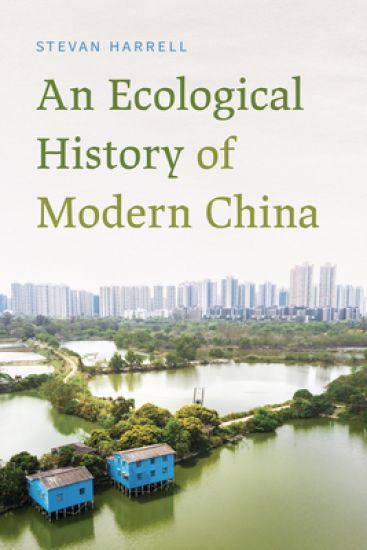
An Ecological History of Modern China

An Ecological History of Modern China

Stevan Harrell

UNIVERSITY OF WASHINGTON PRESS
2023
sidottu
How mega-dams, industrial agriculture, and other developments challenge ecosystem resilienceIs environmental degradation an inevitable result of economic development? Can ecosystems be restored once government officials and the public are committed to doing so? These questions are at the heart of An Ecological History of Modern China, a comprehensive account of China's transformation since the founding of the People's Republic from the perspective not of the economy but of the biophysical world. Examples throughout illustrate how agricultural, industrial, and urban development have affected the resilience of China's ecosystems—their ability to withstand disturbances and additional growth—and what this means for the country's future. Drawing on decades of research, Stevan Harrell demonstrates the local and global impacts of China's miraculous rise. In clear and accessible prose, An Ecological History of Modern China untangles the paradoxes of development and questions the possibility of a future that is both prosperous and sustainable. It is a critical resource for students, scholars, and general readers interested in environmental change, Chinese history, and sustainable development.
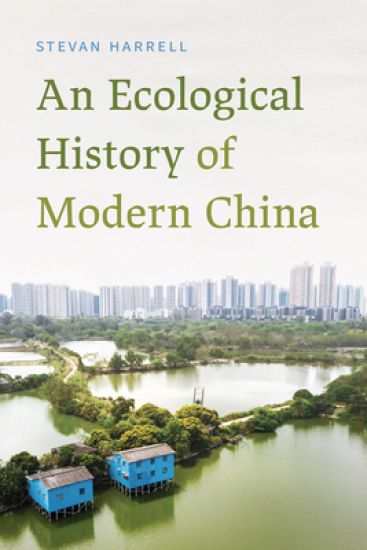
An Ecological History of Modern China

An Ecological History of Modern China

Stevan Harrell

UNIVERSITY OF WASHINGTON PRESS
2023
pokkari
How mega-dams, industrial agriculture, and other developments challenge ecosystem resilienceIs environmental degradation an inevitable result of economic development? Can ecosystems be restored once government officials and the public are committed to doing so? These questions are at the heart of An Ecological History of Modern China, a comprehensive account of China's transformation since the founding of the People's Republic from the perspective not of the economy but of the biophysical world. Examples throughout illustrate how agricultural, industrial, and urban development have affected the resilience of China's ecosystems—their ability to withstand disturbances and additional growth—and what this means for the country's future. Drawing on decades of research, Stevan Harrell demonstrates the local and global impacts of China's miraculous rise. In clear and accessible prose, An Ecological History of Modern China untangles the paradoxes of development and questions the possibility of a future that is both prosperous and sustainable. It is a critical resource for students, scholars, and general readers interested in environmental change, Chinese history, and sustainable development.
Cultural Encounters on China's Ethnic Frontiers

Cultural Encounters on China's Ethnic Frontiers

Stevan Harrell

University of Washington Press
1996
pokkari
Open-access edition: DOI 10.6069/9780295804088China's exploitation by Western imperialism is well known, but the imperialist treatment within China of ethnic minorities has been little explored. Around the geographic periphery of China, as well as some of the less accessible parts of the interior, and even in its cities, live a variety of peoples of different origins, languages, ecological adaptations, and cultures. These people have interacted for centuries with the Han Chinese majority, with other minority ethnic groups (minzu), and with non-Chinese, but identification of distinct groups and analysis of their history and relationship to others still are problematic.Cultural Encounters on China's Ethnic Frontiers provides rich material for the comparative study of colonialism and imperialism and for the study of Chinese nation-building. It represents some of the first scholarship on ethnic minorities in China based on direct research since before World War II. This, combined with increasing awareness in the West of the importance of ethnic relations, makes it an especially timely book. It will be of interest to anthopologists, historians, and political scientists, as well as to sinologists.
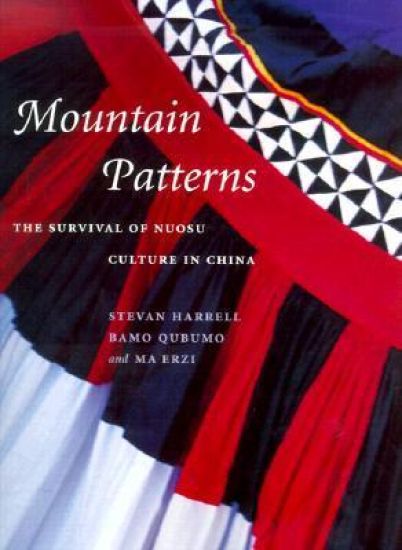
Mountain Patterns

Mountain Patterns

Stevan Harrell; Bamo Qubumo; Ma Erzi

University of Washington Press
2000
pokkari
Nestled against the Tibetan highlands in the remote mountains of Liangshan in southwest China, the land of the Nuosu people was until the 1950s beyond the easy reach of the Chinese government, and the culture of the Nuosu (a branch of the Yi group) developed with little Chinese influence. In the 1960s China's Cultural Revolution suppressed and eroded Nuosu culture, but since the 1980s there has been a resurgence of Nuosu ethnic identity and culture, and a revival of traditional arts.An introductory chapter presents the history and culture of the Nuosu, and essays illustrate each of the traditional visual arts: wooden house architecture, featuring intricate post-and-beam construction and carved decoration; clothing and textiles, including elaborate needlework; red-yellow-black lacquerware, seen in both traditional village-made and modern factory-made versions; silversmithing and jewelry; musical instruments and their use; and two aspects of the ritual culture of the bimo priests -- ceremonies for the souls of deceased ancestors and rituals to expel and exorcise ghosts.Mountain Patterns, includes photographs representing every corner of Nuosu territory and displaying a wide variety of regional styles.
Ways of Being Ethnic in Southwest China

Ways of Being Ethnic in Southwest China

Stevan Harrell

University of Washington Press
2002
pokkari
Open-access edition: DOI 10.6069/9780295804071Drawing on extensive fieldwork conducted in the 1980s and 1990s in southern Sichuan, this pathbreaking study examines the nature of ethnic consciousness and ethnic relations among local communities, focusing on the Nuosu (classified as Yi by the Chinese government), Prmi, Naze, and Han. It argues that even within the same regional social system, ethnic identity is formulated, perceived, and promoted differently by different communities at different times.Ways of Being Ethnic in Southwest China exemplifies a model in which ethnic consciousness and ethnic relations consist of drawing boundaries between one's own group and others, crossing those boundaries, and promoting internal unity within a group. Leaders and members of ethnic groups use commonalties and differences in history, culture, and kinship to promote internal unity and to strengthen or cross external boundaries. Superimposed on the structure of competing and cooperating local groups is a state system of ethnic classification and administration; members and leaders of local groups incorporate this system into their own ethnic consciousness, co-opting or resisting it situationally.The heart of the book consists of detailed case studies of three Nuosu village communities, along with studies of Prmi and Naze communities, smaller groups such as the Yala and Nasu, and Han Chinese who live in minority areas. These are followed by a synthesis that compares different configurations of ethnic identity in different communities and discusses the implications of these examples for our understanding of ethnicity and for the near future of China. This lively description and analysis of the region's complex ethnic identities and relationships constitutes an original and important contribution to the study of ethnic identity.Ways of Being Ethnic in Southwest China will be of interest to social scientists concerned with issues of ethnicity and state-building.
Mapping Shangrila

Mapping Shangrila

Stevan Harrell; Ralph A. Litzinger

University of Washington Press
2014
sidottu
Open-access edition: DOI 10.6069/9780295805023In 2001 the Chinese government announced that the precise location of Shangrila—a place that previously had existed only in fiction—had been identified in Zhongdian County, Yunnan. Since then, Sino-Tibetan borderlands in Yunnan, Sichuan, Gansu, Qinghai, and the Tibet Autonomous Region have been the sites of numerous state projects of tourism development and nature conservation, which have in turn attracted throngs of backpackers, environmentalists, and entrepreneurs who seek to experience, protect, and profit from the region's landscapes.Mapping Shangrila advances a view of landscapes as media of governance, representation, and resistance, examining how they are reshaping cultural economies, political ecologies of resource use, subjectivities, and interethnic relations. Chapters illuminate topics such as the role of Han and Tibetan literary representations of border landscapes in the formation of ethnic identities; the remaking of Chinese national geographic imaginaries through tourism in the Yading Nature Reserve; the role of The Nature Conservancy and other transnational environmental organizations in struggles over culture and environmental governance; the way in which matsutake mushroom and caterpillar fungus commodity chains are reshaping montane landscapes; and contestations over the changing roles of mountain deities and their mediums as both interact with increasingly intensive nature conservation and state-sponsored capitalism.
Mapping Shangrila

Mapping Shangrila

Stevan Harrell; Ralph A. Litzinger

University of Washington Press
2014
pokkari
Open-access edition: DOI 10.6069/9780295805023In 2001 the Chinese government announced that the precise location of Shangrila—a place that previously had existed only in fiction—had been identified in Zhongdian County, Yunnan. Since then, Sino-Tibetan borderlands in Yunnan, Sichuan, Gansu, Qinghai, and the Tibet Autonomous Region have been the sites of numerous state projects of tourism development and nature conservation, which have in turn attracted throngs of backpackers, environmentalists, and entrepreneurs who seek to experience, protect, and profit from the region's landscapes.Mapping Shangrila advances a view of landscapes as media of governance, representation, and resistance, examining how they are reshaping cultural economies, political ecologies of resource use, subjectivities, and interethnic relations. Chapters illuminate topics such as the role of Han and Tibetan literary representations of border landscapes in the formation of ethnic identities; the remaking of Chinese national geographic imaginaries through tourism in the Yading Nature Reserve; the role of The Nature Conservancy and other transnational environmental organizations in struggles over culture and environmental governance; the way in which matsutake mushroom and caterpillar fungus commodity chains are reshaping montane landscapes; and contestations over the changing roles of mountain deities and their mediums as both interact with increasingly intensive nature conservation and state-sponsored capitalism.
Ploughshare Village

Ploughshare Village

Stevan Harrell

University of Washington Press
2014
pokkari
This anthropological study of a workers' village in North Taiwan makes an important contribution to the comparative literature on Chinese and Taiwanese social organization. Based on fieldwork conducted in 1973 and 1978, the study is exceptional not only because of its excellent data but also because the village itself was unique. Unlike villages previously studied and written about, Ploughshare was neither an agricultural nor a fishing village, but rather one whose inhabitants earned their living mostly from coal mining, knitting, and other non-agrarian activities. Culture and environmental context thus shaped social organization there differently than in other Taiwanese villages. This ethnography links local data to surrounding socioeconomic spheres: it shows the village's relationship to its region, to Taiwan as a whole, and to the international economy. It also captures an important point in time, as Taiwan was undergoing the "economic miracle" that brought it into the ranks of developed countries. Stevan Harrell's new preface highlights changes not only in the village over the last several decades, but also in the ways that anthropologists think about culture and Taiwan.Ploughshare Village, with its rich descriptions and analyses, will be of value to anthropologists, sociologists, economists, and China specialists.
Ways of Being Ethnic in Southwest China

Ways of Being Ethnic in Southwest China

Stevan Harrell

University of Washington Press
2015
sidottu
Open-access edition: DOI 10.6069/9780295804071Drawing on extensive fieldwork conducted in the 1980s and 1990s in southern Sichuan, this pathbreaking study examines the nature of ethnic consciousness and ethnic relations among local communities, focusing on the Nuosu (classified as Yi by the Chinese government), Prmi, Naze, and Han. It argues that even within the same regional social system, ethnic identity is formulated, perceived, and promoted differently by different communities at different times.Ways of Being Ethnic in Southwest China exemplifies a model in which ethnic consciousness and ethnic relations consist of drawing boundaries between one's own group and others, crossing those boundaries, and promoting internal unity within a group. Leaders and members of ethnic groups use commonalties and differences in history, culture, and kinship to promote internal unity and to strengthen or cross external boundaries. Superimposed on the structure of competing and cooperating local groups is a state system of ethnic classification and administration; members and leaders of local groups incorporate this system into their own ethnic consciousness, co-opting or resisting it situationally.The heart of the book consists of detailed case studies of three Nuosu village communities, along with studies of Prmi and Naze communities, smaller groups such as the Yala and Nasu, and Han Chinese who live in minority areas. These are followed by a synthesis that compares different configurations of ethnic identity in different communities and discusses the implications of these examples for our understanding of ethnicity and for the near future of China. This lively description and analysis of the region's complex ethnic identities and relationships constitutes an original and important contribution to the study of ethnic identity.Ways of Being Ethnic in Southwest China will be of interest to social scientists concerned with issues of ethnicity and state-building.
Cultural Encounters on China's Ethnic Frontiers

Cultural Encounters on China's Ethnic Frontiers

Stevan Harrell

University of Washington Press
2015
sidottu
Open-access edition: DOI 10.6069/9780295804088China's exploitation by Western imperialism is well known, but the imperialist treatment within China of ethnic minorities has been little explored. Around the geographic periphery of China, as well as some of the less accessible parts of the interior, and even in its cities, live a variety of peoples of different origins, languages, ecological adaptations, and cultures. These people have interacted for centuries with the Han Chinese majority, with other minority ethnic groups (minzu), and with non-Chinese, but identification of distinct groups and analysis of their history and relationship to others still are problematic.Cultural Encounters on China's Ethnic Frontiers provides rich material for the comparative study of colonialism and imperialism and for the study of Chinese nation-building. It represents some of the first scholarship on ethnic minorities in China based on direct research since before World War II. This, combined with increasing awareness in the West of the importance of ethnic relations, makes it an especially timely book. It will be of interest to anthopologists, historians, and political scientists, as well as to sinologists.
Jesus the Healer

Jesus the Healer

Stevan L. Davies

SCM Press
2015
nidottu
It is strange, Stevan Davies points out, that while virtually all those engaged in research into the historical Jesus presuppose that Jesus was a teacher and that all his actions were part of a teaching ministry, they are also largely agreed that it is almost impossible to discover precisely what he taught. Moreover,many of these scholars are also themselves teachers. So might there not be a good deal of the 'Jesus in our image', which Albert Schweitzer brilliantly criticized, in their approach? Fully aware of the problems associated with the quest, he therefore sets out to see Jesus rather as primarily a spirit-possessed healer and an exorcist of demon-possessed people. This new approach, made in the light of contemporary anthropological and psychological studies, sheds fascinating new light on the tradition of the Synoptic Gospels, and can also be extended fruitfully into the writings of Paul and John, with striking results. Even those who feel that there are already an excessive number of books about Jesus will not find this new study one too many. 'Stevan Davies offers a fascinating reading of the Gospels that takes serious account of their descriptions of Jesus as a spirit-filled exorcist and healer. This is a provocative work which I certainly intend to assign for my course in the New Testament' (Elaine Pagels). 'The Jesus-quest has spawned a number of seminal studies,but none more brilliant, surprising, and engaging than this one. Davies is able to reclaim as authentic large swathes of Jesus tradition previously regarded by scholars as late additions. The work is a tour de force that opens a whole new vista on Jesus and his followers' (Walter Wink). Stevan L. Davies is a Professor of Religious Studies
Cultural Change In Postwar Taiwan

Cultural Change In Postwar Taiwan

Stevan Harrell

Routledge
2019
sidottu
With its increasing wealth, a growing and better-educated urban population, and one of the world's largest trade surpluses, Taiwan has shed its identity as an impoverished, war-torn nation and joined the ranks of developed countries. Yet, despite the attention focused on the country's profound transformation, surprisingly little information exists
Cultural Change In Postwar Taiwan

Cultural Change In Postwar Taiwan

Stevan Harrell

Routledge
2020
nidottu
This book combines perspectives from literature, anthropology, sociology, political science, economics, history, philosophy, and art to explore the culture of a fully industrialized society with a traditional Chinese background. It explores the importance of key cultural influences on Taiwan.
Human Families

Human Families

Stevan Harrell

Routledge
2019
sidottu
This detailed study maps the variations in family systems throughout the world, focusing on the ways families interact with their societies. Tracing the developmental cycle of families in a wide range of times and places, Stevan Harrell shows how family members in different societies must cooperate to perform various activities and thus organize themselves in particular ways.Within six major divisions, the book describes families in nomadic bands, traditional African societies, Polynesian and Micronesian societies, native societies of the Pacific Northwest coast, preindustrial class societies, and modern industrial societies. Within each group, the author's copious examples demonstrate the variation from one family system to another. His case studies are clearly illustrated with a unique set of diagrams that allow comparison of complex groups and of family processes extending over a generation. Scholars and advanced students alike will find this ambitious book an invaluable resource.