Christine Raines; A. P. Cavanagh; C. Afamefule; K. Chibani; H. Gherli; P. Lopez; V. Mengin; B. Moreno-Garcia; S. Wall; Eva Rosenqvist; Coralie Salesse-Smith; Steven Driever; Victoria Clarke; R. F. Sage; Shunsuke Adachi; Tadashi Hirasawa; Martin A. J. Parry; João Paulo Pennacchi; Luis Robledo-Arratia; Elizabete Carmo-Silva
This collection features five peer-reviewed reviews on optimising photosynthesis in crops.The first chapter reviews current understanding of the biochemistry, regulation and limitation of the C3 photosynthesis cycle in crops. It provides detailed discussions on CO2 assimilation in C3 photosynthesis, as well as the carboxylation, reduction and regeneration phases of the C3 cycle.The second chapter considers the recent emergence of using phenotyping techniques to analyse crop functionality and photosynthesis. It reviews the relationship between photosynthesis, crop growth and stress response and explores phenotyping photosynthesis in varying environments.The third chapter discusses the process of modifying mesophyll conductance to optimise photosynthesis in crops. The chapter considers recent research efforts to manipulate the structure and composition of cells walls, membranes and liquid phases to achieve this.The fourth chapter explores improving photosynthesis in rice and details the need to optimise photosynthetic efficiency as a means of boosting yield ceilings in rice production.The final chapter reviews some of the key factors determining photosynthetic performance and explores the options for improving the photosynthetic capacity and efficiency of wheat by selecting for a range of important traits.
Stephen Jones; H. P. Lovecraft; Kim Newman; Ramsay Campbell; Michael Marshall Smith; John Glasby; Paul McAuley; Steve Rasnic Tem; Caitlin R. Kiernan; Brian Lumley; Basil Copper; Hugh B. Cave
Secret cults, forbidden knowledge, and cryptic prophecies await in this companion collection to Shadows Over Innsmouth, containing 12 more short stories inspired by the legendary horror writer H. P. Lovecraft. Featuring stories from some of the biggest names in horror fiction, including H. P. Lovecraft, Ramsey Campbell, Kim Newman, Caitlin R. Kiernan, and many more. This newly redesigned edition also includes a revised and updated Introduction and Contributor Notes, along with additional artwork exclusive to this printing. In this companion to the acclaimed anthology Shadows Over Innsmouth, World Fantasy Award-winning editor Stephen Jones assembles some of today's most talented horror authors-the finest of the modern Lovecraftian acolytes. Return to Innsmouth with these 12 haunting horror stories and encounter a scientist who stumbles upon a secret cult, a thief whose heist goes horrifically awry, and a magician who usurps a prophecy only to bring about something much, much worse-plus H. P. Lovecraft's previously discarded draft of 'The Shadow Over Innsmouth'! This newly redesigned edition also includes a revised and updated Introduction and Contributor Notes, along with additional artwork exclusive to this printing. Featuring stories from: H. P. Lovecraft Ramsey Campbell Hugh B. Cave Basil Copper John Glasby Caitlin R. Kiernan Brian Lumley Richard A. Lupoff Paul McAuley Kim Newman Michael Marshall Smith Steve Rasnic Tem
Steven B. Silas was a silly boy, or so it seemed. He always giggled.Morning, noon, and night, Steven B. Silas giggled out loud.But...why?Follow Steven and his mom on their adventures to find a reason for all of his giggles.The answer might just tickle you
Designed for students in Christian colleges and seminaries, An Introduction to Philosophy surveys the four main areas of philosophy - logic, metaphysics, epistemology, and ethics - in an accessible and engaging manner. Yet, it also covers important topics sometimes left unaddressed in introductions, including:why philosophy matters in our daycritical thinking and intellectual virtuea brief history of philosophyphilosophical hermeneuticsthe relationship between philosophy, faith, and worldviewreligious epistemologybioethics, sexual ethics, other types of ethicsa Christian philosophy of lifeGrounded in the Christian intellectual tradition, each chapter in An Introduction to Philosophy includes student-friendly features such as chapter summaries, explanatory sidebars, reflection questions, vocabulary words and definitions, and suggestions for further reading. Professors and students will find it to be a broad and useful overview, perfect for undergraduate and seminary students alike.
One sixth grader takes his battle against homework all the way to the Supreme Court Sixth-grader Sam Warren is sick of stressing over assignments, and that's exactly what he tells his teacher: NO. MORE. HOMEWORK Suspended from school, Sam recruits his elderly neighbor, ex-attorney Mr. Kalman, to the cause. He's ready to file a class action suit on behalf of all the children in Los Angeles, and eventually the country. Their argument? Homework is unconstitutional. With his sister, Sadie, Mr. Kalman, and his besties, Sam takes his case to Washington, D.C., and the highest court in the land. Will Sam's case pay off and allow him and his friends some time to grow and play, or will he just look like the laziest kid in America?
A group of 12-year-old friends concerned about climate change proposes a new way to save the earth: amending the U.S. Constitution. Their project propels these activists on an amazing journey across America--and all the way to Norway--with plenty of outside-the-box hijinks and civil disobedience, as they work to save the planet and their futures on it. For sixth grader Sam Warren and his friends Catalina, Alistair, Jaesang, and Zoe, the effects of climate change are too pressing to ignore. Adults don't seem to be up to the challenge of taking action to make real change, but kids know it's their futures on the line. If their parents, teachers, and government officials won't step up well, then, they will And these young people will stop at nothing to save the planet and their futures on it. With a little help from a retired kids' rights lawyer and a grandma who knows how to march, they are ready to think big: Constitutional amendment big. But can a bunch of 12-year-olds really draft an amendment that protects the planet, get it to pass in Congress, and change enough hearts and minds across the country to get it ratified before the clock runs out? Steven B. Frank crafts another funny and fast-paced story of heightened-reality wish-fulfillment, loaded with the witty patter of smart kids, in this book that reads like Aaron Sorkin for middle grade and plumbs the complexities of the Constitution and the critical turning point of global climate change.
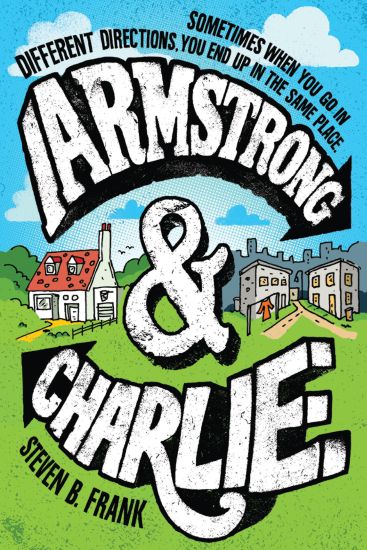
During the pilot year of a Los Angeles school system integration program, Armstrong and Charlie learn to cope with everything from first crushes and playground politics to the loss of loved ones and racial prejudice in the 1970s.Charlie isn't looking forward to sixth grade. If he starts sixth grade, chances are he'll finish it, and he'll be older than his older brother ever was.Armstrong isn't looking forward to sixth grade either. He'll have to wake up at five-thirty to ride a bus to an all-white school in the Hollywood Hills. When they are assigned seats next to each other, what starts as a rivalry becomes a close friendship.Set in Los Angeles in the 1970s, Armstrong and Charlie is the funny and heartwarming tale of two boys. Different, yet the same.
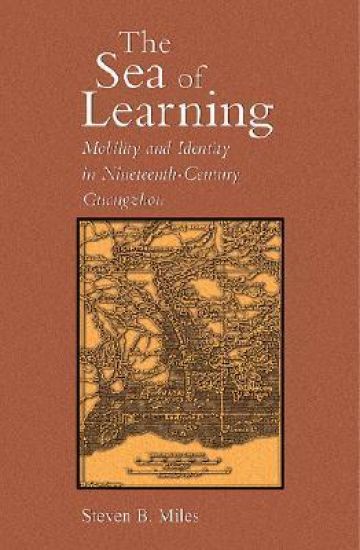
In 1817 a Cantonese scholar was mocked in Beijing as surprisingly learned for someone from the boondocks; in 1855 another Cantonese scholar boasted of the flourishing of literati culture in his home region. Not without reason, the second man pointed to the Xuehaitang (Sea of Learning Hall) as the main factor in the upsurge of learning in the Guangzhou area. Founded in the 1820s by the eminent scholar-official Ruan Yuan, the Xuehaitang was indeed one of the premier academies of the nineteenth century.The celebratory discourse that portrayed the Xuehaitang as having radically altered literati culture in Guangzhou also legitimated the academy's place in Guangzhou and Guangzhou's place as a cultural center in the Qing empire. This study asks: Who constructed this discourse and why? And why did some Cantonese elites find this discourse compelling while others did not? To answer these questions, Steven Miles looks beyond intellectual history to local social and cultural history. Arguing that the academy did not exist in a scholarly vacuum, Miles contends that its location in the city of Guangzhou and the Pearl River Delta embedded it in social settings and networks that determined who utilized its resources and who celebrated its successes and values.
Opportunity in Crisis explores the history of late Qing Cantonese migration along the West River basin during war and reconstruction and the impact of those developments on the relationship between state and local elites on the Guangxi frontier. By situating Cantonese upriver and overseas migration within the same framework, Steven Miles reconceives the late Qing as an age of Cantonese diasporic expansion rather than one of state decline.The book opens with crisis: rising levels of violence targeting Cantonese riverine commerce, much of it fomented by a geographically mobile Cantonese underclass. Miles then narrates the ensuing history of a Cantonese rebel regime established in Guangxi in the wake of the Taiping uprising. Subsequent chapters discuss opportunities created by this crisis and its aftermath and demonstrate important continuities and changes across the mid-century divide. With the reassertion of Qing control, Cantonese commercial networks in Guangxi expanded dramatically and became an increasingly important source of state revenue. Through its reliance on Hunanese and Cantonese to reconquer Guangxi, the Qing state allowed these diasporic cohorts more flexibility in colonizing the provincial administration and examination apparatus, helping to recreate a single polity on the eve of China’s transition from empire to nation-state.
Tracing journeys of Cantonese migrants along the West River and its tributaries, this book describes the circulation of people through one of the world’s great river systems between the late sixteenth and mid-nineteenth centuries. Steven B. Miles examines the relationship between diaspora and empire in an upriver frontier, and the role of migration in sustaining families and lineages in the homeland of what would become a global diaspora. Based on archival research and multisite fieldwork, this innovative history of mobility explores a set of diasporic practices ranging from the manipulation of household registration requirements to the maintenance of split families.Many of the institutions and practices that facilitated overseas migration were not adaptations of tradition to transnational modernity; rather, they emerged in the early modern era within the context of riverine migration. Likewise, the extension and consolidation of empire required not only unidirectional frontier settlement and sedentarization of indigenous populations. It was also responsible for the regular circulation between homeland and frontier of people who drove imperial expansion—even while turning imperial aims toward their own purposes of socioeconomic advancement.
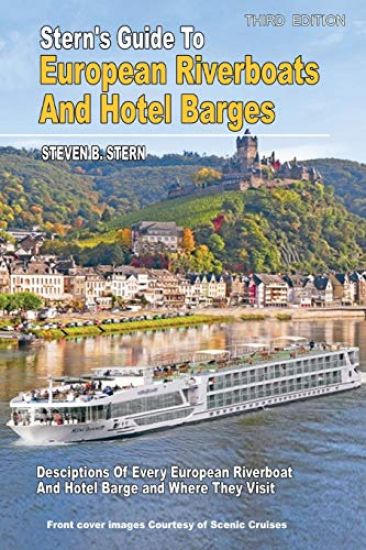
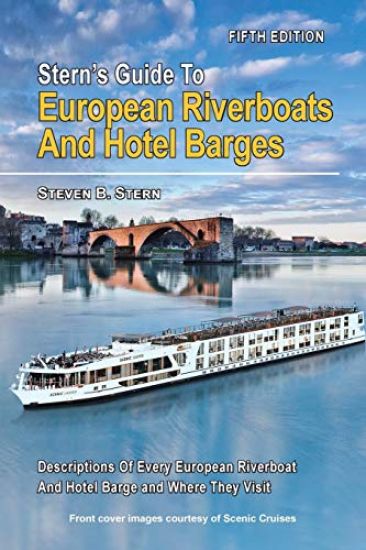
This comprehensive guide lists descriptive information for every European riverboat and hoteil barge, including vital statistics, stateroom size, desrcriptions of public areas, dining, shipboard facilities, and itineraries. Each vessel is evaluated as to comfort and luxury. Hudndreds of photos of the vessels' exteriors and interiors are included, as well as sample menus and daily programs. Several chapters are devoted to descriptions of the cities and villages visited by riverboats, and the regions and villages visited by hotel barges, along with descriptive photographs of each. This is the first and most complete guide to river and barge cruising in existence. Updated annually by Steven B. Stern who is the ultimate authoriy on all forms of cruising having written over 50 travel guides and cruised on every major ocean cruise line and riverboat line.
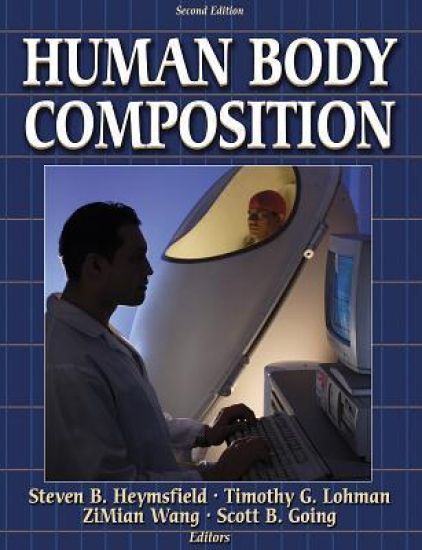
The new edition of Human Body Composition is the most complete text in the burgeoning field of body composition research. The book covers the full range of methods to assess body composition, including dual-energy X-ray absorptiometry, electrical impedance, and imaging techniques. Maintaining the focus of the first edition as a definitive research guide, this resource incorporates updated information on methods and topics of biological importance.This thoroughly revised reference includes new material on-molecular genetics;-energy expenditure; -body composition as related to various pathological states including cancer, inflammatory diseases, and illnesses associated with HIV; and-animal body composition.The information is presented in five logical parts along with an appendix for easy comprehension of the material. Part I presents an introduction to the field and sets the tone for the ensuing chapters. Part II provides an extensive review of the available body composition methods, including measurement cost, safety, and practicality. Part III features reviews on specific body composition components of widespread interest, adipose tissue and skeletal muscle, along with a review of body composition models. Part IV covers the biological influences on body composition such as age, ethnicity, and gender. Part V outlines pathological states related to body composition, including morbidity-mortality links. Human Body Composition, Second Edition, provides a comprehensive account of the science behind human body composition methods. Filled with reliable and accurate information, it is an essential tool and an indispensable reference for exercise science researchers, practitioners, and graduate students who are interested in body composition.
Clinical Decision Making for the Physical Therapist Assistant is a practical guide to developing the clinical judgment essential to effective patient care. Co-authored by two prominent physical therapy educators, this informative reference addresses a skill that is crucial to the success of Physical Therapist Assistants (PTAs). Designed to integrate decision making into PTA education, it covers the types of decisions that must be made in physical therapy treatment and offers sound guidance on how to make them. Critical thinking questions and treatment activities are included with each chapter to enable students to apply what they've learned to real-life situations. This text is a valuable resource for intermediate and post intermediate physical therapist assistant courses.Designed Specifically for PTAsProvides clear guidance on making everyday clinical decisionsCovers decision making in the context of major areas of physical therapyIntegrates decision making into technical educationProvides examples of decisions encountered in patient care
In this offbeat approach to leadership, college president Steven B. Sample-the man who turned the University of Southern California into one of the most respected and highly rated universities in the country-challenges many conventional teachings on the subject. Here, Sample outlines an iconoclastic style of leadership that flies in the face of current leadership thought, but a style that unquestionably works, nevertheless. Sample urges leaders and aspiring leaders to focus on some key counterintuitive truths. He offers his own down-to-earth, homespun, and often provocative advice on some complex and thoughtful issues. And he provides many practical, if controversial, tactics for successful leadership, suggesting, among other things, that leaders should sometimes compromise their principles, not read everything that comes across their desks, and always put off decisions.