Walt Disney's vision for an art school located before the gates of Los Angeles became a reality: Opened 50 years ago, the California Institute of the Arts had long been in crisis, before Steven D. Lavine led it to financial prosperity and international acclaim. Today, CalArts is the cradle of many Academy Award and Pulitzer Prize winners, of Mellon and Guggenheim Fellows – a hotspot of American creativity. In personal conversations with Jörn Jacob Rohwer, Lavine tells his life story for the first time, talking about cultural politics, philanthropy, the avant-garde and Los Angeles at the centre of his life. Spurred on by self-doubts and a desire to learn from failure, he proves to be a sensitive thinker, visionary and transatlantic mediator between the worlds of art, politics and education.
This volume contains the extended pedigree of Steven D Blanchard, however because books are limited to 800 pages, it is printed in 2 volumes with the index at the end of the 2nd volume. This pedigree is 134 generations and takes the reader back through Europe, Great Britain, and the Levant countries all the way to Adam. Along the way you'll find Kings, Queens, Lords and famous people you've heard of only in history books. Information before 1300 is difficult to document but is included as it was taken from already published genealogies done over the centuries by credible sources, and the Bible. There are always mistakes along the way so researchers are encourage to check the sources and to use these pedigrees as a guide in their own research. They are accurate as the author could make them at the time of publication. Front Cover: Artists conception of Methusaleh.
Genealogy is a lifetime pursuit and many of the resources for before 1400 AD are unavailable, having been long lost or destroyed. However, many of these lines can be traced using ancient records including the Bible. This volume includes 140 generations of descendants of Adam ben Eloheim (Adam) as it relates to Steven D Blanchard. Some of those people include the ancient Kings of Babylon, Kings of England and Scotland, Ireland and Emperors of Germany; including Methuselah, Charlemagne, the Holy Roman Emperor, Hoel (Old King Cole) of Wales, William Marshall (1st Earl of Pembroke and Knights Templar) and Chief Powhatan of the Americas (b. .1516). If you were to check the index, you would find that many names appear multiple times, meaning that he has multiple lines which have the same ancestors, but sometimes in a different order. Enjoy the journey as you wander through the generations and imagine their lives in comparison to your own. Remember, they were... so that we could become. (Front Cover is Pembroke Castle, home of William Marshall, 1st Earl of Pembroke and Knights Templar; known as the Greatest Knight in History.
Descended from passengers on the Mayflower in 1620, this genealogy extends back into the 950s when Rollo invaded Normandy. Related to Kings and Queens, Earls and Dukes, this line can be traced back to Adam in approximately 4,000 BC. Names such as Warren, descended from Sir Edmund Warren of Poynton, England is represented in more than 6 lines and is the first coat of arms in the line which was issued by College of Arms in England. Other surnames such as Marshall, were Templar Knights, Many lines/names were original colonists on the eastern coast of the United States, marrying into Native American ancestry, and now appear across the nation. Some of the countries represented are England, Ireland, Scotland, Germany, Switzerland, and Italy. The Plantagenet and Merovingian are both present as well as descendants of Constantine. Enjoy the journey as you travel through time and meet some of these incredible personalities
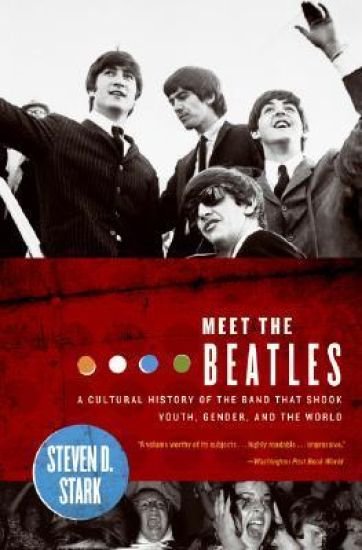
A history of the Beatles' influence on popular culture is drawn on interviews with numerous principals who surrounded the band and demonstrates their role in influencing women's identities, fashion trends, attitudes toward the gay community, and more. Reprint.
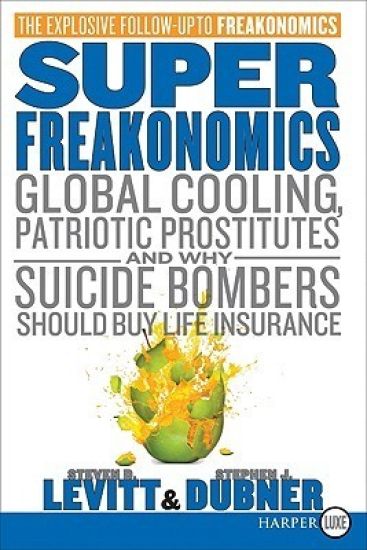
Freakonomics lived on the New York Times bestseller list for an astonishing two years. Now authors Steven D. Levitt and Stephen J. Dubner return with more iconoclastic insights and observations in SuperFreakonomics--the long awaited follow-up to their New York Times Notable blockbuster. Based on revolutionary research and original studies SuperFreakonomics promises to once again challenge our view of the way the world really works.
Freakonomics lived on the New York Times bestseller list for an astonishing two years. Now authors Steven D. Levitt and Stephen J. Dubner return with more iconoclastic insights and observations in SuperFreakonomics--the long awaited follow-up to their New York Times Notable blockbuster. Based on revolutionary research and original studies SuperFreakonomics promises to once again challenge our view of the way the world really works.
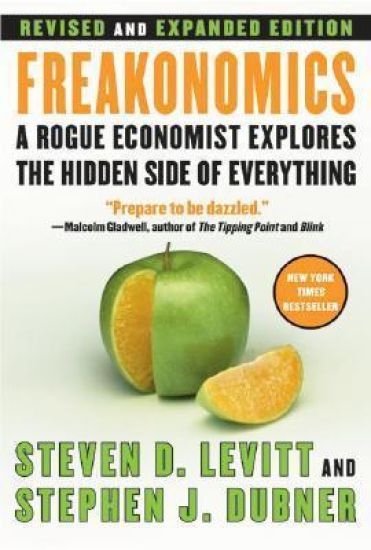
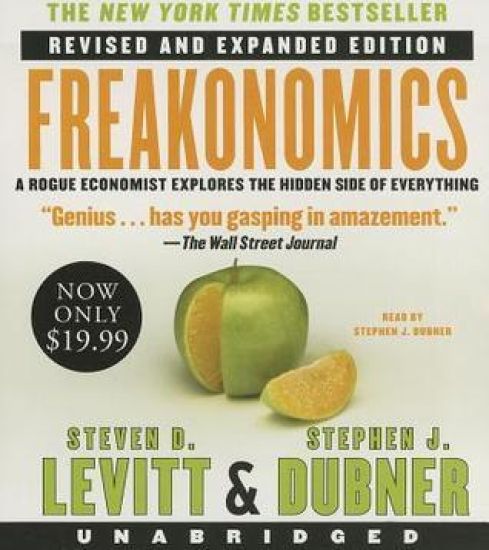
The legendary bestseller that made millions look at the world in a radically different way returns in a new edition, now including an exclusive discussion between the authors and bestselling professor of psychology Angela Duckworth.Which is more dangerous, a gun or a swimming pool? Which should be feared more: snakes or french fries? Why do sumo wrestlers cheat? In this groundbreaking book, leading economist Steven Levitt--Professor of Economics at the University of Chicago and winner of the American Economic Association's John Bates Clark medal for the economist under 40 who has made the greatest contribution to the discipline--reveals that the answers. Joined by acclaimed author and podcast host Stephen J. Dubner, Levitt presents a brilliant--and brilliantly entertaining--account of how incentives of the most hidden sort drive behavior in ways that turn conventional wisdom on its head.
Freakonomics lived on the New York Times bestseller list for an astonishing two years. Now authors Steven D. Levitt and Stephen J. Dubner return with more iconoclastic insights and observations in SuperFreakonomics--the long awaited follow-up to their New York Times Notable blockbuster. Based on revolutionary research and original studies SuperFreakonomics promises to once again challenge our view of the way the world really works.
Freakonomics lived on the New York Times bestseller list for an astonishing two years. Now authors Steven D. Levitt and Stephen J. Dubner return with more iconoclastic insights and observations in SuperFreakonomics--the long awaited follow-up to their New York Times Notable blockbuster. Based on revolutionary research and original studies SuperFreakonomics promises to once again challenge our view of the way the world really works.
Freakonomics lived on the New York Times bestseller list for an astonishing two years. Now authors Steven D. Levitt and Stephen J. Dubner return with more iconoclastic insights and observations in SuperFreakonomics--the long awaited follow-up to their New York Times Notable blockbuster. Based on revolutionary research and original studies SuperFreakonomics promises to once again challenge our view of the way the world really works.
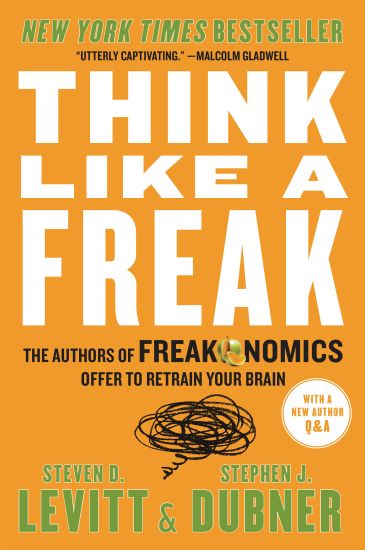
The New York Times bestselling Freakonomics changed the way we see the world, exposing the hidden side of just about everything. Then came SuperFreakonomics, a documentary film, an award-winning podcast, and more.Now, with Think Like a Freak, Steven D. Levitt and Stephen J. Dubner have written their most revolutionary book yet. With their trademark blend of captivating storytelling and unconventional analysis, they take us inside their thought process and teach us all to think a bit more productively, more creatively, more rationally--to think, that is, like a Freak.Levitt and Dubner offer a blueprint for an entirely new way to solve problems, whether your interest lies in minor lifehacks or major global reforms. As always, no topic is off-limits. They range from business to philanthropy to sports to politics, all with the goal of retraining your brain. Along the way, you'll learn the secrets of a Japanese hot-dog-eating champion, the reason an Australian doctor swallowed a batch of dangerous bacteria, and why Nigerian e-mail scammers make a point of saying they're from Nigeria.Some of the steps toward thinking like a Freak: First, put away your moral compass--because it's hard to see a problem clearly if you've already decided what to do about it. Learn to say "I don't know"--for until you can admit what you don't yet know, it's virtually impossible to learn what you need to. Think like a child--because you'll come up with better ideas and ask better questions. Take a master class in incentives--because for better or worse, incentives rule our world. Learn to persuade people who don't want to be persuaded--because being right is rarely enough to carry the day. Learn to appreciate the upside of quitting--because you can't solve tomorrow's problem if you aren't willing to abandon today's dud.Levitt and Dubner plainly see the world like no one else. Now you can too. Never before have such iconoclastic thinkers been so revealing--and so much fun to read.
In this major national bestseller and follow-up to Superfreakonomics, the Freakonomics authors are back to take us behind the phenomenon and unveil the tools for thinking like a freak.With their trademark blend of captivating storytelling and unconventional analysis, Steven D. Levitt and Stephen J. Dubner take us inside their thought process and teach us all how to think a bit more productively, more creatively, more rationally. In Think Like A Freak, they offer a blueprint for an entirely new way to solve problems, whether your interest lies in minor lifehacks or major global reforms. The topics range from business to philanthropy to sports to politics, all with the goal of retraining your brain. Along the way, you'll learn the secrets of a Japanese hot-dog-eating champion, the reason an Australian doctor swallowed a batch of dangerous bacteria, and why Nigerian e-mail scammers make a point of saying they're from Nigeria.Levitt and Dubner plainly see the world like no one else. Now you can too. Never before have such iconoclastic thinkers been so revealing--and so much fun to read.This paperback edition includes a new Q&A with the authors.
The New York Times bestselling Freakonomics changed the way we see the world, exposing the hidden side of just about everything. Then came SuperFreakonomics, a documentary film, an award-winning podcast, and more.Now, with Think Like a Freak, Steven D. Levitt and Stephen J. Dubner have written their most revolutionary book yet. With their trademark blend of captivating storytelling and unconventional analysis, they take us inside their thought process and teach us all to think a bit more productively, more creatively, more rationally--to think, that is, like a Freak.Levitt and Dubner offer a blueprint for an entirely new way to solve problems, whether your interest lies in minor lifehacks or major global reforms. As always, no topic is off-limits. They range from business to philanthropy to sports to politics, all with the goal of retraining your brain. Along the way, you'll learn the secrets of a Japanese hot-dog-eating champion, the reason an Australian doctor swallowed a batch of dangerous bacteria, and why Nigerian e-mail scammers make a point of saying they're from Nigeria.Some of the steps toward thinking like a Freak: First, put away your moral compass--because it's hard to see a problem clearly if you've already decided what to do about it. Learn to say "I don't know"--for until you can admit what you don't yet know, it's virtually impossible to learn what you need to. Think like a child--because you'll come up with better ideas and ask better questions. Take a master class in incentives--because for better or worse, incentives rule our world. Learn to persuade people who don't want to be persuaded--because being right is rarely enough to carry the day. Learn to appreciate the upside of quitting--because you can't solve tomorrow's problem if you aren't willing to abandon today's dud.Levitt and Dubner plainly see the world like no one else. Now you can too. Never before have such iconoclastic thinkers been so revealing--and so much fun to read.
The New York Times bestselling Freakonomics changed the way we see the world, exposing the hidden side of just about everything. Then came SuperFreakonomics, a documentary film, an award-winning podcast, and more.Now, with Think Like a Freak, Steven D. Levitt and Stephen J. Dubner have written their most revolutionary book yet. With their trademark blend of captivating storytelling and unconventional analysis, they take us inside their thought process and teach us all to think a bit more productively, more creatively, more rationally--to think, that is, like a Freak.Levitt and Dubner offer a blueprint for an entirely new way to solve problems, whether your interest lies in minor lifehacks or major global reforms. As always, no topic is off-limits. They range from business to philanthropy to sports to politics, all with the goal of retraining your brain. Along the way, you'll learn the secrets of a Japanese hot-dog-eating champion, the reason an Australian doctor swallowed a batch of dangerous bacteria, and why Nigerian e-mail scammers make a point of saying they're from Nigeria.Some of the steps toward thinking like a Freak: First, put away your moral compass--because it's hard to see a problem clearly if you've already decided what to do about it.Learn to say "I don't know"--for until you can admit what you don't yet know, it's virtually impossible to learn what you need to.Think like a child--because you'll come up with better ideas and ask better questions.Take a master class in incentives--because for better or worse, incentives rule our world.Learn to persuade people who don't want to be persuaded--because being right is rarely enough to carry the day.Learn to appreciate the upside of quitting--because you can't solve tomorrow's problem if you aren't willing to abandon today's dud.Levitt and Dubner plainly see the world like no one else. Now you can too. Never before have such iconoclastic thinkers been so revealing--and so much fun to read.
The New York Times bestselling Freakonomics changed the way we see the world, exposing the hidden side of just about everything. Then came SuperFreakonomics, a documentary film, an award-winning podcast, and more.Now, with Think Like a Freak, Steven D. Levitt and Stephen J. Dubner have written their most revolutionary book yet. With their trademark blend of captivating storytelling and unconventional analysis, they take us inside their thought process and teach us all to think a bit more productively, more creatively, more rationally--to think, that is, like a Freak.Levitt and Dubner offer a blueprint for an entirely new way to solve problems, whether your interest lies in minor lifehacks or major global reforms. As always, no topic is off-limits. They range from business to philanthropy to sports to politics, all with the goal of retraining your brain. Along the way, you'll learn the secrets of a Japanese hot-dog-eating champion, the reason an Australian doctor swallowed a batch of dangerous bacteria, and why Nigerian e-mail scammers make a point of saying they're from Nigeria.Some of the steps toward thinking like a Freak: First, put away your moral compass--because it's hard to see a problem clearly if you've already decided what to do about it. Learn to say "I don't know"--for until you can admit what you don't yet know, it's virtually impossible to learn what you need to. Think like a child--because you'll come up with better ideas and ask better questions. Take a master class in incentives--because for better or worse, incentives rule our world. Learn to persuade people who don't want to be persuaded--because being right is rarely enough to carry the day. Learn to appreciate the upside of quitting--because you can't solve tomorrow's problem if you aren't willing to abandon today's dud.Levitt and Dubner plainly see the world like no one else. Now you can too. Never before have such iconoclastic thinkers been so revealing--and so much fun to read.
Steven D. Levitt and Stephen J. Dubner offer the long-awaited paperback edition of Freakonomics, the runaway bestseller, including six Freakonomics columns from the New York Times Magazine and a Q & A with the authors.
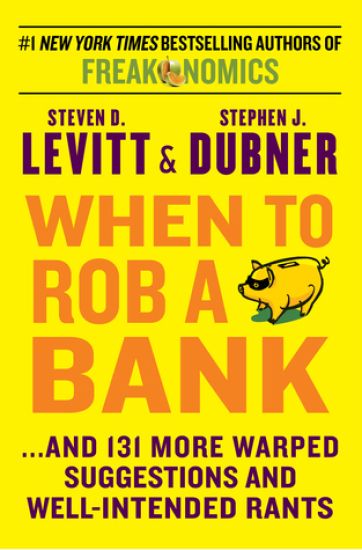
In celebration of the 10th anniversary of the landmark book Freakonomics comes this curated collection from the most readable economics blog in the universe. It's the perfect solution for the millions of readers who love all things Freakonomics. Surprising and erudite, eloquent and witty, When to Rob a Bank demonstrates the brilliance that has made the Freakonomics guys an international sensation, with more than 7 million books sold in 40 languages, and 150 million downloads of their Freakonomics Radio podcast.When Freakonomics was first published, the authors started a blog--and they've kept it up. The writing is more casual, more personal, even more outlandish than in their books. In When to Rob a Bank, they ask a host of typically off-center questions: Why don't flight attendants get tipped? If you were a terrorist, how would you attack? And why does KFC always run out of fried chicken?Over the past decade, Steven D. Levitt and Stephen J. Dubner have published more than 8,000 blog posts on the Freakonomics website. Many of them, they freely admit, were rubbish. But now they've gone through and picked the best of the best. You'll discover what people lie about, and why; the best way to cut gun deaths; why it might be time for a sex tax; and, yes, when to rob a bank. (Short answer: never; the ROI is terrible.) You'll also learn a great deal about Levitt and Dubner's own quirks and passions, from gambling and golf to backgammon and the abolition of the penny.
In celebration of the 10th anniversary of the landmark book Freakonomics comes this curated collection from the most readable economics blog in the universe. It's the perfect solution for the millions of readers who love all things Freakonomics. Surprising and erudite, eloquent and witty, When to Rob a Bank demonstrates the brilliance that has made the Freakonomics guys an international sensation, with more than 7 million books sold in 40 languages, and 150 million downloads of their Freakonomics Radio podcast.When Freakonomics was first published, the authors started a blog--and they've kept it up. The writing is more casual, more personal, even more outlandish than in their books. In When to Rob a Bank, they ask a host of typically off-center questions: Why don't flight attendants get tipped? If you were a terrorist, how would you attack? And why does KFC always run out of fried chicken?Over the past decade, Steven D. Levitt and Stephen J. Dubner have published more than 8,000 blog posts on the Freakonomics website. Many of them, they freely admit, were rubbish. But now they've gone through and picked the best of the best. You'll discover what people lie about, and why; the best way to cut gun deaths; why it might be time for a sex tax; and, yes, when to rob a bank. (Short answer: never; the ROI is terrible.) You'll also learn a great deal about Levitt and Dubner's own quirks and passions, from gambling and golf to backgammon and the abolition of the penny.