Kirjojen hintavertailu. Mukana 12 390 323 kirjaa ja 12 kauppaa.

Kirjahaku

Etsi kirjoja tekijän nimen, kirjan nimen tai ISBN:n perusteella.

1000 tulosta hakusanalla Steven F. Lawson

Midlife Transformation in Literature and Film
In this book, Steven F. Walker considers the midlife transition from a Jungian and Eriksonian perspective, by providing vivid and powerful literary and cinematic examples that illustrate the psychological theories in a clear and entertaining way.For C.G. Jung, midlife is a time for personal transformation, when the values of youth are replaced by a different set of values, and when the need to succeed in the world gives place to the desire to participate more in the culture of one’s age and to further its development in all kinds of different ways. Erik Erikson saw "generativity," an expanded concern for others beyond one's immediate circle of family and friends, as the hallmark of this stage of life. Both psychologists saw it as a time for growth and renewal. Literary texts such Virginia Woolf's Mrs Dalloway, Shakespeare's Antony and Cleopatra, or Sophocles' Oedipus the King, and films such as Fellini's 8 ½ and Campion's The Piano, have the capacity to represent, sometimes more vividly and with greater dramatic concentration than actual life histories or case studies, the archetypal nature of the drama and in-depth transformation associated with the midlife transition. Midlife Transformation in Literature and Film focuses on the specific male and female archetypal paradigms and presents them within the general context of midlife transformation. For men, the theme of death of the young hero presides over the crisis and the transformative ordeal, whereas for women the theme of tragic abandonment acts as the prelude to further growth and independence. This book is essential reading for anyone studying Jung, Erikson, or the midlife transition. It will interest those who have already been through a midlife transition, those who are in the midst of one, as well as those who are yet to experience this challenging period.
Midlife Transformation in Literature and Film
In this book, Steven F. Walker considers the midlife transition from a Jungian and Eriksonian perspective, by providing vivid and powerful literary and cinematic examples that illustrate the psychological theories in a clear and entertaining way.For C.G. Jung, midlife is a time for personal transformation, when the values of youth are replaced by a different set of values, and when the need to succeed in the world gives place to the desire to participate more in the culture of one’s age and to further its development in all kinds of different ways. Erik Erikson saw "generativity," an expanded concern for others beyond one's immediate circle of family and friends, as the hallmark of this stage of life. Both psychologists saw it as a time for growth and renewal. Literary texts such Virginia Woolf's Mrs Dalloway, Shakespeare's Antony and Cleopatra, or Sophocles' Oedipus the King, and films such as Fellini's 8 ½ and Campion's The Piano, have the capacity to represent, sometimes more vividly and with greater dramatic concentration than actual life histories or case studies, the archetypal nature of the drama and in-depth transformation associated with the midlife transition. Midlife Transformation in Literature and Film focuses on the specific male and female archetypal paradigms and presents them within the general context of midlife transformation. For men, the theme of death of the young hero presides over the crisis and the transformative ordeal, whereas for women the theme of tragic abandonment acts as the prelude to further growth and independence. This book is essential reading for anyone studying Jung, Erikson, or the midlife transition. It will interest those who have already been through a midlife transition, those who are in the midst of one, as well as those who are yet to experience this challenging period.
Head Hunters

Head Hunters

Steven F. Pond

The University of Michigan Press
2010
nidottu
". . . [a] very readable dissection of all the different ways in which Herbie Hancock's 1973 album Head Hunters broke the mould. . . . An entertaining and thought-provoking read."---Jazzwise Magazine "An important and timely book. Pond's work reflects the insight an informed researcher and skilled performer can bring to the study of music."---Travis Jackson, Associate Professor of American Music, University of Chicago Winner of the U.S. chapter of the International Association for the Study of Popular Music's Woody Guthrie Award for most distinguished work on popular music. Steven Pond's Head Hunters captures a transitional moment in modern music history, a time when jazz and rock intermingled to create a new, often controversial, genre. At the forefront of that style was Head Hunters, Herbie Hancock's foray into the fusion jazz market. The album became a turning point for a radical shift in both the production and reception of jazz. It was the best-selling jazz record of all time to that point, and the music industry quickly responded to the expanded market, with production and promotion budgets rising tenfold. Such a shift helped musicians pry open the control-booth door, permanently enlarging their role in production. But critics, believing that rock and funk might be appropriating jazz to new musical ends---or more ominously, for commercial reasons---grew increasingly alarmed at what they saw as the beginning of the end of jazz. Steven F. Pond is Associate Professor of music at Cornell University. He will become Editor-in-Chief for the journal Jazz Perspectives in 2011.
Dreaming in the Middle Ages

Dreaming in the Middle Ages

Steven F. Kruger

Cambridge University Press
2005
pokkari
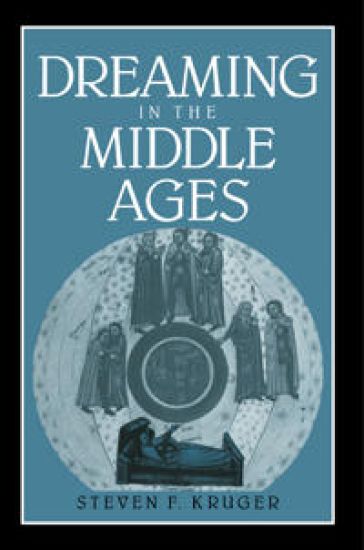
This wide-ranging study examines the role of the dream in medieval culture with reference to philosophical, legal and theological writings as well as literary and autobiographical works. Stephen Kruger studies the development of theories of dreaming, from the Neoplatonic and patristic writers to late medieval re-interpretations, and shows how these theories relate to autobiographical accounts and to more popular treatments of dreaming. He considers previously neglected material including one important dream vision by Nicole Oresme, and arrives at a new understanding of this literary genre, and of medieval attitudes to dreaming in general.
Dreaming in the Middle Ages

Dreaming in the Middle Ages

Steven F. Kruger

Cambridge University Press
1992
sidottu
This wide-ranging study examines the role of the dream in medieval culture with reference to philosophical, legal and theological writings as well as literary and autobiographical works. Stephen Kruger studies the development of theories of dreaming, from the Neoplatonic and patristic writers to late medieval re-interpretations, and shows how these theories relate to autobiographical accounts and to more popular treatments of dreaming. He considers previously neglected material including one important dream vision by Nicole Oresme, and arrives at a new understanding of this literary genre, and of medieval attitudes to dreaming in general.
Modeling Populations of Adaptive Individuals

Modeling Populations of Adaptive Individuals

Steven F. Railsback; Bret C. Harvey

PRINCETON UNIVERSITY PRESS
2020
sidottu
Ecologists now recognize that the dynamics of populations, communities, and ecosystems are strongly affected by adaptive individual behaviors. Yet until now, we have lacked effective and flexible methods for modeling such dynamics. Traditional ecological models become impractical with the inclusion of behavior, and the optimization approaches of behavioral ecology cannot be used when future conditions are unpredictable due to feedbacks from the behavior of other individuals. This book provides a comprehensive introduction to state- and prediction-based theory, or SPT, a powerful new approach to modeling trade-off behaviors in contexts such as individual-based population models where feedbacks and variability make optimization impossible.Modeling Populations of Adaptive Individuals features a wealth of examples that range from highly simplified behavior models to complex population models in which individuals make adaptive trade-off decisions about habitat and activity selection in highly heterogeneous environments. Steven Railsback and Bret Harvey explain how SPT builds on key concepts from the state-based dynamic modeling theory of behavioral ecology, and how it combines explicit predictions of future conditions with approximations of a fitness measure to represent how individuals make good—not optimal—decisions that they revise as conditions change. The resulting models are realistic, testable, adaptable, and invaluable for answering fundamental questions in ecology and forecasting ecological outcomes of real-world scenarios.
Agent-Based and Individual-Based Modeling

Agent-Based and Individual-Based Modeling

Steven F. Railsback; Volker Grimm

PRINCETON UNIVERSITY PRESS
2019
sidottu
The essential textbook on agent-based modeling—now fully updated and expandedAgent-Based and Individual-Based Modeling has become the standard textbook on the subject for classroom use and self-instruction. Drawing on the latest version of NetLogo and fully updated with new examples, exercises, and an enhanced text for easier comprehension, this is the essential resource for anyone seeking to understand how the dynamics of biological, social, and other complex systems arise from the characteristics of the agents that make up these systems.Steven Railsback and Volker Grimm lead students stepwise through the processes of designing, programming, documenting, and doing scientific research with agent-based models, focusing on the adaptive behaviors that make these models necessary. They cover the fundamentals of modeling and model analysis, introduce key modeling concepts, and demonstrate how to implement them using NetLogo. They also address pattern-oriented modeling, an invaluable strategy for modeling real-world problems and developing theory.This accessible and authoritative book focuses on modeling as a tool for understanding real complex systems. It explains how to pose a specific question, use observations from actual systems to design models, write and test software, and more.A hands-on introduction that guides students from conceptual design to computer implementation to analysisFilled with new examples and exercises and compatible with the latest version of NetLogoIdeal for students and researchers across the natural and social sciencesWritten by two leading practitionersSupported by extensive instructional materials at www.railsback-grimm-abm-book.com
Agent-Based and Individual-Based Modeling

Agent-Based and Individual-Based Modeling

Steven F. Railsback; Volker Grimm

Princeton University Press
2019
pokkari
The essential textbook on agent-based modeling—now fully updated and expandedAgent-Based and Individual-Based Modeling has become the standard textbook on the subject for classroom use and self-instruction. Drawing on the latest version of NetLogo and fully updated with new examples, exercises, and an enhanced text for easier comprehension, this is the essential resource for anyone seeking to understand how the dynamics of biological, social, and other complex systems arise from the characteristics of the agents that make up these systems.Steven Railsback and Volker Grimm lead students stepwise through the processes of designing, programming, documenting, and doing scientific research with agent-based models, focusing on the adaptive behaviors that make these models necessary. They cover the fundamentals of modeling and model analysis, introduce key modeling concepts, and demonstrate how to implement them using NetLogo. They also address pattern-oriented modeling, an invaluable strategy for modeling real-world problems and developing theory.This accessible and authoritative book focuses on modeling as a tool for understanding real complex systems. It explains how to pose a specific question, use observations from actual systems to design models, write and test software, and more.A hands-on introduction that guides students from conceptual design to computer implementation to analysisFilled with new examples and exercises and compatible with the latest version of NetLogoIdeal for students and researchers across the natural and social sciencesWritten by two leading practitionersSupported by extensive instructional materials at www.railsback-grimm-abm-book.com
Modeling Populations of Adaptive Individuals

Modeling Populations of Adaptive Individuals

Steven F. Railsback; Bret C. Harvey

Princeton University Press
2020
pokkari
Ecologists now recognize that the dynamics of populations, communities, and ecosystems are strongly affected by adaptive individual behaviors. Yet until now, we have lacked effective and flexible methods for modeling such dynamics. Traditional ecological models become impractical with the inclusion of behavior, and the optimization approaches of behavioral ecology cannot be used when future conditions are unpredictable due to feedbacks from the behavior of other individuals. This book provides a comprehensive introduction to state- and prediction-based theory, or SPT, a powerful new approach to modeling trade-off behaviors in contexts such as individual-based population models where feedbacks and variability make optimization impossible.Modeling Populations of Adaptive Individuals features a wealth of examples that range from highly simplified behavior models to complex population models in which individuals make adaptive trade-off decisions about habitat and activity selection in highly heterogeneous environments. Steven Railsback and Bret Harvey explain how SPT builds on key concepts from the state-based dynamic modeling theory of behavioral ecology, and how it combines explicit predictions of future conditions with approximations of a fitness measure to represent how individuals make good—not optimal—decisions that they revise as conditions change. The resulting models are realistic, testable, adaptable, and invaluable for answering fundamental questions in ecology and forecasting ecological outcomes of real-world scenarios.
Ethical and Legal Issues for Mental Health Professionals

Ethical and Legal Issues for Mental Health Professionals

Steven F Bucky; Joanne E Callan; George Stricker

Routledge Member of the Taylor and Francis Group
2005
sidottu
Stay up-to-date on the ethical and legal issues that affect your clinical and professional decisions!Ethical and Legal Issues for Mental Health Professionals: A Comprehensive Handbook of Principles and Standards details the ethical and legal issues that involve mental health professionals. Respected authorities with diverse backgrounds, expertise, and professional experience discuss contemporary theories emphasizing professional ethics, the ramifications of professional actions and decisions, and ethical standards on teaching, training, research, and publication. This informative handbook provides invaluable up-to-date information and guidelines vital for every mental health professional.This book is a thorough examination of ethical behavior which can be used as a reference source for the professional or a textbook for graduate students. The handbook itself is divided into five sections. The first section is a detailed introduction of ethics, law, and licensing. The second section presents general ethical principles like competence, integrity, and respect for individual rights and dignity. The third section examines confidentiality, privilege, consent, and protection. The fourth section focuses on general ethical standards in practice, including sexual contact, multiple relationships, and bartering. The fifth section presents the ethical principles and standards in teaching, training, and research. Appendices include the Ethical Principles of Psychologists and Code of Conduct (American Psychological Association, 2002) and the Code of Ethics of the National Association of Social Workers (National Association of Social Workers, 1999).Ethical and Legal Issues for Mental Health Professionals: A Comprehensive Handbook of Principles and Standards discusses:the history of basic approaches and issues in ethical philosophyfive fundamental areas in the process of developing competencethe necessary ingredients for the mental health professional’s practice of integrityaspirational versus enforceable standards of ethicsconcern for the welfare of others as a core ethical principlethe notion of social responsibility in the ethics codes of psychologists and social workersethical principles, statutes, and case law protecting privacy and confidentialityissues involving the therapist-patient privilegethe “duty to protect” doctrine and relevant legal issuesthe dynamics of multiple relationships and boundary violationssexualized dual relationships between psychologists and patientspossible conflict of interest in bartering for servicesthe requirements and implementation of maintaining patient records to avoid ethical and legal problemspossible ethical dilemmas involving referrals and feesmuch, much moreThis Handbook is an essential resource for all mental health professionals, including psychologists, psychiatrists, social workers, counselors, therapists, and graduate students in mental health and the related fields.Ethical and Legal Issues for Mental Health Professionals: A Comprehensive Handbook of Principles and Standards is the first of three volumes under this title. The following volumes will focus on forensic settings and special populations/special treatment modalities.
Ethical and Legal Issues for Mental Health Professionals

Ethical and Legal Issues for Mental Health Professionals

Steven F Bucky; Joanne E Callan; George Stricker

Routledge Member of the Taylor and Francis Group
2005
nidottu
Stay up-to-date on the ethical and legal issues that affect your clinical and professional decisions!Ethical and Legal Issues for Mental Health Professionals: A Comprehensive Handbook of Principles and Standards details the ethical and legal issues that involve mental health professionals. Respected authorities with diverse backgrounds, expertise, and professional experience discuss contemporary theories emphasizing professional ethics, the ramifications of professional actions and decisions, and ethical standards on teaching, training, research, and publication. This informative handbook provides invaluable up-to-date information and guidelines vital for every mental health professional.This book is a thorough examination of ethical behavior which can be used as a reference source for the professional or a textbook for graduate students. The handbook itself is divided into five sections. The first section is a detailed introduction of ethics, law, and licensing. The second section presents general ethical principles like competence, integrity, and respect for individual rights and dignity. The third section examines confidentiality, privilege, consent, and protection. The fourth section focuses on general ethical standards in practice, including sexual contact, multiple relationships, and bartering. The fifth section presents the ethical principles and standards in teaching, training, and research. Appendices include the Ethical Principles of Psychologists and Code of Conduct (American Psychological Association, 2002) and the Code of Ethics of the National Association of Social Workers (National Association of Social Workers, 1999).Ethical and Legal Issues for Mental Health Professionals: A Comprehensive Handbook of Principles and Standards discusses:the history of basic approaches and issues in ethical philosophyfive fundamental areas in the process of developing competencethe necessary ingredients for the mental health professional’s practice of integrityaspirational versus enforceable standards of ethicsconcern for the welfare of others as a core ethical principlethe notion of social responsibility in the ethics codes of psychologists and social workersethical principles, statutes, and case law protecting privacy and confidentialityissues involving the therapist-patient privilegethe “duty to protect” doctrine and relevant legal issuesthe dynamics of multiple relationships and boundary violationssexualized dual relationships between psychologists and patientspossible conflict of interest in bartering for servicesthe requirements and implementation of maintaining patient records to avoid ethical and legal problemspossible ethical dilemmas involving referrals and feesmuch, much moreThis Handbook is an essential resource for all mental health professionals, including psychologists, psychiatrists, social workers, counselors, therapists, and graduate students in mental health and the related fields.Ethical and Legal Issues for Mental Health Professionals: A Comprehensive Handbook of Principles and Standards is the first of three volumes under this title. The following volumes will focus on forensic settings and special populations/special treatment modalities.
Small Animal Bandaging, Casting, and Splinting Techniques

Small Animal Bandaging, Casting, and Splinting Techniques

Steven F. Swaim; Walter C. Renberg; Kathy M. Shike

Iowa State University Press
2011
nidottu
Small Animal Bandaging, Casting, and Splinting Techniques is a well-illustrated how-to manual covering common bandaging methods used to support and manage both soft tissue and orthopedic conditions in small animal patients. This highly practical book offers step-by-step procedures with accompanying photographs to aid in the secure and effective application of bandages, casts, and splints, with coverage encompassing indications, aftercare, advantages, and potential complications for each technique. Small Animal Bandaging, Casting, and Splinting Techniques is an indispensable guide for busy veterinary technicians and nurses, as well as veterinarians and veterinary students.
AIDS Narratives

AIDS Narratives

Steven F. Kruger

CRC Press Inc
1996
sidottu
This is the first book-length study of the rich fiction that has emerged from the AIDS crisis. Examining first the ways in which scientific discourse on AIDS has reflected ideologies of gender and sexuality-such as the construction of AIDS as a disease of gay men, part of a battle over masculinity, and thus largely excluding women with AIDS from public attention-the book considers how such discourses have shaped narrative understandings of AIDS. On the one hand, AIDS is seen as an invariably fatal weakening of an individual's bodily defenses, a depiction often used to reconfirm an identification between disease and a weak and vulnerable gayness. On the other hand, AIDS is understood in terms of an epidemic attributable to gay immorality or unnaturalness. The fiction of AIDS depends upon these two narratives, with one major subgenre of AIDS novel presenting narratives of personal illness, decline, and death, and a second focusing on epidemic spread. These novels also question the narrative structures upon which they depend, intervening particularly against the homophobia of those structures, though also sometimes reinforcing it.
The Spectral Jew

The Spectral Jew

Steven F. Kruger

University of Minnesota Press
2006
nidottu
Medieval European culture encompassed Judaic, Christian, Muslim, and pagan societies, forming a complex matrix of religious belief, identity, and imagination. Through incisive readings of a broad range of medieval texts and informed by poststructuralist, queer, and feminist theories, The Spectral Jew traces the Jewish presence in Western Europe to show how the body, gender, and sexuality were at the root of the construction of medieval religious anxieties, inconsistencies, and instabilities. Looking closely at how medieval Jewish and Christian identities are distinguished from each other, yet intimately intertwined, Kruger demonstrates how Jews were often corporealized in ways that posited them as inferior to Christians—archaic and incapable of change—even as the two mutually shaped each other. But such attempts to differentiate Jews and Christians were inevitably haunted by the knowledge that Christianity had emerged out of Judaism and was, in its own self-understanding, a community of converts. Examining the points of contact between Christian and Jewish communities, Kruger discloses the profound paradox of the Jew as different in all ways, yet capable of converting to fully Christian status. He draws from central medieval authors and texts such as Peter Damian, Guibert of Nogent, the Barcelona Disputation, and the Hebrew chronicles of the First Crusade, as well as lesser known writings such as the disputations of Ceuta, Majorca, and Tortosa and the immensely popular Dialogues of Peter Alfonsi. By putting the conversion narrative at the center of this analysis, Kruger exposes it as a disruption of categories rather than a smooth passage and reveals the prominent role Judaism played in the medieval Christian imagination. Steven F. Kruger is professor of English and medieval studies at Queens College and the Graduate Center, CUNY. He is author of several books and editor with Glenn Burger of Queering the Middle Ages (Minnesota, 2001).
Mere Environmentalism

Mere Environmentalism

Steven F. Hayward

AEI Press
2010
pokkari
As debates over climate change rage in Washington and American consumers become ever more conscientious about 'going green,' evangelical Christians are increasingly concerned about the proper relationship between faith and environmentalism. The notion of human 'stewardship' over God's creation could be a groundbreaking opportunity for cooperation between evangelicals, the scientific community, and environmental activists. However, a deep understanding of environmental issues from a distinctively Christian perspective will inevitably complicate partnerships with those who approach the subject from conventional secular viewpoints. Although there is some common ground, there remain important differences between Christian and secular perspectives on the environment. Are human beings merely one 'part' of the undifferentiated whole of nature? Or, worse, are humans a blight and a drain on God's perfect creation? Do we really 'own' the land we live on and the plants and animals that provide our sustenance? The answers to these questions begin to form a Christian approach to solving ecological problems. In Mere Environmentalism: A Biblical Perspective on Humans and the Natural World, Steven F. Hayward provides a thorough examination of the philosophical presuppositions underlying today's environmentalist movement and the history of policies intended to alleviate environmental challenges such as overpopulation and global warming. Relying on Scripture to understand God's created order, Hayward offers an insightful reflection on the relationship between humans and the natural world.