Kirjojen hintavertailu. Mukana 11 244 527 kirjaa ja 12 kauppaa.

Kirjahaku

Etsi kirjoja tekijän nimen, kirjan nimen tai ISBN:n perusteella.

1000 tulosta hakusanalla Steven J. Howell

The Roman Retail Revolution

The Roman Retail Revolution

Steven J. R. Ellis

Oxford University Press
2018
sidottu
Tabernae were ubiquitous in all Roman cities, lining the busiest streets and dominating their most crowded intersections in numbers far exceeding those of any other form of building. That they played a vital role in the operation of the city, and indeed in the very definition of urbanization in ancient Rome, is a point too often under-appreciated in Roman studies, and one which bears fruitful further exploration. The Roman Retail Revolution offers a thorough investigation into the social and economic worlds of the Roman shop, focusing on food and drink outlets in particular. Combining critical analysis of both archaeological material and textual sources, it challenges many of the conventional ideas about the place of retailing in the Roman city and unravels the historical development of tabernae to identify three major waves or revolutions in the shaping of retail landscapes. The volume is underpinned by two new and important bodies of evidence: the first generated from the University of Cincinnati's recent archaeological excavations into a Pompeian neighborhood of close to twenty shop-fronts, and the second resulting from a field-survey of the retail landscapes of more than a hundred cities from across the Roman world. The richness of this information, combined with the volume's interdisciplinary approach to the lives of the Roman sub-elite, results in a refreshingly original look at the history of retailing and urbanism in the Roman world.
The Error of Truth

The Error of Truth

Steven J. Osterlind

Oxford University Press
2019
sidottu
Quantitative thinking is our inclination to view natural and everyday phenomena through a lens of measurable events, with forecasts, odds, predictions, and likelihood playing a dominant part. The Error of Truth recounts the astonishing and unexpected tale of how quantitative thinking came to be, and its rise to primacy in the nineteenth and early twentieth centuries. Additionally, it considers how seeing the world through a quantitative lens has shaped our perception of the world we live in, and explores the lives of the individuals behind its early establishment. This worldview was unlike anything humankind had before, and it came about because of a momentous human achievement: we had learned how to measure uncertainty. Probability as a science was conceptualised. As a result of probability theory, we now had correlations, reliable predictions, regressions, the bellshaped curve for studying social phenomena, and the psychometrics of educational testing. Significantly, these developments happened during a relatively short period in world history— roughly, the 130-year period from 1790 to 1920, from about the close of the Napoleonic era, through the Enlightenment and the Industrial Revolutions, to the end of World War I. At which time, transportation had advanced rapidly, due to the invention of the steam engine, and literacy rates had increased exponentially. This brief period in time was ready for fresh intellectual activity, and it gave a kind of impetus for the probability inventions. Quantification is now everywhere in our daily lives, such as in the ubiquitous microchip in smartphones, cars, and appliances; in the Bayesian logic of artificial intelligence, as well as applications in business, engineering, medicine, economics, and elsewhere. Probability is the foundation of quantitative thinking. The Error of Truth tells its story— when, why, and how it happened.
Ilias Latina

Ilias Latina

Steven J. Green

Oxford University Press
2025
sidottu
The Ilias Latina, the title coined by Emil Baehrens in his 1881 edition, is a condensed version of Homer's Iliad spanning 1,070 verses of Latin hexameter. It was likely composed during the latter part of the principate of Nero (c. AD 60–65). The poem has long suffered the scholarly status of second-order poetry, the sort of imitative, 'translation' work that a Roman might compose at the beginning of his literary career. The poem's chief legacy--as a medieval school text that acquainted a Greek-less audience with Homer--has done little to assist its literary reputation. More recent times, however, have seen a greater appreciation for the literary, cultural, and political significance of Latin translation of Greek works. More specifically, there is now a growing awareness that the Ilias Latina is a sophisticated enterprise in its own right: the poem is a Roman appropriation of Homer's Iliad, reinterpreted through Rome's own national epic, Virgil's Aeneid, and recalibrated to fit the artistic and political sensibilities of the early imperial age. This book includes introductory chapters, Latin text, English translation, and detailed verse-by-verse commentary on the poem. The translation is the first to appear in English in a major, mainstream press. The commentary, also the first to appear in English, takes on board the full range of international scholarship and provides new insights into the poem's intricacies and creative engagement with Homer and the Roman poets.
Disclosure and Discretion in Roman Astrology

Disclosure and Discretion in Roman Astrology

Steven J. Green

Oxford University Press
2014
sidottu
In light of modern scepticism towards the practice, it is easy to overlook just how important a role astrology played in the career of Rome's first Emperor, Augustus. Augustus' enthusiasm for employing astrological predictions and symbols to cement his own position of power was matched by an equally forceful desire to restrict their use by his political rivals. Astrology in Rome was, then, to use Tacitus' neat formulation, both 'forbidden and maintained' (Tacitus, Histories, 1.22). This volume is the first to take seriously this imperial complex as a key to understanding the diverse ways in which contemporary commentators handle the volatile topic of astrology in their writings. It shows how Roman writers engage in elaborate discourses of discretion as they simultaneously celebrate the power of astrology and shy away from the sort of astrological revelations that might offend imperial sensibilities. With a particular focus on the key astrological poem of Manilius, this study provides a new conceptual framework in which to appreciate the complex treatments of astrology during the period of Octavian/Augustus.
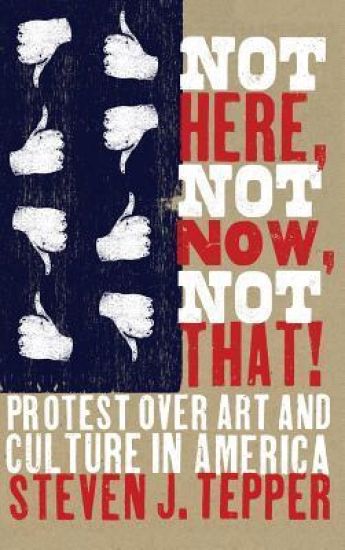
Not Here, Not Now, Not That!

Not Here, Not Now, Not That!

Steven J. Tepper

University of Chicago Press
2011
sidottu
In the late 1990s "Angels in America", Tony Kushner's epic play about homosexuality and AIDS in the Reagan era, toured the country, inspiring protests in a handful of cities while others received it warmly. Why do people fight over some works of art but not others? "Not Here, Not Now, Not That!" examines a wide range of controversies over films, books, paintings, sculptures, clothing, music, and television in dozens of cities across the country to find out what turns personal offense into public protest. What Steven J. Tepper discovers is that these protests are always deeply rooted in local concerns. Furthermore, they are essential to the process of working out our differences in a civil society. To explore the local nature of public protests in detail, Tepper analyzes cases in seventy-one cities, including an in-depth look at Atlanta in the late 1990s, finding that debates there over memorials, public artworks, books, and parades served as a way for Atlantans to develop a vision of the future at a time of rapid growth and change. Eschewing simplistic narratives that reduce public protests to political maneuvering, "Not Here, Not Now, Not That!" at last provides the social context necessary to fully understand this fascinating phenomenon.
Not Here, Not Now, Not That!

Not Here, Not Now, Not That!

Steven J. Tepper

University of Chicago Press
2011
nidottu
In the late 1990s "Angels in America", Tony Kushner's epic play about homosexuality and AIDS in the Reagan era, toured the country, inspiring protests in a handful of cities while others received it warmly. Why do people fight over some works of art but not others? "Not Here, Not Now, Not That!" examines a wide range of controversies over films, books, paintings, sculptures, clothing, music, and television in dozens of cities across the country to find out what turns personal offense into public protest. What Steven J. Tepper discovers is that these protests are always deeply rooted in local concerns. Furthermore, they are essential to the process of working out our differences in a civil society. To explore the local nature of public protests in detail, Tepper analyzes cases in seventy-one cities, including an in-depth look at Atlanta in the late 1990s, finding that debates there over memorials, public artworks, books, and parades served as a way for Atlantans to develop a vision of the future at a time of rapid growth and change. Eschewing simplistic narratives that reduce public protests to political maneuvering, "Not Here, Not Now, Not That!" at last provides the social context necessary to fully understand this fascinating phenomenon.
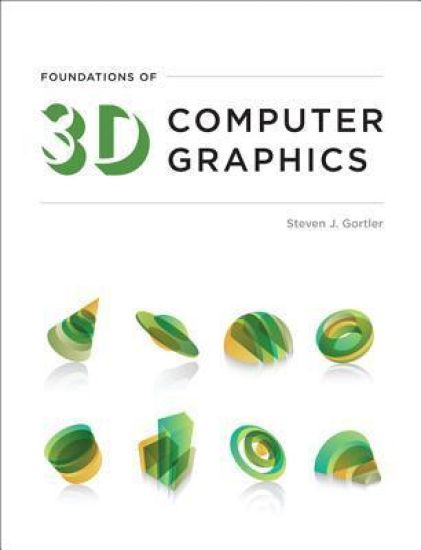
Foundations of 3D Computer Graphics

Foundations of 3D Computer Graphics

Steven J. Gortler

MIT Press
2012
sidottu
An introduction to the basic concepts of 3D computer graphics that offers a careful mathematical exposition within a modern computer graphics application programming interface.Computer graphics technology is an amazing success story. Today, all of our PCs are capable of producing high-quality computer-generated images, mostly in the form of video games and virtual-life environments; every summer blockbuster movie includes jaw-dropping computer generated special effects. This book explains the fundamental concepts of 3D computer graphics. It introduces the basic algorithmic technology needed to produce 3D computer graphics, and covers such topics as understanding and manipulating 3D geometric transformations, camera transformations, the image-rendering process, and materials and texture mapping. It also touches on advanced topics including color representations, light simulation, dealing with geometric representations, and producing animated computer graphics. The book takes special care to develop an original exposition that is accessible and concise but also offers a clear explanation of the more difficult and subtle mathematical issues. The topics are organized around a modern shader-based version of OpenGL, a widely used computer graphics application programming interface that provides a real-time "rasterization-based" rendering environment. Each chapter concludes with exercises. The book is suitable for a rigorous one-semester introductory course in computer graphics for upper-level undergraduates or as a professional reference. Readers should be moderately competent programmers and have had some experience with linear algebra. After mastering the material presented, they will be on the path to expertise in an exciting and challenging field.
Divine Games

Divine Games

Steven J. Brams

MIT Press
2018
sidottu
A game-theoretical analysis of interactions between a human being and an omnipotent and omniscient godlike being highlights the inherent unknowability of the latter's superiority.In Divine Games, Steven Brams analyzes games that a human being might play with an omnipotent and omniscient godlike being. Drawing on game theory and his own theory of moves, Brams combines the analysis of thorny theological questions, suggested by Pascal's wager (which considers the rewards and penalties associated with belief or nonbelief in God) and Newcomb's problem (in which a godlike being has near omniscience) with the analysis of several stories from the Hebrew Bible. Almost all of these stories involve conflict between God or a surrogate and a human player; their representation as games raises fundamental questions about God's superiority.In some games God appears vulnerable (after Adam and Eve eat the forbidden fruit in defiance of His command), in other games his actions seem morally dubious (when He subjects Abraham and Job to extreme tests of their faith), and in still other games He has a propensity to hold grudges (in preventing Moses from entering the Promised Land and in undermining the kingship of Saul). If the behavior of a superior being is indistinguishable from that of an ordinary human being, his existence would appear undecidable, or inherently unknowable. Consequently, Brams argues that keeping an open mind about the existence of a superior being is an appropriate theological stance.
An Introduction to the Event-Related Potential Technique
An essential guide to designing, conducting, and analyzing event-related potential (ERP) experiments, completely updated for this edition.The event-related potential (ERP) technique, in which neural responses to specific events are extracted from the EEG, provides a powerful noninvasive tool for exploring the human brain. This volume describes practical methods for ERP research along with the underlying theoretical rationale. It offers researchers and students an essential guide to designing, conducting, and analyzing ERP experiments. This second edition has been completely updated, with additional material, new chapters, and more accessible explanations. Freely available supplementary material, including several online-only chapters, offer expanded or advanced treatment of selected topics.The first half of the book presents essential background information, describing the origins of ERPs, the nature of ERP components, and the design of ERP experiments. The second half of the book offers a detailed treatment of the main steps involved in conducting ERP experiments, covering such topics as recording the EEG, filtering the EEG and ERP waveforms, and quantifying amplitudes and latencies. Throughout, the emphasis is on rigorous experimental design and relatively simple analyses. New material in the second edition includes entire chapters devoted to components, artifacts, measuring amplitudes and latencies, and statistical analysis; updated coverage of recording technologies; concrete examples of experimental design; and many more figures. Online chapters cover such topics as overlap, localization, writing and reviewing ERP papers, and setting up and running an ERP lab.
Realism and American Foreign Policy

Realism and American Foreign Policy

Steven J. Bucklin

Praeger Publishers Inc
2000
sidottu
George Kennan and Hans Morgenthau argued that moralistic and legalistic beliefs bound Wilsonian internationalists to policies outside the national interest. Establishing their claims in the decade following World War II, Kennan and Morgenthau contended that the United States had over-extended its commitments, an interpretation that came to dominate opponents' criticisms of Wilson and his followers. Bucklin shows, after careful examination of the evidence, that the policies that Wilsonians advocated from 1919 to 1954 were generally in concert with those of the realists. Wilsonians understood balance of power politics, sought the professionalization of the Foreign Service, advocated diplomacy, and demonstrated an acute understanding of the long-term national interest.After establishing the basis of the Kennan/Morgenthau thesis, Bucklin provides a comparative analysis between the policies of Wilson and his disciples and those of Kennan and Morgenthau. This study is based upon an examination of the papers and voluminous publications of three prominent Wilsonians: Quincy Wright, Frederick Schuman, and Denna Fleming, as well as the writings of Kennan and Morgenthau. Beginning with a detailed study of Woodrow Wilson's foreign policy, Bucklin presents the case that Wilson's policies were designed to meet the national interest. The test continues with a consideration of American policies in the inter-war years, World War II, and the first decade of the Cold War to include collective security, neutrality, appeasement, and containment. Efforts to label the Wilsonians as idealistic fail when put to the test of the realists.
Imagining Russian Jewry

Imagining Russian Jewry

Steven J. Zipperstein

University of Washington Press
1999
pokkari
This subtle, unusual book explores the many, often overlapping ways in which the Russian Jewish past has been remembered in history, in literature, and in popular culture. Drawing on a wide range of sources—including novels, plays, and archival material—Imagining Russian Jewry is a reflection on reading, collective memory, and the often uneasy, and also uncomfortably intimate, relationships that exist between seemingly incompatible ways of seeing the past. The book also explores what it means to produce scholarship on topics that are deeply personal: its anxieties, its evasions, and its pleasures.Zipperstein, a leading expert in modern Jewish history, explores the imprint left by the Russian Jewish past on American Jews starting from the turn of the twentieth century, considering literature ranging from immigrant novels to Fiddler on the Roof. In Russia, he finds nostalgia in turn-of-the-century East European Jewry itself, in novels contrasting Jewish life in acculturated Odessa with the more traditional shtetls. The book closes with a provocative call for a greater awareness regarding how the Holocaust has influenced scholarship produced since the Shoah.
Imagining Russian Jewry

Imagining Russian Jewry

Steven J. Zipperstein

University of Washington Press
2015
sidottu
This subtle, unusual book explores the many, often overlapping ways in which the Russian Jewish past has been remembered in history, in literature, and in popular culture. Drawing on a wide range of sources—including novels, plays, and archival material—Imagining Russian Jewry is a reflection on reading, collective memory, and the often uneasy, and also uncomfortably intimate, relationships that exist between seemingly incompatible ways of seeing the past. The book also explores what it means to produce scholarship on topics that are deeply personal: its anxieties, its evasions, and its pleasures.Zipperstein, a leading expert in modern Jewish history, explores the imprint left by the Russian Jewish past on American Jews starting from the turn of the twentieth century, considering literature ranging from immigrant novels to Fiddler on the Roof. In Russia, he finds nostalgia in turn-of-the-century East European Jewry itself, in novels contrasting Jewish life in acculturated Odessa with the more traditional shtetls. The book closes with a provocative call for a greater awareness regarding how the Holocaust has influenced scholarship produced since the Shoah.
The Young John Muir

The Young John Muir

Steven J. Holmes

University of Wisconsin Press
1999
nidottu
As a founder of the Sierra Club and a promoter of the national parks, as a passionate nature writer and as a principle figure of the environmental movement, John Muir stands as a powerful symbol of connection with the natural world. But how did Muir's relationships with nature begin? In this book, Steven J. Holmes offers an interpretation of Muir's formative years, one that reveals the agony as well as the of his earliest experiences of nature. From his childhood in Scotland and Wisconsin through young adulthood in the Midwest and Canada, Muir struggled - often without success - to find a place for himself both in nature and in society. Far from granting comfort, the natural world confronted the young Muir with a full range of practical, emotional and religious conflicts. Only with the help of his family, religion, and the power of nature itself could Muir, in his late 20s, find a welcoming vision of nature as home.
Free Speech and Human Dignity

Free Speech and Human Dignity

Steven J. Heyman

Yale University Press
2008
sidottu
Debates over hate speech, pornography, and other sorts of controversial speech raise issues that go to the core of the First Amendment. Supporters of regulation argue that these forms of expression cause serious injury to individuals and groups, assaulting their dignity as human beings and citizens. Civil libertarians respond that our commitment to free speech is measured by our willingness to protect it, even when it causes harm or offends our deepest values. In this important book, Steven J. Heyman presents a theory of the First Amendment that seeks to overcome the conflict between free speech and human dignity. This liberal humanist theory recognizes a strong right to freedom of expression while also providing protection against the most serious forms of assaultive speech. Heyman then uses the theory to illuminate a wide range of contemporary disputes, from flag burning and antiabortion demonstrations to pornography and hate speech.
Rosenfeld's Lives

Rosenfeld's Lives

Steven J. Zipperstein

Yale University Press
2011
pokkari
A haunting consideration of the extraordinary mind of Saul Bellow’s unjustly forgotten friend and literary rival and the extremes of the writing life Born in Chicago in 1918, the prodigiously gifted and erudite Isaac Rosenfeld was anointed a “genius” upon the publication of his “luminescent” novel, Passage from Home and was expected to surpass even his closest friend and rival, Saul Bellow. Yet when felled by a heart attack at the age of thirty-eight, Rosenfeld had published relatively little, his life reduced to a metaphor for literary failure.In this deeply contemplative book, Steven J. Zipperstein seeks to reclaim Rosenfeld's legacy by “opening up” his work. Zipperstein examines for the first time the “small mountain” of unfinished manuscripts the writer left behind, as well as his fiercely candid journals and letters. In the process, Zipperstein unearths a turbulent life that was obsessively grounded in a profound commitment to the ideals of the writing life.Rosenfeld’s Lives is a fascinating exploration of literary genius and aspiration and the paradoxical power of literature to elevate and to enslave. It illuminates the cultural and political tensions of post-war America, Jewish intellectual life of the era, and—most poignantly—the struggle at the heart of any writer’s life.
Philip Roth

Philip Roth

Steven J. Zipperstein

YALE UNIVERSITY PRESS
2026
sidottu
A landmark biography of one of our most prominent chroniclers of American life In this groundbreaking literary biography, Steven J. Zipperstein captures the complex life and astonishing work of Philip Roth (1933–2018), one of America’s most celebrated writers. Born in Newark, New Jersey—where his short stories and books were often set—Roth wrote with ambition and awareness of what was required to produce great literature. No writer was more dedicated to his craft, even as he was rubbing shoulders with the Kennedys and engaging in a spate of famous and infamous romances. And yet, as much as Roth wrote about sex and self, he viewed himself as socially withdrawn, living much like an “unchaste monk” (his words). Zipperstein explores the unprecedented range of Roth’s work—from “Goodbye, Columbus” and Portnoy’s Complaint to the Pulitzer Prize–winning American Pastoral and The Plot Against America. Drawing on extensive archival materials and over one hundred interviews, including conversations with Roth about his life and work, Zipperstein provides an intimate and insightful look at one of the twentieth century’s most influential writers, placing his work in the context of his obsessions, as well as American Jewishness, freedom, and sexuality.
The Scientific Practice of Professional Psychology

The Scientific Practice of Professional Psychology

Steven J. Trierweiler; George Stricker

Kluwer Academic/Plenum Publishers
1997
sidottu
A workable vision of scientific practice has proven to be an elusive, if laudable, goal for professional psychology. The field cannot be faulted for failing to seek scientific wisdom, but it has been slow to integrate that wisdom fully with the wisdom of practice. This has proven to be a major oversight for, despite psychology's long­ if the standing commitment to science, practitioners are unlikely to think scientifically methods and products of science are described in ways that make it impossible to do so. Unfortunately, the rhetoric of science too often has done just that: So focused has it been on the problem of distinguishing good science from bad that it has inadvertently defeated any hope of a practical science developing in our field. We offer one remedy for this situation: This book is about scientific thinking for the professional psychologist. Specifically, it is a primer on the application of scientific logic to professional practice. We argue that the professional needs a more straightforward and realistic scientific identity than heretofore has been available. The professional consciously must become a local clinical scientist, bringing all the power of scientific thought to the specifics of the clinical situation. Contrary to forces in psychology that promote uncritical acceptance of science as given by academic researchers or, alternatively, that encourage criticism and ultimate disregard of the scientific endeavor, we call for a redoubling of efforts to incorporate scientific thought into practical professional inquiry.