
Kirjahaku
Etsi kirjoja tekijän nimen, kirjan nimen tai ISBN:n perusteella.
1000 tulosta hakusanalla Stokes William

The Olive-Branch, Or, Poems on Peace, Liberty, Friendship, &C
William Stokes
Nabu Press
2010
pokkari

Lectures on the Theory and Practice of Physic
John Bell; William Stokes
Antigonos Verlag
2025
nidottu

Lectures on the Theory and Practice of Physic
John Bell; William Stokes
Antigonos Verlag
2025
nidottu

Letter From William A. Stokes, Of Westmoreland County, To John Creswell, Junior, On The Subject Of Tonnage Tax (1859)
William Axton Stokes
KESSINGER PUBLISHING, LLC
2010
sidottu
Essentials of Earth History: An Introduction to Historical Geology
William Lee Stokes
Literary Licensing, LLC
2012
sidottu
Essentials of Earth History: An Introduction to Historical Geology is a comprehensive textbook that provides an in-depth understanding of the history of the Earth and the processes that have shaped it over time. Written by William Lee Stokes, a renowned geologist and educator, the book covers the fundamental concepts of geology, including plate tectonics, rock formation, and geological time scales. The book is divided into three parts, each focusing on a different aspect of Earth's history. Part one covers the formation of the Earth and the evolution of life on it. Part two delves into the geological processes that have shaped the planet, including earthquakes, volcanoes, erosion, and glaciation. Part three explores the history of the Earth's climate and the impact of human activities on the environment.Throughout the book, Stokes uses clear and concise language to explain complex geological concepts, making it accessible to students with little or no background in geology. The book also features numerous illustrations, photographs, and diagrams to help readers visualize the concepts being discussed.Essentials of Earth History: An Introduction to Historical Geology is an ideal textbook for students of geology, environmental science, and related fields. It is also a valuable resource for anyone interested in learning more about the history of our planet and the processes that have shaped it.This scarce antiquarian book is a facsimile reprint of the old original and may contain some imperfections such as library marks and notations. Because we believe this work is culturally important, we have made it available as part of our commitment for protecting, preserving, and promoting the world's literature in affordable, high quality, modern editions, that are true to their original work.
Essentials of Earth History: An Introduction to Historical Geology
William Lee Stokes
Literary Licensing, LLC
2012
nidottu
An Analysis and Evaluation of Current Efforts to Improve the Curriculum by Emphasis on Disciplinary Structure and Learning by Discovery
William Woods 1932- Stokes
Hassell Street Press
2021
nidottu


Indian Fairy Tales
Maive Stokes; William Ralston Shedden Ralston; Mary Stokes
Anson Street Press
2025
pokkari
Indian Fairy Tales
Maive Stokes; William Ralston Shedden Ralston; Mary Stokes
Anson Street Press
2025
sidottu
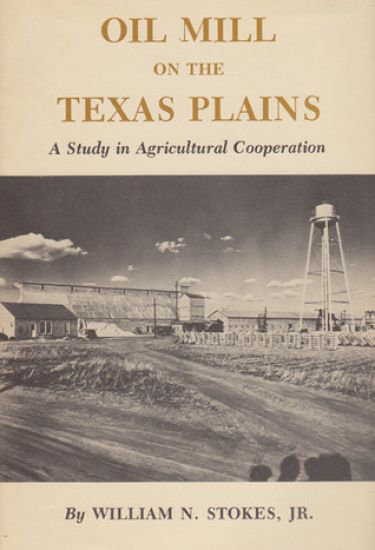
Oil Mill on the Texas Plains
William N. Stokes; Vernon E. Schneider
Texas A M University Press
2000
nidottu
The Plains Cooperative Oil Mill in Lubbock was organized in 1937 to process and market cottonseed oil on a cooperative basis. With annual sales in 1999 averaging 150 million dollars, the Plains mill is now a trendsetter in the cottonseed industry, processing on average 600,000 tons of cottonseed a year-approximately 15 percent of the cottonseed processed in the United States. Since its inception the Plains mill has returned millions of dollars to its patrons, removed the "Dallas differential," which in the early days penalized Plains producers at the marketplace, and actively encouraged the development of other cooperative activities in the area. Its influence, direct and indirect, on Plains agriculture has been incalculable. Despite the farsighted assistance of the Houston Bank for Cooperatives, the Plains mill, faced with inadequate capital, losses in membership, and obsolete facilities, got off to an uncertain start. But in 1943 new manager Roy Davis saw that extensive irrigation would soon revolutionize cotton production, and under his imaginative and innovative guidance the Plains mill became the largest and one of the most successful cottonseed oil mills in the world. A recent venture into milling sunflower seed brought near disaster when the market dropped far below the mill's guaranteed payment, but courageous support by the gins and the Houston Bank for Cooperatives brought the Plains mill back to successful operation. This lively insider's look at the Plains mill, written by a former president of the Houston bank, dramatically demonstrates the importance of adequate capital, sound management principles, membership support, and a sympathetic lending institution in the development of a cooperative enterprise.
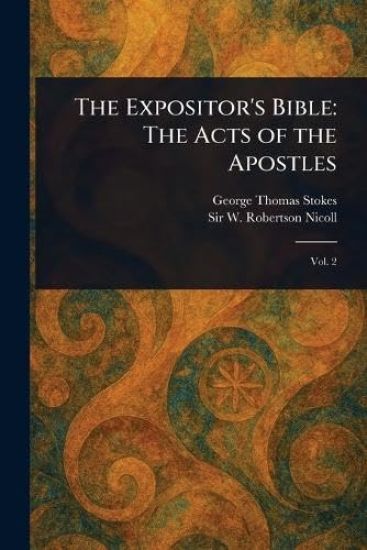
The Expositor's Bible
George Thomas Stokes; W Robertson (William Roberts Nicoll
Anson Street Press
2025
pokkari

The Expositor's Bible
George Thomas Stokes; W Robertson (William Roberts Nicoll
Anson Street Press
2025
sidottu