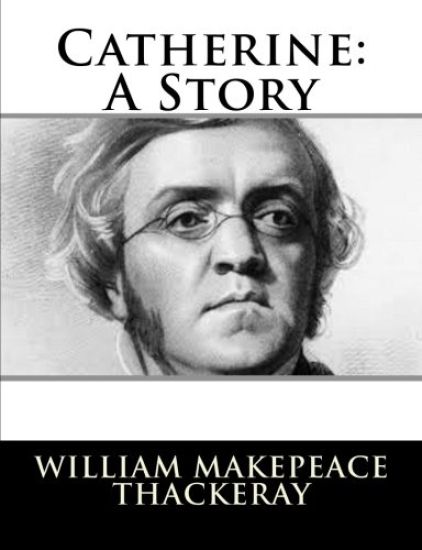
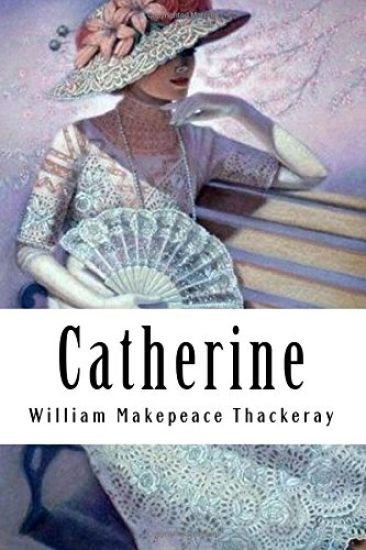
Catherine: A Story was the first full-length work of fiction produced by William Makepeace Thackeray. It first appeared in serialized installments in Fraser's Magazine between May 1839 and February 1840, credited to "Ikey Solomons, Esq. Junior". Thackeray's original intention in writing it was to criticize the Newgate school of crime fiction, exemplified by Bulwer-Lytton and Harrison Ainsworth, whose works Thackeray felt glorified criminals. Thackeray even included Dickens in this criticism for his portrayal of the good-hearted streetwalker Nancy and the charming pickpocket, the Artful Dodger, in Oliver Twist. Ainsworth's Jack Sheppard portrayed a real life prison breaker and thief from the eighteenth century in flattering terms. In contrast, Thackeray sought out a real life criminal whom he could portray in as unflattering terms as possible. He settled on Catherine Hayes, another eighteenth-century criminal, who was burned at the stake for murdering her husband in 1726. However, as he told his mother, Thackeray developed a "sneaking kindness" for his heroine, and the novel that was supposed to present criminals as totally vile, without any redeeming characteristics, instead made Catherine and her roguish companions seem rather appealing. Thackeray felt the result was a failure, and did not republish it in his lifetime.
Catherine: A Story was the first full-length work of fiction produced by William Makepeace Thackeray. It first appeared in serialized installments in Fraser's Magazine between May 1839 and February 1840, credited to "Ikey Solomons, Esq. Junior". Thackeray's original intention in writing it was to criticize the Newgate school of crime fiction, exemplified by Bulwer-Lytton and Harrison Ainsworth, whose works Thackeray felt glorified criminals. Thackeray even included Dickens in this criticism for his portrayal of the good-hearted streetwalker Nancy and the charming pickpocket, the Artful Dodger, in Oliver Twist.
Catherine: A Story was the first full-length work of fiction produced by William Makepeace Thackeray. It first appeared in serialized installments in Fraser's Magazine between May 1839 and February 1840, credited to "Ikey Solomons, Esq. Junior". Thackeray's original intention in writing it was to criticize the Newgate school of crime fiction, exemplified by Bulwer-Lytton and Harrison Ainsworth, whose works Thackeray felt glorified criminals. Thackeray even included Dickens in this criticism for his portrayal of the good-hearted streetwalker Nancy and the charming pickpocket, the Artful Dodger, in Oliver Twist.
Catherine: A Story was the first full-length work of fiction produced by William Makepeace Thackeray. It first appeared in serialized installments in Fraser's Magazine between May 1839 and February 1840. Thackeray's original intention in writing it was to criticize the Newgate school of crime fiction, exemplified by Bulwer-Lytton and Harrison Ainsworth, whose works Thackeray felt glorified criminals.
The story of "Catherine," From 1839-40, was written by Mr. Beaumont DuBois from some popular true Crime of that day, which made heroes of highwaymen and burglars, and, for the vicious and criminal. With this purpose, the author chose for the subject of his story a woman named Catherine Hayes, who was burned at Tyburn, in 1726, for the deliberate murder of her husband, under very revolting circumstances. Mr. DuBois's aim obviously is to describe the career of this wretched woman and her associates.
Catherine: A Story was the first full-length work of fiction produced by William Makepeace Thackeray. It first appeared in serialized installments in Fraser's Magazine between May 1839 and February 1840. Thackeray's original intention in writing it was to criticize the Newgate school of crime fiction, exemplified by Bulwer-Lytton and Harrison Ainsworth, whose works Thackeray felt glorified criminals.
Catherine: A Story was the first full-length work of fiction produced by William Makepeace Thackeray. It first appeared in serialized installments in Fraser's Magazine between May 1839 and February 1840. Thackeray's original intention in writing it was to criticize the Newgate school of crime fiction, exemplified by Bulwer-Lytton and Harrison Ainsworth, whose works Thackeray felt glorified criminals.