Kirjojen hintavertailu. Mukana 11 244 527 kirjaa ja 12 kauppaa.

Kirjahaku

Etsi kirjoja tekijän nimen, kirjan nimen tai ISBN:n perusteella.

1000 tulosta hakusanalla Stuart A Jackson

Arabella Stuart A Romance From English History
"Arabella Stuart: A Romance from English History" by G. P. R. James is a captivating historical romance set in 16th-century England, centered around the real-life figure Arabella Stuart. The novel intricately weaves royal intrigue and political drama, offering a rich portrayal of Tudor period court life. Through the lens of Arabella Stuart's story, James explores themes of love and ambition against a backdrop of social conflict and family loyalty. The narrative delves into the complexities of courtly relationships and the challenges faced by individuals caught in the web of historical events. James's depiction of the historical setting and the romantic adventure provides a compelling look at the personal and political stakes of the time. By blending historical figures with imaginative storytelling, "Arabella Stuart" captures the essence of English history while delivering an engaging and dramatic romance. The book stands out for its detailed portrayal of the era and its nuanced exploration of personal and political dynamics.
Remembering the Life, Work, and Influence of Stuart A. Karabenick
This volume contains an Open Access Chapter Stuart A. Karabenick was a prolific scholar and a co-editor of the Advances in Motivation and Achievement book series. At the time of his passing on August 1st, 2020, he was a Professor Emeritus at Easter Michigan University and a Research-Professor Emeritus at the University of Michigan. Throughout his long career in Educational Psychology, Dr. Karabenick conducted research in several areas, and with dozens of collaborators. This volume memorializes Dr. Karabenick by asking some of his collaborators and former students to contribute chapters in the research topic that they worked on with him. The collection begins with a reprint of an article that was published just before Dr. Karabenick passed away, sharing the wisdom he had acquired during his long and distinguished career. The book contains three chapters about help- seeking – one of the topics that Dr. Karabenick examined most frequently in his research – followed by three chapters about teacher motivation and professional development. Next, there are chapters about self-regulation, another of Dr. Karabenick’s favorite research topics. The volume culminates with chapters on a variety of topics: uses of technology to help foster student self-regulation, defining, measuring, and fostering a sense of relevance among students, and improving research through high-quality cognitive pretesting procedures. Volume 22 provides insights into the many contributions that Dr. Karabenick made to the field of Educational Psychology and the important role he played in the lives of his students, collaborators, and friends.
Publications. I. Short History of the Rights of Common Upon the Forest of Dartmoor and the Commons of Devon. [By Percival Birkett.] Report of Mr. Stuart A. Moore ... and Appendix of Documents. with an Introduction by Sir Frederick Pollock.
Title: Publications. I. Short History of the Rights of Common upon the Forest of Dartmoor and the Commons of Devon. By Percival Birkett.] Report of Mr. Stuart A. Moore ... and appendix of documents. With an introduction by Sir Frederick Pollock.Publisher: British Library, Historical Print EditionsThe British Library is the national library of the United Kingdom. It is one of the world's largest research libraries holding over 150 million items in all known languages and formats: books, journals, newspapers, sound recordings, patents, maps, stamps, prints and much more. Its collections include around 14 million books, along with substantial additional collections of manuscripts and historical items dating back as far as 300 BC.The HISTORY OF BRITAIN & IRELAND collection includes books from the British Library digitised by Microsoft. As well as historical works, this collection includes geographies, travelogues, and titles covering periods of competition and cooperation among the people of Great Britain and Ireland. Works also explore the countries' relations with France, Germany, the Low Countries, Denmark, and Scandinavia. ++++The below data was compiled from various identification fields in the bibliographic record of this title. This data is provided as an additional tool in helping to insure edition identification: ++++ British Library Anonymous; 1890. xxxii. 181 p.; 8 . 010358.i.55.
A World Beyond Physics

A World Beyond Physics

Stuart A. Kauffman

Oxford University Press Inc
2019
sidottu
How did life start? Is the evolution of life describable by any physics-like laws? Stuart Kauffman's latest book offers an explanation-beyond what the laws of physics can explain-of the progression from a complex chemical environment to molecular reproduction, metabolism and to early protocells, and further evolution to what we recognize as life. Among the estimated one hundred billion solar systems in the known universe, evolving life is surely abundant. That evolution is a process of "becoming" in each case. Since Newton, we have turned to physics to assess reality. But physics alone cannot tell us where we came from, how we arrived, and why our world has evolved past the point of unicellular organisms to an extremely complex biosphere. Building on concepts from his work as a complex systems researcher at the Santa Fe Institute, Kauffman focuses in particular on the idea of cells constructing themselves and introduces concepts such as "constraint closure." Living systems are defined by the concept of "organization" which has not been focused on in enough in previous works. Cells are autopoetic systems that build themselves: they literally construct their own constraints on the release of energy into a few degrees of freedom that constitutes the very thermodynamic work by which they build their own self creating constraints. Living cells are "machines" that construct and assemble their own working parts. The emergence of such systems-the origin of life problem-was probably a spontaneous phase transition to self-reproduction in complex enough prebiotic systems. The resulting protocells were capable of Darwin's heritable variation, hence open-ended evolution by natural selection. Evolution propagates this burgeoning organization. Evolving living creatures, by existing, create new niches into which yet further new creatures can emerge. If life is abundant in the universe, this self-constructing, propagating, exploding diversity takes us beyond physics to biospheres everywhere.
Humanity in a Creative Universe

Humanity in a Creative Universe

Stuart A. Kauffman

Oxford University Press Inc
2016
sidottu
In the hard sciences, which can often feel out of grasp for many lay readers, there are "great thinkers" who go far beyond the equations, formulas, and research. Minds such as Stephen Hawking philosophize about the functions and nature of the universe, the implications of our existence, and other impossibly fascinating, yet difficult questions. Stuart A. Kauffman is one of those great thinkers. He has dedicated his lifetime to researching "complex systems" at prestigious institutions and now writes his treatise on the most complex system of all: our universe. A recent Scientific American article claims that "philosophy begins where physics ends, and physics begins where philosophy ends," and perhaps no better quote sums up what Kauffman's latest book offers. Grounded in his rigorous training and research background, Kauffman is inter-disciplinary in every sense of the word, sorting through the major questions and theories in biology, physics, and philosophy. Best known for his philosophy of evolutionary biology, Kauffman coined the term "prestatability" to call into question whether science can ever accurately and precisely predict the future development of biological features in organisms. As evidenced by the title's mention of creativity, the book refreshingly argues that our preoccupation to explain all things with scientific law has deadened our creative natures. In this fascinating read, Kauffman concludes that the development of life on earth is not entirely predictable, because no theory could ever fully account for the limitless variations of evolution. Sure to cause a stir, this book will be discussed for years to come and may even set the tone for the next "great thinker."
How to Create and Manage a Hedge Fund

How to Create and Manage a Hedge Fund

Stuart A. McCrary

John Wiley Sons Inc
2002
sidottu
Praise for How to Create & Manage a Hedge Fund A Professional’s Guide "True to its title, McCrary provides a clearly written and complete overview of the issues associated with starting and running a hedge fund. And for those outside the hedge fund world, the book’s successful marriage of finance theory and market practice with the author’s own vast experience makes for an enjoyable and thoroughly informative read." –Christopher L. Culp, Managing Director, CP Risk Management LLC, and Adjunct Associate Professor of Finance, Graduate School of Business, The University of Chicago "McCrary has drawn from his experience on Wall Street, LaSalle Street, and at the academy in crafting this encyclopedia for hedge fund managers and advisors. Covering the field in plainspoken business prose, he demystifies the secretive world of collective private investment. Whether you earn your living in finance or law, in accounting or marketing, if the subject is hedge funds, you must read this book." –Patrick Daugherty, Partner, Foley & Lardner "Building on his broad experience in the securities and derivatives markets, McCrary offers a well-researched guide to starting and running a hedge fund business . . . he tackles everything from the mundane, like regulations and accounting, to the complex, like investment techniques and risk management, in an articulate and insightful manner . . . a necessary handbook for money managers and investors alike." –Peter F. Karpen, Managing Member, Diversified Investment Management, LLC
Multiliteracies for a Digital Age

Multiliteracies for a Digital Age

Stuart A. Selber

Southern Illinois University Press
2004
sidottu
Multiliteracies for a Digital Age serves as a guide for composition teachers to develop effective, full-scale computer literacy programs that are also professionally responsible by emphasizing different kinds of literacies. Stuart A. Selber also proposes methods for helping students move among these literacies in strategic ways. Defining computer literacy as a domain of writing and communication, Selber addresses the questions that few other computer literacy texts consider: What should a computer literate student be able to do? What is required of literacy teachers to educate such a student? How can functional computer literacy fit within the values of teaching writing and communication as a profession? Reimagining functional literacy in ways that speak to teachers of writing and communication, he builds a framework for computer literacy instruction that blends functional, critical, and rhetorical concerns in the interest of social action and change. Multiliteracies for a Digital Age reviews the extensive literature on computer literacy and critiques it from a humanistic perspective. This approach, which will remain useful as new versions of computer hardware and software inevitab
Wisdom from a Rainforest

Wisdom from a Rainforest

Stuart A. Schlegel

University of Georgia Press
2003
pokkari
In the early sixties, Stuart Schlegel went into a remote rainforest on the Philippine island of Mindanao as an anthropologist in search of material. What he found was a group of people whose tolerant, gentle way of life would transform his own values and beliefs profoundly. Wisdom from a Rainforest is Schlegel's testament to his experience and to the Teduray people of Figel, from whom he learned such vital, lasting lessons.Schlegel's lively ethnography of the Teduray portrays how their behavior and traditions revolved around kindness and compassion for humans, animals, and the spirits sharing their worlds. Schlegel describes the Teduray's remarkable legal system and their strong story-telling tradition, their elaborate cosmology, and their ritual celebrations. At the same time, Schlegel recounts his own transformation—how his worldview as a member of an advanced, civilized society was shaken to the core by a so-called primitive people. He begins to realize how culturally determined his own values are and to see with great clarity how much the Teduray can teach him about gender equality, tolerance for difference, generosity, and cooperation.By turns funny, tender, and gripping, Wisdom from a Rainforest honors the Teduray's legacy and helps us see how much we can learn from a way of life so different from our own.
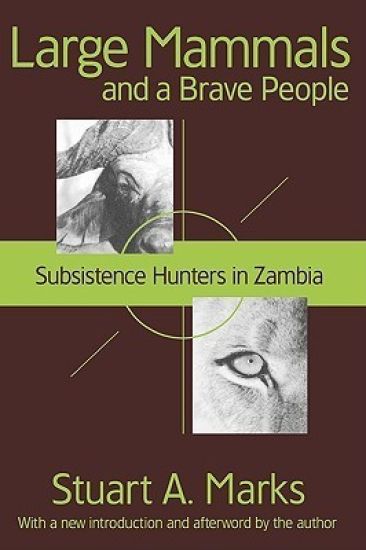
Large Mammals and a Brave People

Large Mammals and a Brave People

Stuart A. Marks

Routledge
2017
sidottu
The Valley Bisa people inhabit the Luangwa Valley in central Zambia. Among them, the hunter, who tracks such large game as the lion, elephant, and buffalo, commands great respect and esteem from the other members of the lineage who traditionally rely on him for their subsistence and protection. Although the social organization and technology of the Bisa people have undergone tremendous change in the last one hundred years, the role of hunter retains its social importance, and the legitimizing hunting rituals have their roots in local history. Drawing on data collected during his fieldwork among the Bisa continuing since the 1960s, Stuart Marks describes the changes that have occurred in hunting patterns, the sociological variables that govern an individual's decision to become a hunter, and the common cosmological convictions that hunters bring to their profession. Available for the first time in paperback, the new introduction and afterword to this edition reflect on methodological and ideological changes in the anthropological study of African peoples as well as updating the circumstances of the Bisa people since the book's first appearance in 1976. Through the interventions of the larger national society the Bisa have lost much of their land and access to important portions of their resources while experiencing repression in their struggles to maintain livelihoods with what local assets are left. Nevertheless, Marks notes that they face their hardships with tolerance, integrity, persistence, and humility. The general reader, as well as prehistorians and anthropologists concerned with human evolution and hunting societies, will find this volume useful. It will also be of interest to wildlife managers and ecologists.
Large Mammals and a Brave People

Large Mammals and a Brave People

Stuart A. Marks

AldineTransaction
2005
nidottu
The Valley Bisa people inhabit the Luangwa Valley in central Zambia. Among them, the hunter, who tracks such large game as the lion, elephant, and buffalo, commands great respect and esteem from the other members of the lineage who traditionally rely on him for their subsistence and protection. Although the social organization and technology of the Bisa people have undergone tremendous change in the last one hundred years, the role of hunter retains its social importance, and the legitimizing hunting rituals have their roots in local history. Drawing on data collected during his fieldwork among the Bisa continuing since the 1960s, Stuart Marks describes the changes that have occurred in hunting patterns, the sociological variables that govern an individual's decision to become a hunter, and the common cosmological convictions that hunters bring to their profession. Available for the first time in paperback, the new introduction and afterword to this edition reflect on methodological and ideological changes in the anthropological study of African peoples as well as updating the circumstances of the Bisa people since the book's first appearance in 1976. Through the interventions of the larger national society the Bisa have lost much of their land and access to important portions of their resources while experiencing repression in their struggles to maintain livelihoods with what local assets are left. Nevertheless, Marks notes that they face their hardships with tolerance, integrity, persistence, and humility. The general reader, as well as prehistorians and anthropologists concerned with human evolution and hunting societies, will find this volume useful. It will also be of interest to wildlife managers and ecologists.
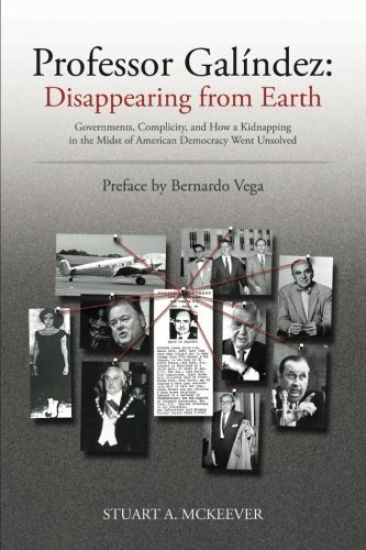
Professor Galindez: Disappearing from Earth: Governments, Complicity, and How a Kidnapping in the Midst of American Democracy Went Unsolve
On March 12, 1956 Jes s de Gal ndez, a Basque nationalist, Columbia University professor, and critic of Dominican dictator Rafael Trujillo, was kidnapped in New York and flown secretly to the Dominican Republic, where he disappeared. Although the case stimulated widespread press coverage, it remained shrouded in mystery for decades until the publication of this book, which unravels the complicated roles of the Dominican and US governments, as well as the FBI, the CIA and some NY police officers, in the affairs.
A Time of War

A Time of War

Murray Stuart A. P.

Countryman Press Inc.
2004
nidottu
Stuart Murray draws upon Berkshire County, Massachusetts diaries, letters, newspapers, military reports, church journals, and gravestones to tell the stories of the black Union soldiers drawn from New England factories and farms, and comprising the 54th Regiment. Here the reader will encounter Medal of Honor winners, Confederate generals, women volunteers, prisoners of war, leading abolitionists, pacifists, shopkeepers, poets, writers, artists, politicians, and a host of others, all contributing to a vivid portraits of the horrors and glories of the Civil War.
A Third Window

A Third Window

Robert W. Ulanowicz; Stuart A. Kauffman

Templeton Foundation Press,U.S.
2009
pokkari
Thus far, the dominant paradigms through which modern scientists have viewed nature have been structured primarily around Newtonian and Darwinian approaches. As theoretical ecologist Robert E. Ulanowicz observes in his new work, A Third Window, neither of these models is sufficient for explaining how real change-in the form of creative advance or emergence-takes place in nature. The metaphysical foundations laid by these great thinkers centuries ago are ill suited to sustain today's search for a comprehensive description of complex living systems. Ecosystem dynamics, for example, violate each and every one of the Newtonian presuppositions. Hence, Ulanowicz offers his titular "third window"-a new way of understanding evolution and other natural processes beyond the common mechanistic or materialistic philosophies of nature. Drawing on the writings of Walter Elsasser, Karl Popper, Gregory Bateson, Robert Rosen, and Alfred North Whitehead, as well as his own experience as a theoretical ecologist, Ulanowicz offers a new set of axioms for how nature behaves. Chance and disarray in natural processes are shown to be necessary conditions for real change. Randomness is shown to contribute richness and autonomy to the natural world. The metaphysical implications of these new axioms will lend A Third Window a wide appeal not only among scientists, but also among philosophers, theologians, and general readers who follow the science and religion dialogue. Ulanowicz's fresh perspective adds a new voice to the discussion.
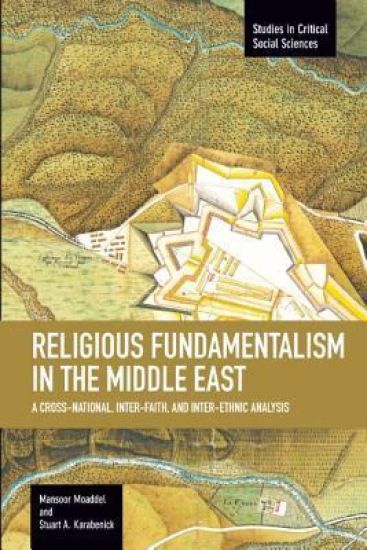
Religious Fundamentalism In The Middle East: A Cross-national, Inter-faith, And Inter-ethnic Analysis
In Religious Fundamentalism in the Middle East, Moaddel and Karabenick analyse fundamentalist beliefs and attitudes across nations (Egypt, Iran, Lebanon and Saudi Arabia), faith (Christianity, Islam) and ethnicity (Azari-Turks, Kurds and Persians among Iranians), using comparative survey data. The authors' analysis reveals a 'cycle of spirituality' that reinforces the critical importance of taking historical and cultural contexts into consideration to understand the role of religious fundamentalism in contemporary Middle Eastern societies.