Kirjojen hintavertailu. Mukana 11 244 527 kirjaa ja 12 kauppaa.

Kirjahaku

Etsi kirjoja tekijän nimen, kirjan nimen tai ISBN:n perusteella.

628 tulosta hakusanalla Stuckey Rachel

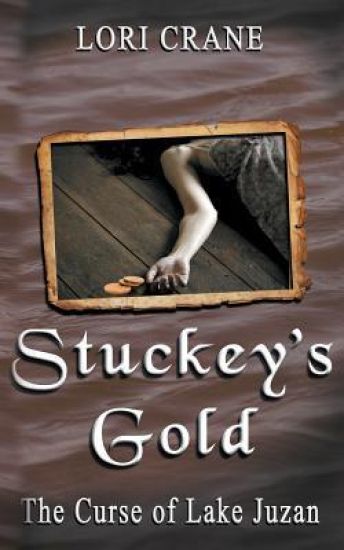
Stuckey's Gold: The Curse of Lake Juzan

Stuckey's Gold: The Curse of Lake Juzan

Lori Crane

Lori Crane Entertainment Incorporated
2014
nidottu
In 1840, Pierre Juzan was an innkeeper on the shores of Lake Juzan. His business was successful, but he wanted more. One day he got wind of a coach transporting a trunk of gold near his home, and his actions on that fateful day would spark an Indian curse that would haunt his family for four generations. Seventy years later, can Penelope Juzan break the curse, or will she suffer the same tragic fate as her forefathers?"The Legend of Stuckey's Bridge" and "Stuckey's Legacy: The Legend Continues" told tales of the gold leaving a trail of destruction from Meridian, Mississippi to Jekyll Island, Georgia. In "Stuckey's Gold: The Curse of Lake Juzan," we may find the victims in the original tales were merely bit players in a story that is far darker and more sinister than one could imagine. "Stuckey's Gold: The Curse of Lake Juzan" is the final installment in the "Stuckey's Bridge Trilogy" and is the tale of four generations struggling to escape a curse caused by greed.
Stuckey Family: Revised to December 31, 1935 ..

Stuckey Family: Revised to December 31, 1935 ..

Frank L. (Frank Linden) 1875- Crone

Hassell Street Press
2021
nidottu
This work has been selected by scholars as being culturally important and is part of the knowledge base of civilization as we know it.This work is in the public domain in the United States of America, and possibly other nations. Within the United States, you may freely copy and distribute this work, as no entity (individual or corporate) has a copyright on the body of the work.Scholars believe, and we concur, that this work is important enough to be preserved, reproduced, and made generally available to the public. To ensure a quality reading experience, this work has been proofread and republished using a format that seamlessly blends the original graphical elements with text in an easy-to-read typeface.We appreciate your support of the preservation process, and thank you for being an important part of keeping this knowledge alive and relevant.
Stuckey's

Stuckey's

Tim Hollis

Arcadia Publishing Library Editions
2017
sidottu
Beginning as a single roadside stand selling pecans in Eastman, Georgia, by the 1950s, the name Stuckey's was synonymous throughout the South with candy, souvenirs, clean restrooms, and the other necessities of automobile travel. During the 1960s, the Stuckey's stores moved into the new frontier of the interstate highways, where quite often they sat alone at the exits like oases in the middle of a desert. Their bright aqua-colored rooftops were a welcome beacon for those who had been driving long distances. Travel has changed a lot since then, but Stuckey's can still be found along the nation's highways, still providing dozens of types of candy and nuts, plus the same mix of souvenirs, as always. Anyone need a rubber alligator or a pecan log?
The Legend of Stuckey's Bridge

The Legend of Stuckey's Bridge

Lori Crane

Lori Crane Entertainment Incorporated
2013
nidottu
In 1901, the Virginia Bridge & Iron Company began re-building a fifty-year-old Mississippi bridge. In the middle of the project, they began discovering bodies buried on the banks of the river.Legend has it, he was so evil, he was even thrown out of the notorious Dalton Gang. Years later, he opened an inn near the river, and on foggy nights, boatmen witnessed him pacing back and forth across the bridge, waving his lantern, offering travelers a hot meal and a soft bed.Those unfortunate enough to take him up on the hospitality were often never seen again.To this day, eerie experiences are still reported around the bridge that now bears his name. If you travel down to Stuckey's Bridge, be careful, for not much else is known about the man locals refer to as Old Man Stuckey...until now.
The Misadventures of John Stuckey

The Misadventures of John Stuckey

Marc Allen

Polished Stone Publishing
2024
nidottu
A thrilling, comic stroll through 1980s San Francisco and a pre-Internet ensemble of sorcerers, cults, megalomaniacs, and a man determined to follow a deep practice of laziness.In an exhilarating mix of Raymond Chandler and Richard Brautigan comes the story of James Stuckey and a charged, shambolic year through the eccentric fringe of the San Francisco Bay Area. Stuckey, stubbornly devout to a habit of laziness, inadvertently collides with a megalomaniac cult leader and his followers and is forced to begrudgingly face himself and take action. His careening, chaotic misfortunes finally culminate in a tense, near-deadly battle with a sorcerer. Set in 1986, before Northern California was a playground for Silicon Valley titans, The Misadventures of John Stuckey brings to life the nonconformity and unapologetic weirdness of the pre-Internet days, when getting rich quick required convincing others that if only they do what you say, they will grow rich in your shadow.In his first work of long-form fiction, Marc Allen, renowned author and publisher at New World Library, which he founded in 1977 with Shakti Gawain, spins an imaginative tale that is perfect for fans of The Big Lebowski, Tom Robbins, and Robert Pirsig. The Misadventures of John Stuckey is an electric, philosophical, and deeply funny journey.
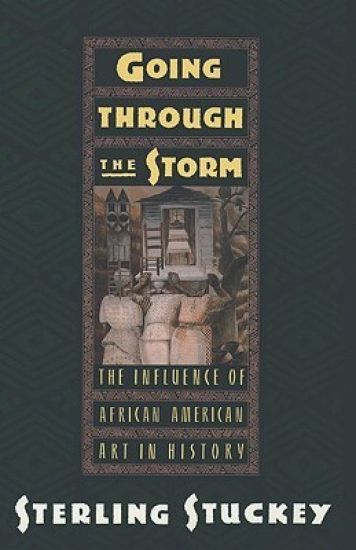
Going Through the Storm

Going Through the Storm

Stuckey

Oxford University Press Inc
1994
nidottu
Upon his arrival in the North, Frederick Douglass found, to his utter astonishment, "persons who could speak of the singing among slaves as the evidence of their contentment and happiness." As late as 1903, W.E.B. Du Bois observed that African American spirituals had led naive whites to believe that "life was joyous to the black slave, careless and happy." While these misconceptions have largely disappeared, the history of African American culture--and its importance to American history as a whole--is still a subject little understood by the majority of Americans. In Going Through the Storm, Sterling Stuckey offers a compelling look at one of the world's richest cultural traditions. He traces the fertile legacy of African American art from its roots in tribal myth, through its blossoming in slave music and dance, to its fruition in the great gospel-singing movements of the 1960s. In the process he shows how this tradition, grounded as it was in adversity, represents one of the great triumphs of the human spirit: slaves and their descendants, by way of Negro spirituals, the blues, and jazz, transformed the pain of oppression into a transcendent and timeless beauty. And, as he explores these various styles, Stuckey reveals that the development of a distinctive African American aesthetic follows (and helps illuminate) the course of the nation's history. In a series of engaging, lucidly written essays, Going Through the Storm covers the entire spectrum of African American culture, offering along the way many fresh and important insights. Within the context of slavery and slave music, Stuckey presents a new look at the foundations of black nationalism and the civil rights movement. In his eloquent reflections on Paul Robeson, he shows how black art offers a commentary on the human spirit so genuine and resonant that its appeal has reached across the boundaries of race to touch most of humanity. Writing of Herman Melville, he demonstrates how the great novelist was struck with the importance of African culture in history--and the reciprocal relationship of history to African culture--and carefully explored this theme in Benito Cereno. Frederick Douglass is presented for the first time as a major theorist of African American culture, one whose thought is profoundly relevant to our current debates on culture and race. And, perhaps most important, Stuckey explains that because black artists have been deeply interested for so long in the question of oppression, their art is of particular use to historians. In what amounts to nothing less than a revolutionary approach, Stuckey considers the uses of music as history, arguing that an easing of barriers between academic disciplines will lead to a better understanding of human life in general. A timely, readable, and often moving volume, Going Through the Storm not only expands our understanding of black music, dance, literature, and folklore, but provides a new vantage point from which to view the entire landscape of American culture.
The President as Interpreter-in-Chief

The President as Interpreter-in-Chief

Stuckey Mary E.

SAGE PUBLICATIONS INC
1991
nidottu
"Stuckey's perceptive study of presidential rhetoric shows how technological changes have emptied presidential discourse of political substance, weakening American democracy. Her fascinating, widely ranging book is essential reading for presidency watchers, media scholars, and everyone who cares about the quality of American politics." – Doris A. Graber University of Illinois at Chicago
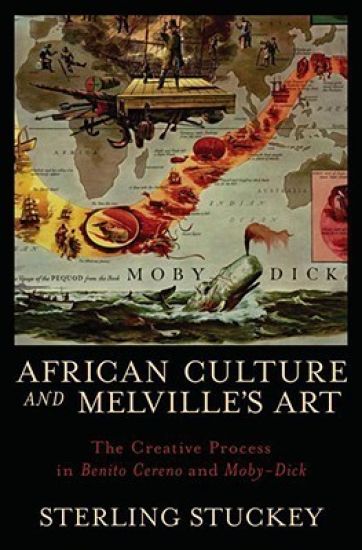
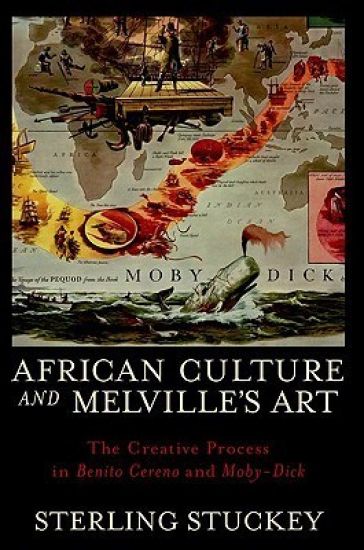
African Culture and Melville's Art

African Culture and Melville's Art

Sterling Stuckey

Oxford University Press Inc
2008
sidottu
Here is that rare work that in research and interpretation is original almost from beginning to end. For the first time we discover that slave music and dance are used by Melville in Moby-Dick in the creation of some of his most tragic and avant-garde art. Just as previously unknown African practices, found in travel accounts, reveal a powerful symbolic link between Benito Cereno and Moby-Dick, Frederick Douglass's formulation of joy-sorrow in slave life and music leads to the discovery of a blues aesthetic in Moby-Dick that is full of implications for American culture and the craft of writing. In the future, neither Benito Cereno nor Moby-Dick, should be read as before, for important passages in each spring from Melville's magnificent treatment of a source common to each. In still more ways, Melville in this volume in not the Melville we have known. Especially in Benito Cereno, the creation of principal characters, symbols, and scenes is drawn from sources hidden in obscurity for roughly a century and a half. Though African influences predominate, Latin American, European, and North American influences are also woven masterfully into the design of the novella. As emphases among them shift back and forth, Melville's art, stunning in its range and subtlety, shimmers with previously undisclosed brilliance. Targeting how he conceived and executed his art, we find in this volume a degree of heretofore unprobed intertexuality in his own work and reveal the other volumes that informed his creative process.
African Culture and Melville's Art

African Culture and Melville's Art

Sterling Stuckey

Oxford University Press Inc
2011
nidottu
Although Herman Melville's masterworks Moby-Dick and Benito Cereno have long been the subject of vigorous scholarly examination, the impact of African culture on these works has received surprisingly little critical attention. Presenting a groundbreaking reappraisal of these two powerful pieces of fiction, Sterling Stuckey reveals how African customs and rituals heavily influenced one of America's greatest novelists. The Melville that emerges in this innovative, intertextual study is one profoundly shaped by the vibrant African-influenced music and dance culture of nineteenth-century America. Drawing on extensive research, Stuckey reveals how celebrations of African culture by black Americans, such as the Pinkster festival and the Ring Shout dance form, permeated Melville's environs during his formative years and found their way into his finest fiction. Also demonstrated is the extent to which the author of Moby-Dick is indebted to Frederick Douglass's depiction of music, especially the blues, in his classic slave narrative. Connections between Melville's work and African culture are also extended beyond America to the African continent itself. With readings of hitherto unexplored chapters in Delano's Voyages and Travels in the Northern and Southern Hemispheres and other nonfiction sources--such as Joseph Dupuis's Journal of a Residence in Ashantee --Stuckey links Benito Cereno and Moby-Dick , pinpointing the sources from which Melville drew to fashion major characters that appear aboard both the Pequod and the San Dominick . Combining inventive literary and historical analysis, Stuckey shows how myriad aspects of African culture coalesced to create the unique vision conveyed in Moby-Dick and Benito Cereno. Ultimately, African Culture and Melville's Art provides a wealth of insight into the novelist's expressive power and the development of his distinct cross-cultural aesthetic.
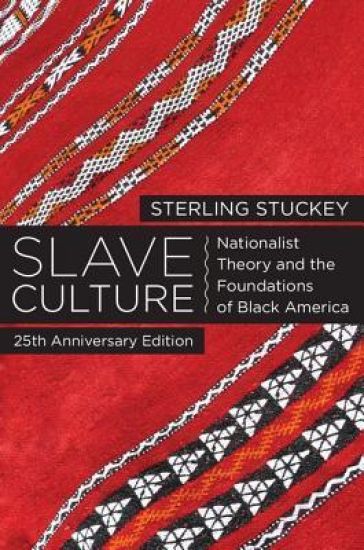
Slave Culture

Slave Culture

Sterling Stuckey

Oxford University Press Inc
2014
nidottu
Twenty-five years after its original publication, Oxford has released a new edition of Sterling Stuckey's ground-breaking study, Slave Culture. A leading cultural historian and authority on slavery, Stuckey explains how different African peoples interacted on the plantations of the South to achieve a common culture. He argues that at the time of emancipation, slaves still remained essentially African in culture, a conclusion that has had profound implications for theories of black liberation and race relations in America. Drawing evidence from the anthropology and art history of Central and West African cultural traditions and exploring the folklore of the American slave, Stuckey reveals an intrinsic Pan-African impulse that contributed to the formation of the black ethos in slavery. He presents fascinating profiles of such nineteenth-century figures as David Walker, Henry Highland Garnet, and Frederick Douglass, as well as detailed examinations into the lives and careers of W.E.B. Du Bois and Paul Robeson in this century. The second edition, which includes a Foreword by historian John Stauffer, will reintroduce Stuckey's masterpiece to a wider audience. Stukey provides a new introduction that looks at the life of the book and the impact it has had on the field of African-American scholarship, as well as how the field has changed in the 25 years since its original publication.
Mermaids on the Moon

Mermaids on the Moon

Elizabeth Stuckey-French

ANCHOR BOOKS
2003
nidottu
Thirty-six years after giving up her job as a mermaid in the underwater pagents of Florida's Mermaid Springs, Grendy returns for a reunion and is hired for a starring role in the "Mermaids on the Moon" Labor Day show, until her mysterious disappearance brings her daughter to Mermaid City to find out what happened and to take her mother's role in the extravaganza. By the author of The First Paper Girl in Red Oak, Iowa. Reprint. 15,000 first printing.