
Kirjahaku
Etsi kirjoja tekijän nimen, kirjan nimen tai ISBN:n perusteella.
1000 tulosta hakusanalla Sueton

Suetone, Des Vies Des Douze Cesars, Empereurs Romains (1663)
Suetonius
KESSINGER PUBLISHING, LLC
2009
pokkari


Collectanea De Vita Et Scriptis Suetonii Tranquilli (1645)
Suetonius
KESSINGER PUBLISHING, LLC
2009
pokkari
C. Suetonius Tranquillus V1, Part 2 (1736)
Suetonius; Pieter Burman
KESSINGER PUBLISHING, LLC
2010
pokkari
C. Suetonius Tranquillus V1, Part 1 (1736)
Suetonius; Pieter Burman
KESSINGER PUBLISHING, LLC
2010
pokkari
The lives of the first twelve Cæsars, translated from the Latin of C. Suetonius Tranquillus
Suetonius
Gale Ecco, Print Editions
2010
pokkari

Suetonius, Volume 2
Nabu Press
2010
pokkari

The Lives of the XII. Cæsars, or the First Twelve Roman Emperors, Written in Latin by C. Suetonius Tranquillus. Translated Into English, With Explanatory Notes. Adorn'd With Cuts. In two Volumes. of 2; Volume 1
Suetonius
Gale Ecco, Print Editions
2018
sidottu
The 18th century was a wealth of knowledge, exploration and rapidly growing technology and expanding record-keeping made possible by advances in the printing press. In its determination to preserve the century of revolution, Gale initiated a revolution of its own: digitization of epic proportions to preserve these invaluable works in the largest archive of its kind. Now for the first time these high-quality digital copies of original 18th century manuscripts are available in print, making them highly accessible to libraries, undergraduate students, and independent scholars.Rich in titles on English life and social history, this collection spans the world as it was known to eighteenth-century historians and explorers. Titles include a wealth of travel accounts and diaries, histories of nations from throughout the world, and maps and charts of a world that was still being discovered. Students of the War of American Independence will find fascinating accounts from the British side of conflict. ++++The below data was compiled from various identification fields in the bibliographic record of this title. This data is provided as an additional tool in helping to insure edition identification: ++++British LibraryT145613With separate volume titlepages; register and pagination are continuous. The translation is by Jabez Hughes.London: printed for J. Nicholson, 1717. 2v.( 34],502, 18]p., plates); 12
The Lives of the XII. Cæsars, or the First Twelve Roman Emperors, Written in Latin by C. Suetonius Tranquillus. Translated Into English, With Explanatory Notes. Adorn'd With Cuts. In two Volumes. of 2; Volume 2
Suetonius
Gale Ecco, Print Editions
2018
sidottu
The 18th century was a wealth of knowledge, exploration and rapidly growing technology and expanding record-keeping made possible by advances in the printing press. In its determination to preserve the century of revolution, Gale initiated a revolution of its own: digitization of epic proportions to preserve these invaluable works in the largest archive of its kind. Now for the first time these high-quality digital copies of original 18th century manuscripts are available in print, making them highly accessible to libraries, undergraduate students, and independent scholars.Rich in titles on English life and social history, this collection spans the world as it was known to eighteenth-century historians and explorers. Titles include a wealth of travel accounts and diaries, histories of nations from throughout the world, and maps and charts of a world that was still being discovered. Students of the War of American Independence will find fascinating accounts from the British side of conflict. ++++The below data was compiled from various identification fields in the bibliographic record of this title. This data is provided as an additional tool in helping to insure edition identification: ++++British LibraryT145613With separate volume titlepages; register and pagination are continuous. The translation is by Jabez Hughes.London: printed for J. Nicholson, 1717. 2v.( 34],502, 18]p., plates); 12
The Lives of the Twelve Cæsars, Written in Latin by C. Suetonius Tranquillus. Translated Into English, With Explanatory Notes, by Mr. Hughes. Adorn'd With Cuts. In two Volumes. The Second Edition. of 2; Volume 1
Suetonius
Gale Ecco, Print Editions
2018
sidottu
The 18th century was a wealth of knowledge, exploration and rapidly growing technology and expanding record-keeping made possible by advances in the printing press. In its determination to preserve the century of revolution, Gale initiated a revolution of its own: digitization of epic proportions to preserve these invaluable works in the largest archive of its kind. Now for the first time these high-quality digital copies of original 18th century manuscripts are available in print, making them highly accessible to libraries, undergraduate students, and independent scholars.Rich in titles on English life and social history, this collection spans the world as it was known to eighteenth-century historians and explorers. Titles include a wealth of travel accounts and diaries, histories of nations from throughout the world, and maps and charts of a world that was still being discovered. Students of the War of American Independence will find fascinating accounts from the British side of conflict. ++++The below data was compiled from various identification fields in the bibliographic record of this title. This data is provided as an additional tool in helping to insure edition identification: ++++Bodleian Library (Oxford)N011156Pagination is continuous.London: printed for Theodore Sanders, 1726. 2v., plates; 12

C. Suetoni Tranquilli Quae Supersunt Omnia
Suetonius
Createspace Independent Publishing Platform
2016
nidottu

Suetonius: The Fragments
LIVERPOOL UNIVERSITY PRESS
2025
sidottu
The Roman writer Suetonius (second century CE) is best known for his Lives of the Caesars (De vita Caesarum) and Lives of famous men (De viris illustribus). It seems he also wrote about sixteen or seventeen other works, now lost to the manuscript tradition. There remain about sixty fragments attributed to Suetonius by various later writers, from Fronto to Gerald of Wales, which have until now been available only in Greek and Latin. The works seem to cover not just biography, but such diverse fields as the proper use of language, Roman culture and institutions, names for rivers and winds, animals, body parts, types of insults and types of garments. A treasure trove from the time of Hadrian, looking back on institutions that were already passing into history, these fragments are here collected in one volume with the first translation in any language, plus detailed notes by a team of scholars. Alongside the texts and translations, the attribution of each fragment with reference to the possible genre and background of the lost works is discussed, with an afterword by eminent Suetonian David Wardle. Literary scholars and ancient historians as well as students of social history will for the first time be able to easily access and study this unique collection.
Seutonius, a Roman historian, was the author of "The Lives of the Caesars". This biography sets the historian's career and his method of dealing with his subject matter in the context of Roman society in the early Empire, and draws a picture of the coherence of Suetonius's life, appointments, scholarship and literary activities. Seutonius is presented as a man of learning, rather than as a failed narrative historian. This portrait takes account of recent evidence concerning his life and seeks to clarify the character of "The Lives of the Caesars" as a description of emperors and Roman imperial society by a scholarly biographer who himself was in the service of a scholarly Caesar - the Emperor Hadrian.
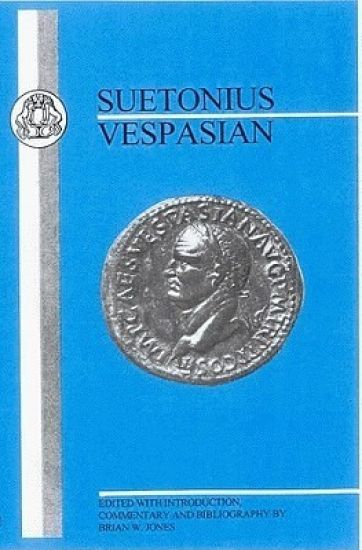
The emperor Vespasian (AD69-79) is universally regarded as one of the better Roman emperors. Coming to the throne after the demise of Nero and the bitterness of a year-long civil war, he restored the empire's finances and inaugurated a period of peace and prosperity. Tacitus, Pliny and Josephus had a high regard for Vespasian, portraying him as an astute commander and an excellent emperor. In comparison with the comments of these contemporary or near-contemporary writers, Suetonius' biography, produced some fifty years after the emperor's death, is quite detailed. He too admired Vespasian. For him, Vespasian was a very shrewd administrator, who liked to be seen as having the common touch and as an ex-soldier with a ribald sense of humour. These and other aspects of his character are revealed in a series of anecdotes, always amusing and always opposite. This edition (the first since 1930) offers a newly revised text with a general introduction and detailed commentary. Comparison is continually drawn between Vespasian and other accounts of the reign, especially that of Dio Cassius, the only other substantial account but written a century after that of Suetonius.
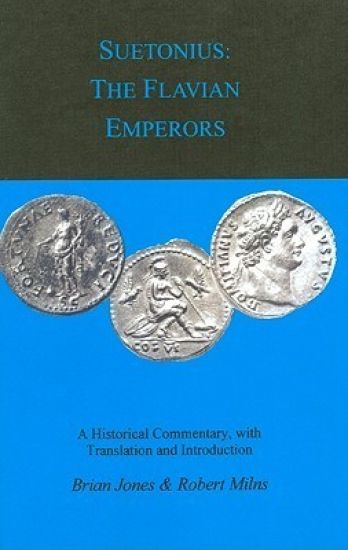
Nero's suicide in AD 68 was followed by a disastrous civil war that left the empire in a parlous state and saw the demise, in quick succession, of another three emperors (Galba, Otho and Vitellius). Normality returned with Vespasian and his sons, Titus and Domitian who ruled from 69 to 96. They changed the face of Rome, with massive public works such as the Flavian amphitheatre (later called the Colosseum) and the palace-complex on the Palatine, which provided much-needed employment whilst at the same time enhancing the city's status as the capital of the Mediterranean. The most detailed account of the new dynasty and its achievements is provided by Suetonius. What he has to say about these three Flavians constitutes the best source we have for the period. This edition of the three "Lives" includes a new translation, a general introduction to Suetonius and a detailed commentary that concentrates on the social and political history behind each life.

Suetonius: The Life of Caligula (Selections)
Brent Vine
Createspace Independent Publishing Platform
2017
nidottu
Suetonius explores the colorful life of Caligula, one of Rome's most notorious emperors. The intermediate/advanced Latin student can enjoy selections of Suetonius's humorous biography with the help of Brent Vine's notes and commentary in this accessible reader.