Kirjojen hintavertailu. Mukana 12 595 353 kirjaa ja 12 kauppaa.

Kirjahaku

Etsi kirjoja tekijän nimen, kirjan nimen tai ISBN:n perusteella.

1000 tulosta hakusanalla Swift Jonathan

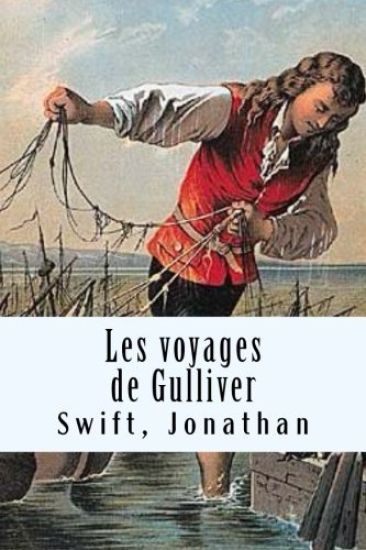
Les voyages de Gulliver

Les voyages de Gulliver

Swift Jonathan

Createspace Independent Publishing Platform
2017
nidottu
Les Voyages de Gulliver ou Les Voyages extraordinaires de Gulliver (en anglais Gulliver's Travels) est un roman satirique crit par Jonathan Swift en 1721. Une version censur e et modifi e par son diteur para t pour la premi re fois en 1726; ce n'est qu'en 1735 qu'il para tra en version compl te. Il appara t pour la premi re fois en fran ais sous le titre Voyages du capitaine Lemuel Gulliver en divers pays eloignez en janvier 1727, La Haye.
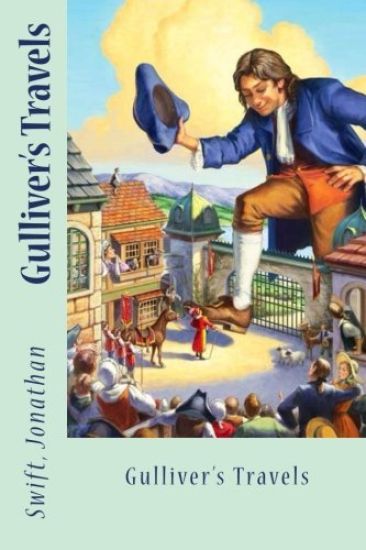
Gulliver's Travels

Gulliver's Travels

Swift Jonathan

Createspace Independent Publishing Platform
2017
nidottu
The travel begins with a short preamble in which Lemuel Gulliver gives a brief outline of his life and history before his voyages. During his first voyage, Gulliver is washed ashore after a shipwreck and finds himself a prisoner of a race of tiny people, less than 6 inches (0.50 ft) tall, who are inhabitants of the island country of Lilliput. After giving assurances of his good behaviour, he is given a residence in Lilliput and becomes a favourite of the Lilliput Royal Court.
Jonathan Swift in the Company of Women

Jonathan Swift in the Company of Women

Louise Barnett

Oxford University Press Inc
2006
sidottu
Building upon recent research on the history of women, Jonathan Swift in the Company of Women examines Swift, both as man and writer, in terms of women: women as intimates, acquaintances, subjects of satire, and those who have written about Swift. It considers women as mothers and nurses in Swift's personal life and his fictions, and it explores the issue that has persisted from the eighteenth century into our own time: the subject of misogyny in Swift's writings.
Jonathan Swift and Thomas Sheridan: The Intelligencer
In 1728-9, Jonathan Swift and his friend Thomas Sheridan anonymously published the Intelligencer. This Dublin periodical offered trenchant and often witty commentary on the Irish social and political scene in the year before A Modest Proposal. The frequently anthologized review of The Beggar's Opera (no. 3) is not only the best contemporary criticism of it but also Swift's central pronouncement on satire. Several essays lash important enemies, anger being always a great creative stimulus to both Swift and Sheridan. This is the first collected edition of the Intelligencer since 1730. It is based on the rare original Dublin pamphlets, each known copy of which has been collated. Full commentary and appendices draw upon contemporary pamphlets, broadsides, newspapers, and manuscripts to site the Intelligencer papers in the personal, social, and political controversies in which they are engaged. There is also a fresh bibliographical analysis of the Intelligencer's textual transmission.
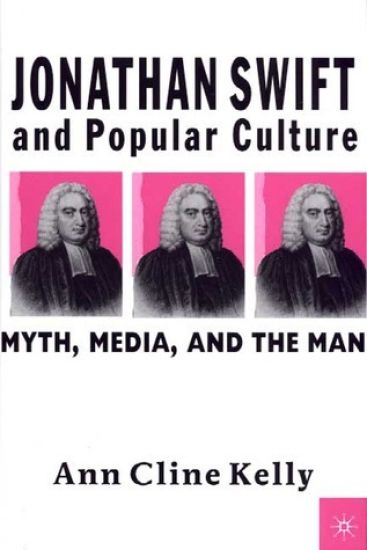
Jonathan Swift and Popular Culture Myth, Media and the Man
Ann Kelly's provocative book breaks the mold of Swift studies. Twentieth century Swift scholars have tended to assess Jonathan Swift as a pillar of the eighteenth-century 'republic of letter', a conservative, even reactionary voice upholding classical values against the welling tide of popularization in literature. Kelly looks at Swift instead as a practical exponent of the popular and impressario of the literary image. She argues that Swift turned his back on the elite to write for a popular audience, and that he annexed scandals to his fictionalized print alter ego, creating a continual demand for works by or about this self-mythologized figure. A fascinating look at print culture, the commodification of the author, and the history of popular culture, this book should provoke lots of discussion.
Jonathan Swift

Jonathan Swift

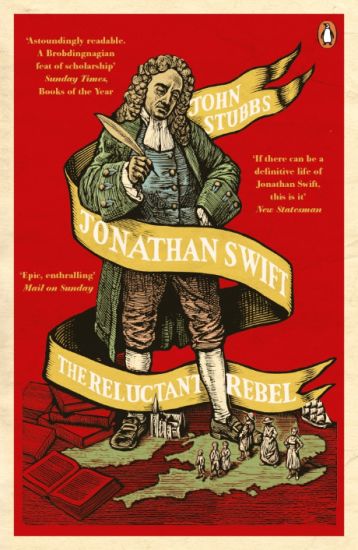
John Stubbs

Penguin Books Ltd
2017
pokkari
Jonathan Swift was a man of contradictions: a man who satirized the powerful but aspired to political greatness, who mocked men's vanity but held himself in high esteem, a religious moralizer famed for his malice - a man sharply aware of humanity's flaws, but no less susceptible to them.As with his acclaimed biography of John Donne, John Stubbs paints a vivid portrait of an extraordinary man and a turbulent period of English and Irish history.
Jonathan Swift

Jonathan Swift

Robert Mahony

Yale University Press
2012
pokkari
Jonathan Swift was internationally acclaimed in his own time for Gulliver's Travels and other brilliant satires in verse and prose. In his native Ireland, however, he was most fervently admired as a patriot. Advocating economic self-sufficiency for Ireland and resistance to the high-handedness of the British government, Swift represented an articulate challenge to British rule. Although his reputation as an Irish patriot declined after his death, the twentieth century has come to recognize him as a founding father of Irish nationalism.This book traces Swift's fluctuating reception in Ireland through the centuries, examining his nationalist ambivalence for a homeland he could defend but not love, and comparing his feelings with the ambiguities that have marked the development of Irish identity more widely. Robert Mahony considers Swift's posthumous reputation in both literary and popular culture and examines his unusual place in Irish political rhetoric. He shows how Swift's reputation suffered in the later eighteenth century through its seeming irrelevance to shifting political circumstances. In the early nineteenth century, Irish Protestants made him a symbol of their own patriotism within the British union, but he was ignored, or dismissed as a bigot, by most Catholic writers. In the 1840s the tide turned as the Young Ireland movement emphasized Swift's anti-British rhetoric while establishing his Protestant pedigree for contemporary Protestants. Although charges of hypocrisy and of an English cultural orientation survived as late as the 1930s, the construction of Swift as a patriot—with human flaws—was ultimately sustained.
Jonathan Swift

Jonathan Swift

Leo Damrosch

Yale University Press
2014
pokkari
Winner of the 2013 National Book Critics Circle Award in Biography: The life of satirist Jonathan Swift, written by a master biographer and leading scholar of eighteenth-century literature Selected by New York Times Book Review as a Best Book Since 2000 “Superb. . . . Damrosch’s outstanding book has raised Swift’s provocative genius to life.”—Jeffrey Collins, Wall Street Journal Jonathan Swift is best remembered today as the author of Gulliver’s Travels, the satiric fantasy that quickly became a classic and has remained in print for nearly three centuries. Yet Swift also wrote many other influential works, was a major political and religious figure in his time, and became a national hero, beloved for his fierce protest against English exploitation of his native Ireland. What is really known today about the enigmatic man behind these accomplishments? Can the facts of his life be separated from the fictions? In this deeply researched biography, Leo Damrosch draws on discoveries made over the past thirty years to tell the story of Swift’s life anew. Probing holes in the existing evidence, he takes seriously some daring speculations about Swift’s parentage, love life, and various personal relationships and shows how Swift’s public version of his life—the one accepted until recently—was deliberately misleading. Swift concealed aspects of himself and his relationships, and other people in his life helped to keep his secrets. Assembling suggestive clues, Damrosch re-narrates the events of Swift’s life while making vivid the sights, sounds, and smells of his English and Irish surroundings.Through his own words and those of a wide circle of friends, a complex Swift emerges: a restless, combative, empathetic figure, a man of biting wit and powerful mind, and a major figure in the history of world letters.
Jonathan Swift and Popular Culture Myth, Media and the Man
Ann Kelly's provocative book breaks the mold of Swift studies. Twentieth century Swift scholars have tended to assess Jonathan Swift as a pillar of the eighteenth-century 'republic of letter', a conservative, even reactionary voice upholding classical values against the welling tide of popularization in literature. Kelly looks at Swift instead as a practical exponent of the popular and impressario of the literary image. She argues that Swift turned his back on the elite to write for a popular audience, and that he annexed scandals to his fictionalized print alter ego, creating a continual demand for works by or about this self-mythologized figure. A fascinating look at print culture, the commodification of the author, and the history of popular culture, this book should provoke lots of discussion.
Jonathan Swift

Jonathan Swift

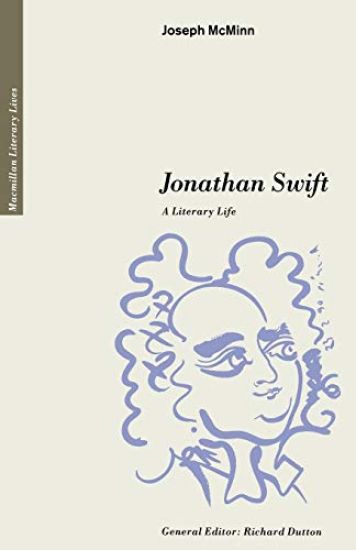
Joseph McMinn

Palgrave Macmillan
1991
sidottu
This biography emphasises the extraordinary versatility and resourcefulness of a lifetime spent serving the public interest with the pen. At the same time, it shows Swift's distinctive love of writing for personal entertainment and diversion, with little or no interest in publication. While remaining a fiercely committed writer, he always tried to preserve, especially in his poetry and letters, a literature dedicated to friendship. Swift's literary career comprises much more than the well-known satires.
Jonathan Swift

Jonathan Swift

McMinn Joseph

PALGRAVE MACMILLAN
1991
nidottu
This biography emphasises the extraordinary versatility and resourcefulness of a lifetime spent serving the public interest with the pen. At the same time, it shows Swift's distinctive love of writing for personal entertainment and diversion, with little or no interest in publication. While remaining a fiercely committed writer, he always tried to preserve, especially in his poetry and letters, a literature dedicated to friendship. Swift's literary career comprises much more than the well-known satires.
Jonathan Swift: The Reluctant Rebel

Jonathan Swift: The Reluctant Rebel

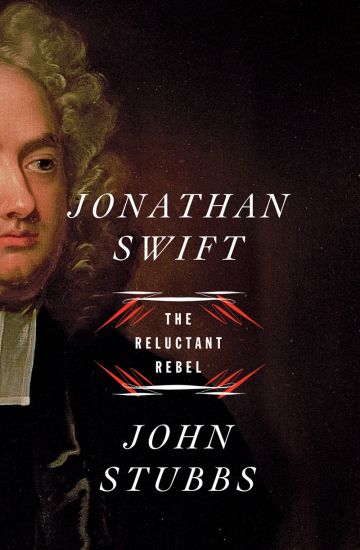
John Stubbs

W. W. Norton Company
2017
sidottu
One of Europe's most important literary figures, Jonathan Swift was also an inspired humorist, a beloved companion, and a conscientious Anglican minister--as well as a hoaxer and a teller of tales. His anger against abuses of power would produce the most famous satires of the English language: Gulliver's Travels as well as the Drapier Papers and the unparalleled Modest Proposal, in which he imagined the poor of Ireland farming their infants for the tables of wealthy colonists.John Stubbs's biography captures the dirt and beauty of a world that Swift both scorned and sought to amend. It follows Swift through his many battles, for and against authority, and in his many contradictions, as a priest who sought to uphold the dogma of his church; as a man who was quite prepared to defy convention, not least in his unshakable attachment to an unmarried woman, his "Stella"; and as a writer whose vision showed that no single creed holds all the answers.Impeccably researched and beautifully told, in Jonathan Swift Stubbs has found the perfect subject for this masterfully told biography of a reluctant rebel--a voice of withering disenchantment unrivaled in English.