Kirjojen hintavertailu. Mukana 11 627 380 kirjaa ja 12 kauppaa.

Kirjahaku

Etsi kirjoja tekijän nimen, kirjan nimen tai ISBN:n perusteella.

1000 tulosta hakusanalla T. Mowle

Electron-Molecule and Photon-Molecule Collisions

Electron-Molecule and Photon-Molecule Collisions

T.N. Rescigno

Springer-Verlag New York Inc.
2012
nidottu
The First Asilomar Conference on Electron- and Photon-Molecule Collisions was held August 1-4, 1978 in Pacific Grove, California. This meeting brought together forty scientists who are actively involved in theoretical studies of electron scattering by, and photoionization of, small molecules. In this volume, are collected the contributions of the invited speakers, as well as the roundtable and evening discussions condensed from taped recordings of the entire proceedings. The subject matter reflects current activity in the field and describes many of the techniques that are being developed and applied to molecular collision problems. We would like to thank the Air Force Office of Scientific Research (AFOSR) and the Office of Naval Research (ONR) for providing the financial support that made this conference possible. Special thanks are due to Dr. Robert Junker of ONR and Dr. Ralph Kelley of AFOSR for the interest and encouragement they provided in all phases of this meeting. We also thank all the participants whose efforts and contributions made this conference a success. Finally, we thank Ms. Charlotte MacNaughton and Ms. Sara Jackson for the many hours they spent transcribing tapes and preparing this volume for publication.
Fractals in Molecular Biophysics

Fractals in Molecular Biophysics

T. Gregory Dewey

Oxford University Press Inc
1999
sidottu
Historically, science has strived to reduced complex problems to its simplest components, but more recently, it has recognized the merit of studying complex phenomena in situ. Fractal geometry is one such appealing approach, and this book discusses their application to complex problems in molecular biophysics. It provides a detailed, unified treatment of fractal aspects of protein and structure dynamics, fractal reaction kinetics in biochemical systems, sequence correlations in DNA and proteins, and descriptors of chaos in enzymatic systems. In an area that has been slow to acknowledge the use of fractals, this is an important addition to the literature, offering a glimpse of the wealth of possible applications. application to complex problems
Targeted Molecular Imaging in Oncology

Targeted Molecular Imaging in Oncology

T.P. Haynie

Springer-Verlag New York Inc.
2000
sidottu
Cancer cells dedifferentiate with repect to cell function; their vascularity is more leaky, but perfusion is heterogenerously reduced, and interstitial fluid pressure is high, severely retarding delivery of agents from the blood. Targeted imaging is designed to produce a detectable difference between tissue that is visualized with single photon and positron emission tomography, magnetic resonance imaging, computed tomography, or ultrasonography. This book uniquely reports strategies for the application of molecular targeted imaging agents such as antibodies, peptides, receptors and contrast agents in the biologic grading of tumors, differential diagnosis of tumors, prediction of therapeutic response and monitoring tumor response to treatment. This book also describes updated information about the imaging of tumor angiogenesis, hypoxia, apoptosis and gene delivery as well as expression in the understanding and utility of tumor molecular biology for better cancer management.
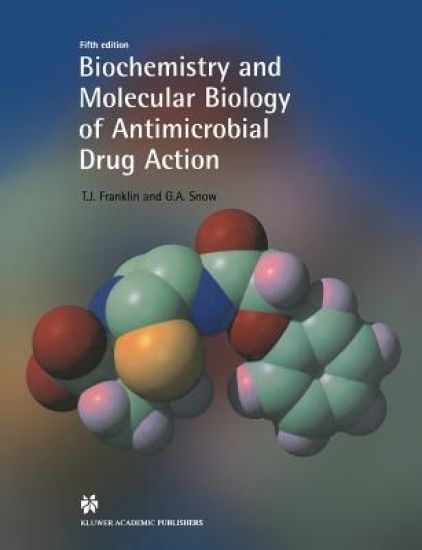
Biochemistry and Molecular Biology of Antimicrobial Drug Action
The rapid advances made in the study of the synthesis, structure and function of biological macromole­ cules in the last fifteen years have enabled scientists concerned with antimicrobial agents to achieve a considerable measure of understanding of how these substances inhibit cell growth and division. The use of antimicrobial agents as highly specific inhibitors has in turn substantially assisted the investigation of complex biochemical processes. The literature in this field is so extensive, however, that we considered an attempt should be made to draw together in an introductory book the more significant studies of recent years. This book, which is in fact based on lecture courses given by us to undergraduates at Liverpool and Manchester Universities, is therefore intended as an introduction to the biochemistry of antimicrobial action for advanced students in many disciplines. We hope that it may also be useful to established scientists who are new to this area of research. The book is concerned with a discussion of medically important antimicrobial compounds and also a number of agents that, although having no medical uses, have proved invaluable as research tools in bio­ chemistry. Our aim has been to present the available information in a simple and readable way, empha­ sizing the established facts rather than more controversial material. Whenever possible, however, we have indicated the gaps in the present knowledge of the subject where further information is required.
Targeted Molecular Imaging in Oncology

Targeted Molecular Imaging in Oncology

T.P. Haynie

Springer-Verlag New York Inc.
2013
nidottu
Cancer cells dedifferentiate with repect to cell function; their vascularity is more leaky, but perfusion is heterogenerously reduced, and interstitial fluid pressure is high, severely retarding delivery of agents from the blood. Targeted imaging is designed to produce a detectable difference between tissue that is visualized with single photon and positron emission tomography, magnetic resonance imaging, computed tomography, or ultrasonography. This book uniquely reports strategies for the application of molecular targeted imaging agents such as antibodies, peptides, receptors and contrast agents in the biologic grading of tumors, differential diagnosis of tumors, prediction of therapeutic response and monitoring tumor response to treatment. This book also describes updated information about the imaging of tumor angiogenesis, hypoxia, apoptosis and gene delivery as well as expression in the understanding and utility of tumor molecular biology for better cancer management.
Elementary Excitations in Solids, Molecules, and Atoms

Elementary Excitations in Solids, Molecules, and Atoms

Jozef T. Devreese; A. B. Kunz; T. C. Collins

Springer-Verlag New York Inc.
2012
nidottu
The Advanced Study Institute on 'Elementary Excitations in Solids, Molecules, and Atoms' was held at the University of Antwerp (U.I.A.) from June 18th till June 30th 1973. The In­ stitute was sponsored by NATO. Co-sponsors were: Agfa-Gevaert N.V. (Mortsel - Belgium), Bell Telephone Mfg. Co. (Antwerp­ Belgium), the National Science Foundation (Washington D.C. - U.S.A.) and the University of Antwerp (U.I.A.). A total of 120 lecturers and participants attended the Institute. Over the last few years, substantial progress has been made in the description of the elementary excitations of the elec­ tronic and vibrational systems and their interactions. Parallel with this, the experimentalists have obtained outstanding re­ sults, partly as a result of availability of coherent light sour­ ces from the far infrared through the visible region, and partly because of the availability of synchrotron radiation sources in the soft X-ray region. The results of today will lead to fur­ ther progress over the next years. It was the purpose of this NATO Advanced Study Institute to present astate of the art, namely a survey of experiment and theory.
Molecular Biology LabFax

Molecular Biology LabFax

T. A. Brown

Academic Press Inc
1998
sidottu
Labfax volumes are purpose-designed data reference books for practicing scientists. Each book presents key information for a major subject in one place and therefore saves hours of searching. The authors and editors of each Labfax volume have searched the original literature for the accurate data which they know the specialist needs.
Molecular Biology LabFax

Molecular Biology LabFax

T. A. Brown

Academic Press Inc
1998
sidottu
In the eight years since the original publication of Molecular Biology Labfax, there has been a vast proliferation of molecular biology techniques. The Second Edition has been divided into two parts: Recombinant DNA, and Gene Analysis. Together they comprise a comprehensive collection of the most up-to-date methods available in molecular biology. This second volume of the two-part Second Edition provides key information on nucleic acid blotting and hybridization, DNA sequencing, PCR, labelingnucleic acids, electrophoresis, centrifugation, chemicals and reagents, and safety. Molecular Biology Labfax will be essential for scientists of all disciplines within the life sciences who use molecular biological techniques.
Molecular Virology

Molecular Virology

T. H. Pennington

Chapman and Hall
1975
nidottu
1. 1 Historical development of molecular virology of effort on a limited number of phages, Viruses have occupied a central position in notably the Escherichia coli phages T2 and T4. molecular biology ever since its development as At the same time Lwoff and his colleagues were an independent discipline. Indeed, molecular studying phage A, a temperate phage of E. coli, biology itselflargely developed out of the work which was to lead to equally fundamental pioneer studies of Delbriick, Luria and Hershey, observations on the regulation of macro­ who realized, in the late 1930's, that bacterial molecular synthesis. viruses (bacteriophages, often abbreviated to The study of animal and plant viruses has its phages) had properties which made them origins in the latter half of the 19th century uniquely suitable as a model system for an and was largely initiated by workers in medical, attack on one of the then outstanding problems veterinary and agricultural disciplines. Many of of biology, the definition of the gene in their practical successes owe little to molecular physical and chemical terms. The favourable biology, stemming instead from those properties of these viruses include the rapidity approaches successful in combating other of their growth, their ease of assay, and the parasites, such as vector control and the availability of easily scored genetic markers. breeding of resistant varieties of plants.
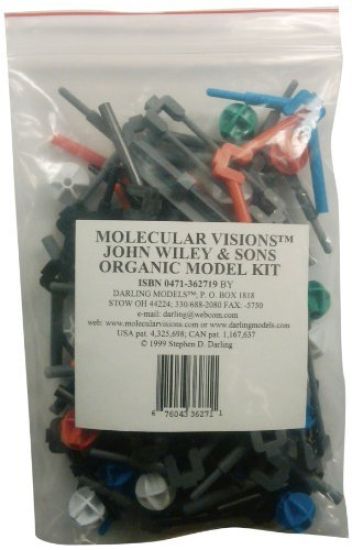
Molecular Modeling Kit to accompany Organic Chemistry, 7e

Molecular Modeling Kit to accompany Organic Chemistry, 7e

T. W. Graham Solomons; Craig B. Fryhle

John Wiley Sons Inc
2003
sidottu
Manipulating models and building molecules in 3-dimensional space is the very best way for students to develop their spatial skills (one of the key issues in organic courses) and to get a real sense of how molecules are put together. To that end, we have done everything we could to make a model set available for students at a price they can afford. The model kit is particularly customized to the Solomons Fryhle text, but can be used with any of Wiley's organic texts. Manufactured by Darling Model Kits, this custom kit was designed by T.W.Graham Solomons. The kit consists of Darling's basic Molecular Vision kit with a few additional pieces, so that p orbitals could be shown in molecules like acetylene. This customized kit also has pieces that allow linear geometry for the sigma bonds of alkynes while also having orthogonal connections at each atom for the associated p orbitals. By attaching balls of the right colors it is possible to show the lobes of the p orbitals that make up the pi bonds in an alkyne. Ball colors can be matched symmetrically to show in-phase orbital overlap, or antisymmetrically to show an antibonding state. Use of colored balls with the appropriate framework geometry is a very nice feature of the Darling model set. Pieces from Darling's inorganic model set and are used for octahedral geometry.
Basic Molecular Protocols in Neuroscience: Tips, Tricks, and Pitfalls
Basic Neuroscience Protocols: Tips, Tricks, and Pitfalls contains explanatory sections that describe the techniques and what each technique really tells the researcher on a scientific level. These explanations describe relevant controls, troubleshooting, and reaction components for some of the most widely used neuroscience protocols that remain difficult for many neuroscientists to implement successfully. Having this additional information will help researchers ensure that their experiments work the first time, and will also minimize the time spent working on a technique only to discover that the problem was them, and not their materials.