Kirjojen hintavertailu. Mukana 12 563 673 kirjaa ja 12 kauppaa.

Kirjahaku

Etsi kirjoja tekijän nimen, kirjan nimen tai ISBN:n perusteella.

384 tulosta hakusanalla Telford Work

Thomas Telford

Thomas Telford

L T C Rolt; Neil Cossons

The History Press Ltd
2007
nidottu
Thomas Telford, the son of a shepherd, was born in Westerkirk, Scotland in 1757. At the age of 14, he was apprenticed to a stonemason. He worked for a time in Edinburgh and in 1792, he moved to London where he was involved in building additions to Somerset House. Two years later, he found work at Portsmouth dockyard. In 1787, he became surveyor of public works for Shropshire. By this time, Telford had established a good reputation as an engineer and in 1790 was given the task of building a bridge over the River Severn at Montford. This was followed by a canal that linked the ironworks and collieries of Wrexham with Chester and Shrewsbury. This involved building an aqueduct over the River Dee. On the Pontcysyllte Aqueduct, Telford used a new method of construction consisting of troughs made from cast-iron plates and fixed in masonry.After the completion of the Ellesmere Canal Telford moved back to Scotland where he took control of the building of Caledonian Canal. Other works by Telford include the Menai Suspension Bridge (1819-1826) and the Katherine's Docks (1824-1828) in London. Telford was also an important road builder. He was responsible for rebuilding the Shrewsbury to Holyhead road and the North Wales coast road between Chester and Bangor. During his life, Telford built more than 1,000 miles of road, including the main road between London and Holyhead. Thomas Telford died in 1834.
North Telford, Wellington, Oakengates and Surrounding Areas
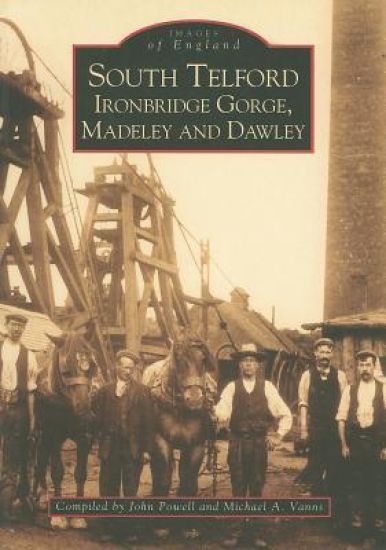
This fascinating selection of photographs reflects some of the different and varied aspects of life in North Telford from the 1970s to the 1950s, providing a glimpse of the familiar and the unusual, the survivals and the changes.In this companion volume to "South Telford", the areas north of the M54 motorway is the centre of attention. The photographs show the communities close to Thomas Telford's Holyhead Road (the later A5), their working environments, families and leisure activities, the area had a different character to that of the small scattered settlements to the south, and at the heart of North Telford, Wellington was an established market town long before the Industrial Revolution.It managed to retain its urban identity despite the industrial changes nearby, and the arrival of Telford New Town in the 1960s. Other communities like Oakengates, St Georges, Trench and the satellite villages, were much more affected by the industrial activity of the last two centuries and the building of the New Town. The extensive industrial and domestic developments of the last few decades will ensure that the late twentieth century also leaves its mark on the landscape.
Haunted Telford

Haunted Telford

Philip Solomon

The History Press Ltd
2011
nidottu
Although it is the largest town in Shropshire, you probably wouldn’t think there would be many ghosts lurking in the new town of Telford. However, the smaller settlements that formed the new town were founded in the thirteenth century and so Telford plays host to many spirits from the past. The surrounding areas of Ironbridge Gorge and Coalbrookdale are haunted by numerous ghostly apparitions that appear to date from the time of the Industrial Revolution. From heart-stopping accounts of apparitions, manifestations and related supernatural phenomena to first-hand encounters with spirits, this collection of stories contains both new and well-known spooky stories from in and around Telford. It is sure to fascinate everyone with an interest in the area’s history.
Thomas Telford

Thomas Telford

Rhoda M. Pearce

Shire Publications
2007
nidottu
Thomas Telford’s genius is reflected in the variety and technical skill of his achievements, most of which are still in use today. But it is perhaps Telford’s work on Canals which attracts most attention now: Ellesmere Canal with its aqueducts at Pontcycyllte and Chirk; the Caledonian cutting its way through the Great Glen in Scotland. Telford’s appointment as first president of the Institution of Civil Engineers showed that his generation recognised him as the real founder of his profession.
Thomas Telford. --

Thomas Telford. --

L. T. C. 1910-1974 Rolt

Hassell Street Press
2021
sidottu
This work has been selected by scholars as being culturally important and is part of the knowledge base of civilization as we know it.This work is in the public domain in the United States of America, and possibly other nations. Within the United States, you may freely copy and distribute this work, as no entity (individual or corporate) has a copyright on the body of the work.Scholars believe, and we concur, that this work is important enough to be preserved, reproduced, and made generally available to the public. To ensure a quality reading experience, this work has been proofread and republished using a format that seamlessly blends the original graphical elements with text in an easy-to-read typeface.We appreciate your support of the preservation process, and thank you for being an important part of keeping this knowledge alive and relevant.
Thomas Telford

Thomas Telford

Anthony Burton

PEN SWORD BOOKS LTD
2023
nidottu
Thomas Telford's life was extraordinary: born in the Lowlands of Scotland, where his father worked as a shepherd, he ended his days as the most revered engineer in the world, known punningly as The Colossus of Roads. He was responsible for some of the great works of the age, such as the suspension bridge across the Menai Straits and the mighty Pontcysyllte aqueduct. He built some of the best roads seen in Britain since the days of the Romans and constructed the great Caledonian Canal, designed to take ships across Scotland from coast to coast. He did as much as anyone to turn engineering into a profession and was the first President of the newly formed Institution of Civil Engineers. All this was achieved by a man who started work as a boy apprentice to a stonemason. He was always intensely proud of his homeland and was to be in charge of an immense programme of reconstruction for the Highlands that included building everything from roads to harbours and even designing churches. He was unquestionably one of Britains finest engineers, able to take his place alongside giants such as Brunel. He was also a man of culture, even though he had only a rudimentary education. As a mason in his early days he had worked alongside some of the greatest architects of the day, such as William Chambers and Robert Adams, and when he was appointed County Surveyor for Shropshire early in his career, he had the opportunity to practice those skills himself, designing two imposing churches in the county and overseeing the renovation of Shrewsbury Castle. Even as a boy, he had developed a love of literature and throughout his life wrote poetry and became a close friend of the Poet Laureate, Robert Southey. He was a man of many talents, who rose to the very top of his profession but never forgot his roots: he kept his old masons tools with him to the end of his days. There are few official monuments to this great man, but he has no need of them: the true monuments are the structures that he left behind that speak of a man who brought about a revolution in transport and civil engineering.
Morris Telford's Salopian Odyssey
The official book of the BBC Shropshire blog. A thirty three year old man, obsessed with Bingo, stationary and Countdown, living with his Mother in a small village. He decides to quite his job, take his life savings and embark on a worldwide quest to convince everybody outside Shropshire that if they lived life like the people in his village do they would be much happier. It sounds naive, but he managed to get quite a following and now a big chunk of China, a little bit of Amsterdam, an all-girl Australian Beatles tribute band and a Dutch chapter of the Hells Angels all see Morris Telford as the man with the answers. Will you?
Morris Telford's Salopian Odyssey (HC)
It started out as an online diary on the BBC Shropshire website. A thirty three year old man, obsessed with Bingo, stationary and Countdown, living with his Mother in a small village. He decides to quite his job, take his life savings and embark on a worldwide quest to convince everybody outside Shropshire that if they lived life like the people in his village do they would be much happier. It sounds naive, but he managed to get quite a following and now a big chunk of China, a little bit of Amsterdam, an all-girl Australian Beatles tribute band and a Dutch chapter of the Hells Angels all see Morris Telford as the man with the answers.
Yeoman and Colliers in Telford

Yeoman and Colliers in Telford

Barrie Trinder; Jeff Cox

Phillimore Co Ltd
1980
nidottu
One of the most thorough surveys of probate inventories yet published, it is based on an analysis of 846 inventories made in the parishes of Dawley, Lilleshall, Wellington and Wrockwardine between 1660 and 1750. All are listed and the texts of 265 of the most interesting are printed in full. Agriculture is also examined in depth and the large farms on the fringe of the Cheshire cheese region contrasted with the smaller holdings on the coalfield. There is a detailed analysis of the mercers of Wellington, together with surveys of the dyeing, leather and other trades.
The Life of Thomas Telford (Esprios Classics)
Samuel Smiles (1812-1904) was a Scottish author and government reformer. Although he campaigned on a Chartist platform, he concluded that more progress would come from new attitudes than from new laws. His masterpiece, Self-Help (1859), promoted thrift and claimed that poverty was caused largely by irresponsible habits, while also attacking materialism and laissez-faire government. It has been called "the bible of mid-Victorian liberalism" and raised Smiles to celebrity status almost overnight. In 1837, he wrote articles for the Edinburgh Weekly Chronicle and the Leeds Times, campaigning for parliamentary reform. In November 1838, Smiles was invited to become the editor of the Leeds Times, a position he accepted and filled until 1842.
The Life of Thomas Telford, Civil Engineer

The Life of Thomas Telford, Civil Engineer

Samuel Smiles

Cambridge University Press
2014
pokkari
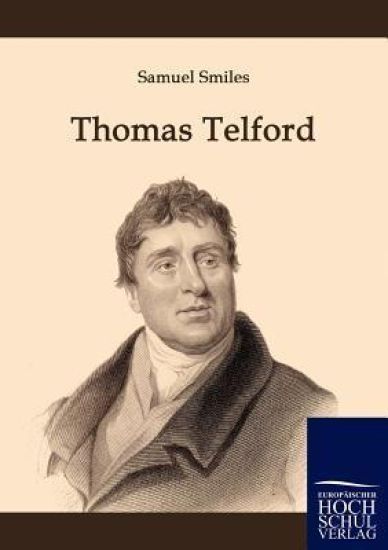
This biography of the civil engineer Thomas Telford (1757–1834) was published in 1867 by Samuel Smiles (1812–1904), the author of Self-Help and of other biographies of engineers and innovators. Smiles had already written about Telford's life and achievements in Volume 2 of his Lives of the Engineers (which is also reissued in this series), but in returning to the topic he adds to this new edition an introductory section (taken from Volume 1 of Lives of the Engineers) on the history of roads in Britain, from prehistoric trackways, via the Romans, to the modern road-building system pioneered by John Metcalf (the extraordinary 'Blind Jack of Knaresborough') and Telford himself. This illustrated work gives engaging accounts from earlier writers of the perils of road travel, and also deals in detail with Telford's own career as a builder of roads, bridges and canals.