Kirjojen hintavertailu. Mukana 11 699 587 kirjaa ja 12 kauppaa.

Kirjahaku

Etsi kirjoja tekijän nimen, kirjan nimen tai ISBN:n perusteella.

1000 tulosta hakusanalla Terence

Terence

Terence

Egmont Books Ltd
2012
nidottu
This is a story about Terence the Tractor. When Thomas met Terence ploughing a field, he was very rude to him. But when snow came to Sodor, Thomas found out that Terence's caterpillar tracks could be Really Useful!
Terence

Terence

Roger Mavity; Stephen Bayley

Little, Brown
2021
sidottu
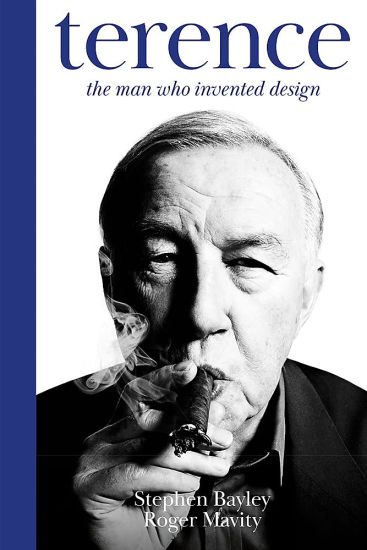
'A terrific read, bubbling with anecdotes and insight' Daily Mail, 2021's best biographies'Bayley, the author of books on style, design and taste, tells the Habitat story with his customary polycultural panache . . . [Mavity is] good at conveying the experience of being in a room with Conran' Sunday TimesTerence Conran, a visionary and a myopic. A design entrepreneur and imaginative restaurateur, he was a democratising idealist who was also a selfish hedonist. His influence is everywhere in modern Britain from where we live to what we eat. Terence: The Man Who Invented Design is the most definitive, intimate and revelatory biography of this design legend, by two of his closest collaborators, Roger Mavity and Stephen Bayley. Frank, amusing, indiscreet, sharp, rude, respectful and knowing, it tells Terence's story as it evolved, from before Habitat's humble chicken brick to Bibendum's sophisticated poulet de Bresse, via personal successes and corporate calamities, culminating in that peculiar temple to the religion he invented: The Design Museum. It celebrates Terence's genius and immeasurable impact on British life - and ensures his rightful status as national treasure. Terence: The Man Who Invented Design is the most candid, up-close insight into the man and myth.
Terence

Terence

Roger Mavity; Stephen Bayley

Little, Brown Book Group
2022
pokkari
'Bayley, the author of books on style, design and taste, tells the Habitat story with his customary polycultural panache . . . [Mavity is] good at conveying the experience of being in a room with Conran' Sunday TimesTerence Conran, a visionary and a myopic. A design entrepreneur and imaginative restaurateur, he was a democratising idealist who was also a selfish hedonist. His influence is everywhere in modern Britain from where we live to what we eat. Terence: The Man Who Invented Design is the most definitive, intimate and revelatory biography of this design legend, by two of his closest collaborators, Roger Mavity and Stephen Bayley. Frank, amusing, indiscreet, sharp, rude, respectful and knowing, it tells Terence's story as it evolved, from before Habitat's humble chicken brick to Bibendum's sophisticated poulet de Bresse, via personal successes and corporate calamities, culminating in that peculiar temple to the religion he invented: The Design Museum. It celebrates Terence's genius and immeasurable impact on British life - and ensures his rightful status as national treasure. Terence: The Man Who Invented Design is the most candid, up-close insight into the man and myth.

Terence

Terence

John Barsby

Bristol Classical Press
1991
pokkari
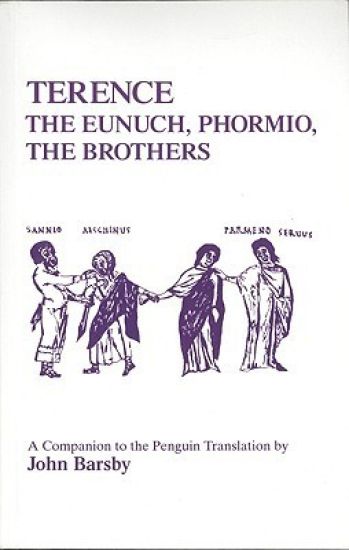
This book, keyed to the Penguin translation, introduces three of Terence's most entertaining and widely read plays. The selection demonstrates his versatility as a playwright: the brilliant farce of The Eunuch, the subtle comedy of Phormio and the more serious theme of the relationship between fathers and sons explored in The Brothers. A detailed and well-researched introduction sets Terence in his context in the Roman theatre, while the commentaries, with their useful line-by-line analysis, provide the reader with valuable information about the social and ethical background, as well as offering views on interpretation. Latin words are identified where this seems helpful, and references are made to other comedies (including those of Menander and Plautus) to give the student a broader picture of Terence's work.
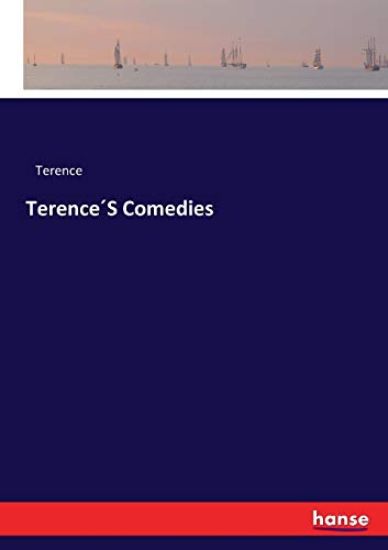
Terence´S Comedies

Terence´S Comedies

Terence

Hansebooks
2017
pokkari
Terence S Comedies is an unchanged, high-quality reprint of the original edition of 1767. Hansebooks is editor of the literature on different topic areas such as research and science, travel and expeditions, cooking and nutrition, medicine, and other genres. As a publisher we focus on the preservation of historical literature. Many works of historical writers and scientists are available today as antiques only. Hansebooks newly publishes these books and contributes to the preservation of literature which has become rare and historical knowledge for the future.
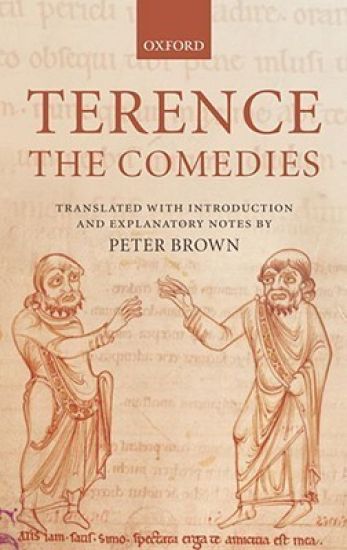
Terence, The Comedies

Terence, The Comedies

Oxford University Press
2006
sidottu
Terence (?184-159 BC) was the outstanding comic playwright of his generation at Rome and one of the founding fathers of European comic drama. His plays have been imitated by authors as diverse as the nun Hrothswitha in the tenth century and P. G. Wodehouse in the twentieth. They deal with the love-life of adolescent boys and with associated tensions in their relations with their fathers. They show love triumphing over obstacles of various kinds, and they also portray the problems that arise from ignorance, misunderstanding, and prejudice. They are true to universal elements of human experience, and audiences today can readily engage with the issues they raise. This new translation with introduction and explanatory notes aims to convey the liveliness of the plays as pieces written for the theatre.
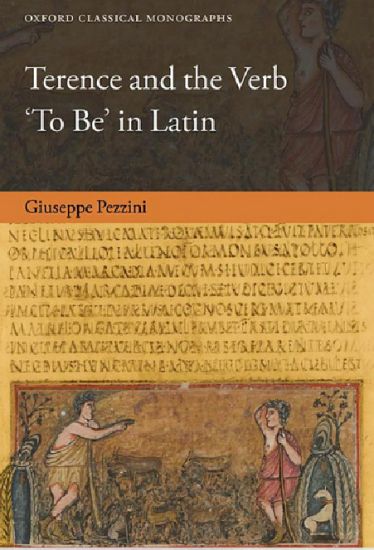
Terence and the Verb 'To Be' in Latin

Terence and the Verb 'To Be' in Latin

Giuseppe Pezzini

Oxford University Press
2015
sidottu
Terence and the Verb 'To Be' in Latin is the first in-depth study of the verb 'to be' in Latin (esse) and some of its hidden properties. Like the English 'be' (e.g. it's), the Latin forms of esse could undergo phonetic reduction or contraction. This phenomenon is largely unknown since classical texts have undergone a long process of transmission over the centuries, which has altered or deleted its traces. Although they are often neglected by scholars and puzzling to students, the use of contracted forms is shown to be widespread and significant. These forms expose the clitic nature of esse, which also explains other properties of the verb, including its participation in a prosodic simplification with a host ending in -s (sigmatic ecthlipsis), a phenomenon which is also discussed in the volume. After an introduction on methodology, the volume discusses the linguistic significance of such phenomena, focusing in particular on analysis of their behaviour in the plays of the ancient Roman playwright, Terence. Combining traditional scholarship with the use of digital resources, the volume explores the orthographic, phonological, semantic, and syntactic aspects of the verb esse, revealing that cliticization is a key feature of the verb 'to be' in Latin, and that contractions deserve a place within its paradigm.
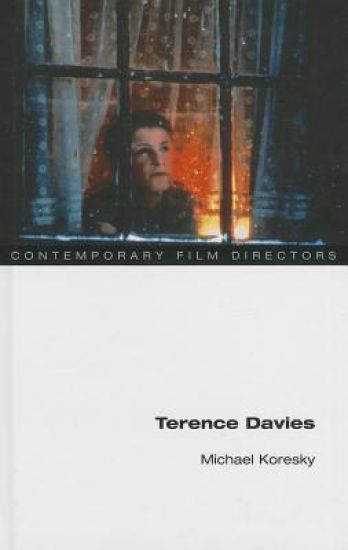
Terence Davies

Terence Davies

Michael Koresky

University of Illinois Press
2014
sidottu
Called the most important British filmmaker of his generation, Terence Davies made his reputation with modern classics like Distant Voices, Still Lives and The Long Day Closes, personal works exploring his fractured childhood in Liverpool. His idiosyncratic and unorthodox narrative films defy easy categorization, as their seeming existence within realism and personal memory cinema is undermined by an abstractness that makes the way he lays bare personal pain come across as distant, even alien. Film critic Michael Koresky explores the unique emotional tenor of Davies's work by focusing on four paradoxes within the director's oeuvre: films that are autobiographical yet fictional; melancholy yet elating; conservative in tone and theme yet radically constructed; and obsessed with the passing of time yet frozen in time and space. Through these contradictions, the films' intricate designs reveal a cumulative, deeply personal meditation on the self. Koresky also analyzes how Davies's ongoing negotiation of--and struggle with--questions of identity related to his past and his homosexuality imbue the details and jarring juxtapositions in his films with a queer sensibility, which is too often overlooked due to the complexity of Davies's work and his unfashionable ambivalence toward his own sexual orientation.
Terence Davies

Terence Davies

Michael Koresky

University of Illinois Press
2014
nidottu
Called the most important British filmmaker of his generation, Terence Davies made his reputation with modern classics like Distant Voices, Still Lives and The Long Day Closes, personal works exploring his fractured childhood in Liverpool. His idiosyncratic and unorthodox narrative films defy easy categorization, as their seeming existence within realism and personal memory cinema is undermined by an abstractness that makes the way he lays bare personal pain come across as distant, even alien. Film critic Michael Koresky explores the unique emotional tenor of Davies's work by focusing on four paradoxes within the director's oeuvre: films that are autobiographical yet fictional; melancholy yet elating; conservative in tone and theme yet radically constructed; and obsessed with the passing of time yet frozen in time and space. Through these contradictions, the films' intricate designs reveal a cumulative, deeply personal meditation on the self. Koresky also analyzes how Davies's ongoing negotiation of--and struggle with--questions of identity related to his past and his homosexuality imbue the details and jarring juxtapositions in his films with a queer sensibility, which is too often overlooked due to the complexity of Davies's work and his unfashionable ambivalence toward his own sexual orientation.
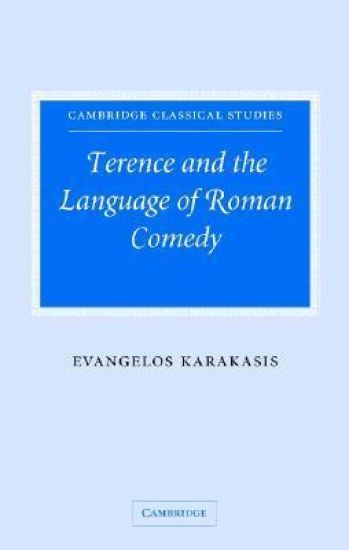
Terence and the Language of Roman Comedy

Terence and the Language of Roman Comedy

Karakasis Evangelos

Cambridge University Press
2008
pokkari
This book offers a comprehensive examination of the language of Roman comedy in general and that of Terence in particular. The study explores Terence's use of language to differentiate his characters and his language in relation to the language of the comic fragments of the palliata, the togata and the atellana. Linguistic categories in the Terentian corpus explored include colloquialisms, archaisms, hellenisms and idiolectal features. Terence is shown to give his old men an old-fashioned and verbose tone, while low characters are represented as using colloquial diction. An examination of Eunuchus' language shows it to be closer to the Plautine linguistic tradition. The book also provides a thorough linguistic/stylistic commentary on all the fragments of the palliata, the togata and the atellana. It shows that Terence, except in the case of his Eunuchus, consciously distances himself from the linguistic/stylistic tradition of Plautus followed by all other comic poets.
Terence and the Language of Roman Comedy

Terence and the Language of Roman Comedy

Karakasis Evangelos

Cambridge University Press
2005
sidottu
This book offers a comprehensive examination of the language of Roman comedy in general and that of Terence in particular. The study explores Terence's use of language to differentiate his characters and his language in relation to the language of the comic fragments of the palliata, the togata and the atellana. Linguistic categories in the Terentian corpus explored include colloquialisms, archaisms, hellenisms and idiolectal features. Terence is shown to give his old men an old-fashioned and verbose tone, while low characters are represented as using colloquial diction. An examination of Eunuchus' language shows it to be closer to the Plautine linguistic tradition. The book also provides a thorough linguistic/stylistic commentary on all the fragments of the palliata, the togata and the atellana. It shows that Terence, except in the case of his Eunuchus, consciously distances himself from the linguistic/stylistic tradition of Plautus followed by all other comic poets.