Kirjahaku
Etsi kirjoja tekijän nimen, kirjan nimen tai ISBN:n perusteella.
1000 tulosta hakusanalla Terence O'Donnell

A tale of courage and sacrifice during the time of the Great HungerThe Irish who could flee went to America. Black potatoes and death surrounded those who remained. Danny has to find a way to stay alive during the long years of the potato famine. He takes his strength from his family's love and the kindness of strangers. He is driven by his hatred for the men who tumbled his cottage and forced his family to the workhouse. Somehow, Danny must survive a tragic time when one million Irish will die. He must live to tell his story of the Irish during the time of the Great Hunger.
Humanism and Religion in Early Modern Spain brings together twenty-five essays by renowned historian Terence O’Reilly. The essays examine the interplay of religion and humanism in a series of writings composed in sixteenth-century Spain. It begins by presenting essential background: the coming together during the reign of the Emperor Charles V of Erasmian humanism and various movements of religious reform, some of them heterodox. It then moves on to the reign of Philip II, focusing on the mystical poetry and prose of St John of the Cross. It explores the influence on his writings of his humanist learning – classical, biblical and patristic. The third part of the book concerns a verse-epistle by John’s contemporary, Francisco de Aldana. One chapter presents the text with a parallel version in English, whilst two others trace its debt to Florentine Neoplatonism, particularly the thought of Marsilio Ficino. The final part is devoted to the humanism of the poet and Scripture scholar Luis de León, and specifically to the confluence in his work of biblical and classical motifs.This book is essential reading for scholars and students of early modern Spanish history, as well those interested in literary studies and the history of religion. (CS 1102).
Humanism and Religion in Early Modern Spain brings together twenty-five essays by renowned historian Terence O’Reilly. The essays examine the interplay of religion and humanism in a series of writings composed in sixteenth-century Spain. It begins by presenting essential background: the coming together during the reign of the Emperor Charles V of Erasmian humanism and various movements of religious reform, some of them heterodox. It then moves on to the reign of Philip II, focusing on the mystical poetry and prose of St John of the Cross. It explores the influence on his writings of his humanist learning – classical, biblical and patristic. The third part of the book concerns a verse-epistle by John’s contemporary, Francisco de Aldana. One chapter presents the text with a parallel version in English, whilst two others trace its debt to Florentine Neoplatonism, particularly the thought of Marsilio Ficino. The final part is devoted to the humanism of the poet and Scripture scholar Luis de León, and specifically to the confluence in his work of biblical and classical motifs.This book is essential reading for scholars and students of early modern Spanish history, as well those interested in literary studies and the history of religion. (CS 1102).
From time to time all families face predicaments, and use their own resources to overcome them. However, sometimes these resources are insufficient and they need help. Through the use of richly detailed practice examples and case studies, this comprehensive book clearly and succinctly examines the knowledge, skills and attitude that social workers require in order to engage with and help families experiencing strain in a multitude of different situations. Taking a strongly ecological stance, it outlines the variety of external stressors that can push families into difficulty and provides a thorough examination of the ways in which social workers can understand, help and support them.Concise and accessible, Supporting Families is an essential sourcebook for undergraduate and postgraduate students taking modules related to working with children and families as well as practitioners seeking a fresh source of reference.

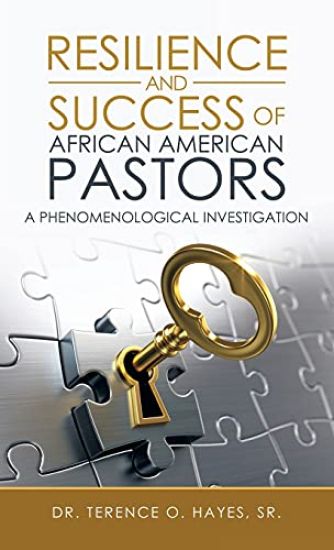

Beautiful and profoundly moving, Irish Crossings is a voyage of love, partings and new beginnings in the time of the Irish Potato Famine. Michael flees Ireland during the horror and heartbreak of the Great Hunger. Like one million other Irish, he journeys across the treacherous North Atlantic Ocean in search of a better life. He rejoins Paddy and Caitlin and together they travel across America. The young immigrants witness the rebirth of the Irish in a foreign land that is now their home.
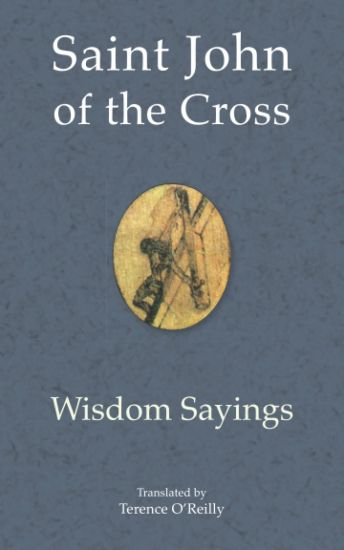
Saint John of the Cross: Wisdom SayingsTo the men and women he was guiding along a spiritual path Saint John of the Cross occasionally gave apophthegmata (wisdom sayings) for them to ponder prayerfully and make their own. They are designed to catch the reader's attention, and to provoke thought. They take various forms, including plain statement, exclamation, admonition and prayer, and they are usually arresting, sometimes disturbing, and often puzzling or moving too. They demand to be read, like Scripture, in a contemplative way: devoutly, thoughtfully and repeatedly, with a view to discerning God's will.This edition presents the sayings in Spanish, with an English version designed to assist a meditative reading.Terence O'Reilly is Professor Emeritus of Spanish at University College Cork and a member of the Royal Irish Academy.
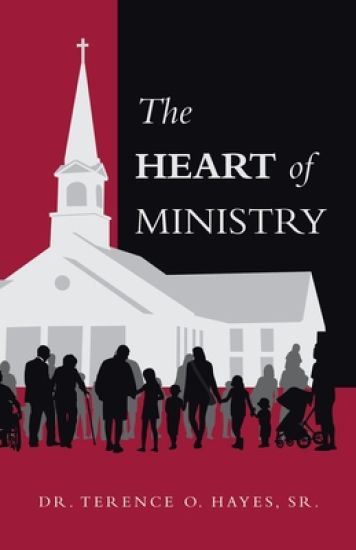
The Heart of Ministry will unfold the engagement and connection of ministry of the preparedness, organization, and administrative skills that are essential for the work of ministry to be modeled in depth from Biblical principles and practices that aligned exclusively from the word of God. The pages are written to personalize ministry that is done in all churches that have the heart, mind, and soul to do it right the first time.

The statistical dynamics of geophysical flows
Terence O'Kane
LAP Lambert Academic Publishing
2010
pokkari
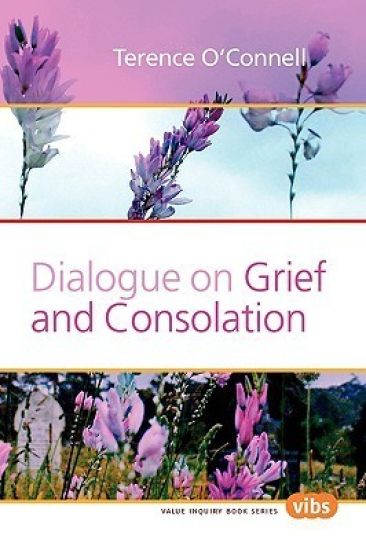
Have you lost a loved one? The loss can be inestimable, the grief excruciating. What helped you? Did someone say something comforting? Did someone offer a consolation, which you resented? Have you ever tried to comfort someone with a terminal illness or one who has lost a loved one? Knowing how to help or what to say that is not trite, insincere, or superficial can be difficult. The point of view of a grieving person is quite different from that of those who wish to offer comfort. In a multicultural society such as ours, anticipating the beliefs of the grieving person can be even more difficult. This book explores the perspective of a grieving person. It considers the merits and potential harm of alternative comfort strategies. As a philosophical analysis of grief, it emphasizes an understanding of the beliefs that underlie grief and the usefulness or dangers of emotions. Because grief is so complex and sensitive, a narrow approach runs the risk of alienating the grieving person. The ideas in this book are expressed in a dialogue among three characters. Their discussion is broad and fundamental. Starting from the familiar consolation, “She’s no longer suffering” and the grieving person’s resentment toward the expression, the three friends articulate the value of life and the evils of death. Their discussion enriches their understanding of grief. Many consolations offered to mourners are poor arguments. Even the better ones do their work best in the context of a greater understanding of grief.
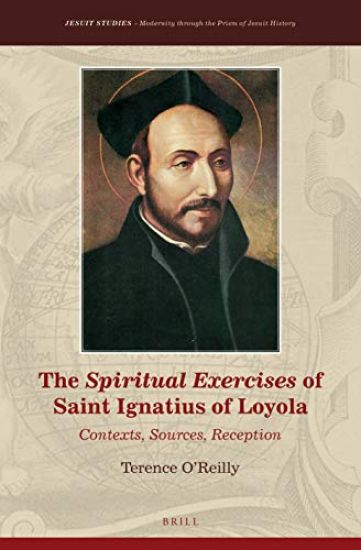
In The Spiritual Exercises of Saint Ignatius Loyola: Contexts, Sources, Reception, Terence O’Reilly examines the historical, theological and literary contexts in which the Exercises took shape. The collected essays have as their common theme the early history of the Spiritual Exercises, and the interior life of Ignatius Loyola to which they give expression. The traditional interpretation of the Exercises was shaped by writings composed in the late sixteenth century, reflecting the preoccupations of the Counter-Reformation world in which they were composed. The Exercises, however, belong, in their origins, to an earlier period, before the Council of Trent, and the full recognition of this fact, and of its implications, has confronted modern scholars with fresh questions about the sources, evolution, and reception of the work.

United Nations Peacekeeping in the Post-Cold War Era
John Terence O'Neill; Nick Rees
Routledge
2005
sidottu
This new study questions whether peacekeeping fundamentally changed between the Cold War and Post-Cold War periods. Focusing on contrasting case studies of the Congo, Cyprus, Somalia and Angola, as well as more recent operations in Sierra Leone and East Timor, it probes new evidence with clarity and rigour. The authors conclude that most peacekeeping operations - whether in the Cold War or Post-Cold War periods - were flawed due to the failure of the UN member states to agree upon achievable objectives, the precise nature of the operations and provision of the necessary resources, and unrealistic post-1989 expectations that UN peacekeeping operations could be adapted to the changed international circumstances. The study concludes by looking at the Brahimi reforms, questions whether these are realistically achievable and looks at their impact on contemporary peace operations in Sierra Leone, East Timor and elsewhere.
United Nations Peacekeeping in the Post-Cold War Era
John Terence O'Neill; Nick Rees
Routledge
2005
nidottu
This new study questions whether peacekeeping fundamentally changed between the Cold War and Post-Cold War periods. Focusing on contrasting case studies of the Congo, Cyprus, Somalia and Angola, as well as more recent operations in Sierra Leone and East Timor, it probes new evidence with clarity and rigour. The authors conclude that most peacekeeping operations - whether in the Cold War or Post-Cold War periods - were flawed due to the failure of the UN member states to agree upon achievable objectives, the precise nature of the operations and provision of the necessary resources, and unrealistic post-1989 expectations that UN peacekeeping operations could be adapted to the changed international circumstances. The study concludes by looking at the Brahimi reforms, questions whether these are realistically achievable and looks at their impact on contemporary peace operations in Sierra Leone, East Timor and elsewhere.