Kirjojen hintavertailu. Mukana 11 244 527 kirjaa ja 12 kauppaa.

Kirjahaku

Etsi kirjoja tekijän nimen, kirjan nimen tai ISBN:n perusteella.

1000 tulosta hakusanalla Theodore Bennett

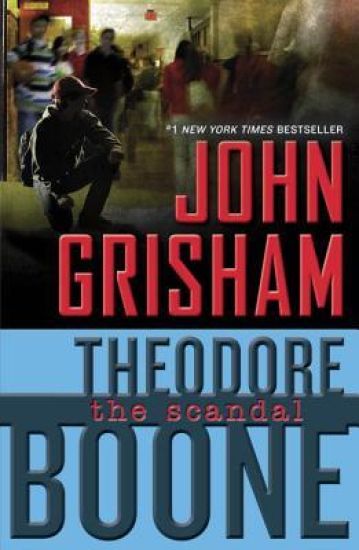
Theodore Boone: The Scandal

Theodore Boone: The Scandal

John Grisham

Penguin Young Readers Group
2017
nidottu
Theodore Boone returns in this sixth adventure from international and worldwide bestseller John Grisham Thirteen-year-old Theodore Boone knows every judge, police officer, and court clerk in Strattenburg. He has even helped bring a fugitive to justice. But even a future star lawyer like Theo has to deal with statewide standardized testing. When an anonymous tip leads the school board to investigate a suspicious increase in scores at another local middle school, Theo finds himself thrust in the middle of a cheating scandal. With insider knowledge and his future on the line, Theo must follow his keen instincts to do what's right in the newest case for clever kid lawyer Theo Boone. "Not since Nancy Drew has a nosy, crime-obsessed kid been so hard to resist."--The New York Times "Smartly written."--USA Today "Edge-of-your-seat drama, sophisticated plotting, and plenty of spunk."--Chicago Sun-Times "Classic Grisham."--The Los Angeles Times
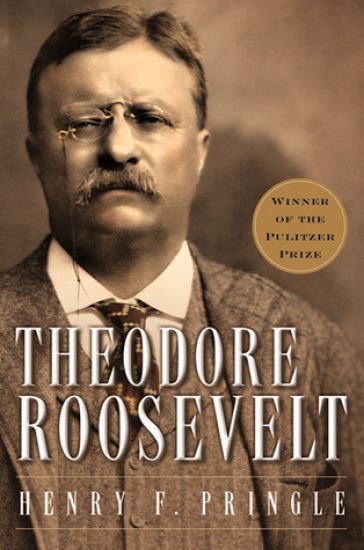
Theodore Roosevelt

Theodore Roosevelt

Henry F. Pringle

HOUGHTON MIFFLIN
2003
nidottu
Pringle's Pulitzer Prize-winning biography not only chronicles the incidents that shaped Roosevelt's career but also offers insight into the character and mind of this colorful american president. Index.
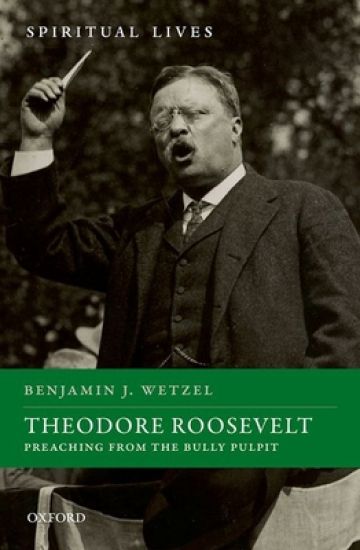
Theodore Roosevelt

Theodore Roosevelt

Benjamin J. Wetzel

Oxford University Press
2021
sidottu
Theodore Roosevelt is well-known as a rancher, hunter, naturalist, soldier, historian, explorer, and statesman. His visage is etched on Mount Rushmore--alongside George Washington, Thomas Jefferson, and Abraham Lincoln--as a symbol of his vast and consequential legacy. While Roosevelt's life has been written about from many angles, no modern book probes deeply into his engagement with religious beliefs, practices, and controversies despite his lifelong church attendance and commentary on religious issues. Theodore Roosevelt: Preaching from the Bully Pulpit traces Roosevelt's personal religious odyssey from youthful faith and pious devotion to a sincere but more detached adult faith. Benjamin J. Wetzel presents the president as a champion of the separation of church and state, a defender of religious ecumenism, and a "preacher" who used his "bully pulpit" to preach morality using the language of the King James Bible. Contextualizing Roosevelt in the American religious world of the late nineteenth and early twentieth centuries, Wetzel shows how religious groups interpreted the famous Rough Rider and how he catered to, rebuked, and interacted with various religious constituencies. Based in large part on personal correspondence and unpublished archival materials, this book offers a new interpretation of an extremely significant historical figure.
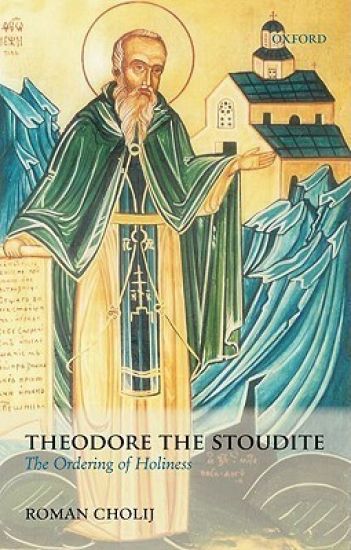
Theodore the Stoudite

Theodore the Stoudite

Roman Cholij

Oxford University Press
2002
sidottu
This is the first modern study in English of the life and thought of the ninth-century Byzantine theologian and monastic reformer, Theodore the Stoudite. Cholij provides a complete analysis of and guide to all the primary source material attributed to Theodore. If the monastic leader is considered in the context of the tradition to which he belonged, it is clear that his religious formation occurred within a widely established school of Basilian and Palestinian Christian thought. This encourages a fresh engagement with the subtleties in Theodore's behaviour towards the Byzantine religious and secular leaders of his time and provokes new conclusions concerning the religious and secular issues which involved Theodore in controversy. Cholij refutes the established view of Theodore as a breaker of the traditional Byzantine church and state relationship and provides new insights into Theodore's true understanding of the involvement of the Emperor in church affairs. In his analysis of the rites of holiness that belonged to Theodore's church, the author identifies a false tradition of sacramental mysteries in a misreading of Pseudo-Dionysios the Areopagite and so offers a radically new definition of the origins of the Orthodox sacramental tradition.
Theodore the Stoudite

Theodore the Stoudite

Roman Cholij

Oxford University Press
2009
nidottu
This is the first modern study in English of the life and thought of the ninth-century Byzantine theologian and monastic reformer, Theodore the Stoudite. Cholij provides a guide to and a complete analysis of all the primary source material attributed to Theodore. If the monastic leader is considered in the context of the tradition to which he belonged, it is clear that his religious formation occurred within a widely established school of Basilian and Palestinian Christian thought. This encourages a fresh engagement with the subtleties in Theodore's behaviour towards the Byzantine religious and secular leaders of his time and provokes new conclusions concerning the religious and secular issues which involved Theodore in controversy. Cholij refutes the established view of Theodore as a breaker of the traditional; Byzantine church and state relationship and provides new insights into Theodore's true understanding of the involvement of the Emperor in church affairs. In his analysis of the rites of holiness that belonged to Theodore's church, the author identifies a false tradition of sacramental mysteries in a misreading of Pseudo-Dionysios the Areopagite and so offers a radically new definition of the origins of the Orthodox sacramental tradition.
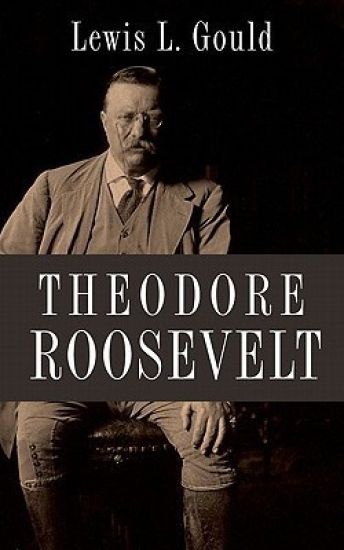
Theodore Roosevelt

Theodore Roosevelt

Lewis L. Gould

Oxford University Press Inc
2012
sidottu
Sportsman. Naturalist. Warrior. President. There are so many sides to Theodore Roosevelt that it is easy to overlook one of his most enduring contributions to American public life: the use of fame to fuel his political career. In this concisely written, enlightening book, presidential historian Lewis L. Gould goes beyond the "bully pulpit" stereotypes to reveal how Roosevelt used his celebrity to change American politics. Based on research gleaned from the personal papers of Roosevelt and his contemporaries, Theodore Roosevelt recaptures its subject's bold activism and irrepressible, larger-than-life personality. Beginning with his privileged childhood in New York City, the narrative traces his election to the New York Assembly, where he quickly rose through the ranks of the Republican Party. It is here that he first applied his shrewd ability to keep himself in the spotlight--a skill that served him well as commander of a volunteer regiment (dubbed "Roosevelt's Rough Riders") in the Spanish-American War. Gould shows how Roosevelt rode a wave of popular acclaim at the war's end, assuming the governorship of New York and serving as president from 1901 to 1909. While covering his major accomplishments as chief executive, including his successes as a trust-buster, labor mediator, and conservationist, Gould explains how fame both sustained and limited Roosevelt when he ran for president in 1912 and opposed Woodrow Wilson's policies during World War I. Theodore Roosevelt delivers the most insightful look yet at a pioneer of political theater--a man whose vigorous idealism as a champion of democracy serves as a counterpoint to the cynicism of today's political landscape. The book will coincide with the 100th anniversary of Roosevelt's third party run for the Progressive or Bull Moose Party.
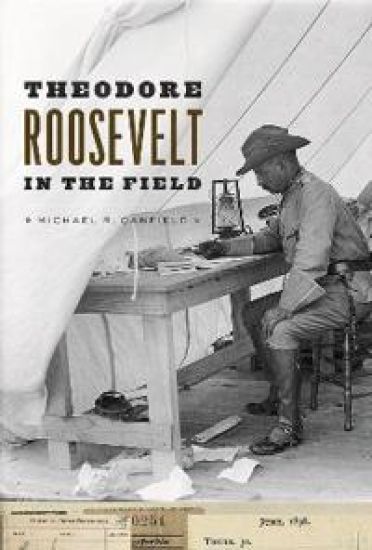
Theodore Roosevelt in the Field

Theodore Roosevelt in the Field

Michael R. Canfield

University of Chicago Press
2015
sidottu
Never has there been a president less content to sit still behind a desk than Theodore Roosevelt. When we picture him, he's on horseback or standing at a cliff's edge or dressed for safari. And Roosevelt was more than just an adventurer-he was also a naturalist and campaigner for conservation. His love of the outdoor world began at an early age and was driven by a need to not simply observe nature but to be actively involved in the outdoors-to be in the field. As Michael R. Canfield reveals in Theodore Roosevelt in the Field, throughout his life Roosevelt consistently took to the field as a naturalist, hunter, writer, soldier, and conservationist, and it is in the field where his passion for science and nature, his belief in the manly, "strenuous life," and his drive for empire all came together. Drawing extensively on Roosevelt's field notebooks, diaries, and letters, Canfield takes readers into the field on adventures alongside Roosevelt. From Roosevelt's early childhood observations of ants to his notes on ornithology as a teenager, Canfield shows how Roosevelt's quest for knowledge coincided with his interest in the outdoors. We later travel to the Badlands, after the deaths of Roosevelt's wife and mother, to understand his embrace of the rugged freedom of the ranch lifestyle and the western wilderness. Finally, Canfield takes us to Africa and South America as we consider Roosevelt's travels and writings after his presidency. Throughout, we see how the seemingly contradictory aspects of Roosevelt's biography as a hunter and a naturalist are actually complementary traits of a man eager to directly understand and experience the environment around him. As our connection to the natural world seems to be more tenuous, Theodore Roosevelt in the Field offers the chance to reinvigorate our enjoyment of nature alongside one of history's most bold and restlessly curious figures.
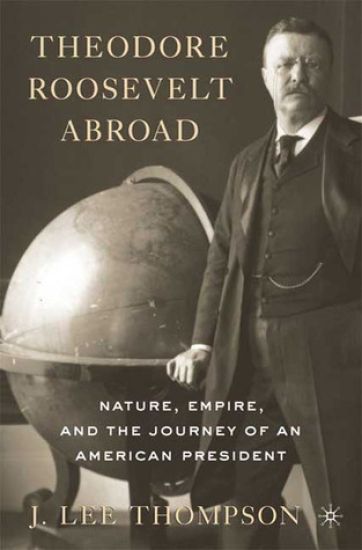
Theodore Roosevelt Abroad

Theodore Roosevelt Abroad

J. Lee Thompson

Palgrave Macmillan
2010
sidottu
In a life full of momentous episodes, Theodore Roosevelt's fifteen-month post-presidential odyssey to Africa and Europe has never been given its due place. A tale of daring adventure, international celebrity, a friendship lost, and a political legacy transformed, Theodore Roosevelt Abroad is the first full account of this important time in history.
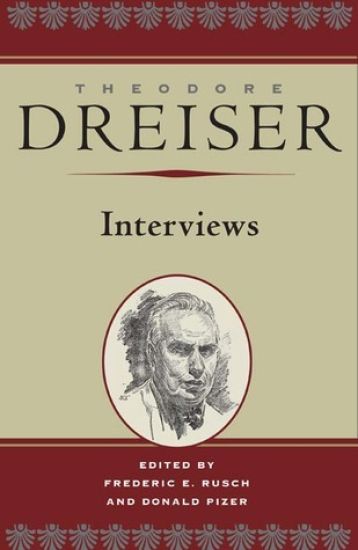
Theodore Dreiser: Interviews

Theodore Dreiser: Interviews

University of Illinois Press
2004
sidottu
Hardly shy about himself or his work, Theodore Dreiser knew the value of publicity. Over four decades he often consented to interviews, answering questions about his fiction, his politics, and even previous interviews. Throughout his life Dreiser raised a storm of protest with his realistic novels, blistered public figures and other authors with untempered criticism, scorned pieties masking brutality in law and economics, and expressed a few contradictions of his own. This volume collects for the first time more than seventy interviews. As a group, they show Dreiser dealing with an array of literary and social issues, as well as his lifelong incapacity to mince words. Dreiser is revealed in these interviews as a public figure of epic proportions.
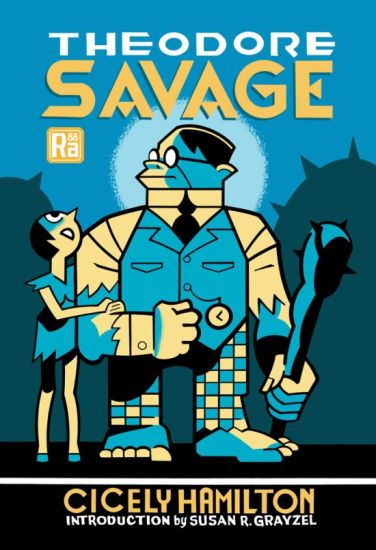
Theodore Savage

Theodore Savage

Cicely Hamilton; Susan R. Grayzel

MIT PRESS LTD
2023
nidottu
From one of the earliest feminist science fiction writers, a novel that envisions the fall of civilization—and the plight of the modern woman in a post-apocalyptic wilderness.When war breaks out in Europe, British civilization collapses overnight. The ironically named protagonist must learn to survive by his wits in a new Britain. When we first meet Savage, he is a complacent civil servant, primarily concerned with romancing his girlfriend. During the brief war, in which both sides use population displacement as a terrible strategic weapon, Savage must battle his fellow countrymen. He shacks up with an ignorant young woman in a forest hut—a kind of inverse Garden of Eden, where no one is happy. Eventually, he sets off in search of other survivors . . . only to discover a primitive society where science and technology have come to be regarded with superstitious awe and terror. A pioneering feminist, Hamilton offers a warning about the degraded state of modern women, who—being “unhandy, unresourceful, superficial”—would suffer a particularly sad fate in a postapocalyptic social order.
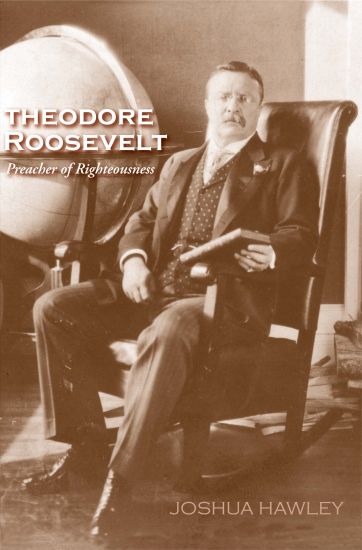
Theodore Roosevelt

Theodore Roosevelt

Joshua David Hawley; David M. Kennedy

Yale University Press
2015
pokkari
An exploration of Roosevelt’s political thought and the impact of his legacy on modern America"Hawley has pieced together an interesting interpretation of Theodore Roosevelt"—Choice Often dismissed by scholars as an opportunistic politician whose ideas lacked historical import, Theodore Roosevelt has been underestimated as a thinker. But to disdain Roosevelt’s politics is to overlook his important and lasting contributions to the shape of modern America, says the author of this compelling study of the 26th president of the United States. Senator Joshua Hawley examines Roosevelt’s political thought more deeply than ever before to arrive at a fully revised understanding of his legacy: Roosevelt galvanized a twenty-year period of national reform that permanently altered American politics and Americans’ expectations for government, social progress, and presidents.The book explores the historical context of Theodore Roosevelt’s politics, its intellectual sources, its practice, and its effect on his era and our own. Hawley finds that Roosevelt developed a coherent political science centered on the theme of righteousness, and this “warrior republicanism” was what made the progressive era possible. The debates of Roosevelt’s era were driven largely by his ideas, and from those debates emerged the grammar of our contemporary politics. Casting new light on the fertility and breadth of Roosevelt’s thought, Hawley reveals the full extent of his achievement in twentieth-century intellectual history.
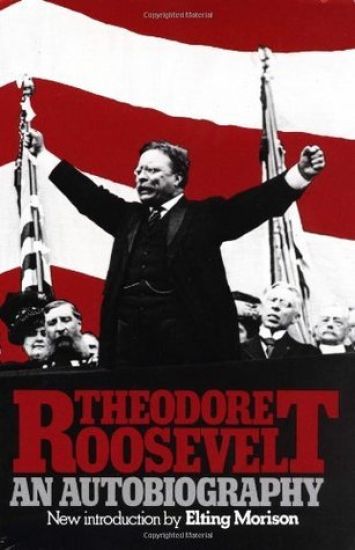
Theodore Roosevelt

Theodore Roosevelt

Theodore Roosevelt

Da Capo Press Inc
1985
pokkari
Theodore Roosevelt's writing has the same verve, panache, and energy as the life he lived. Perhaps no president in U.S. history,not even Jefferson,had so many opinions and intellectual interests, believed in so many causes, or worked so hard to translate his beliefs into action. A hard-headed idealist, an unabashed interventionist, a crusader on behalf of environmental preservation and against big business "trusts," he was also a writer of uncommon grace and passion with a gift for the memorable phrase. His autobiography, one of the two or three finest ever written by a U.S. president, abounds in exciting episodes of personal transformation and insights into the bitter politics of the day. Roosevelt was a sickly youth who steeled himself for a life of vigor, growing up surrounded by wealth in nineteenth-century Manhattan but vacationing in the West, where he rode with cowboys and learned to revere and study the natural world. His book describes his early failures in his political career and his ascent from the New York City police board to assistant secretary of the Navy where he advocated war with Spain, to his brief stint and public renown as a Rough Rider and on to the governorship of New York, vice presidency under McKinley, and finally the presidency itself. Elting Morison's new introduction analyzes what Roosevelt has included,and not included,about his many political conflicts, his role in the acquisition of the Panama Canal, and the deaths of his wife and his mother.As everywhere in his writing, the personality of T.R.,alert, voluble, forceful, compassionate,shines forth from this book, which remains a singular study of a dynamic and, in many respects, exemplary man who was also a key figure in the Age of Reform.
Theodore Roosevelt, the U.S. Navy and the Spanish-American War
In the 1890s, Assistant Secretary of the Navy Theodore Roosevelt led a campaign to modernize the navy. Paramount in Roosevelt's vision was the creation of a fleet of modern, steel-hulled warships armed with the most powerful weapons available. The future president and his intellectual soul mate, Captain Alfred Thayer Mahan, firmly believed that America's emerging global expansion would only reach its full potential through sea. power. The swift and overwhelming US victor in the Spanish-American War of 1898 vindicated the views of Theodore Roosevelt and Captain Mahan, and marked the debut on the world stage of the modern US Navy. Theodore Roosevelt, the U.S. Navy and the Spanish American War considers the impact Roosevelt had on the US navy in general and how his reforms affected the course and outcome of the Spanish-American war in particular. The nine contributors to this volume include leading historians, and prominent naval officers from the US and Spain. With essays ranging from the Roosevelt family's naval heritage to the impact of the Spanish-American War on enlisted forces in the navy, this work is a major contribution to our understanding of Theodore Roosevelt and 'his' navy.
Theodore Roosevelt and the Rhetoric of Militant Decency

Theodore Roosevelt and the Rhetoric of Militant Decency

Robert V. Friedenberg

Greenwood Press
1990
sidottu
Friedenberg brings to this study of Theodore Roosevelt a thorough grounding in the criticism of American public address. Basing his findings on his own detailed reading of Roosevelt's speeches and supplementing it with his own research in the primary collections of Roosevelt's manuscripts, Robert V. Friedenberg reveals the depth of Roosevelt's fascinating rhetorical career. Friedenberg's astute analysis of Roosevelt's use of classic rhetorical method shows how dependent the president was on the style of the classical masters as well as American predecessors such as Washington and Lincoln.This book demonstrates and analyzes the persuasive and expressive public speaking of the first great orator of this century, Theodore Roosevelt. Following a foreword by Halford R. Ryan and a preface by Friedenberg, the book provides critical analysis of Roosevelt's rhetoric of militant decency. After an overview, Friedenberg applies his analysis, which is followed by the application of militant decency rhetoric to foreign policy, responsible citizenship, and progressive reform. A series of Roosevelt's collected speeches forms the second part of the volume and provides concrete examples of Roosevelt's rhetorical style. A speech chronology and a bibliography close the work. As we Americans look to the twenty-first century, we might do well to look for guidance and inspiration in the writings and speeches of the man who led us into the twentieth century, Theodore Roosevelt.
Theodore M. Hesburgh

Theodore M. Hesburgh

Charlott Ames

Greenwood Press
1989
sidottu
Priest, educator, and public servant, Theodore M. Hesburgh, C.S.C., President Emeritus of the University of Notre Dame, is internationally recognized as one of the most influential leaders of the American Catholic Church not only because of his commitment to Catholic education but also because of his passion for ensuring the protection and preservation of human rights everywhere. The present volume consists of a biography of Father Hesburgh; a detailed and comprehensive description of archival and manuscript materials held in The Archives of the University of Notre Dame, the official repository of Father Hesburgh's papers, prepared by William Kevin Cawley; and a bibliography of major published and unpublished works by Father Hesburgh, as well as selected works about him. Making a selection from the wealth of material contained in The Archives and other sources, compiler Charlotte A. Ames has created an invaluable bridge to Father Hesburgh's life and work. Much of this work was written as a response to the various challenges posed by national and global crises: the civil rights movement, starving millions worldwide, refugees in need of resettlement, the specter of nuclear war, the need to find peaceful uses for nuclear power, the most productive use of science and technology for Third World development, and the need for quality and equality in higher education.The bibliographical section includes works issued from 1940 through February 1989. Published works include books, articles and essays, forewords, prefaces and introductions, newspaper articles, interviews, selected U.S. government documents, and non-print media. Among the unpublished works are addresses, papers, speeches, and diaries. Works about Father Hesburgh consist not only of books, articles, and newspaper articles, both biographical and reportorial, but also of theses and dissertations relating to him. The volume is arranged to provide easy access, with citations for selected works to be found in three distinct locations at the University of Notre Dame. Three appendices cite awards and honors, honorary degrees, and current and past board and committee memberships held by Father Hesburgh. A useful resource for students and scholars of Education, American Studies, and American Religious History.
Theodore Parker

Theodore Parker

David B. Chesebrough

Greenwood Press
1999
sidottu
Theodore Parker, a great orator of the mid-19th century, was a Unitarian clergyman who directed much of his oratory towards ecclesiastical and social reform. Parker challenged slavery and other social ills. As a volume in the Great American Orators series, the focus is on Parker's oratory and its effect on theology and the social structures of the mid-19th century. Biographical information pertains to those aspects of Parker's life that influenced and shaped his elocution and ideas. Parker's rhetoric and rhetorical techniques are examined. Three of Parker's important speeches are included, each with an introduction that places it in its proper context.This study will appeal to students of rhetoric, theology, and mid-nineteenth-century American religious history. The book is divided into two sections. The first concentrates on Parker's life, his role as an abolitionist, social reformer, and public order. Part Two scrutinizes three of Parker's most famous discourses. The author establishes Parker's place among mid-19th-century preachers.
Theodore Gray's Completely Mad Science

Theodore Gray's Completely Mad Science

Theodore Gray

Black Dog Leventhal Publishers Inc
2016
sidottu
Bestselling author Theodore Gray has spent more than a decade dreaming up, executing, photographing, and writing about extreme scientific experiments, which he then published between 2009 and 2014 in his monthly Popular Science column "Gray Matter." Previously published in book form by Black Dog in two separate volumes (Mad Science and Mad Science 2), these experiments, plus 5 more all-new ones, will now be combined in one complete book.Packaged in a smaller, chunkier format Completely Mad Science is 432 pages of dazzling chemical demonstrations, illustrated in spectacular full-color photographs. Some of the completely mad experiments in the book include: Casting a model fish out of mercury (demonstrating how this element behaves very differently depending upon temperature); the famous Flaming Bacon Lance that can cut through steel (demonstrating the amount of energy contained in fatty foods like bacon); creating nylon thread out of pure liquid by combining molecules of hexamethylenediamine and sebacoyl chloride; making homemade ice cream using a fire extinguisher and a pillow case; powering your iPhone using 150 pennies and an apple, and many, many more. It's the ultimate collection for Gray's millions of fans.
Selected Speeches and Writings of Theodore Roosevelt

Selected Speeches and Writings of Theodore Roosevelt

Theodore Roosevelt

Random House Inc
2014
pokkari
Theodore Roosevelt (1858-1919) was America's most published president with an incredible output of writing including forty books, over a thousand articles, and countless speeches and letters. Collected here in one volume are examples of Roosevelt's voluminous writings over a dazzling array of topics. Organized by general categories, readers can sample writings on subjects as varied as the environment, the danger of professional sports; the famous charge of San Juan Hill, and Roosevelt's passion for literary criticism. From addresses and presidential messages on public policy and national ideals, to biography, to travel writing, to ecological concerns, to writings on hunting, to international politics and history, Roosevelt's talents and achievements as a writer went far beyond what we now expect of our public leaders. Roosevelt's legacy as one of the first progressive American politicians, his concerns about environmentalism, his internationalism, and his unflinching belief in the American character and destiny uncannily speak to the issues of our own day and can be found in the pages of this representative and judicious anthology of his work.
Theodore Gericault, Painting Black Bodies
This book examines Théodore Géricault’s images of black men, women and children who suffered slavery’s trans-Atlantic passage in the late eighteenth and early nineteenth centuries, including his 1819 painting The Raft of the Medusa. The book focuses on Géricault’s depiction of black people, his approach towards slavery, and the voices that advanced or denigrated them. By turning to documents, essays and critiques, both before and after Waterloo (1815), and, most importantly, Géricault’s own oeuvre, this study explores the fetters of slavery that Gericault challenged—alongside a growing number of abolitionists—overtly or covertly. This book will be of interest to scholars in art history, race and ethnic studies and students of modernism.