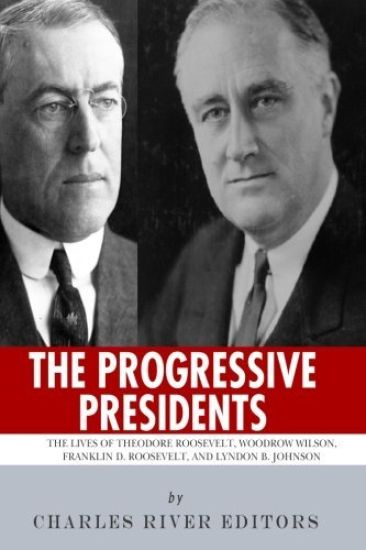
*Weaves the lives of the 4 progressive presidents into one entertaining and educational narrative. *Includes pictures of the presidents and important people, places, and events in their lives. *Includes some of the presidents' most colorful quotes. *Includes a Bibliography for further reading. When President McKinley was assassinated in 1901, young Vice President Theodore Roosevelt was thrust into the presidency, one that would earn him a place on Mount Rushmore, Roosevelt's "Square Deal" domestic policies favored average citizens while busting trusts and monopolies. Roosevelt also promoted conservation as an environmental stance, while his "speak softly and carry a big stick" foreign policy is still an oft used phrase today. Roosevelt even earned a Nobel Prize during his presidency. By the time Roosevelt died in 1919, he was an American icon. As one of the most influential men of the 20th century, there is no shortage of adjectives to use when describing Woodrow Wilson's two terms as president of the United States. Wilson was a pioneer of the Progressive movement both before and during his presidency, becoming a populist champion a generation before Franklin Roosevelt's New Deal. He ran for reelection by touting his neutrality during World War I, only to lead his nation into the war and become the architect of a world body that would lead to greater inter-connection among nations. Today Wilson is best remembered for his Fourteen Points, one of the most forceful arguments for an idealistic foreign policy in American history, and his fight for the League of Nations, which set the model for today's United Nations. Franklin Delano Roosevelt might be America's greatest 20th century president, but there's no question that he was the most unique. A well-connected relative of Theodore Roosevelt, FDR was groomed for greatness until he was struck down by what was widely believed to be polio at the time. Nevertheless, he persevered, rising through New York politics to reach the White House just as the country faced its greatest challenge since the Civil War, beginning his presidency with one of the most iconic lines ever spoken during an inaugural address. For over a decade, President Roosevelt threw everything he had at the Great Depression, and then threw everything the country had at the Axis powers during World War II. Ultimately, he succumbed to illness in the middle of his fourth term, just before the Allies won the war. Kennedy has been nostalgically and fondly remembered for his youth, vigor and sense of unfinished potential, but it would be President Johnson who would bring much of the agenda to fruition. To the surprise of many, the Southern Democrat relied on his wealth of Senate experience and dogged determination to help push through an ambitious and progressive social agenda that formed the backbone of modern American society. Known as the Great Society, President Johnson's legislation included the landmark Civil Rights Act of 1964, as well as the establishment of Medicare, Medicaid, environmental protection, and the "War on Poverty." Everything from the National Endowment for the Arts to the Environmental Protection Agency has its roots in Johnson's presidency. Had Johnson's presidency included just his domestic agenda, he would have unquestionably been one of America's greatest presidents. Unfortunately, as he was engineering a new social contract at home, he was ramping up American military participation in a tiny country thousands of miles away in Southeast Asia. The Progressive Presidents chronicles the lives of each president and weaves their stories and accomplishments into one entertaining narrative, examining their records and analyzing their legacies. Along with pictures of important people, places, and events, you will learn about America's most important progressive presidents like you never have before.
*Weaves the lives of the 4 progressive presidents into one entertaining and educational narrative. *Includes pictures of the presidents and important people, places, and events in their lives. *Includes some of the presidents' most colorful quotes. *Includes a Bibliography for further reading. When President McKinley was assassinated in 1901, young Vice President Theodore Roosevelt was thrust into the presidency, one that would earn him a place on Mount Rushmore, Roosevelt's "Square Deal" domestic policies favored average citizens while busting trusts and monopolies. Roosevelt also promoted conservation as an environmental stance, while his "speak softly and carry a big stick" foreign policy is still an oft used phrase today. Roosevelt even earned a Nobel Prize during his presidency. By the time Roosevelt died in 1919, he was an American icon. As one of the most influential men of the 20th century, there is no shortage of adjectives to use when describing Woodrow Wilson's two terms as president of the United States. Wilson was a pioneer of the Progressive movement both before and during his presidency, becoming a populist champion a generation before Franklin Roosevelt's New Deal. He ran for reelection by touting his neutrality during World War I, only to lead his nation into the war and become the architect of a world body that would lead to greater inter-connection among nations. Today Wilson is best remembered for his Fourteen Points, one of the most forceful arguments for an idealistic foreign policy in American history, and his fight for the League of Nations, which set the model for today's United Nations. Franklin Delano Roosevelt might be America's greatest 20th century president, but there's no question that he was the most unique. A well-connected relative of Theodore Roosevelt, FDR was groomed for greatness until he was struck down by what was widely believed to be polio at the time. Nevertheless, he persevered, rising through New York politics to reach the White House just as the country faced its greatest challenge since the Civil War, beginning his presidency with one of the most iconic lines ever spoken during an inaugural address. For over a decade, President Roosevelt threw everything he had at the Great Depression, and then threw everything the country had at the Axis powers during World War II. Ultimately, he succumbed to illness in the middle of his fourth term, just before the Allies won the war. Kennedy has been nostalgically and fondly remembered for his youth, vigor and sense of unfinished potential, but it would be President Johnson who would bring much of the agenda to fruition. To the surprise of many, the Southern Democrat relied on his wealth of Senate experience and dogged determination to help push through an ambitious and progressive social agenda that formed the backbone of modern American society. Known as the Great Society, President Johnson's legislation included the landmark Civil Rights Act of 1964, as well as the establishment of Medicare, Medicaid, environmental protection, and the "War on Poverty." Everything from the National Endowment for the Arts to the Environmental Protection Agency has its roots in Johnson's presidency. Had Johnson's presidency included just his domestic agenda, he would have unquestionably been one of America's greatest presidents. Unfortunately, as he was engineering a new social contract at home, he was ramping up American military participation in a tiny country thousands of miles away in Southeast Asia. The Progressive Presidents chronicles the lives of each president and weaves their stories and accomplishments into one entertaining narrative, examining their records and analyzing their legacies. Along with pictures of important people, places, and events, you will learn about America's most important progressive presidents like you never have before.
This book offers a quick but comprehensive look at the most influential presidents in American history, from their origins to the impact they had before, during, and after their presidencies.
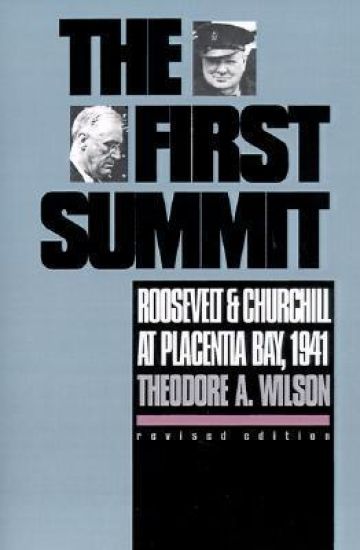
Four months before Pearl Harbour, Winston Churchill and Franklin D. Roosevelt met in secret aboard a ship in a secluded Newfoundland harbour. This was the first summit conference of World War II. Although it would soon be overshadowed by the events to come, the 1941 summit at Placentia Bay produced dramatic results. It confirmed the policy of material aid for Britain and sanctioned the ""Atlantic Charter"". It also laid the groundwork for the three-way alliance that would bring about the destruction of the Axis powers. In this revised edition of his study, historian Theodore Wilson has expanded and updated the narrative. Drawing upon primary sources made available since the first edition he has added new material. Wilson analyzes the events of August 1941 and concludes that President Roosevelt was not totally in control. As the country lurched from crisis to crisis, bureaucratic politics and organizational dynamics were far more influential than FDR in determining the evolution of US strategy, US policy toward Japan, Anglo-American economic relations, and the efforts to mobilize for war. Wilson also recaptures the drama and colour of the shipboard discussions - from Roosevelt's bizarre working methods to Churchill's choice of entertainment in the evenings.
This book thoroughly covers each subfield of respiratory mechanics: pulmonary mechanics, the respiratory pump, and flow. It presents the current understanding of the field and serves as a guide to the scientific literature from the golden age of respiratory mechanics, 1960 - 2010. Specific topics covered include the contributions of surface tension and tissue forces to lung recoil, the gravitational deformation of the lung, and the interdependence forces that act on pulmonary airways and blood vessels. The geometry and kinematics of the ribs is also covered in detail, as well as the respiratory action of the external and internal intercostal muscles, the mechanics of the diaphragm, and the quantitative compartmental models of the chest wall is also described. Additionally, flow in the airways is covered thoroughly, including the wave-speed and viscous expiratory flow-limiting mechanisms; convection, diffusion and the stationary front; and the distribution of ventilation. This is an ideal book for respiratory physiologists, pneumologists, exercise physiologists, and critical care physicians.This book also: Maximizes reader insights into current and landmark respiratory mechanics researchConcisely yet thoroughly explores the current research on pulmonary mechanics, the respiratory pump, and flowServes as an invaluable guide for those entering the field, or those seeking to expand their knowledge of it
Title: The Ruined Cities of Mashonaland: being a record of excavation and exploration in 1891 ... With a chapter on the orientation and mensuration of the temples by R. M. W. Swan. With plates.]Publisher: British Library, Historical Print EditionsThe British Library is the national library of the United Kingdom. It is one of the world's largest research libraries holding over 150 million items in all known languages and formats: books, journals, newspapers, sound recordings, patents, maps, stamps, prints and much more. Its collections include around 14 million books, along with substantial additional collections of manuscripts and historical items dating back as far as 300 BC.The GENERAL HISTORICAL collection includes books from the British Library digitised by Microsoft. This varied collection includes material that gives readers a 19th century view of the world. Topics include health, education, economics, agriculture, environment, technology, culture, politics, labour and industry, mining, penal policy, and social order. ++++The below data was compiled from various identification fields in the bibliographic record of this title. This data is provided as an additional tool in helping to insure edition identification: ++++ British Library Bent, James Theodore; Swan, Robert McNavi Wilson; 1892. xi. 376 p.; 8 . 010096.ff.22.
Title: The Ruined Cities of Mashonaland: being a record of excavation and exploration in 1891 ... With a chapter on the orientation and mensuration of the temples by R. M. W. Swan. With plates.]Publisher: British Library, Historical Print EditionsThe British Library is the national library of the United Kingdom. It is one of the world's largest research libraries holding over 150 million items in all known languages and formats: books, journals, newspapers, sound recordings, patents, maps, stamps, prints and much more. Its collections include around 14 million books, along with substantial additional collections of manuscripts and historical items dating back as far as 300 BC.The GEOGRAPHY & TOPOGRAPHY collection includes books from the British Library digitised by Microsoft. Offering some insights into the study and mapping of the natural world, this collection includes texts on Babylon, the geographies of China, and the medieval Islamic world. Also included are regional geographies and volumes on environmental determinism, topographical analyses of England, China, ancient Jerusalem, and significant tracts of North America. ++++The below data was compiled from various identification fields in the bibliographic record of this title. This data is provided as an additional tool in helping to insure edition identification: ++++ British Library Bent, James Theodore; Swan, Robert McNavi Wilson; 1893. xvii. 427 p.; 8 . 010096.g.18.
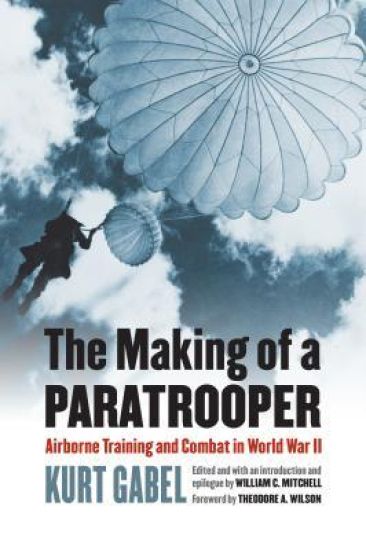
The memoir of paratrooper Kurt Gabel—a German Jew who emigrated to the US in 1938, joined the 513th Regiment of the 17th Airborne Division, and fought against his former countrymen in the Battle of the Bulge.Gabel conveys with rare immediacy anin-depth look at the training of a paratrooper, the dangers of combat, and his transformation from romantic idealist to warrior. He vividly recounts the fire fights and such episodes as narrow escapes, separation from his battalion and his rescue by another, and the interrogation of prisoners. He tells the full story of his desperate hours on “Dead Man’s Ridge” near Bastogne.
Communicating the excitement and importance of criminal justice research, this practical and comprehensive book shows students how to perform and understand statistical analyses, while helping them recognize the connection between statistical analyses used in everyday life and their importance to criminology and criminal justice. This updated Fifth Edition is packed with real-world case studies and contemporary examples utilizing the most current crime data and empirical research available. Each chapter presents a particular statistical method in the context of a substantive research story.