

Kirjahaku
Etsi kirjoja tekijän nimen, kirjan nimen tai ISBN:n perusteella.
1000 tulosta hakusanalla Thomas C

The ultimate gift for fans of Thomas the Tank Engine! This elegant boxset brings together all 26 books, in hardback, from the original Railway Series. A nostalgic offering to share between generations and a real collector's item that makes a delightful present for new babies who are sure to grow up to be firm Thomas fans. Children aged 3 and up will love beloved characters such as Percy, James, Gordon, and Toby who live on The Fat Controller’s railway. Thomas has been teaching children lessons about life and friendship for over 75 years. He ranks alongside other beloved characters such as Paddington Bear, Winnie-the-Pooh and Peter Rabbit as an essential part of our literary heritage. It all began as a story made up by the Reverand W. Awdry to entertain his son when he had measles. Now millions of people across the world have grown up with the tales of Sodor Island, enchanted by the adventures of Thomas and his friends, Percy, Gordon, and Toby, and all the other engines that work on the Fat Controller’s railway. Have you met them all?

Thomas' Concise Telecom and Networking Dictionary
Thomas Thomas
McGraw-Hill Professional
2000
nidottu
This reference for engineers involved in networking and communications is arranged alphabetically to cover major definitions including UNIX, LINUX, Novell, Microsoft and Solaris, all flavours of LAN and WAN, xDSL, voice over IP VPNs and Network Security.

For three-semester or four-quarter courses in Calculus for students majoring in mathematics, engineering, or science Clarity and precision Thomas' Calculus helps students reach the level of mathematical proficiency and maturity you require, but with support for students who need it through its balance of clear and intuitive explanations, current applications, and generalized concepts. In the 14th Edition, new co-author Christopher Heil (Georgia Institute of Technology) partners with author Joel Hass to preserve what is best about Thomas' time-tested text while reconsidering every word and every piece of art with today's students in mind. The result is a text that goes beyond memorizing formulas and routine procedures to help students generalize key concepts and develop deeper understanding. Also available with MyLab Math MyLab™ Math is an online homework, tutorial, and assessment program designed to work with this text to engage students and improve results. Within its structured environment, students practice what they learn, test their understanding, and pursue a personalized study plan that helps them absorb course material and understand difficult concepts. A full suite of Interactive Figures have been added to the accompanying MyLab Math course to further support teaching and learning. Enhanced Sample Assignments include just-in-time prerequisite review, help keep skills fresh with distributed practice of key concepts, and provide opportunities to work exercises without learning aids to help students develop confidence in their ability to solve problems independently. Note: You are purchasing a standalone product; MyLab does not come packaged with this content. Students, if interested in purchasing this title with MyLab, ask your instructor for the correct package ISBN and Course ID. Instructors, contact your Pearson representative for more information. If you would like to purchase both the physical text and MyLab, search for: 0134768485 / 9780134768489 Thomas' Calculus plus MyLab Math with Pearson eText -- Title-Specific Access Card Package, 14/e Package consists of: 0134438981 / 9780134438986 Thomas' Calculus0134764552 / 9780134764559 MyLab Math with Pearson eText -- Standalone Access Card -- Thomas' Calculus

For the single-variable component of three-semester or four-quarter courses in Calculus for students majoring in mathematics, engineering, or science Clarity and precision Thomas' Calculus, Single Variable helps students reach the level of mathematical proficiency and maturity you require, but with support for students who need it through its balance of clear and intuitive explanations, current applications, and generalized concepts. In the 14th Edition, new co-author Christopher Heil (Georgia Institute of Technology) partners with author Joel Hass to preserve what is best about Thomas' time-tested text while reconsidering every word and every piece of art with today's students in mind. The result is a text that goes beyond memorizing formulas and routine procedures to help students generalize key concepts and develop deeper understanding. Also available with MyLab Math MyLab™ Math is an online homework, tutorial, and assessment program designed to work with this text to engage students and improve results. Within its structured environment, students practice what they learn, test their understanding, and pursue a personalized study plan that helps them absorb course material and understand difficult concepts. A full suite of Interactive Figures have been added to the accompanying MyLab Math course to further support teaching and learning. Enhanced Sample Assignments include just-in-time prerequisite review, help keep skills fresh with distributed practice of key concepts, and provide opportunities to work exercises without learning aids to help students develop confidence in their ability to solve problems independently. Note: You are purchasing a standalone product; MyLab Math does not come packaged with this content. Students, if interested in purchasing this title with MyLab Math, ask your instructor for the correct package ISBN and Course ID. Instructors, contact your Pearson representative for more information. If you would like to purchase both the physical text and MyLab Math, search for: 0134768523 / 9780134768526 Thomas' Calculus, Single Variable plus MyLab Math with Pearson eText -- Title-Specific Access Card package 14/e Package consists of: 0134439244 / 9780134439242 Thomas' Calculus, Single Variable 0134764552 / 9780134764559 MyLab Math with Pearson eText - Standalone Access Card - Thomas's Calculus
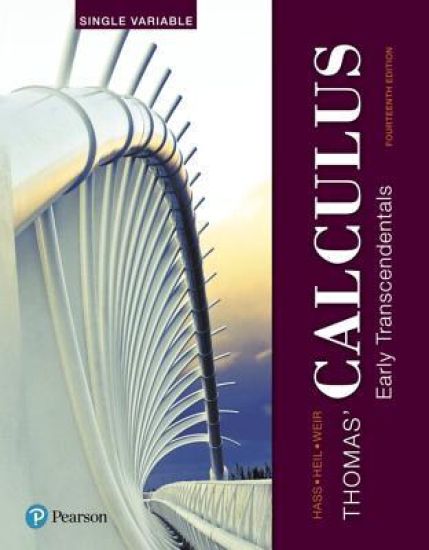
For the single-variable component of three-semester or four-quarter courses in Calculus for students majoring in mathematics, engineering, or science Clarity and precision Thomas' Calculus: Early Transcendentals, Single Variable helps students reach the level of mathematical proficiency and maturity you require, but with support for students who need it through its balance of clear and intuitive explanations, current applications, and generalized concepts. In the 14th Edition, new co-author Christopher Heil (Georgia Institute of Technology) partners with author Joel Hass to preserve what is best about Thomas' time-tested text while reconsidering every word and every piece of art with today's students in mind. The result is a text that goes beyond memorizing formulas and routine procedures to help students generalize key concepts and develop deeper understanding. Also available with MyLab Math MyLab™ Math is an online homework, tutorial, and assessment program designed to work with this text to engage students and improve results. Within its structured environment, students practice what they learn, test their understanding, and pursue a personalized study plan that helps them absorb course material and understand difficult concepts. A full suite of Interactive Figures have been added to the accompanying MyLab Math course to further support teaching and learning. Enhanced Sample Assignments include just-in-time prerequisite review, help keep skills fresh with distributed practice of key concepts, and provide opportunities to work exercises without learning aids to help students develop confidence in their ability to solve problems independently. Note: You are purchasing a standalone product; MyLab does not come packaged with this content. Students, if interested in purchasing this title with MyLab, ask your instructor for the correct package ISBN and Course ID. Instructors, contact your Pearson representative for more information. If you would like to purchase both the physical text and MyLab, search for: 0134768515 / 9780134768519 Thomas' Calculus: Early Transcendentals, Single Variable plus MyLab Math with Pearson eText -- Title-Specific Access Card Package, 14/e Package consists of: 0134439414 / 9780134439419 Thomas' Calculus: Early Transcendentals, Single Variable0134764528 / 9780134764528 MyLab Math plus Pearson eText -- Standalone Access Card -- for Thomas' Calculus: Early Transcendentals
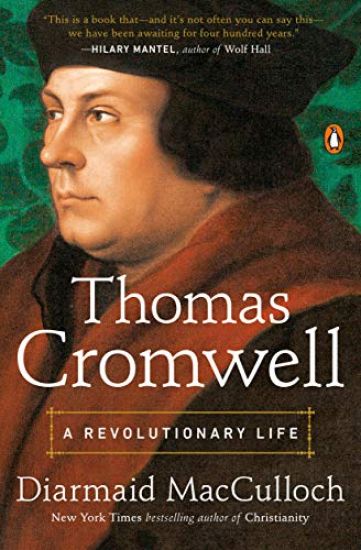
The long-awaited biography of the genius who masterminded Henry VIII's bloody revolution in the English government, which reveals at last Cromwell's role in the downfall of Anne Boleyn "This a book that - and it's not often you can say this - we have been awaiting for four hundred years." --Hilary Mantel, author of Wolf Hall Since the sixteenth century we have been fascinated by Henry VIII and the man who stood beside him, guiding him, enriching him, and enduring the king's insatiable appetites and violent outbursts until Henry ordered his beheading in July 1540. After a decade of sleuthing in the royal archives, Diarmaid MacCulloch has emerged with a tantalizing new understanding of Henry's mercurial chief minister, the inscrutable and utterly compelling Thomas Cromwell. History has not been kind to the son of a Putney brewer who became the architect of England's split with Rome. Where past biographies portrayed him as a scheming operator with blood on his hands, Hilary Mantel reimagined him as a far more sympathetic figure buffered by the whims of his master. So which was he--the villain of history or the victim of her creation? MacCulloch sifted through letters and court records for answers and found Cromwell's fingerprints on some of the most transformative decisions of Henry's turbulent reign. But he also found Cromwell the man, an administrative genius, rescuing him from myth and slander. The real Cromwell was a deeply loving father who took his biggest risks to secure the future of his son, Gregory. He was also a man of faith and a quiet revolutionary. In the end, he could not appease or control the man whose humors were so violent and unpredictable. But he made his mark on England, setting her on the path to religious awakening and indelibly transforming the system of government of the English-speaking world.
Thomas Chalmers and the Godly Commonwealth in Scotland
S. J. Brown
Oxford University Press
1983
sidottu
Thomas Chalmers and the Godly Commonwealth in Scotland

A scholarly edition of poems by Thomas Carew. The edition presents an authoritative text, together with an introduction, commentary notes, and scholarly apparatus.
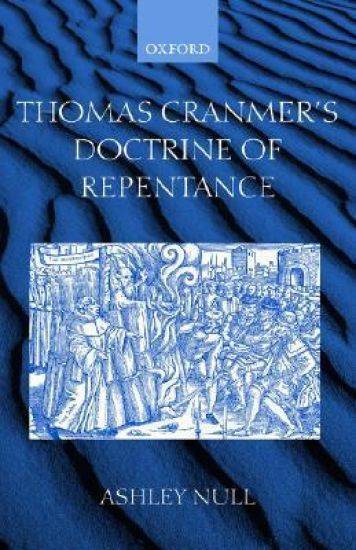
Self-serving lacky, self-deceiving puppet, Swiss Protestant partisan, or sensible Erasmian humanist: which, if any, was Thomas Cranmer? For centuries historians have offered often bitterly contradictory answers. Although Cranmer was a key participant in the changes to English life brought about by the Reformation, his reticent nature and lack of extensive personal writings have left a vacuum that in the past has too often been filled by scholarly prejudice or presumption. For the first time, however, this book examines in-depth little used manuscript sources to reconstruct Cranmer's theological development on the crucial Protestant doctrine of justification. The author explores Cranmer's cultural heritage, why he would have been attracted to Luther's thought, and then provides convincing evidence for the Reformed Protestant Augustinianism which Cranmer enshrined in the formularies of the Church of England. For Cranmer the glory of God was his love for the unworthy; the heart of theology was proclaiming this truth through word and sacrament. Hence, the focus of both was on the life of on-going repentance, remembering God's gracious love inspired grateful human love.

Thomas Carlyle: The French Revolution
Oxford University Press
2020
muu
This is the first time that Thomas Carlyle's remarkable The French Revolution: A History has been published in a comprehensive scholarly form. The edition features an abundance of new critical features, including a critical text that presents the edition much as it appeared in the first edition of 1837, but with a detailed record of the emendations that Carlyle made in subsequent versions during his lifetime. These volumes also contain a variety of scholarly aids--literary, textual, historical, and photographic--to render The French Revolution more approachable and readable to twenty-first century readers. The edition takes seriously Carlyle's claim to have produced a history of the Revolution that is rooted in his primary French sources. The extensive annotations vividly testify to his deep engagement in a wide array of histories, pamphlets, memoirs, and biographies. The notes not only demonstrate his complex method of history, but they also shed fresh light on his artistry and his rich use of language. For the first time, readers will be provided with numerous samples of engravings that Carlyle used from Chamfort's Tableaux historiques and other sources to visualize the 'Flame Drama,' as it was conceived by revolutionary artists and printers. The appendices will also include an annotated version of Carlyle's essay, 'On the Sinking of the Vengeur' (1839), in which he offers a detailed response to controversy surrounding the events that occurred during the naval battle between France and Britain on 'the Glorious First of June,' 1794; an image and transcription of an unpublished MS holograph excerpt from The French Revolution located in the Harry Ransom Center, Texas; and a copy of a corrected proof of 'The Feast of Pikes' held in the Forster Collection of the National Art Library, Victoria and Albert Museum.
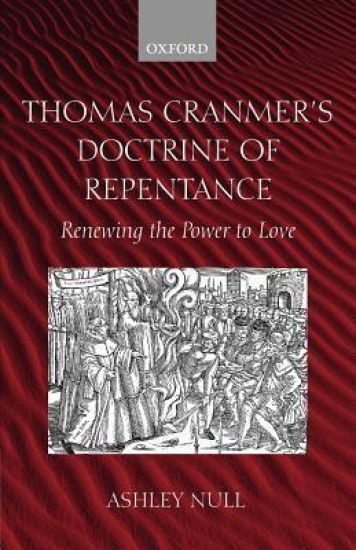
Self-serving lackey, self-deceiving puppet, Swiss Protestant partisan, or sensible Erasmian humanist: which, if any, was Thomas Cranmer? For centuries historians have offered often bitterly contradictory answers. Although Cranmer was a key participant in the changes to English life brought about by the Reformation, his reticent nature and lack of extensive personal writings have left a vacuum that in the past has too often been filled by scholarly prejudice or presumption. For the first time, however, this book examines in-depth little used manuscript sources to reconstruct Cranmer's theological development on the crucial Protestant doctrine of justification. The author explores Cranmer's cultural heritage, why he would have been attracted to Luther's thought, and then provides convincing evidence for the Reformed Protestant Augustinianism which Cranmer enshrined in the formularies of the Church of England. For Cranmer the glory of God was his love for the unworthy; the heart of theology was proclaiming this truth through word and sacrament. Hence, the focus of both was on the life of on-going repentance, remembering God's gracious love inspired grateful human love.
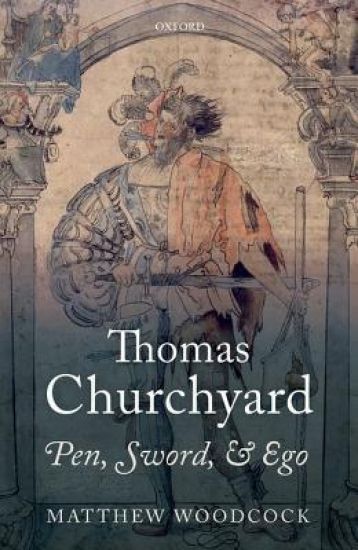
Soldier, courtier, author, entertainer, and amateur spy, Thomas Churchyard (c.1529-1604) saw action in most of the principal Tudor theatres of war, was a servant to five monarchs, and had a literary career spanning over half a century during which time he produced over fifty different works in a variety of forms and genres. Churchyard's struggles to subsist as an author and soldier provides an unrivalled opportunity to examine the self-promotional strategies employed by an individual who attempts to make a living from both writing and fighting, and who experiments throughout his life with ways in which the arts of the pen and sword may be reconciled and aligned. Drawing on extensive archival and literary sources, Matthew Woodcock reconstructs the extraordinary life of a figure well-known yet long neglected in early modern literary studies. In the first ever book-length biography of Churchyard, Woodcock reveals the author to be a resourceful and innovative writer whose long literary career plays an important part in the history of professional authorship in sixteenth-century England. This book also situates Churchyard alongside contemporary soldier-authors such as Henry Howard, Earl of Surrey, George Gascoigne, and Sir Philip Sidney, and it makes a significant contribution to our understanding of the relationship between literature and the military in the early modern period. Churchyard's writings drew heavily upon his own experiences at court and in the wars and the author never tired of drawing attention to the struggles he endured throughout his life. Consequently, this study addresses the wider methodological question of how we should construct the biography of an individual who was consistently preoccupied with telling his own story.
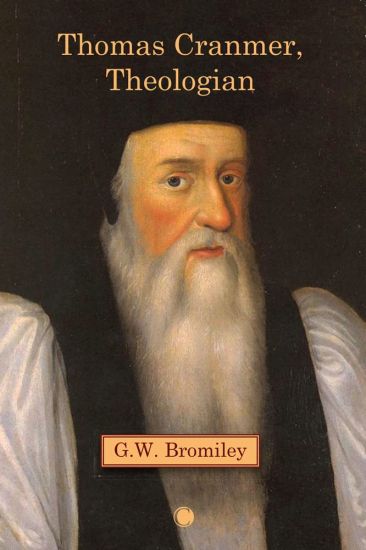
In his important evaluation of the theological leader of the English Reformation, G.W. Bromiley charts Cranmer's doctrinal views, scriptural interpretation and liturgical composition. His nuanced position on various controversial issues of the day, not least baptism, is articulated with clarity and care, and his ecumenical sensitivity is foregrounded. While arguably more adept as a scholar than as a creative theologian in his own right, Cranmer's writing nevertheless formed the cornerstone of future Anglican theology. Through his Articles of Religion (42, later reduced to 39) and the Book of Common Prayer, he set the parameters within which the Church of England was to operate. Perhaps most significantly, as Bromiley shows, his extensive citation of patristic sources established a precedent for his successors that continues today. Written by one of the great ecclesiastical historians of the twentieth century, Thomas Cranmer, Theologian is the essential starting point for understanding Cranmer's influence and legacy in the Anglican church.
In his important evaluation of the theological leader of the English Reformation, G.W. Bromiley charts Cranmer's doctrinal views, scriptural interpretation and liturgical composition. His nuanced position on various controversial issues of the day, not least baptism, is articulated with clarity and care, and his ecumenical sensitivity is foregrounded. While arguably more adept as a scholar than as a creative theologian in his own right, Cranmer's writing nevertheless formed the cornerstone of future Anglican theology. Through his Articles of Religion (42, later reduced to 39) and the Book of Common Prayer, he set the parameters within which the Church of England was to operate. Perhaps most significantly, as Bromiley shows, his extensive citation of patristic sources established a precedent for his successors that continues today. Written by one of the great ecclesiastical historians of the twentieth century, Thomas Cranmer, Theologian is the essential starting point for understanding Cranmer's influence and legacy in the Anglican church.


A SUNDAY TIMES, THE TIMES, DAILY TELEGRAPH, SPECTATOR, FINANCIAL TIMES, GUARDIAN, BBC HISTORY BOOK OF THE YEAR'This is the biography we have been awaiting for 400 years' Hilary Mantel'A masterpiece' Dan Jones, Sunday TimesThomas Cromwell is one of the most famous - or notorious - figures in English history. Born in obscurity in Putney, he became a fixer for Cardinal Wolsey in the 1520s. After Wolsey's fall, Henry VIII promoted him to a series of ever greater offices, and by the end of the 1530s he was effectively running the country for the King. That decade was one of the most momentous in English history: it saw a religious break with the Pope, unprecedented use of parliament, the dissolution of all monasteries. Cromwell was central to all this, but establishing his role with precision, at a distance of nearly five centuries and after the destruction of many of his papers at his own fall, has been notoriously difficult.Diarmaid MacCulloch's biography is much the most complete and persuasive life ever written of this elusive figure, a masterclass in historical detective work, making connections not previously seen. It overturns many received interpretations, for example that Cromwell was a cynical, 'secular' politician without deep-felt religious commitment, or that he and Anne Boleyn were allies because of their common religious sympathies - in fact he destroyed her. It introduces the many different personalities of these foundational years, all conscious of the 'terrifyingly unpredictable' Henry VIII. MacCulloch allows readers to feel that they are immersed in all this, that it is going on around them.For a time, the self-made 'ruffian' (as he described himself) - ruthless, adept in the exercise of power, quietly determined in religious revolution - was master of events. MacCulloch's biography for the first time reveals his true place in the making of modern England and Ireland, for good and ill.

This is a brief biographical sketch of one of the great leaders of the Scottish Presbyterian Church. Thomas Chalmers (1780-1847) became an outstanding evangelical preacher in the first half of the 19th century. Besides this he was an able mathematician, scientist, social reformer, moral philosopher and theologian. He was a leader of the evangelicals in the years leading up to the 'Disruption' of 1843 when about a third of the ministers and people of the Church of Scotland left the National Church to form the Free Church of Scotland. Previously the Professor of Divinity in Edinburgh University (1828-1843), he became Professor in Theology in the Free Church College up to his passing in 1847. A man of great erudition and piety, his memory should be kept alive as one of the godly 'cloud of witnesses' who call every generation to follow Jesus Christ as they have done in their day.
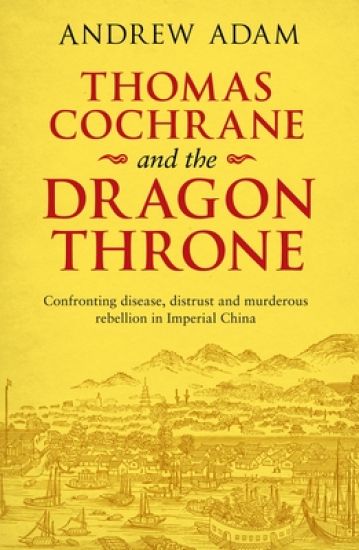
In 1897 Tom Cochrane, a young, newly-qualified Scottish medical missionary, arrived with his wife in Chaoyang, Inner Mongolia. For three years he laboured single-handed in a mud-floored dispensary, quickly realising his work was a drop in a sea of suffering. He became seized by the vision of a Western medical college and teaching hospital in Peking. In 1900 the Boxer Rebellion began. Rebels roamed the countryside. Their cry was: `Kill the foreigners! Kill them before breakfast!’ Over 30,000 converts were butchered in months, with hundreds of missionaries. The Cochranes escaped with their three young sons, but by 1901 Tom was back. In Peking he practised from mule stables amongst beggars and lepers. A powerful nobleman befriended him, and in 1903 his intervention brought a major cholera epidemic under control. The Imperial Grand Eunuch, right-hand man of the feared Empress Dowager, helped Tom to petition the Dragon Throne and obtain a substantial grant for his college. In 1906 he established the Peking Union Medical College. Today it stands in Beijing, prestigious and respected. Its origins forgotten, it remains one of countless seeds Christians planted in China.

Thomas Cranmer, the architect of the Anglican Book of Common Prayer, was the archbishop of Canterbury who guided England through the early Reformation—and Henry VIII through the minefields of divorce. This is the first major biography of him for more than three decades, and the first for a century to exploit rich new manuscript sources in Britain and elsewhere.Diarmaid MacCulloch, one of the foremost scholars of the English Reformation, traces Cranmer from his east-Midland roots through his twenty-year career as a conventionally conservative Cambridge don. He shows how Cranmer was recruited to the coterie around Henry VIII that was trying to annul the royal marriage to Catherine, and how new connections led him to embrace the evangelical faith of the European Reformation and, ultimately, to become archbishop of Canterbury. By then a major English statesman, living the life of a medieval prince-bishop, Cranmer guided the church through the king's vacillations and finalized two successive versions of the English prayer book.MacCulloch skillfully reconstructs the crises Cranmer negotiated, from his compromising association with three of Henry's divorces, the plot by religious conservatives to oust him, and his role in the attempt to establish Lady Jane Grey as queen to the vengeance of the Catholic Mary Tudor. In jail after Mary's accession, Cranmer nearly repudiated his achievements, but he found the courage to turn the day of his death into a dramatic demonstration of his Protestant faith.From this vivid account Cranmer emerges a more sharply focused figure than before, more conservative early in his career than admirers have allowed, more evangelical than Anglicanism would later find comfortable. A hesitant hero with a tangled life story, his imperishable legacy is his contribution in the prayer book to the shape and structure of English speech and through this to the molding of an international language and the theology it expressed.