
Kirjahaku
Etsi kirjoja tekijän nimen, kirjan nimen tai ISBN:n perusteella.
1000 tulosta hakusanalla Thomas Kaufmann
Das Italienische Kartellgesetz Von 1990 Und Sein Verhaeltnis Zum Europaeischen Recht Der Wettbewerbsbeschraenkungen
Thomas Kaufmann
Peter Lang AG
1993
nidottu
Italien hat sich am 10. Oktober 1990 als letztes Land der Europaischen Gemeinschaft ein Kartellgesetz gegeben. Angesichts eines immer enger zusammenwachsenden europaischen Marktes und der gestiegenen Bedeutung des EG-Kartellrechts stellte sich dabei das auch fur die anderen EG-Mitgliedsstaaten immer wichtiger werdende Problem, nationales mit europaischem Kartellrecht zu harmonisieren. Das italienische Gesetz entscheidet sich fur eine weitgehende Ubernahme der Formulierungen von Art. 85/86 EWG-Vertrag und der neuen europaischen Fusionskontrollverordnung ins nationale Recht. Andererseits verbleiben doch bedeutsame Unterschiede zum EG-Kartellrecht. Ziel der Arbeit ist es, vor allem diese Unterschiede herauszuarbeiten und dabei die wettbewerbspolitischen Vorstellungen zu analysieren, die dem Gesetz zugrundeliegen und die fur die praktische Anwendung des Gesetzes von grosser Bedeutung sein werden."
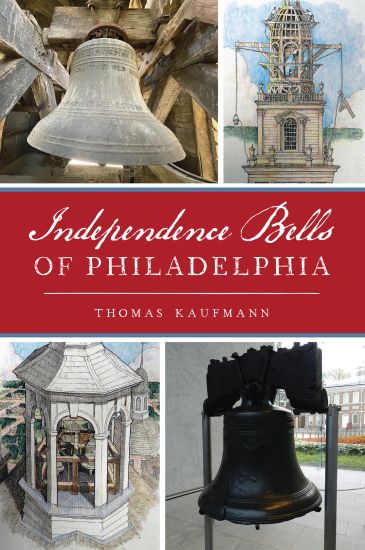
The bells rung all day, and almost all night... John Adams wrote this timeless observation when the Declaration of Independence was signed and publicly proclaimed in early July of 1776 to a jubilant crowd in Philadelphia. This is the story of those bells - a search to discover which bells did indeed ring, or are believed to have rung, when America was born. It is the story of the most famous bell in the world, the Liberty Bell, and the other historic bells of Philadelphia, during the era of the American Revolution. Author Thomas Kaufmann traces the joyous history of sound and instrument as the nation is forged among uplifting tolls of Philadelphia's historic independence bells.
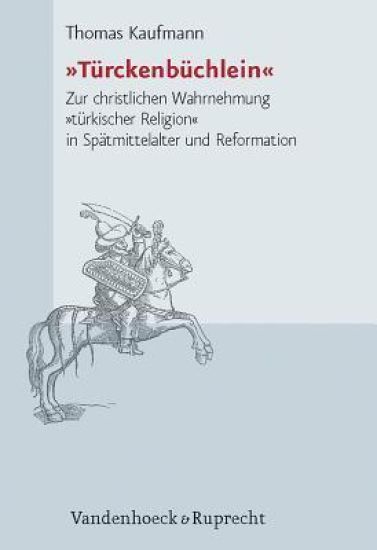
No Turks, no Reformation? Thomas Kaufmann explores Christian attitudes to the expanding Ottoman Empire in the late Middle Ages. This title includes a German text.

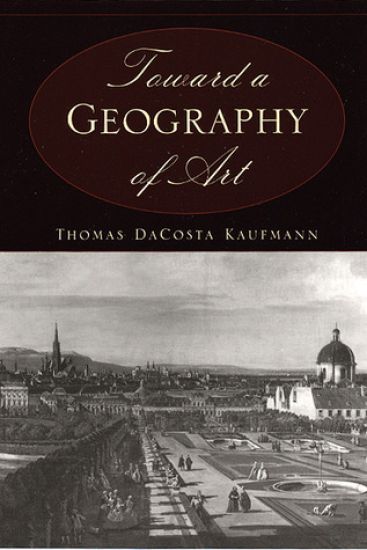
Art history traditionally classifics works of art by country as well as period, but often political borders and cultural boundaries are highly complex and fluid. Questions of identity, policy, and exchange make it difficult to determine the "place" of art, and often the art itself results from these conflicts of geography and culture. Addressing an important approach to art history, Thomas DaCosta Kaufmann's book offers essays that focus on the intricacies of accounting for the geographical dimension of art history during the early modern period in Europe, Latin America, and Asia. Toward a Geography of Art presents a historical overview of these complexities, debates contemporary concerns, and completes its exploration with a diverse collection of case studies. Employing the author's expertise in a variety of fields, the book delves into critical issues such as transculturation of indigenous traditions, mestizaje, the artistic metropolis, artistic diffusion, transfer, circulation, subversion, and center and periphery. What results is a foundational study that establishes the geography of art as a subject and forces us to reconsider assumptions about the place of art that underlic the longstanding narratives of art history.
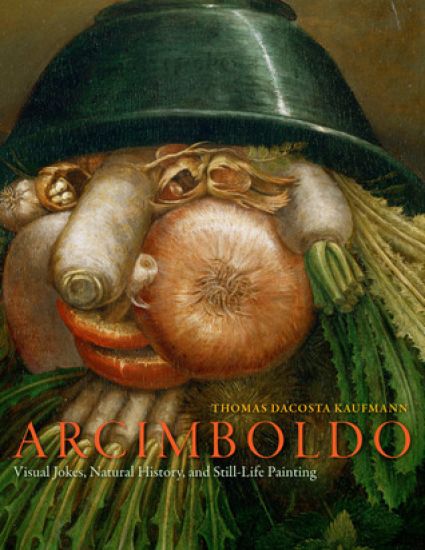
In Giuseppe Arcimboldo's most famous paintings, grapes, fish, and even the beaks of birds form human hair. A pear stands in for a man's chin. Citrus fruits sprout from a tree trunk that doubles as a neck. All sorts of natural phenomena come together on canvas and panel to assemble the strange heads and faces that constitute one of Renaissance art's most striking oeuvres. The first major study in a generation of the artist behind these remarkable paintings, "Arcimboldo" tells the singular story of their creation. Drawing on his thirty-five-year engagement with the artist, Thomas DaCosta Kaufmann begins with an overview of Arcimboldo's life and work, exploring the artist's early years in sixteenth-century Lombardy, his grounding in Leonardesque traditions, and his tenure as a Habsburg court portraitist in Vienna and Prague. "Arcimboldo" then trains its focus on the celebrated composite heads, approaching them as visual jokes with serious underpinnings - images that poetically display pictorial wit while conveying an allegorical message. In addition to probing the humanistic, literary, and philosophical dimensions of these pieces, Kaufmann explains that they embody their creator's continuous engagement with nature painting and natural history. He reveals, in fact, that Arcimboldo painted many more nature studies than scholars have realized - a finding that significantly deepens current interpretations of the composite heads. Demonstrating the previously overlooked importance of these works to natural history and still-life painting, "Arcimboldo" finally restores the artist's fantastic visual jokes to their rightful place in the history of both science and art.
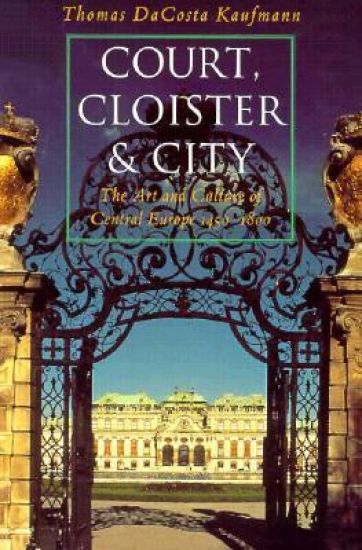
Court, Cloister, and City: The Art and Culture of Central Europe, 1450-1800
Thomas Dacosta Kaufmann
University of Chicago Press
1997
nidottu
The collapse of Communism in Central and Eastern Europe opened the doors to cultural treasures that for decades had been hidden, forgotten, or misinterpreted. Thomas DaCosta Kaufmann looks at Central Europe as a cultural entity while chronicling more than three hundred years of painting, sculpture, and architecture in Germany, Poland, the Czech Republic, Slovakia, Hungary, Austria, Ukraine, Lithuania and western parts of the Russian Federation. Kaufmann surveys a remarkable range of art and artifacts created from the coming of the Renaissance through to the Enlightenment. "Kaufmann throws considerable light on one of the more neglected and least understood periods in art history."-Philadelphia Inquirer "A wonderful book which does justice both to a formal analysis of the art and to an explanation of broader political and economic forces at work."-Virginia Quarterly Review "Important and stimulating, Kaufmann's study examines the cultural legacy of a region too little known and understood."-Choice "Peaks of the creative heritage which Kaufmann] describes reserve their message-and their surprises-for those who visit them in situ. But invest in Kaufmann's volume before you go."-R. J. W. Evans, New York Review of Books

Rudolf II: The Life and Legend of the Mad Emperor offers a fresh perspective on the Habsburg ruler, shedding new light on a reign often coloured by myths of madness. Contrary to popular belief, Rudolf was not a passive recluse but an engaged monarch, navigating the complexities of state affairs with a moderate hand amid turbulent times. By contextualizing his interests in astrology, alchemy and magic, Thomas DaCosta Kaufmann offers new insights into Rudolf’s support for scientific endeavours and his quest for power. It also demonstrates that Rudolf’s assembling of the greatest Kunstkammer and painting collection of his time and his patronage of artists were essential elements of Renaissance rulership. This book will appeal to a diverse audience, including enthusiasts of the occult, as well as those fascinated by Renaissance history, the Habsburg dynasty and art history.
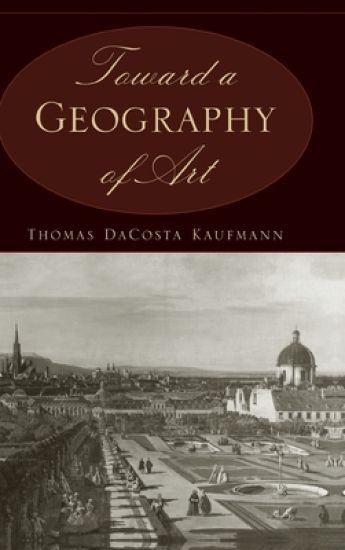
Art history traditionally classifics works of art by country as well as period, but often political borders and cultural boundaries are highly complex and fluid. Questions of identity, policy, and exchange make it difficult to determine the "place" of art, and often the art itself results from these conflicts of geography and culture. Addressing an important approach to art history, Thomas DaCosta Kaufmann's book offers essays that focus on the intricacies of accounting for the geographical dimension of art history during the early modern period in Europe, Latin America, and Asia. Toward a Geography of Art presents a historical overview of these complexities, debates contemporary concerns, and completes its exploration with a diverse collection of case studies. Employing the author's expertise in a variety of fields, the book delves into critical issues such as transculturation of indigenous traditions, mestizaje, the artistic metropolis, artistic diffusion, transfer, circulation, subversion, and center and periphery. What results is a foundational study that establishes the geography of art as a subject and forces us to reconsider assumptions about the place of art that underlic the longstanding narratives of art history.
Franz Anton Maulbertsch (1724-1796) was an Austrian fresco painter known for his bold use of color. Although he has been recognized in the Central European regions where he worked, Maulbertsch has remained outside the general canon of art history. With Painterly Enlightenment, Thomas DaCosta Kaufmann recovers the story of Maulbertsch, offering the first comprehensive English-language study of the long-neglected artist. Kaufmann situates Maulbertsch as a fresco painter at a time of transition to easel painting, a colorist at a time when color was not fully appreciated by contemporary observers, and an interpreter of religious themes at a time when secular subjects were becoming more popular. In this analysis, he is shown caught between the intellectual forces of the Enlightenment and the waning power of the traditional church, thus helping to illuminate the relationship between the Enlightenment and the arts. Kaufmann provides a thorough foundation for the fresh recognition of one of the great painters of eighteenth-century Europe, a leading fresco painter who is a colorist worthy of comparison to the best of his contemporaries, including the celebrated Venetian artist Giovanni Battista Tiepolo.
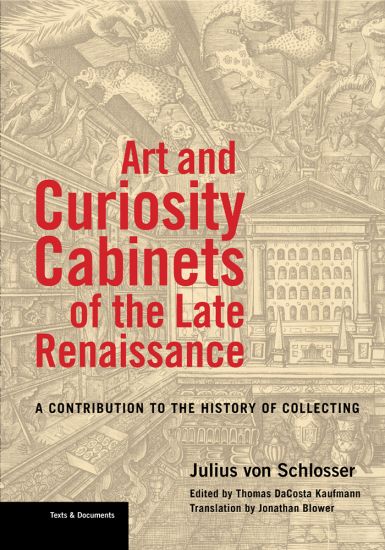
Art and Curiosity Cabinets of the Late Renaissance - A Contribution to the History of Collecting
Julius Von Schlosser; Thomas Dacosta Kaufmann; Jonathan Blower
Getty Publications
2021
nidottu
For the first time, the pioneering book that launched the study of art and curiosity cabinets is available in English. Julius von Schlosser's Die Kunst- und Wunderkammern der Spatrenaissance (Art and Curiosity Cabinets of the Late Renaissance) is a seminal work in the history of art and collecting. Originally published in German in 1908, it was the first study to interpret sixteenth- and seventeenth-century cabinets of wonder as precursors to the modern museum, situating them within a history of collecting going back to Greco-Roman antiquity. In its comparative approach and broad geographical scope, Schlosser's book introduced an interdisciplinary and global perspective to the study of art and material culture, laying the foundation for museum studies and the history of collections. Schlosser was an Austrian professor, curator, museum director, and leading figure of the Vienna School of art history whose work has not achieved the prominence of his contemporaries until now. This eloquent and informed translation is preceded by Thomas DaCosta Kaufmann's substantial introduction. Tracing Schlosser's biography and intellectual formation in Vienna at the turn of the twentieth century, it contextualizes his work among that of his contemporaries, offering a wealth of insights along the way.
Kaufmann, N: Beweis des hl. Thomas von Aquin für die Existen
Antigonos Verlag
2024
nidottu
Kaufmann, N: Beweis des hl. Thomas von Aquin für die Existen
Antigonos Verlag
2024
sidottu