Kirjahaku
Etsi kirjoja tekijän nimen, kirjan nimen tai ISBN:n perusteella.
1000 tulosta hakusanalla Thomas March





Some Actors in Our Lord's Passion
Herman Lilienthal; Thomas March (CON) Clark
Kessinger Pub
2008
pokkari
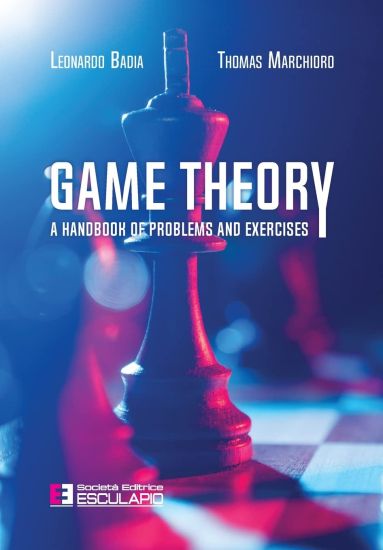
Game Theory. A Handbook of Problems and Exercises
Leonardo Badia; Thomas Marchioro
Societa Editrice Esculapio
2022
pokkari
Since the origins in its modern form, due to the seminal works of von Neumann and Nash, Game theory has most often been considered for its applications to economic and social sciences. However, its mathematical roots are more general, and its set of analytical tools that can be used to predict the outcome of interactive decision situations can be very relevant for many other scientific fields, especially including information and industrial engineering, where it has recently become a common curricular subject in university programs. To train the "brain muscles" to solve problems in a game theoretic way, students may find it useful to practice on concrete examples. For this reason, this book presents a collection of exercises that can be suitable for any entry-level course on Game theory. While there is no specific major for which such a practical activity can be useful, the book is conceived with an engineering spirit, and a general regard for modeling and optimization (from technological scenarios to childish gameplay). Still, some useful considerations can also be derived for other fields such as social psychology, biology, or humanities. Rather than in-depth speculative discussions, the book covers mostly practical cases, however providing a preliminary theoretical justification for the solution methods. Covered topics include static games of complete information, zero-sum games and minimax problems, lotteries, sequential games, multistage games, Bayesian games. This may also encourage the reader to approach more advanced topics, with a solid methodological background and a full-rounded appreciation of the subject.

Full Unit Study Curriculum for March: (Thomas Jefferson, Oregon, and Penguins)
Sarah Nicole Bean
Independently Published
2018
nidottu
These Unit Studies cover many topics such as Math, Science, and writing We play games, make recipes, trace pictures and words, and learn learn learn But more importantly, it is FUN This bundle is for the whole month of March. It includes Thomas Jefferson, Oregon, and Penguins At Raising Human Beans, we believe Education is life- and that kids should learn accordingly. Passion and Interest based learning, show so much more progress than traditional sit down and study learning. With my Unit Studies, your child can see what the world is really like- because the world is our true classroom. Look through my Unit Studies, and let your Child pick what they are interested in Don't see what you are looking for? Message me I am open to new ideas. Don't forget to check us out online at raisinghumanbeans.com
An Introduction, Phonological, Morphological, Syntactic To The Gothic Of Ulfilas
Thomas Le Marchant Douse
Kessinger Pub
2008
pokkari
An Introduction, Phonological, Morphological, Syntactic to the Gothic of Ulfilas
Thomas Le Marchant Douse
Hansebooks
2018
nidottu
The Pacha of Many Tales (1835).By: Frederick Marryat and By: Thomas Hardy (3 March 1752 - 11 October 1832): In Three Volumes. Vol. I
Thomas S. Hardy; Frederick Marryat
Createspace Independent Publishing Platform
2017
nidottu
Thomas Hardy (3 March 1752 - 11 October 1832) was an early Radical, and the founder, first Secretary, and Treasurer of the London Corresponding Society... Captain Frederick Marryat (10 July 1792 - 9 August 1848) was a British Royal Navy officer, a novelist, and an acquaintance of Charles Dickens. He is noted today as an early pioneer of the sea story, particularly for his semi-autobiographical novel Mr Midshipman Easy (1836), for his children's novel The Children of the New Forest (1847), and for a widely used system of maritime flag signalling, known as Marryat's Code. Early life and naval career: Marryat was born in Great George Street, Westminster, London, the son of Joseph Marryat (1757-1824), a "merchant prince" and member of Parliament, and his American wife Charlotte, n e von Geyer. After trying to run away to sea several times, Marryat was permitted to enter the Royal Navy in 1806 as a midshipman on board HMS Imperieuse, a frigate commanded by Lord Cochrane (who later served as inspiration for Marryat as well as other authors). Marryat's time aboard the Imperieuse included action off the Gironde, the rescue of a fellow midshipman who had fallen overboard, captures of many ships off the Mediterranean coast of Spain, and the capture of the castle of Montgat. The Imperieuse shifted to operations in the Scheldt in 1809, where Marryat contracted malaria; he returned to England on the 74-gun HMS Victorious. After recuperating, Marryat returned to the Mediterranean in the 74-gun HMS Centaur and again saved a shipmate by leaping into the sea after him. He then sailed as a passenger to Bermuda in the 64-gun HMS Atlas, and from there to Halifax, Nova Scotia on the schooner HMS Chubb, where he joined the 32-gun frigate HMS Aeolus on 27 April 1811. A few months later, Marryat again earned distinction by leading the effort to cut away the Aeolus's mainyard to save the ship during a storm and, continuing a pattern, he also saved one of the men from the sea. Shortly thereafter, he moved to the frigate HMS Spartan, participating in the capture of a number of American ships (the War of 1812 having begun). On 26 December 1812, he was promoted to lieutenant, and as such served in the sloop HMS Espiegle and in HMS Newcastle. Marryat led four barges from the latter ship on a punishing raid to Orleans, Massachusetts on December 19, 1814, the last combat in New England during the war. The affair had mixed results. Initially, Marryat cut out an American schooner and three sloops, but managed to escape with just one sloop. The local militia avoided casualties while killing one Royal marine. He was promoted to commander on 13 June 1815, just as peace broke out..........
The Pacha of Many Tales (1835).By: Frederick Marryat and By: Thomas Hardy (3 March 1752 - 11 October 1832): In Three Volumes. Vol. II
Thomas Hardy; Frederick Marryat
Createspace Independent Publishing Platform
2017
nidottu
Thomas Hardy (3 March 1752 - 11 October 1832) was an early Radical, and the founder, first Secretary, and Treasurer of the London Corresponding Society. Hardy was born on 3 March 1752 in Larbert, Stirlingshire, Scotland, the son of a merchant seaman. His father died in 1760 at sea while Thomas was still a boy. He was sent to school by his maternal grandfather and later apprenticed to a shoemaker in Stirlingshire. He later worked in the Carron Iron Works. As a young man, he came to London just before the American Revolutionary War. On 21 May 1781 he married at St-Martin-in-the-Fields church Lydia Priest, the youngest daughter of a carpenter and builder from Chesham, Buckinghamshire. The couple had six children, all of whom died in infancy. Lydia died in childbirth on 27 August 1794, her child (the sixth) being stillborn: the cause may have been the injuries she had sustained when a loyalist "Church and King" mob attacked the Hardy home some weeks earlier.In 1791, Hardy opened his own boot and shoe shop at 9 Piccadilly, London....... Captain Frederick Marryat (10 July 1792 - 9 August 1848) was a British Royal Navy officer, a novelist, and an acquaintance of Charles Dickens. He is noted today as an early pioneer of the sea story, particularly for his semi-autobiographical novel Mr Midshipman Easy (1836), for his children's novel The Children of the New Forest (1847), and for a widely used system of maritime flag signalling, known as Marryat's Code. Early life and naval career: Marryat was born in Great George Street, Westminster, London, the son of Joseph Marryat (1757-1824), a "merchant prince" and member of Parliament, and his American wife Charlotte, n e von Geyer. After trying to run away to sea several times, Marryat was permitted to enter the Royal Navy in 1806 as a midshipman on board HMS Imperieuse, a frigate commanded by Lord Cochrane (who later served as inspiration for Marryat as well as other authors). Marryat's time aboard the Imperieuse included action off the Gironde, the rescue of a fellow midshipman who had fallen overboard, captures of many ships off the Mediterranean coast of Spain, and the capture of the castle of Montgat. The Imperieuse shifted to operations in the Scheldt in 1809, where Marryat contracted malaria; he returned to England on the 74-gun HMS Victorious. After recuperating, Marryat returned to the Mediterranean in the 74-gun HMS Centaur and again saved a shipmate by leaping into the sea after him. He then sailed as a passenger to Bermuda in the 64-gun HMS Atlas, and from there to Halifax, Nova Scotia on the schooner HMS Chubb, where he joined the 32-gun frigate HMS Aeolus on 27 April 1811. A few months later, Marryat again earned distinction by leading the effort to cut away the Aeolus's mainyard to save the ship during a storm and, continuing a pattern, he also saved one of the men from the sea. Shortly thereafter, he moved to the frigate HMS Spartan, participating in the capture of a number of American ships (the War of 1812 having begun). On 26 December 1812, he was promoted to lieutenant, and as such served in the sloop HMS Espiegle and in HMS Newcastle. Marryat led four barges from the latter ship on a punishing raid to Orleans, Massachusetts on December 19, 1814, the last combat in New England during the war. The affair had mixed results. Initially, Marryat cut out an American schooner and three sloops, but managed to escape with just one sloop. The local militia avoided casualties while killing one Royal marine. He was promoted to commander on 13 June 1815, just as peace broke out.............

The Pacha of Many Tales (1835).By: Frederick Marryat and By: Thomas Hardy (3 March 1752 - 11 October 1832): In Three Volumes. Vol. III
Thomas Hardy; Frederick Marryat
Createspace Independent Publishing Platform
2017
nidottu
Thomas Hardy (3 March 1752 - 11 October 1832) was an early Radical, and the founder, first Secretary, and Treasurer of the London Corresponding Society. Hardy was born on 3 March 1752 in Larbert, Stirlingshire, Scotland, the son of a merchant seaman. His father died in 1760 at sea while Thomas was still a boy. He was sent to school by his maternal grandfather and later apprenticed to a shoemaker in Stirlingshire. He later worked in the Carron Iron Works. As a young man, he came to London just before the American Revolutionary War. On 21 May 1781 he married at St-Martin-in-the-Fields church Lydia Priest, the youngest daughter of a carpenter and builder from Chesham, Buckinghamshire. The couple had six children, all of whom died in infancy. Lydia died in childbirth on 27 August 1794, her child (the sixth) being stillborn: the cause may have been the injuries she had sustained when a loyalist "Church and King" mob attacked the Hardy home some weeks earlier.In 1791, Hardy opened his own boot and shoe shop at 9 Piccadilly, London....... Captain Frederick Marryat (10 July 1792 - 9 August 1848) was a British Royal Navy officer, a novelist, and an acquaintance of Charles Dickens. He is noted today as an early pioneer of the sea story, particularly for his semi-autobiographical novel Mr Midshipman Easy (1836), for his children's novel The Children of the New Forest (1847), and for a widely used system of maritime flag signalling, known as Marryat's Code. Early life and naval career: Marryat was born in Great George Street, Westminster, London, the son of Joseph Marryat (1757-1824), a "merchant prince" and member of Parliament, and his American wife Charlotte, n e von Geyer. After trying to run away to sea several times, Marryat was permitted to enter the Royal Navy in 1806 as a midshipman on board HMS Imperieuse, a frigate commanded by Lord Cochrane (who later served as inspiration for Marryat as well as other authors). Marryat's time aboard the Imperieuse included action off the Gironde, the rescue of a fellow midshipman who had fallen overboard, captures of many ships off the Mediterranean coast of Spain, and the capture of the castle of Montgat. The Imperieuse shifted to operations in the Scheldt in 1809, where Marryat contracted malaria; he returned to England on the 74-gun HMS Victorious. After recuperating, Marryat returned to the Mediterranean in the 74-gun HMS Centaur and again saved a shipmate by leaping into the sea after him. He then sailed as a passenger to Bermuda in the 64-gun HMS Atlas, and from there to Halifax, Nova Scotia on the schooner HMS Chubb, where he joined the 32-gun frigate HMS Aeolus on 27 April 1811. A few months later, Marryat again earned distinction by leading the effort to cut away the Aeolus's mainyard to save the ship during a storm and, continuing a pattern, he also saved one of the men from the sea. Shortly thereafter, he moved to the frigate HMS Spartan, participating in the capture of a number of American ships (the War of 1812 having begun). On 26 December 1812, he was promoted to lieutenant, and as such served in the sloop HMS Espiegle and in HMS Newcastle. Marryat led four barges from the latter ship on a punishing raid to Orleans, Massachusetts on December 19, 1814, the last combat in New England during the war. The affair had mixed results. Initially, Marryat cut out an American schooner and three sloops, but managed to escape with just one sloop. The local militia avoided casualties while killing one Royal marine. He was promoted to commander on 13 June 1815, just as peace broke out...............

The Pacha of Many Tales (1835).By: Frederick Marryat and By: Thomas Hardy (3 March 1752 - 11 October 1832): Complete set Volume I, II and III
Thomas Hardy; Frederick Marryat
Createspace Independent Publishing Platform
2017
nidottu
Thomas Hardy (3 March 1752 - 11 October 1832) was an early Radical, and the founder, first Secretary, and Treasurer of the London Corresponding Society. Hardy was born on 3 March 1752 in Larbert, Stirlingshire, Scotland, the son of a merchant seaman. His father died in 1760 at sea while Thomas was still a boy. He was sent to school by his maternal grandfather and later apprenticed to a shoemaker in Stirlingshire. He later worked in the Carron Iron Works. As a young man, he came to London just before the American Revolutionary War. On 21 May 1781 he married at St-Martin-in-the-Fields church Lydia Priest, the youngest daughter of a carpenter and builder from Chesham, Buckinghamshire. The couple had six children, all of whom died in infancy. Lydia died in childbirth on 27 August 1794, her child (the sixth) being stillborn: the cause may have been the injuries she had sustained when a loyalist "Church and King" mob attacked the Hardy home some weeks earlier.In 1791, Hardy opened his own boot and shoe shop at 9 Piccadilly, London....... Captain Frederick Marryat (10 July 1792 - 9 August 1848) was a British Royal Navy officer, a novelist, and an acquaintance of Charles Dickens. He is noted today as an early pioneer of the sea story, particularly for his semi-autobiographical novel Mr Midshipman Easy (1836), for his children's novel The Children of the New Forest (1847), and for a widely used system of maritime flag signalling, known as Marryat's Code. Early life and naval career: Marryat was born in Great George Street, Westminster, London, the son of Joseph Marryat (1757-1824), a "merchant prince" and member of Parliament, and his American wife Charlotte, n e von Geyer. After trying to run away to sea several times, Marryat was permitted to enter the Royal Navy in 1806 as a midshipman on board HMS Imperieuse, a frigate commanded by Lord Cochrane (who later served as inspiration for Marryat as well as other authors). Marryat's time aboard the Imperieuse included action off the Gironde, the rescue of a fellow midshipman who had fallen overboard, captures of many ships off the Mediterranean coast of Spain, and the capture of the castle of Montgat. The Imperieuse shifted to operations in the Scheldt in 1809, where Marryat contracted malaria; he returned to England on the 74-gun HMS Victorious. After recuperating, Marryat returned to the Mediterranean in the 74-gun HMS Centaur and again saved a shipmate by leaping into the sea after him. He then sailed as a passenger to Bermuda in the 64-gun HMS Atlas, and from there to Halifax, Nova Scotia on the schooner HMS Chubb, where he joined the 32-gun frigate HMS Aeolus on 27 April 1811. A few months later, Marryat again earned distinction by leading the effort to cut away the Aeolus's mainyard to save the ship during a storm and, continuing a pattern, he also saved one of the men from the sea. Shortly thereafter, he moved to the frigate HMS Spartan, participating in the capture of a number of American ships (the War of 1812 having begun). On 26 December 1812, he was promoted to lieutenant, and as such served in the sloop HMS Espiegle and in HMS Newcastle. Marryat led four barges from the latter ship on a punishing raid to Orleans, Massachusetts on December 19, 1814, the last combat in New England during the war. The affair had mixed results. Initially, Marryat cut out an American schooner and three sloops, but managed to escape with just one sloop. The local militia avoided casualties while killing one Royal marine. He was promoted to commander on 13 June 1815, just as peace broke out...............
![An Oration Delivered March 5th 1781 at the Request of the Inhabitants of the Town of Boston, to Commemorate the Bloody Tragedy of the Fifth of March 1770. by Thomas Dawes, Junr. [One Line of Latin Text].](/covers/9781140882213.jpg)
![An Oration Delivered March 5th 1781 at the Request of the Inhabitants of the Town of Boston, to Commemorate the Bloody Tragedy of the Fifth of March 1770. By Thomas Dawes, Junr. [One Line of Latin Text]](/covers/9781379513308.jpg)
An Oration Delivered March 5th 1781 at the Request of the Inhabitants of the Town of Boston, to Commemorate the Bloody Tragedy of the Fifth of March 1770. By Thomas Dawes, Junr. [One Line of Latin Text]
Thomas Dawes
Gale Ecco, Print Editions
2018
sidottu
The 18th century was a wealth of knowledge, exploration and rapidly growing technology and expanding record-keeping made possible by advances in the printing press. In its determination to preserve the century of revolution, Gale initiated a revolution of its own: digitization of epic proportions to preserve these invaluable works in the largest archive of its kind. Now for the first time these high-quality digital copies of original 18th century manuscripts are available in print, making them highly accessible to libraries, undergraduate students, and independent scholars.The Age of Enlightenment profoundly enriched religious and philosophical understanding and continues to influence present-day thinking. Works collected here include masterpieces by David Hume, Immanuel Kant, and Jean-Jacques Rousseau, as well as religious sermons and moral debates on the issues of the day, such as the slave trade. The Age of Reason saw conflict between Protestantism and Catholicism transformed into one between faith and logic -- a debate that continues in the twenty-first century.++++The below data was compiled from various identification fields in the bibliographic record of this title. This data is provided as an additional tool in helping to insure edition identification: ++++British LibraryW021495With a half-title.Boston: Printed by Thomas and John Fleet, M, DCC, LXXXI. 1781]. 23, 1] p.; 2
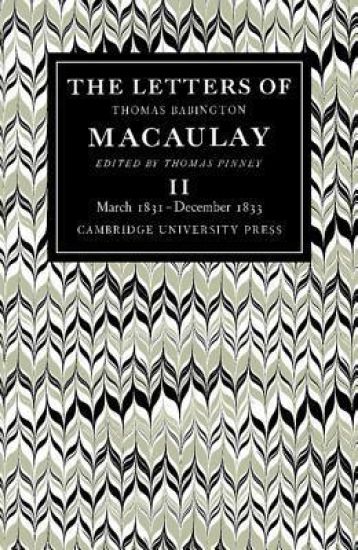
The Letters of Thomas Babington MacAulay: Volume 2, March 1831–December 1833
Thomas MacAulay; Thomas Pinney
Cambridge University Press
2008
pokkari
Some of Macaulay's letters were printed in nineteenth-century memoirs, but a 'Complete Letters' of this eminent Victorian has long been needed. Professor Pinney is editing the whole body of surviving letters by Macaulay, giving accurate texts and textual and explanatory notes. The letters are in chronological order, grouped by historical theme and phases of Macaulay's life. The first two volumes deal with his childhood, career at Cambridge, early legal career and early political career, and end with him about to leave for India. The letters are lively because Macaulay (as lawyer, essayist, historian, politician, administrator, poet) was a man of enormous energy and very wide interests. They will add greatly to our sense of early Victorian political and cultural life as well as to our understanding of Macaulay himself.