
Kirjahaku
Etsi kirjoja tekijän nimen, kirjan nimen tai ISBN:n perusteella.
1000 tulosta hakusanalla Thomas-M
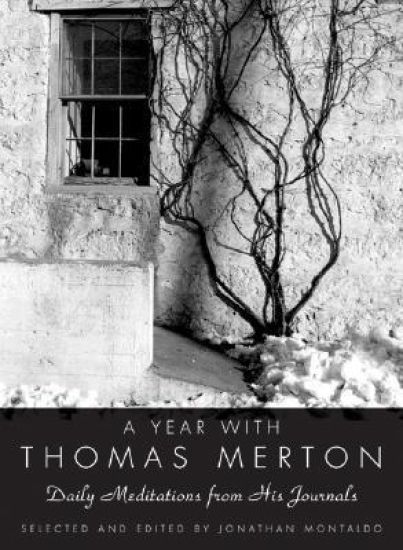
A 365 daily devotional from one of the most influential and spiritual writers of modern times - The perfect companion for daily gratitude, prayer, and reflection.From the author of The Seven Storey Mountain comes engaging journal entries guaranteed to inspire, motivate, and facilitate self-reflection and spiritual guidance. Thomas Merton's words touch the soul and spark the mind and can be read all at once or in parts, year-after-year. Packed with Merton's delightful pen-and-ink drawings and elegant black-and-white photographs, this is the perfect gift for any spiritual seeker and gratitude manifester in your life. If you struggle to stay in--and enjoy--the present moment, or simply need some extra encouragement to slow down, this guide is for you.Oftentimes, the joy and hope we seek is very much alive in our lives, we just need a little help uncovering it. Allow Merton's affirmations to aide, provoke, and comfort your daily and spiritual journey--one essay, and day, at a time.
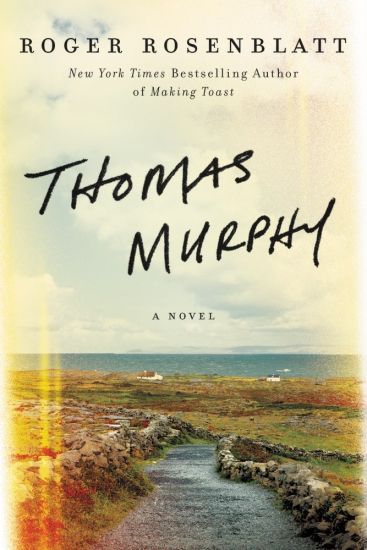
The acclaimed, award-winning essayist and memoirist returns to fiction with this reflective, bittersweet tale that introduces the irrepressible aging poet Thomas Murphy—a paean to the mystery, tragedy and wonder of life.Trying his best to weasel out of an appointment with the neurologist his only child, Máire, has cornered him into, the poet Thomas Murphy—singer of the oldies, friend of the down-and-out, card sharp, raconteur, piano bar player, bon vivant, tough and honest and all-around good guy—contemplates his sunset years. Máire worries that Murph is losing his memory. Murph wonders what to do with the rest of his life. The older mind is at issue, and Murph’s jumps from fact to memory to fancy, conjuring the islands that have shaped him—Inishmaan, a rocky gumdrop off the Irish coast where he was born, and New York, his longtime home. He muses on the living, his daughter and precocious grandson William, and on the dead, his dear wife Oona, and Greenberg, his best friend. Now, into Murphy’s world comes the lovely Sarah, a blind woman less than half his age, who sees into his heart, as he sees into hers. Brought together under the most unlikely circumstance, Murph and Sarah begin in friendship and wind up in impossible possible love.An Irishman, a dreamer, a poet, Murph, like Whitman, sings lustily of himself and of everyone. Through his often-extravagant behavior and observations, both hilarious and profound, we see the world in all its strange glory, equally beautiful and ridiculous. With memory at the center of his thoughts, he contemplates its power and accuracy and meaning. Our life begins in dreams, but does not stay with them, Murph reminds us. What use shall we make of the past Ultimately, he asks, are relationships our noblest reason for livingBehold the charming, wistful, vibrant, aging Thomas Murphy, whose story celebrates the ageless confusion that is this dreadful, gorgeous life.

Very Short Introductions: Brilliant, Sharp, Inspiring Thomas More is an enduringly fascinating and profoundly controversial figure. A brilliant scholar, his Utopia of 1516 dared to imagine how society might be completely reordered. At the same time, his hatred of the Reformation caused him to advocate, and seek to implement, the death penalty for heretics. A friend and advisor to Henry VIII, More's refusal to support Henry's break with Rome led to his execution in 1535, and the start of a long argument about his legacy. This Very Short Introduction assesses More's life, writings and achievements, and examines changing views of his character, in both historical interpretation and various works of fiction. ABOUT THE SERIES: The Very Short Introductions series from Oxford University Press contains hundreds of titles in almost every subject area. These pocket-sized books are the perfect way to get ahead in a new subject quickly. Our expert authors combine facts, analysis, perspective, new ideas, and enthusiasm to make interesting and challenging topics highly readable.

This collection seeks to illustrate the ways in which Thomas Mann's 1924 novel, The Magic Mountain, has been newly construed by some of today's most astute readers in the field of Mann studies. The essays, many of which were written expressly for this volume, comment on some of the familiar and inescapable topics of Magic Mountain scholarship, including the questions of genre and ideology, the philosophy of time, and the ominous subjects of disease and medical practice. Moreover, this volume offers fresh approaches to the novel's underlying notions of masculinity, to its embodiment of the cultural code of anti-Semitism, and to its precarious relationship to the rival media of photography, cinema, and recorded sound.

Thomas Mann's The Magic Mountain
Oxford University Press Inc
2008
nidottu
This collection seeks to illustrate the ways in which Thomas Mann's 1924 novel, The Magic Mountain, has been newly construed by some of today's most astute readers in the field of Mann studies. The essays, many of which were written expressly for this volume, comment on some of the familiar and inescapable topics of Magic Mountain scholarship, including the questions of genre and ideology, the philosophy of time, and the ominous subjects of disease and medical practice. Moreover, this volume offers fresh approaches to the novels underlying notions of masculinity, to its embodiment of the cultural code of anti-Semitism, and to its precarious relationship to the rival media of photography, cinema, and recorded sound.

T.J. Reed's study has long established itself as the standard work in English on Thomas mann, and offers as comprehensive a view of Mann's fiction and thought as is available in any language. It is based on a coherent close reading of Mann's oeuvre, literary and political, and also on manuscripts and sources, and was part of the first phase of literary scholarship that opened up the resources of the Zurich Thomas Mann Archive. Further documents that have appeared since then - Mann's diaries, notebooks, and other correspondences - have not fundamentally altered the individual interpretations or the overall picture the study offers, and in some respects have emphatically confirmed them. A further chapter added to this edition covers the new documentation, gives a vigorous account of the main curents in Mann scholarship and criticism over the last two decades suggesting how we should now see the writer, the man, and the political figure, and above all the complex relationship between the three.
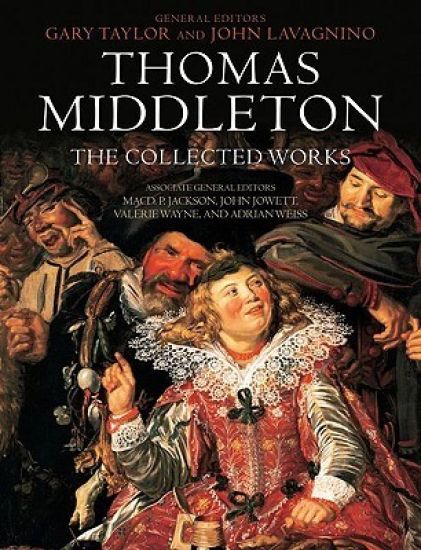
Thomas Middleton: The Collected Works
Oxford University Press
2010
nidottu
Thomas Middleton (1580-1627) - 'our other Shakespeare' - is the only other Renaissance playwright who created lasting masterpieces of both comedy and tragedy; he also wrote the greatest box-office hit of early modern London (the unique history play A Game at Chess ). His range extends beyond these traditional genres to tragicomedies, masques, pageants, pamphlets, epigrams, and Biblical and political commentaries, written alone or in collaboration with Shakespeare, Webster, Dekker, Ford, Heywood, Rowley, and others. Compared by critics to Aristophanes and Ibsen, Racine and Joe Orton, he has influenced writers as diverse as Aphra Behn and T. S. Eliot. Though repeatedly censored in his own time, he has since come to be particularly admired for his representations of the intertwined pursuits of sex, money, power, and God. The Oxford Middleton, prepared by more than sixty scholars from a dozen countries, follows the precedent of The Oxford Shakespeare in being published in two volumes, an innovative but accessible Collected Works and a comprehensive scholarly Companion. Though closely connected, each volume can be used independently of the other. The Collected Works brings together for the first time in a single volume all the works currently attributed to Middleton. It is the first edition of Middleton's works since 1886. The texts are printed in modern spelling and punctuation, with critical introductions and foot-of-the-page commentaries; they are arranged in chronological order, with a special section of Juvenilia. The volume is introduced by essays on Middleton's life and reputation, on early modern London, and on the varied theatres of the English Renaissance. Extensively illustrated, it incorporates much new information on Middleton's life, canon, texts, and contexts. A self-consciously 'federal edition', The Collected Works applies contemporary theories about the nature of literature and the history of the book to editorial practice.

Thomas Middleton and Early Modern Textual Culture
Oxford University Press
2013
nidottu
Thomas Middleton and Early Modern Textual Culture is not only a companion to The Collected Works of Thomas Middleton, which every scholar of Renaissance literature will find indispensable. It is also essential reading for anyone interested in the history of the book in early modern Europe. The book is divided into two parts. The first part, on 'The Culture', situates Middleton within an historical and theoretical overview of early modern textual production, reproduction, circulation, and reception. An introductory essay by Gary Taylor ('The Order of Persons') surveys lists of persons written by or connected to Middleton, using the complex relationship between textual and social orders to trace the evolution of textual culture in England during the 'Middleton century' (1580-1679). Ten original essays then focus on Middleton's connections to different aspects of textual culture in that century: authorship (by MacD. P. Jackson), manuscripts (Harold Love), legal texts (Edward Geiskes), censorship (Richard Burt), printing (Adrian Weiss), visual texts (John Astington), music (Andrew Sabol), stationers and living authors (Cyndia Clegg), posthumous publishing (Maureen Bell), and early readers (John Jowett). The second part, 'The Texts', supplies the documentation for claims made in the first part. This includes detailed evidence for the canon and chronology of Middleton's works in all genres, greatly extending previous scholarship, and using the latest corpus-based attribution techniques. A full editorial apparatus is supplied for each item in The Collected Works: an Introduction, which summarizes and extends previous scholarship, is followed by textual notes, recording substantive departures from the control-text, variants between early texts, press-variants, discussions of emendations, and (for plays) an exact transcription of all original stage directions. Cross-references make it easy to move between the two volumes. This authoritative account of the early texts includes some extraordinarily complicated cases, which have never before been systematically collated: 'Hence, all you vain delights' (the most popular song lyric from the Renaissance stage), The Two Gates of Salvation, The Peacemaker, and A Game at Chess (the most complex editorial problem in early modern drama, with eight extant texts and numerous reports of the early performances).

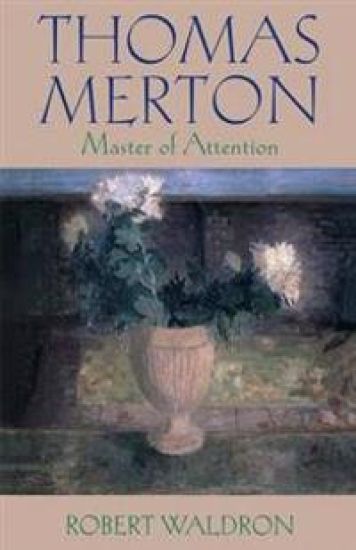
Thomas Merton was one of the greatest contemporary spiritual writers, whose books have enabled millions of readers to rediscover the importance of prayer in their inner lives. Yet until now Merton's own personal interior life has remained something of a mystery. In Thomas Merton: Master of Attention one of the most distinguished Merton scholars reveals his 'way of prayer'. An ideal introduction to Merton, and essential reading for every admirer of his work.

Daily reflections from the one of the most influential spiritual writers of the past century Thomas Merton is widely acclaimed as one of the most influential American spiritual writers of the past century. This volume of daily reflections draws from Merton's journals and papers to present, each day, a seasonally appropriate and thought-provoking insight or observation. Each month begins with one of Merton's delightful Zen-style pen-and-ink or black and white photographs.
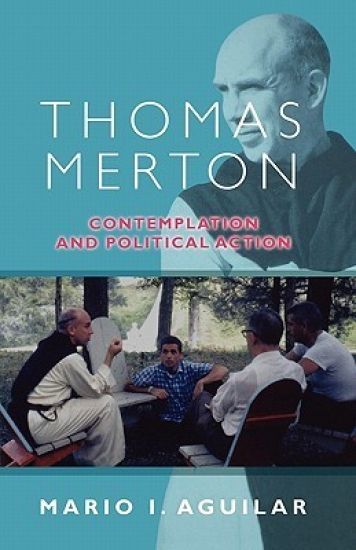
A fresh exploration of Merton's life and thought, focusing on his role as a Christian activist.
'If the English people were to be set a test to justify their history and civilization by the example of one man, then it is Sir Thomas More whom they would perhaps choose.' So commented The Times in 1978 on the 500th anniversary of More's birth. Twenty-two years later, Pope John Paul II proclaimed Thomas More the patron saint of politicians and people in public life, on the basis of his 'constant fidelity to legitimate authority and ... his intention to serve not power but the supreme ideal of justice'. In this fresh assessment of More's life and legacy, John Guy considers the factors that have given rise to such claims concerning More's significance. Who was the real Thomas More? Was he the saintly, self-possessed hero of conscience of Robert Bolt's A Man for All Seasons or was he the fanatical, heretic-hunting torturer of Hilary Mantel's Wolf Hall? Which of these images of More has the greater historical veracity? And why does this man continue to fascinate, inspire and provoke us today?

'If the English people were to be set a test to justify their history and civilization by the example of one man, then it is Sir Thomas More whom they would perhaps choose.' So commented The Times in 1978 on the 500th anniversary of More's birth. Twenty-two years later, Pope John Paul II proclaimed Thomas More the patron saint of politicians and people in public life, on the basis of his 'constant fidelity to legitimate authority and ... his intention to serve not power but the supreme ideal of justice'. In this fresh assessment of More's life and legacy, John Guy considers the factors that have given rise to such claims concerning More's significance. Who was the real Thomas More? Was he the saintly, self-possessed hero of conscience of Robert Bolt's A Man for All Seasons or was he the fanatical, heretic-hunting torturer of Hilary Mantel's Wolf Hall? Which of these images of More has the greater historical veracity? And why does this man continue to fascinate, inspire and provoke us today?

The Yale Edition of The Complete Works of St. Thomas More
Thomas More
Yale University Press
1990
sidottu
More's Latin reply to Bugenhagen (1526), given here with a facing English translation, is a comparatively brief but intense rebuttal of the principal points of Lutheran teaching concerning scripture ant tradition, faith and works, grace and free will, clerical celibacy, and the sacraments. It presents arguments elaborated at much greater length in More's other polemical works. Supplication of Souls (1529) refutes A Supplication for the Beggars, an anticlerical pamphlet by Simon Fish which Henry VIII seems to have regarded with some favor. More places his response in the mouths of the souls in purgatory. In the first book, he contemptuously demolished Fish's loose railery with accurate statistics and historical analysis. In the second, he defends the traditional doctrine of purgatory with brief arguments drawn from reason and a detailed analysis of scriptural passages. Letter against Frith (1532) answers John Frith's Zwinglian arguments against the physical presence of Christ in the more. Written to an unknown correspondent, it is the briefest and mildest of More's polemical works and anticipates arguments presented moer elaborately in More's The Answer to a Poisoned Book (1533). Besides full introductions and commentaries, a glossary, and an index, this volume contains seven appendices giving the works to which More is replying and other thematic, historical, and bibliographical matter closely related to the three works by More.
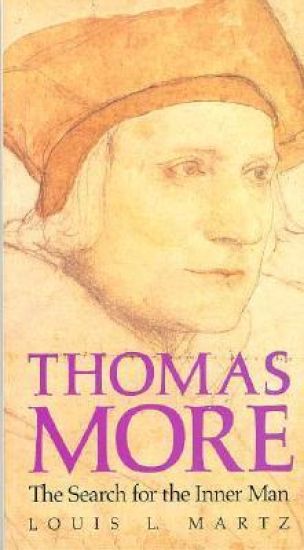
Recent writings about Thomas More have questioned his integrity and motivation and have challenged the long-held view of him as a humane, wise, and heroic "man for all seasons." This new book responds to these revisionist studies by closely and persuasively analyzing More's writings as well as Holbein's portraits of More and his family. "Martz cuts down the revived charge of More as a bloodthirsty hunter of heretics, a furious, sexually repressed, and frustrated man. . . . This penetrating rebuttal of the revisionists deserves high commendation."—Choice "Martz draws a compelling picture of More's attempts during his lonely imprisonment to adjust to his human fear of death and to see his own plight in the perspective of the universal human condition. In these essays More's voice and personality speak to us from his own literate and humorous prose."—M. Edmund Hussey, Antioch Review "In his gracefully written Thomas More: The Search for the Inner Man, Louis L. Martz provides a sharply different account of the 'dark side' of More. . . . [He] lays out the case for a more complex, ironic construction of More's texts."—Stanley Stewart, Studies in English Literature "This . . . book is a gemstone."—Terence R. Murphy, History: Reviews of New Books "Correcting the view of Thomas More as a cold-blooded prosecutor of heresy, Martz here considers the gentle, affectionate, yet upright man pictured in Holbein's family portraits and implicit in More's prose."—Judith Fair, Theological Studies