Kirjojen hintavertailu. Mukana 11 699 587 kirjaa ja 12 kauppaa.

Kirjahaku

Etsi kirjoja tekijän nimen, kirjan nimen tai ISBN:n perusteella.

527 tulosta hakusanalla Thurman Sensing

Bob Thurman

Bob Thurman

VDM Publishing House
2010
nidottu
Observera att förlaget som ger ut denna produkt baserar innehållet i sina produkter på fria källor som Wikipedia. Boken är med stor sannolikhet endast ett utdrag ur dessa informationskällor, alltså inte en vanlig bok i den bemärkelsen.
Prophetic Healing: Howard Thurman's Vision of Contemplative Activism
Can mystics be political activists? Can our encounter with God inspire us to be agents of social transformation? Through the lens of Howard Thurman's life and mystical theology, Bruce Epperly explores what it means to join prophetic ministry with personal and social healing. Despite the racism he experienced throughout his life, Thurman joined his spiritual experiences with a commitment to racial and social healing. He was a prophet, challenging racism and social injustice. He was also a healer who experienced God's presence in oppressor as well as oppressed. Thurman's holistic spirituality provides a pathway for social healing in a time characterized by polarization, incivility, and hatred. Thurman reminds us that we can both picket and pray, and protest injustice while working toward reconciliation.The spiritual exercises at the end of each chapter draw on Howard Thurman's work to challenge us--if we practice these exercises seriously and with commitment--to develop a new view of our opponents. They help us toward loving our enemies, and becoming the "friendly world of friendly persons" that Thurman described.
Descendants of John Thurman of Virginia, William Graves of Virginia and James Jones of South Carolina
This book provides a detailed account of the lineage of John Thurman of Virginia, William Graves of Virginia, and James Jones of South Carolina. It includes historical information and genealogical records of the descendants of these individuals.This work has been selected by scholars as being culturally important, and is part of the knowledge base of civilization as we know it.This work is in the "public domain in the United States of America, and possibly other nations. Within the United States, you may freely copy and distribute this work, as no entity (individual or corporate) has a copyright on the body of the work.Scholars believe, and we concur, that this work is important enough to be preserved, reproduced, and made generally available to the public. We appreciate your support of the preservation process, and thank you for being an important part of keeping this knowledge alive and relevant.
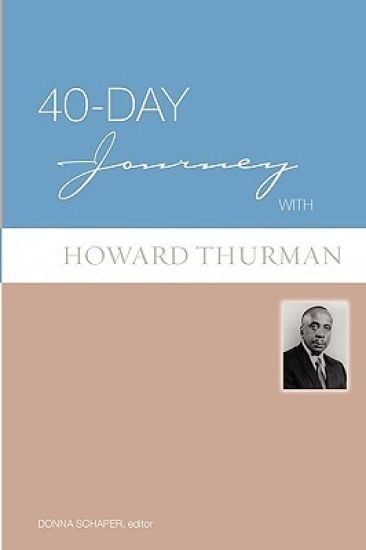
40-Day Journey with Howard Thurman
Howard Thurman was an influential American author, philosopher, theologian, educator, and civil rights leader. Strongly influenced by his grandmother, a former slave, who raised him and a Quaker mystic under whom he studied, Thurman adopted a philosophy of activism rooted in faith, guided by spirit, and maintained in peace. Editor Donna Schaper selects forty inspiring passages from the works of this spiritual advisor to Dr. Martin Luther King, Jr. to accompany readers on their own spiritual journeys. Ideal for traveling through the seasons of Advent and Lent.
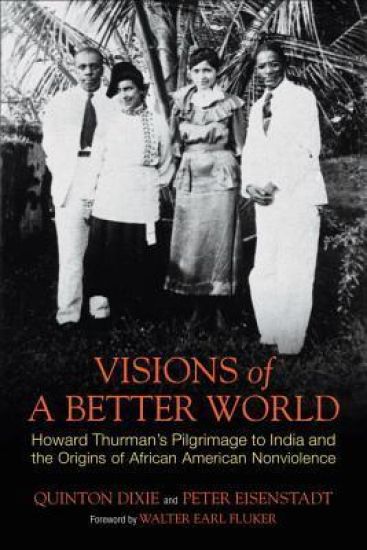
Visions of a Better World: Howard Thurman's Pilgrimage to India and the Origins of African American Nonviolence
In 1935, at the height of his powers, Howard Thurman, one of the most influential African American religious thinkers of the twentieth century, took a pivotal trip to India that would forever change him--and that would ultimately shape the course of the civil rights movement in the United States. When Thurman (1899-1981) became the first African American to meet with Mahatma Gandhi, he found himself called upon to create a new version of American Christianity, one that eschewed self-imposed racial and religious boundaries, and equipped itself to confront the enormous social injustices that plagued the United States during this period. Gandhi's philosophy and practice of satyagraha, or "soul force," would have a momentous impact on Thurman, showing him the effectiveness of nonviolent resistance. After the journey to India, Thurman's distinctly American translation of satyagraha into a Black Christian context became one of the key inspirations for the civil rights movement, fulfilling Gandhi's prescient words that "it may be through the Negroes that the unadulterated message of nonviolence will be delivered to the world." Thurman went on to found one of the first explicitly interracial congregations in the United States and to deeply influence an entire generation of black ministers--among them Martin Luther King Jr. Visions of a Better World depicts a visionary leader at a transformative moment in his life. Drawing from previously untapped archival material and obscurely published works, Quinton Dixie and Peter Eisenstadt explore, for the first time, Thurman's development into a towering theologian who would profoundly affect American Christianity--and American history.
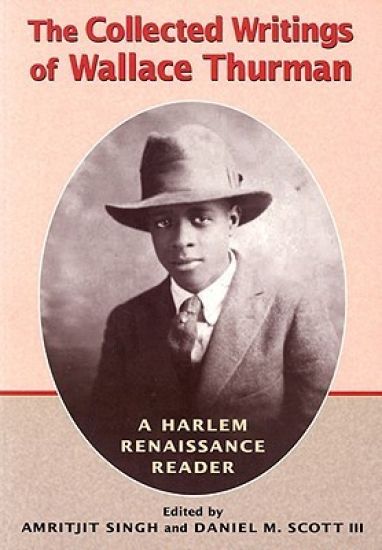
The Collected Writings of Wallace Thurman
This book is the definitive collection of the writings of Wallace Thurman (1902-1934), providing a comprehensive anthology of both the published and unpublished works of this bohemian, bisexual writer. Widely regarded as the enfant terrible of the Harlem Renaissance scene, Thurman was a leader among a group of young artists and intellectuals that included, among others, Langston Hughes, Zora Neale Hurston, Richard Bruce Nugent, Gwendolyn Bennett, and Aaron Douglas. Through the publication of magazines such as FIRE!! and Harlem: A Forum of Negro Life, Thurman tried to organize the opposition of the younger generation against the programmatic and promotional ideologies of the older generation of black leaders and intellectuals such as W.E.B. Du Bois and Benjamin Brawley. Thurman also left a permanent mark on the period through his prolific work as a novelist, playwright, short story writer, and literary critic, as well as by claiming for himself a voice as a public intellectual.The Collected Writings of Wallace Thurman is divided into eight sections to highlight the variety of genres and styles Thurman practiced as he courageously pursued controversial subjects throughout his short and brilliant career. It includes Essays on Harlem, Social Essays and Journalism, Correspondence, Literary Essays and Reviews, Poetry and Short Fiction, Plays, and Excerpts from Novel.Filling an important gap in Harlem Renaissance literature, this collection brings together all of Thurman’s essays, nearly all of his letters to major black and white figures of the 1920s, and three previously unpublished major works. These books are Aunt Hagar’s Children, which is a collection of essays and two full-length plays, Harlem, and Jeremiah the Magnificent. The introduction to the volume, along with the carefully researched introductory notes to each of the eight sections, provides a challenging new reevaluation of Thurman and the Harlem Renaissance for both the general reader and scholar.
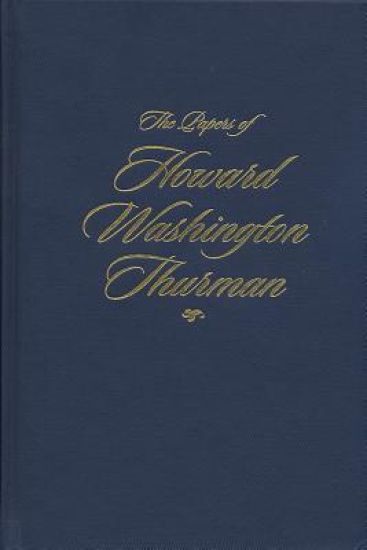
The Papers of Howard Washington Thurman

The Papers of Howard Washington Thurman

University of South Carolina Press
2012
sidottu
This is a four-volume, chronologically arranged documentary edition spanning the long and productive career of the Reverend Howard Thurman, one of the most significant leaders in the history of intellectual and religious life in the mid-twentieth-century US. Thurman was one of the principal architects of the modern non-violent Civil Rights Movement and a key mentor to Dr. Martin Luther King, Jr.
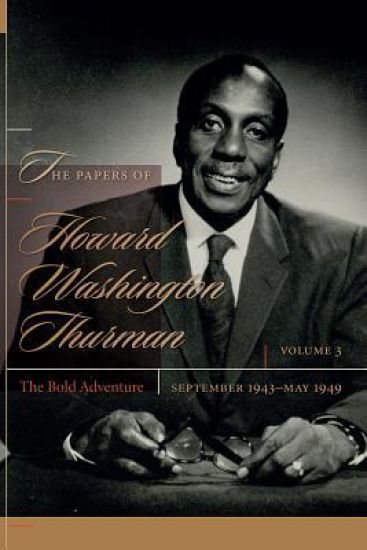
The Papers of Howard Washington Thurman

The Papers of Howard Washington Thurman

University of South Carolina Press
2015
sidottu
The Papers of Howard Washington Thurman is a multivolume, chronologically arranged documentary edition spanning the long and productive career of the Reverend Howard Thurman, one of the most significant leaders in the intellectual and religious life of United States in the mid-twentieth century. The first to lead a delegation of African Americans to meet with Mahatma Gandhi in 1936, Thurman later became one of the principal architects of the modern nonviolent civil rights movement and a key mentor to Dr. Martin Luther King, Jr. and others involved in the movement. In 1953 Life magazine named Thurman one of the twelve greatest preachers of the century.In volume 3 (September 1943-May 1949), Walter Earl Fluker documents Thurman's founding and leadership of the Fellowship Church for All Peoples in San Francisco, California--the nation's first major interracial, interfaith church. The war years showed Thurman new possibilities and strains in American culture. He felt the war had led to a moral coarsening as evidenced by a willingness to accept things that had been intolerable in peacetime, an emphasis on destroying enemies--real and imagined--and the conviction that the only way to solve problems was through the use of force, a conviction that became a self-fulfilling prophecy. Amid the uncertainty of this period, Thurman embarked on his great interfaith experiment as pastor to a small group of dedicated and courageous people who were primarily middle class, with at least as many white as black people, in a city that in 1940s America was far from the mainstream of black life. His letters, essays, and sermons show Thurman struggling to define and maintain the interracial character and practice of Fellowship Church, building its programs and membership while constantly wrestling with financial and location problems and preserving its separation from other organizations, most notably the Communist Party and its adult education program, the California Labour School. Thurman was also becoming more of a national figure, partly a result of the attention given to the Fellowship Church in publications such as Time magazine, but also because he had begun to publish regularly. From his first book, The Greatest of These, it was only three years until his Ingersoll lecture at Harvard, ""The Negro Spiritual Speaks of Life and Death,"" was offered by Harper. Two years later Thurman published what has proven his most enduring work, Jesus and the Disinherited, arguing that the key to understanding the religion of Jesus was his lack of Roman citizenship, a condition Thurman compared to the lives of southern black people, who, like Jesus, were effectively disinherited
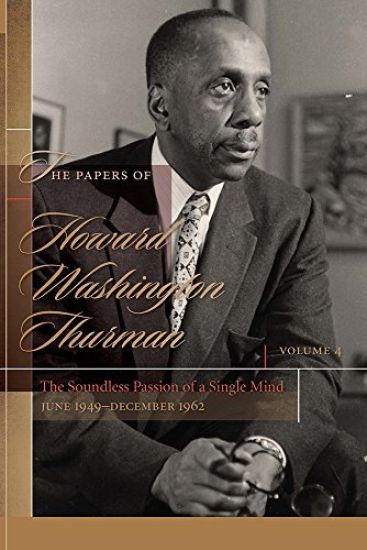
The Papers of Howard Washington Thurman, Volume 4

The Papers of Howard Washington Thurman, Volume 4

University of South Carolina Press
2017
sidottu
The Papers of Howard Washington Thurman is a multivolume, chronologically arranged documentary edition spanning the long and productive career of the Reverend Howard Thurman, one of the most significant leaders in the intellectual and religious life of the United States in the mid–twentieth century. The first to lead a delegation of African Americans to meet with Mahatma Gandhi in 1936, Thurman later became one of the principal architects of the modern nonviolent civil rights movement and a key mentor to Dr. Martin Luther King, Jr., and others involved in the movement. In 1953 Life magazine named Thurman one of the twelve greatest preachers of the century.In volume 4 (June 1949–December 1962), Walter Earl Fluker covers Thurman’s final years at the Fellowship Church in San Francisco and his years as the dean of Marsh Chapel at Boston University and professor of spiritual resources at Boston University School of Theology. In taking on these positions, Thurman became the first African American dean of chapel at a majority-white college or university in the United States and the first tenured African American professor at Boston University School of Theology.During his time at Boston University, Thurman tirelessly advocated for dialogue and understanding between faiths. Although charged with serving the university’s Protestant community, Thurman preferred to pursue a broader ministry. He sought to use his status as dean of the chapel to bring people together, always acting out of a profound belief that no religion holds a monopoly on truth or holiness. Thurman sought to make Marsh Chapel a place where Protestants, Catholics, Jews, and all others could learn from each other as they shared a universal search for meaning and purpose, each drawing strength and insights from his or her own religious tradition. He sought to make the university a place where people who had found safety and comfort in “keeping to their own” would come to understand that intellectual, spiritual, and ethical progress can take place only when barriers between groups are broken down. His vision of interreligious cooperation is as timely as ever, as people of many faiths work to build bridges of understanding and hope to carry us through the challenges of the twenty-first century.
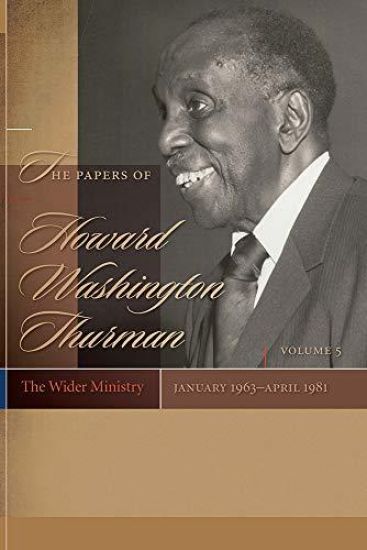
The Papers of Howard Washington Thurman, Volume 5

The Papers of Howard Washington Thurman, Volume 5

University of South Carolina Press
2019
sidottu
The Papers of Howard Washington Thurman is a five-volume, chronologically arranged documentary edition spanning the long and productive career of the Reverend Howard Thurman, one of the most significant leaders in the history of intellectual and religious life in the mid-twentieth-century United States. The first to lead a delegation of African Americans to meet personally with Mahatma Gandhi, in 1936, Thurman later became one of the principal architects of the modern, nonviolent civil rights movement and a key mentor to Martin Luther King, Jr. In 1953 Life magazine named Thurman as one of the twelve greatest preachers of the century.This fifth and final volume covers the last seventeen years of his life, from the end of his ministry as Boston University's dean of chapel in 1963 through his passing in April 1981. Thurman referred to these years as his ""wider ministry,"" one untethered to a specific congregation or institution, spreading his spiritual gifts and insights as widely as possible from his base in San Francisco. A resonant theme is Thurman's interaction with the black freedom struggle, from its heyday in the early 1960s through the turn to black power and nationalism. This includes Thurman's correspondence with many of the movement's leading figures and thinkers, among them Martin Luther King, Jr.; Whitney Young, Jr.; Jesse Jackson; Vincent Harding; and Lerone Bennett.Thurman's final years saw the culmination of his expansive religious vision, in his attempt to fashion a conception of spirituality that was at once deeply personal and truly inclusive. These final documents refer to many aspects of this, including his work with the Howard Thurman Educational Trust, his seminars with young African American divinity students, his outreach to Judaism and other religions, his efforts to come to terms with the cultural changes of the 1960s and 1970s, and his endeavors to pass on his legacy to another generation.
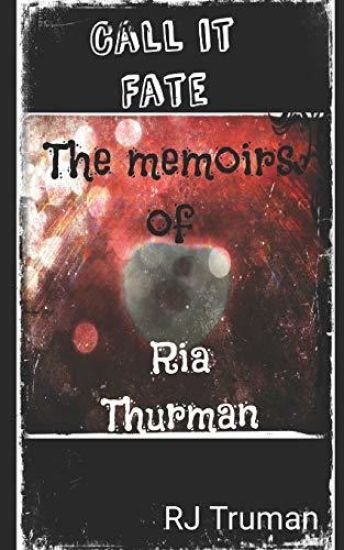
Call It Fate: The Memoirs of RIA Thurman

Call It Fate: The Memoirs of RIA Thurman

Rj Truman

Createspace Independent Publishing Platform
2018
nidottu
I am Ria Thurman and these are my memoirs. This is my story as told by me. I have lived, I've love, I've lost it all. But in my darkest days i found myself, my happiness, and my guiding light. You can call it luck, you can call it coincidence, or if you are like me, you an call it fate.