Kirjojen hintavertailu. Mukana 11 244 527 kirjaa ja 12 kauppaa.

Kirjahaku

Etsi kirjoja tekijän nimen, kirjan nimen tai ISBN:n perusteella.

1000 tulosta hakusanalla Tim Cooks

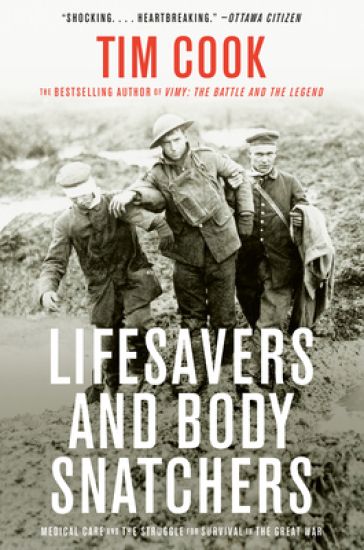
Lifesavers And Body Snatchers

Lifesavers And Body Snatchers

Tim Cook

Prentice Hall Press
2022
sidottu
Exposes the shocking story of the exploitation of human body parts during the Great War. Tim Cook has spent over a decade investigating the hidden history of Canadian medical doctors harvesting the body parts of slain soldiers and transporting their brains, lungs, bones, and other tissue or bones to the Royal College of Surgeons (RCS) in London. At least 1,200 individual Canadian body parts were removed from dead soldiers and sent to London, where they were stored, treated, and some put on display in exhibition galleries at the RCS.
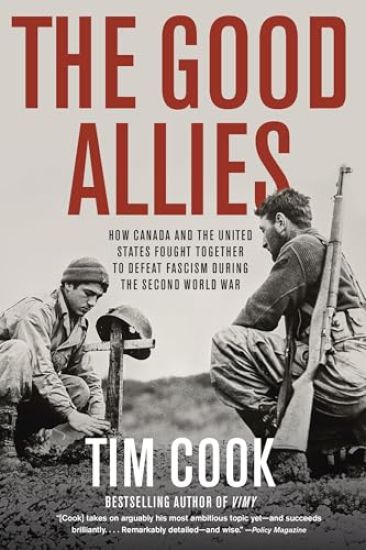
The Good Allies

The Good Allies

Tim Cook

Prentice Hall Press
2024
sidottu
From our country's most important war historian, a gripping account of the turbulent relationship between Canada and the US during the Second World War. The two nations entered the war amidst rivalry and mutual suspicion, but learned to fight together before emerging triumphant and bound by an alliance that has lasted to this day. When the Second World War broke out in 1939, it set in motion a deadly struggle between the Axis powers and the Allies, but also fraught negotiations between and among the Allies. On questions of diplomacy, economic policy, industrial might, military capabilities, and even national sovereignty, thousands of lives and the fate of the free world depended on back-room deals and desperate trade-offs between soldiers, diplomats, and leaders. In North America, Canada and the US strained to forge a new military alliance to guard their coasts and fend off German U-boats and the menace of a Japanese invasion. Wartime economies were entwined to produce a staggering contribution of weapons to keep Britain and other allies in the war. The defense of North America against enemy threats was essential before the US and Canada could send armies, navies, and air forces overseas. In his trademark style, Tim Cook employs eyewitness accounts to vividly lay bare the brutality of combat and the courage of North Americans under fire. Behind the fighting fronts, the charged and often secret communications between national leaders Churchill, Roosevelt, and King reveals how their personalities shaped the outcome of history's most destructive war, the fate of the British Empire, and the North American alliance that lives on to this day. The Good Allies is a masterful account of how Canadians and Americans made the transition from wary rivals to steadfast allies, and how Canada thrived in the shadow of the military and global superpower. In exploring this complex and crucial dimension of the Second World War and its legacy, Cook recounts two nations' story of cooperation, of sacrifice, and of bleeding together to save the world from the fascist threat.
The Good Allies: How Canada and the United States Fought Together to Defeat Fascism During the Second World War
" Cook] takes on arguably his most ambitious topic yet--and succeeds brilliantly.... Remarkably detailed...and wise." --Policy Magazine From our country's most important war historian, a gripping account of the turbulent relationship between Canada and the US during the Second World War. The two nations entered the war amidst rivalry and mutual suspicion, but learned to fight together before emerging triumphant and bound by an alliance that has lasted to this day. When the Second World War broke out in 1939, it set in motion a deadly struggle between the Axis powers and the Allies, but also fraught negotiations between and among the Allies. On questions of diplomacy, economic policy, industrial might, military capabilities, and even national sovereignty, thousands of lives and the fate of the free world depended on back-room deals and desperate trade-offs between soldiers, diplomats, and leaders. In North America, Canada and the US strained to forge a new military alliance to guard their coasts and fend off German U-boats and the menace of a Japanese invasion. Wartime economies were entwined to produce a staggering contribution of weapons to keep Britain and other allies in the war. The defence of North America against enemy threats was essential before the US and Canada could send armies, navies, and air forces overseas. In his trademark style, Tim Cook employs eyewitness accounts to vividly lay bare the brutality of combat and the courage of North Americans under fire. Behind the fighting fronts, the charged and often secret communications between national leaders Churchill, Roosevelt, and King reveal how their personalities shaped the outcome of history's most destructive war, the fate of the British Empire, and the North American alliance that lives on to this day. The Good Allies is a masterful account of how Canadians and Americans made the transition from wary rivals to steadfast allies, and how Canada thrived in the shadow of the military and global superpower. In exploring this complex and crucial dimension of the Second World War and its legacy, Cook recounts two nations' story of cooperation, of sacrifice, and of bleeding together to save the world from the fascist threat.
At Home With: The Aztecs

At Home With: The Aztecs

Tim Cooke

Wayland
2014
sidottu
Life in the past was in many ways very different from life today, but in one way it was very similar.There were always some people who were wealthier, more powerful or more famous than everyone else- and it was those early celebrities who set the fashions of the age and who got tongues wagging withearly celebrity gossip. At Home With... uses a magazine approach to reveal what fashionable life was like in various societies.Each book in the series focuses on a highly popular and widely studied period of history. The subjects include famous individuals and their homes, fashions, pastimes, food and drink, ways of getting around - and the must-have possessions of the day.
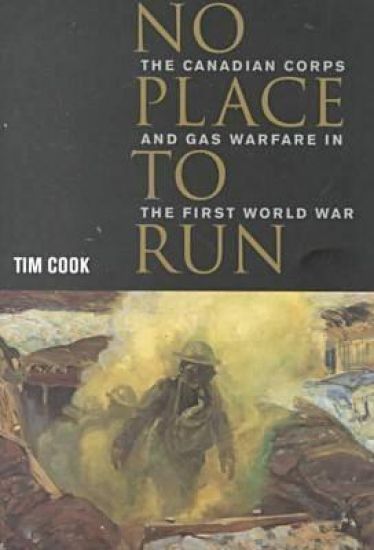
No Place to Run

No Place to Run

Tim Cook

University of British Columbia Press
1999
sidottu
Historians of the First World War have often dismissed the important role of poison gas in the battles of the Western Front. In No Place to Run, however, Tim Cook shows that the serious threat of gas did not disappear with the introduction of gas masks. By 1918, gas shells were used by all armies to deluge the battlefield, and those not instructed with a sound anti-gas doctrine left themselves exposed to this new chemical plague.Cook uses fascinating primary sources -- diaries, letters, reminiscences, published memoirs, and the official archival record -- to illustrate the horror of gas warfare for the average trench soldier. As the first chlorine clouds rolled across the fields during the 2nd Battle of Ypres, soldiers were forced to stuff urine-soaked handkerchiefs in their mouths in order to survive. As the gas war evolved, mustard gas plagued the soldiers at the front as it lay active in mud and snow for weeks on end. There was no escape from the pervasive nature of poison gas. Entering the dug-outs, it attacked men when they were least ready. In response, the Canadian Corps had to develop an anti-gas doctrine, a process that Cook describes in full.No Place to Run provides a challenging re-examination of the function of gas warfare in the First World War, including its important role in delivering victory in the campaign of 1918 and its curious postwar legacy. It will be of interest both to historians and military buffs.
No Place to Run

No Place to Run

Tim Cook

University of British Columbia Press
2000
pokkari
Historians of the First World War have often dismissed the important role of poison gas in the battles of the Western Front. In No Place to Run, however, Tim Cook shows that the serious threat of gas did not disappear with the introduction of gas masks. By 1918, gas shells were used by all armies to deluge the battlefield, and those not instructed with a sound anti-gas doctrine left themselves exposed to this new chemical plague.Cook uses fascinating primary sources -- diaries, letters, reminiscences, published memoirs, and the official archival record -- to illustrate the horror of gas warfare for the average trench soldier. As the first chlorine clouds rolled across the fields during the 2nd Battle of Ypres, soldiers were forced to stuff urine-soaked handkerchiefs in their mouths in order to survive. As the gas war evolved, mustard gas plagued the soldiers at the front as it lay active in mud and snow for weeks on end. There was no escape from the pervasive nature of poison gas. Entering the dug-outs, it attacked men when they were least ready. In response, the Canadian Corps had to develop an anti-gas doctrine, a process that Cook describes in full.No Place to Run provides a challenging re-examination of the function of gas warfare in the First World War, including its important role in delivering victory in the campaign of 1918 and its curious postwar legacy. It will be of interest both to historians and military buffs.
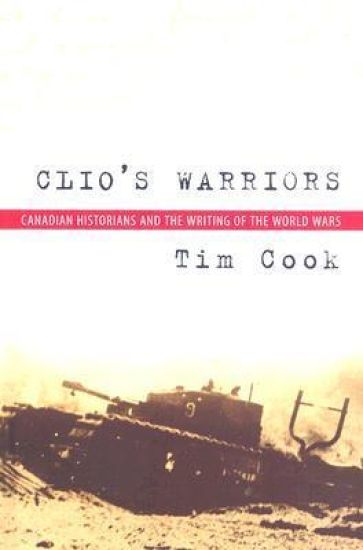
Clio's Warriors

Clio's Warriors

Tim Cook

University of British Columbia Press
2006
sidottu
Clio's Warriors examines how the Canadian world war experience has been constructed and reconstructed over time. Tim Cook elucidates the role of historians in codifying the sacrifice and struggle of a generation as he discusses historical memory and writing, the creation of archives, and the war of reputations that followed each of the world wars on the battlefield.Only recently have academic military historians pushed the discipline to explore the impact of war on society. Even so, the publications of official historians remain the central narrative of the national experience. In analyzing where the profession has come from and where it needs to go, Clio's Warriors plays a vital role in the ongoing challenge of writing critical history. It will be an essential addition to the library of all Canadian military historians and students of military history and historiography.
Clio's Warriors

Clio's Warriors

Tim Cook

University of British Columbia Press
2007
pokkari
Clio's Warriors examines how the Canadian world war experience has been constructed and reconstructed over time. Tim Cook elucidates the role of historians in codifying the sacrifice and struggle of a generation as he discusses historical memory and writing, the creation of archives, and the war of reputations that followed each of the world wars on the battlefield.Only recently have academic military historians pushed the discipline to explore the impact of war on society. Even so, the publications of official historians remain the central narrative of the national experience. In analyzing where the profession has come from and where it needs to go, Clio's Warriors plays a vital role in the ongoing challenge of writing critical history. It will be an essential addition to the library of all Canadian military historians and students of military history and historiography.
Explore with Henry Hudson

Explore with Henry Hudson

Tim Cooke

Crabtree Classics
2014
nidottu
This fascinating book follows the travels of English explorer and sea navigator Henry Hudson. Historical information and high-interest fact boxes are presented in an entertaining tabloid style that guides readers through major voyages, explorations, and discoveries. Topics include what led Hudson to become an explorer, Northern exploration, life on sea voyages, merchant companies, and Hudson's legacy. Teacher's guide available.
Go West with Cowboys and Ranchers

Go West with Cowboys and Ranchers

Tim Cooke

Crabtree Classics
2016
nidottu
When the cattle trade moved west, herds took over vast expanses of land. Go west with the cowboys that rode the range and herded cattle along the trails from the southwest to the railheads. Discover how many of the cowboys were African Americans or Latin American vaqueros. Find out what life was like for the ranchers who owned the herds and how ranching practices sometimes led to armed conflict with neighboring farmers, such as in the Johnson County War.
Explore with Francisco Vazquez de Coronado
This fascinating book follows the travels of the Spanish conquistador Francisco Vasquez de Coronado on his quest to find the fabled Cities of Gold in what is now the Southwestern United States. Historical information and high-interest fact boxes are presented in an appealing tabloid style that guides readers through major voyages, explorations, and discoveries. Topics include why the Spaniards sent Coronado into the Southwest, deadly clashes with the Pueblo peoples, the first European sighting of the Grand Canyon and the Great Plains, and Coronado's eventual disappointment and disgrace. Teacher's guide available.
Explore with Gertrude Bell

Explore with Gertrude Bell

Tim Cooke

Crabtree Classics
2017
sidottu
This fascinating book takes readers through the life story of influential English archaeologist and traveler Gertrude Bell. Bell explored what is now the Middle East and played a significant role in the creation of modern Iraq. Historical facts, images, and high-interest information are presented in a tabloid-style to engage readers in an accessible way. Topics include Bell's work in archaeology, her mountain summits, and her role in World War One. Teacher's guide available.
The Impact of the Internet

The Impact of the Internet

Tim Cooke

Crabtree Publishing Company
2020
sidottu
The Internet gives us information at our fingertips and puts us in touch instantly with anyone in the world. It reduces our need to use paper or travel long distances to meet, but its growth has come at a cost. Find out how we can stay connected without harming ourselves or the planet in this insightful look at the Internet and social media. Case studies reveal the environmental impact of producing and discarding the computers and other devices we use to access the Internet, as well as the human toll from serious problems such as cyber bullying and online addiction.
The Impact of Buildings and Cities

The Impact of Buildings and Cities

Tim Cooke

Crabtree Publishing Company
2020
nidottu
More than half the world's population live in cities, and that number is rising. Find out how we can create buildings and cities without harming the environment in this informative title. The growth of cities can lead to overcrowding, pollution from transportation and factories, and the release of greenhouse gases from buildings. Case studies show how scientists, architects, and planners are investigating how to build more energy-efficient houses and more sustainable cities.
Vagrant Alcoholics

Vagrant Alcoholics

Tim Cook

TAYLOR FRANCIS LTD
2023
sidottu
In the 1970s the vagrant alcoholic was not a new problem, and for the previous two hundred years people had asked: What can be done to help them? Why not lock them up? Why don’t they get jobs? Tim Cook had worked for many years with homeless men and in this book, originally published in 1975, he describes the problems of vagrant alcoholics and the way in which one voluntary organization, the Alcoholics Recovery Project, based in South London, responded to these problems.The response had in essence been one of experimentation beginning with the first hostel in 1966, the development of non-residential shop fronts in 1970, and the employment of a team of recovered alcoholics in 1974. The Project sought to break down the mistrust surrounding the problem on all sides and to rediscover the potential of the so-called ‘hopeless’ skid row alcoholic. Tim Cook places the Project’s work in the wider context of social work and social responsibility, and shows that its methods had relevance for other agencies. He also examines the persistent failure of successive governments to take any positive action to tackle the problems of vagrant alcoholics.Throughout the book the views of the alcoholics themselves are integrated with the attitudes and experiences of the Project workers. The author offers an assessment of the Project’s work, and an outline of its limitations, stressing that no easy answer exists to this problem. But, he believed, the Project had made valuable progress towards a greater understanding of the vagrant alcoholic and his milieu.
Vagrant Alcoholics

Vagrant Alcoholics

Tim Cook

TAYLOR FRANCIS LTD
2025
nidottu
In the 1970s the vagrant alcoholic was not a new problem, and for the previous two hundred years people had asked: What can be done to help them? Why not lock them up? Why don’t they get jobs? Tim Cook had worked for many years with homeless men and in this book, originally published in 1975, he describes the problems of vagrant alcoholics and the way in which one voluntary organization, the Alcoholics Recovery Project, based in South London, responded to these problems.The response had in essence been one of experimentation beginning with the first hostel in 1966, the development of non-residential shop fronts in 1970, and the employment of a team of recovered alcoholics in 1974. The Project sought to break down the mistrust surrounding the problem on all sides and to rediscover the potential of the so-called ‘hopeless’ skid row alcoholic. Tim Cook places the Project’s work in the wider context of social work and social responsibility, and shows that its methods had relevance for other agencies. He also examines the persistent failure of successive governments to take any positive action to tackle the problems of vagrant alcoholics.Throughout the book the views of the alcoholics themselves are integrated with the attitudes and experiences of the Project workers. The author offers an assessment of the Project’s work, and an outline of its limitations, stressing that no easy answer exists to this problem. But, he believed, the Project had made valuable progress towards a greater understanding of the vagrant alcoholic and his milieu.
Facts and Artefacts: Ancient Rome

Facts and Artefacts: Ancient Rome

Tim Cooke

Franklin Watts Ltd
2018
sidottu
The ancient Romans were skilled builders, artists and inventors, and one of the best ways to discover how they lived is by studying the artefacts they made. Just as ancient objects enable us to step back into the world of the people who made them, the stories people told can reveal what they thought about their world. This book combines facts about the ancient Romans with photographs of the artefacts they left behind and the stories they shared with each other to present a full picture of life at the time.
Time Travel Guides: The Shang Dynasty and Yin

Time Travel Guides: The Shang Dynasty and Yin

Tim Cooke

Hachette Children's Group
2024
sidottu
Step back in time to discover life during the Shang Dynasty with this handy time travel guidebook! Perfect for the KS2 history curriculum, and for readers aged 7 and up.Time travel back over 3,000 to visit the fascinating Shang dynasty in China, and find out all about Shang life and culture. Get ready to visit a bronze-making workshop, eat elephant at a banquet, play panpipes and shop for precious jade and silk at a bustling Shang market. Like modern travel guides, the books in this series highlight must-see features and explain local culture. Each highlighted destination contains an explanation of what took part in these areas, as well as a look at important artefacts found there providing a bigger picture of life in the past. Typical travel guide notes include, 'best time to visit', 'what to eat' and 'where to stay'. Perfect for the KS2 history curriculum, and for readers aged 7 and up.Titles in the series:The Ancient Egyptians and ThebesThe Ancient Greeks and AthensThe Maya and Chichén ItzáRoman Britain and LondiniumThe Shang Dynasty and YinxuThe Stone Age and Skara BraeThe Victorians and LondonViking Britain and Jorvik