Kirjojen hintavertailu. Mukana 12 442 543 kirjaa ja 12 kauppaa.

Kirjahaku

Etsi kirjoja tekijän nimen, kirjan nimen tai ISBN:n perusteella.

1000 tulosta hakusanalla Timothy D Eckert

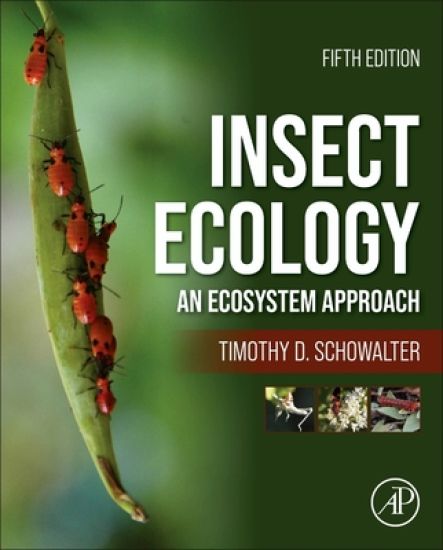
Insect Ecology

Insect Ecology

Timothy D. Schowalter

ELSEVIER SCIENCE TECHNOLOGY
2022
sidottu
Insect Ecology: An Ecosystem Approach, Fifth Edition provides the most updated and comprehensive knowledge of the diversity of insect responses to environmental changes and their effects on ecosystem properties and services. Written by an expert in the field, this book addresses ways in which insect morphology, physiology and behavior tailor their adaptation to particular environmental conditions, how those adaptations affect their responses to environmental changes, and how their responses affect ecosystem properties and the ecosystem services on which humans depend for survival. This edition also addresses recent reports of global declines in insect abundance and how these declines could affect human interests. Insect Ecology: An Ecosystem Approach, Fifth Edition is an important resource for researchers, entomologists, ecologists, pest managers and conservationists who want to understand insect ecology and to manage insects in ways that sustain the delivery of ecosystem services. Graduate and advanced undergraduate students may also find this as a useful resource for entomology and specifically insect ecology courses.

Food, Fuel, and Shelter

Food, Fuel, and Shelter

Timothy D. Tregarthen

Routledge
2019
sidottu
As human pressures on land intensify, land-use decisions in response to the new demands become increasingly critical. Thus, the fate of the little-known Running Creek Watershed assumes a broad importance. Running Creek Watershed is a 150-kilometer strip of land lying just east of the rapidly expanding urban corridor of Colorado's front range. The land in the watershed is devoted primarily to the production of food, and includes pasture, dry crop, and irrigated crop operations. Two sources of demand suggest dramatic future changes in this land-use pattern: advancing urbanization, and energy demands for the coal available in a large deposit 25 kilometers east of Denver. In this volume Timothy Tregarthen presents a synthesis of discussions and papers presented at a 1976 conference that focused on the trade-offs implicit in the land-use alternatives of food production, urbanization, and energy development. Sponsored by the Wright-Ingraham Institute, the conference brought together a wide range of scientists, humanists, public officials, representatives of industrial and agricultural organizations, and interested citizens concerned not only about this important regional problem, but about the broader implications of competing land-use needs. Conference participants examined factors important to changes in land use, giving particular attention to the natural, economic, political, and value systems at work on the watershed in terms of how these systems affect and will be affected by changing land-use patterns.
Making Technology Work in Schools

Making Technology Work in Schools

Timothy D. Green; Loretta C. Donovan; Jody Peerless Green

Routledge
2020
sidottu
Making Technology Work in Schools is an easy-to-use guide for transforming your school into a learner-centered, tech-rich environment. School systems are increasingly adopting ambitious new educational technologies, but how do you make sure they are yielding effective teaching and learning experiences? The authors’ proven, intuitive practices speak directly to academic coaches, school technology leads, district technology directors, and teachers on special assignment who are responsible for introducing new tools and programs. After reading this book, you will be able to better prepare the educators you serve to empower their learners, whether digitally savvy or not, to be engaged, collaborative, and better prepared for college and careers.
Food, Fuel & Shelter

Food, Fuel & Shelter

Timothy D. Tregarthen

Routledge
2020
nidottu
This book presents a synthesis of discussions and papers presented at a 1976 conference, held at the University of Northern Colorado at Greeley, that focused on the trade-offs implicit in the land-use alternatives of food production, urbanization, and energy development.
Insects and Society

Insects and Society

Timothy D. Schowalter

CRC Press
2019
nidottu
Recommended in CHOICE, February 2021Insects are all around us, outweighing humanity by 17 times. Many are nuisances; they compete with us for food and carry some of our most devastating diseases. Many common pests have been transported worldwide by humans. Yet, some recent reports suggest dramatic declines in some important groups, such as pollinators and detritivores. Should we care? Yes, we should. Without insect pollinators we’d lose 35% of our global food production; without detritivores, we would be buried in un-decayed refuse. Insects are also critical sources for nutritional, medical and industrial products. A world without insects would seem a very different and unpleasant place. So why do insects inspire such fear and loathing? This concise, full-color text challenges many entrenched perceptions about insect effects on our lives. Beginning with a summary of insect biology and ecology that affect their interactions with other organisms, it goes on to describe the various positive and negative ways in which insects and humans interact. The final chapters describe factors that affect insect abundance and approaches to managing insects that balance their impacts. The first textbook to cater directly to those studying Insect and Society or Insect Ecology modules, this book will also be fascinating reading for anyone interested in learning how insects affect human affairs and in applying more sustainable approaches to "managing" insects. This includes K-12 teachers, undergraduate students, amateur entomologists, conservation practitioners, environmentalists, as well as natural resource managers, land use planners and environmental policy makers.
Insects and Society

Insects and Society

Timothy D. Schowalter

CRC Press
2019
sidottu
Recommended in CHOICE, February 2021Insects are all around us, outweighing humanity by 17 times. Many are nuisances; they compete with us for food and carry some of our most devastating diseases. Many common pests have been transported worldwide by humans. Yet, some recent reports suggest dramatic declines in some important groups, such as pollinators and detritivores. Should we care? Yes, we should. Without insect pollinators we’d lose 35% of our global food production; without detritivores, we would be buried in un-decayed refuse. Insects are also critical sources for nutritional, medical and industrial products. A world without insects would seem a very different and unpleasant place. So why do insects inspire such fear and loathing? This concise, full-color text challenges many entrenched perceptions about insect effects on our lives. Beginning with a summary of insect biology and ecology that affect their interactions with other organisms, it goes on to describe the various positive and negative ways in which insects and humans interact. The final chapters describe factors that affect insect abundance and approaches to managing insects that balance their impacts. The first textbook to cater directly to those studying Insect and Society or Insect Ecology modules, this book will also be fascinating reading for anyone interested in learning how insects affect human affairs and in applying more sustainable approaches to "managing" insects. This includes K-12 teachers, undergraduate students, amateur entomologists, conservation practitioners, environmentalists, as well as natural resource managers, land use planners and environmental policy makers.
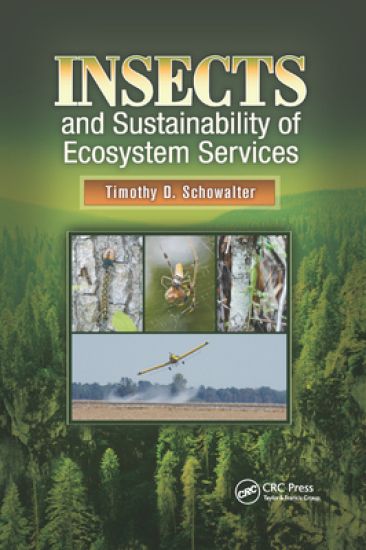
Insects and Sustainability of Ecosystem Services
With few exceptions, insects are perceived in industrialized countries as undesirable pests. In reality, relatively few insects interfere with us or our resources. Most have benign or positive effects on ecosystem services, and many represent useful resources in non-industrialized countries. Challenging traditional perceptions of the value of insects, Insects and Sustainability of Ecosystem Services explores the ways insects affect the ecosystem services we depend upon. It also fosters an appreciation for the amazing diversity, adaptive ability, and natural roles of insects.The book discusses how the ways in which we manage insects will determine an ecosystem’s capacity to continue to supply services. It reviews aspects of insect physiology, behavior, and ecology that affect their interactions with other ecosystem components and ecosystem services, emphasizing critical effects of insects on the sustainability of ecosystem processes and services. The author examines the integration of insect ecology with self-regulatory aspects of ecosystems that control primary production, energy and nutrient fluxes, and global climate—functions that underlie the sustainability of ecosystem services. Clearly, we need environmental policies that meet needs for pest control where warranted, but do not undermine the important contributions of insects to sustaining ecosystem processes and services. With in-depth coverage of the multiple, often compensatory, effects of insects on various resources or ecosystem services and on the consequences of control tactics for those resources or services, Insects and Sustainability of Ecosystem Services recommends changes in perspectives and policies regarding insects that will contribute to sustainability of ecosystem services.
International Mediation in Civil Wars
This book evaluates the role of international mediators in bringing civil wars to an end and makes the case for ‘powerful peacemaking’ – using incentives and sanctions – to leverage parties into peace.As internal violence within countries is a hugely significant threat to international peace in the post-Cold War era, the question of how these wars end has become an urgent research and policy question. This volume explores a critical aspect of peacemaking that has yet to be sufficiently evaluated: the turbulent period beyond the onset of formal or open negotiations to end civil wars and the clinching of an initially sustainable negotiated settlement. The book argues that the transnational flow of weapons, resources, and ideas means that when civil wars today end, they are more likely to do so at the negotiating table than on the battlefield. It uses bargaining theory to develop an analytical framework to evaluate peace processes – moving from stalemate in wars to negotiated settlement – and it rigorously analyses the experiences of five cases of negotiated transitions from war and the role of international mediators: South Africa, Liberia, Burundi, Kashmir, and Sri Lanka.
International Mediation in Civil Wars
This book evaluates the role of international mediators in bringing civil wars to an end and makes the case for ‘powerful peacemaking’ – using incentives and sanctions – to leverage parties into peace.As internal violence within countries is a hugely significant threat to international peace in the post-Cold War era, the question of how these wars end has become an urgent research and policy question. This volume explores a critical aspect of peacemaking that has yet to be sufficiently evaluated: the turbulent period beyond the onset of formal or open negotiations to end civil wars and the clinching of an initially sustainable negotiated settlement. The book argues that the transnational flow of weapons, resources, and ideas means that when civil wars today end, they are more likely to do so at the negotiating table than on the battlefield. It uses bargaining theory to develop an analytical framework to evaluate peace processes – moving from stalemate in wars to negotiated settlement – and it rigorously analyses the experiences of five cases of negotiated transitions from war and the role of international mediators: South Africa, Liberia, Burundi, Kashmir, and Sri Lanka.
Global Pop

Global Pop

Timothy D Taylor

Routledge
1997
nidottu
Global Pop examines the rise of "world musics" and "world beat", and some of the musicians associated with these recent genres such as Peter Gabriel, Ladysmith Black Mambazo, and Johnny Clegg. Drawing on a wide range of sources - academic, popular, cyber, interviews, and the music itself - Global Pop charts an accessible path through many of the issues and contradictions surrounding the contemporary movement of people and musics worldwide. Global Pop examines the range of discourses employed in and around world music, demonstrating how the central concept of authenticity is wielded by musicians, fans, and other listeners, and looks at some of these musics in detail, examining ways they are caught up in forms of domination and resistance. The book also explores how some cross-cultural collaborations may fashion new musics and identities through innovative combinations of sounds and styles.
Strange Sounds

Strange Sounds

Timothy D Taylor

Routledge
2001
sidottu
In Strange Sounds, Timothy D. Taylor explains the wonder and anxiety provoked by a technological revolution that began in the 1940s and gathers steam daily. Taylor discusses the ultural role of technology, its use in making music, and the inevitable concerns about "authenticity" that arise from electronic music. Informative and highly entertaining for both music fans and scholars, Strange Sounds is a provocative look at how we perform, listen to, and understand music today.
Strange Sounds

Strange Sounds

Timothy D Taylor

Routledge
2001
nidottu
In Strange Sounds, Timothy D. Taylor explains the wonder and anxiety provoked by a technological revolution that began in the 1940s and gathers steam daily. Taylor discusses the ultural role of technology, its use in making music, and the inevitable concerns about "authenticity" that arise from electronic music. Informative and highly entertaining for both music fans and scholars, Strange Sounds is a provocative look at how we perform, listen to, and understand music today.
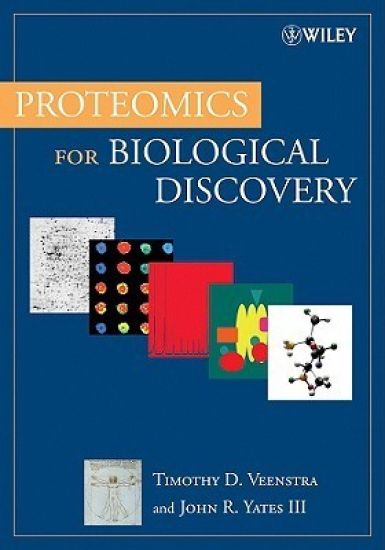
Proteomics for Biological Discovery

Proteomics for Biological Discovery

Timothy D. Veenstra

John Wiley Sons
2006
nidottu
Written by recognized experts in the study of proteins, "Proteomics for Biological Discovery" begins by discussing the emergence of proteomics from genome sequencing projects and a summary of potential answers to be gained from proteome-level research. The tools of proteomics, from conventional to novel techniques, are then dealt with in terms of underlying concepts, limitations and future directions. An invaluable source of information, this title also provides a thorough overview of the current developments in post-translational modification studies, structural proteomics, biochemical proteomics, microfabrication, applied proteomics, and bioinformatics relevant to proteomics. Presents a comprehensive and coherent review of the major issues faced in terms of technology development, bioinformatics, strategic approaches, and applications Chapters offer a rigorous overview with summary of limitations, emerging approaches, questions, and realistic future industry and basic science applications Discusses higher level integrative aspects, including technical challenges and applications for drug discovery Accessible to the novice while providing experienced investigators essential information "Proteomics for Biological Discovery" is an essential resource for students, postdoctoral fellows, and researchers across all fields of biomedical research, including biochemistry, protein chemistry, molecular genetics, cell/developmental biology, and bioinformatics.
The Common LISP Companion

The Common LISP Companion

Timothy D. Koschmann

John Wiley Sons Inc
1990
nidottu
A self-contained, intermediate-level introduction to the structure and syntax of Common Lisp, this text is the first based on the draft ANSI standard for Common Lisp. Presents the concepts of object-oriented programming and incorporates the Common Lisp Object-Oriented Systems (CLOS) of the new ANSI standard. Includes end-of-section exercises. The end-of-chapter problems are answered at the back of the book.
Proteomic Applications in Cancer Detection and Discovery

Proteomic Applications in Cancer Detection and Discovery

Timothy D. Veenstra

John Wiley Sons Inc
2013
sidottu
Helps researchers in proteomics and oncology work together to understand, prevent, and cure cancer Proteomic data is increasingly important to understanding the origin and progression of cancer; however, most oncologic researchers who depend on proteomics for their studies do not collect the data themselves. As a result, there is a knowledge gap between scientists, who devise proteomic techniques and collect the data, and the oncologic researchers, who are expected to interpret and apply proteomic data. Bridging the gap between proteomics and oncology research, this book explains how proteomic technology can be used to address some of the most important questions in cancer research. Proteomic Applications in Cancer Detection and Discovery enables readers to understand how proteomic data is acquired and analyzed and how it is interpreted. Author Timothy Veenstra has filled the book with examples?many based on his own firsthand research experience?that clearly demonstrate the application of proteomic technology in oncology research, including the discovery of novel biomarkers for different types of cancers. The book begins with a brief introduction to systems biology, explaining why cancer is a systems biology disease. Next, it covers such topics as: Mass spectrometry in cancer researchApplication of proteomics to global phosphorylation analysisSearch for biomarkers in biofluidsRise and fall of proteomic patterns for cancer diagnosticsEmergence of protein arraysRole of proteomics in personalized medicine The final chapter is dedicated to the future prospects of proteomics in cancer research. By guiding readers through the latest proteomic technologies and their applications in cancer research, Proteomic Applications in Cancer Detection and Discovery enhances the ability of researchers in proteomics and researchers in oncology to collaborate in order to better understand cancer and develop strategies to prevent and treat it.
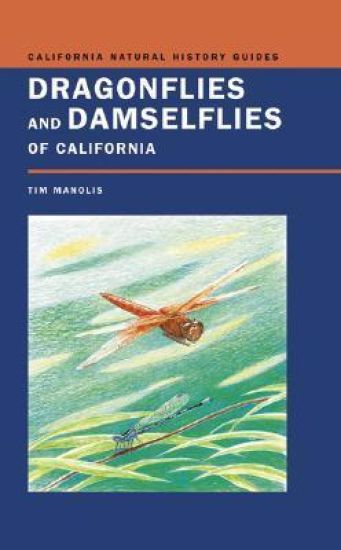
Dragonflies and Damselflies of California

Dragonflies and Damselflies of California

Timothy D. Manolis

University of California Press
2003
pokkari
The Exclamation Damsel, Bison Snaketail, Powdered Dancer, Black Meadowhawk, and Sedge Sprite are just a few of the dragonflies and damselflies identified in this complete guide to California's abundant Odonates. o Species accounts discuss identification in the field and in the hand, behavior, habitat associations, geographic distribution, and flight season o Includes 40 vivid full-color plates and supplemental black-and-white drawings o Provides a general overview of dragonfly anatomy, behavior, life history, and a complete set of range maps
The Mat

The Mat

Timothy D Mitchell

Match of Life
2019
pokkari
My name is Timothy Mitchell, I've been involved with amateur wrestling since 1981. As a wrestler, coach and official. Being a wrestler. I learned how to handle many situations that have come my way. I feel there's nothing I can't achieve or have anything to fear. This is a direct result from being a wrestler.
Abacar the Wizard

Abacar the Wizard

Timothy D Erenberger

iUniverse
2001
pokkari
An adventure across ancient Europe upon the Magical Earth. Monsters and magic are an everyday occurrence in Abacar's world.A fantastic adventure with plenty of magic, sword fighting, and monsters.
Athanasius and Constantius

Athanasius and Constantius

Timothy D. Barnes

Harvard University Press
2001
nidottu
As the high-ranking Bishop of Alexandria from 328 to 373, Athanasius came into conflict with no fewer than four Roman emperors—Constantine himself, his son Constantius, Julian the Apostate, and the “Arian” Valens. In this new reconstruction of Athanasius’s career, Timothy D. Barnes analyzes the nature and extent of the Bishop’s power, especially as it intersected with the policies of these emperors.Repeatedly condemned and deposed by church councils, the Bishop persistently resurfaced as a player to contend with in ecclesiastic and imperial politics. Barnes’s work reveals that Athanasius’s writings, though a significant source for this period, are riddled with deliberate misinterpretations, which historians through the ages have uncritically accepted.Untangling longstanding misconceptions, Barnes reveals the Bishop’s true role in the struggles within Christianity, and in the relations between the Roman emperor and the Church at a critical juncture.