Kirjojen hintavertailu. Mukana 11 424 842 kirjaa ja 12 kauppaa.

Kirjahaku

Etsi kirjoja tekijän nimen, kirjan nimen tai ISBN:n perusteella.

1000 tulosta hakusanalla Timothy George

Hare Haiku Ravenwood Hermitage - Volume Five

Hare Haiku Ravenwood Hermitage - Volume Five

Timothy George Hare Ra Ma

Createspace Independent Publishing Platform
2012
nidottu
Hare Haiku - Ravenwood Hermitage Volume Five Timothy George Hare RA MA Internationally-Published Architect [email protected] Copyright(c)2012-2018 Timothy George Hare - All Rights Reserved About Timothy George Hare RA MA Registered Architect . Haikuist Photographer . Humanitarian The combination of his rare talents with a camera, a Haiku pen, and his professional interest in architecture, has led to Haiku becoming one of his main avocations. Hare has worked for the promotion and preservation of antique architecture around the world, including helping save Grand Central Station in New York City.

Balm in Gilead – A Theological Dialogue with Marilynne Robinson

Balm in Gilead – A Theological Dialogue with Marilynne Robinson

Timothy Larsen; Keith L. Johnson; Han–luen Kantze Komline; Timothy George; Lauren F. Winner

IVP Academic
2019
nidottu
Pulitzer Prize–winning novelist Marilynne Robinson is one of the most eminent public intellectuals in America today. In addition to literary elegance, her trilogy of novels (Gilead, Home, and Lila) and her collections of essays offer probing meditations on the Christian faith. Many of these reflections are grounded in her belief that the sixteenth-century Protestant Reformer John Calvin still deserves a hearing in the twenty-first century. This volume, based on the 2018 Wheaton Theology Conference, brings together the thoughts of leading theologians, historians, literary scholars, and church leaders who engaged in theological dialogue with Robinson's published work—and with the author herself.
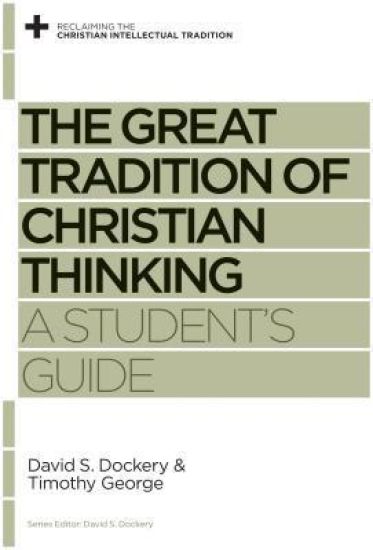
The Great Tradition of Christian Thinking

The Great Tradition of Christian Thinking

David S. Dockery; Timothy George

Crossway Books
2012
pokkari
A college education becomes truly meaningful when faith affects what happens in the classroom every day. Toward that end, David Dockery and Timothy George have written this compelling case for the role of the Christian intellectual tradition in a serious liberal arts education. Surveying the long-standing history of Christian thinkers—ranging from the Apostles to the Reformers to the 21st century’s greatest theologians—this book introduces readers to the distinctive way that Christians through the years have read the Bible, formulated doctrine, provided education, and engaged the culture.
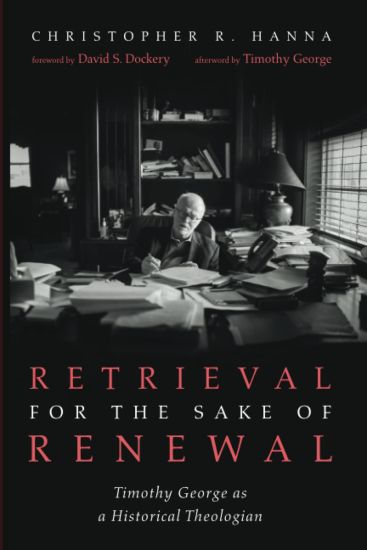
Retrieval for the Sake of Renewal

Retrieval for the Sake of Renewal

Christopher R Hanna; David S Dockery; Timothy George

Wipf Stock Publishers
2022
pokkari
To borrow imagery from C. S. Lewis's The Lion, the Witch and the Wardrobe, Timothy George's perspective as a historical theologian is the wardrobe that we can walk through to get to Narnia, an exciting new place where we discover the wonderful works of Augustine, Aquinas, Calvin, Luther, Wesley, and many others. George is one of the most respected church historians, theologians, and Christian educators of our time. But how did this Baptist preacher from Tennessee become a premier church historian and follow in the footsteps of great historians like the Harvard scholar George Huntston Williams (who was a Unitarian), the Duke scholar David Steinmetz (who was a Methodist), and the Yale scholar Jaroslav Pelikan (who was a Lutheran and later Eastern Orthodox)? This book will uncover how each of these influences contributed to George's eye-opening, heart-warming, and kingdom-advancing approach to the study of church history.
Retrieval for the Sake of Renewal

Retrieval for the Sake of Renewal

Christopher R Hanna; David S Dockery; Timothy George

Wipf Stock Publishers
2022
sidottu
To borrow imagery from C. S. Lewis's The Lion, the Witch and the Wardrobe, Timothy George's perspective as a historical theologian is the wardrobe that we can walk through to get to Narnia, an exciting new place where we discover the wonderful works of Augustine, Aquinas, Calvin, Luther, Wesley, and many others. George is one of the most respected church historians, theologians, and Christian educators of our time. But how did this Baptist preacher from Tennessee become a premier church historian and follow in the footsteps of great historians like the Harvard scholar George Huntston Williams (who was a Unitarian), the Duke scholar David Steinmetz (who was a Methodist), and the Yale scholar Jaroslav Pelikan (who was a Lutheran and later Eastern Orthodox)? This book will uncover how each of these influences contributed to George's eye-opening, heart-warming, and kingdom-advancing approach to the study of church history.
Strange Conceit

Strange Conceit

George Timothy

Createspace Independent Publishing Platform
2016
nidottu
Strange Conceit takes place in a Mexican tourist town. It weaves together the narratives of a broken-down priest who has just lost his wife, a mysterious and protective black dog, an adolescent young man convinced that the world is meaningless, a teenage girl lost in literature, a young Mexican boy who loves her from afar, a renegade bootlegger in a wheelchair, an obese bookseller, a man who may or may not be an angel, and a parrot of above average intelligence. Told from the shifting points of view of several different main characters, Strange Conceit examines issues of despair, free will, hope, and mystery.
A George Eliot Chronology

A George Eliot Chronology

Timothy Hands

Palgrave Macmillan
1989
sidottu
This is a companion to George Eliot's life and works, listing year by year the details of her biography, her wide reading and her literary output. The chronology also offers previously unavailable bibliographical information, listing Eliot's periodical publications.
George Mackay Brown and the Philosophy of Community

George Mackay Brown and the Philosophy of Community

Timothy C Baker

Edinburgh University Press
2009
sidottu
George Mackay Brown has long been recognised as one of the most original and important Scottish writers of the twentieth century. This book is the first comprehensive account of Brown's work from a philosophical perspective and offers a radical new approach to the study of Scottish literature. The importance of local community in the work of Scottish novelists ranging from Walter Scott to Neil M. Gunn has often been noted, but few critics have addressed the relation of this concept to current philosophical and sociological models of community. Timothy C. Baker uses Brown's work as a primary case study to demonstrate that the relationship between the individual and the community is a dominant narrative question in Scottish fiction. Baker traces the development of Brown's writing in relation to contemporary developments in the study of community, drawing on both continental and Anglo-American traditions. Focusing on Brown's novels, Baker argues for Brown's importance not only within a Scottish literary tradition, but as a major thinker of community. The book also suggests the utility of community, as opposed to nation and region, for productive discourse on modern literature. Combining close readings with theoretical elaborations, and including a broad national and historical overview, Baker offers a new perspective both on Brown's work and contemporary national literatures. Key Features: *Offers the first philosophically-informed critique of George Mackay Brown *Shows how fiction can contribute to an understanding of the problems of community in modernity *Suggests new directions for the study of contemporary Scottish literature *Takes into account Brown's late and posthumous writings as well as unpublished material not covered before
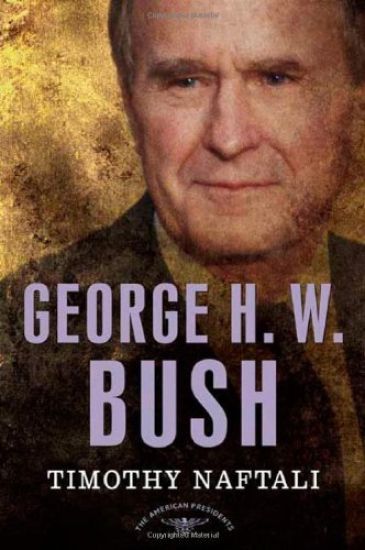
George H.W. Bush

George H.W. Bush

Timothy Naftali

Times Books
2007
sidottu
The judicious statesman who won victories abroad but suffered defeat at home, whose wisdom and demeanor served America well at a critical timeGeorge Bush was a throwback to a different era. A patrician figure not known for eloquence, Bush dismissed ideology as "the vision thing." Yet, as Timothy Naftali argues, no one of his generation was better prepared for the challenges facing the United States as the Cold War ended. Bush wisely encouraged the liberalization of the Soviet system and skillfully orchestrated the reunification of Germany. And following Iraq's invasion of Kuwait in 1990, he united the global community to defeat Saddam Hussein. At home, Bush reasserted fiscal discipline after the excesses of the Reagan years. It was ultimately his political awkwardness that cost Bush a second term. His toughest decisions widened fractures in the Republican Party, and with his party divided, Bush lost his bid for reelection in 1992. In a final irony, the conservatives who scorned him would return to power eight years later, under his son and namesake, with the result that the elder George Bush would see his reputation soar.
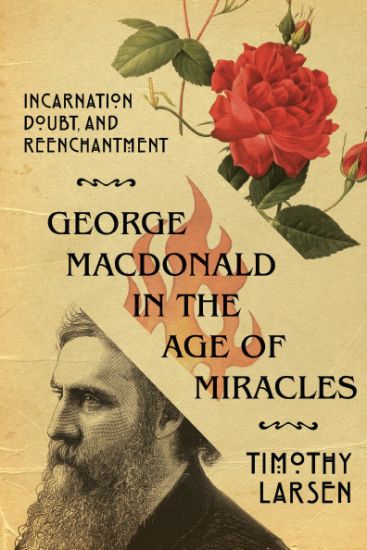
George MacDonald in the Age of Miracles – Incarnation, Doubt, and Reenchantment
The Bible is full of miracles. Yet how do we make sense of them today? And where might we see miracles in our own lives? In this installment of the Hansen Lectureship series, historian and theologian Timothy Larsen considers the legacy of George MacDonald, the Victorian Scottish author and minister who is best known for his pioneering fantasy literature, which influenced authors such as C. S. Lewis, J. R. R. Tolkien, G. K. Chesterton, and Madeleine L'Engle. Larsen explores how, throughout his life and writings, MacDonald sought to counteract skepticism, unbelief, naturalism, and materialism and to herald instead the reality of the miraculous, the supernatural, the wondrous, and the realm of the spirit. Based on the annual lecture series hosted at Wheaton College's Marion E. Wade Center, volumes in the Hansen Lectureship Series reflect on the imaginative work and lasting influence of seven British authors: Owen Barfield, G. K. Chesterton, C. S. Lewis, George MacDonald, Dorothy L. Sayers, J. R. R. Tolkien, and Charles Williams.
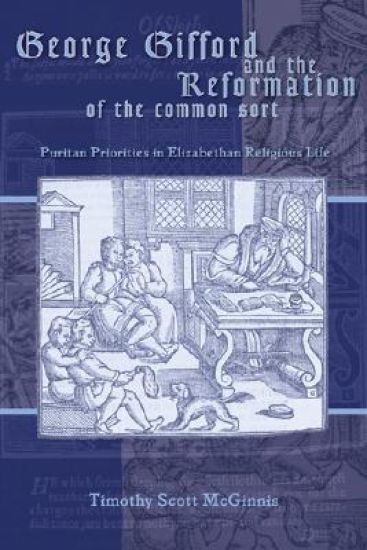
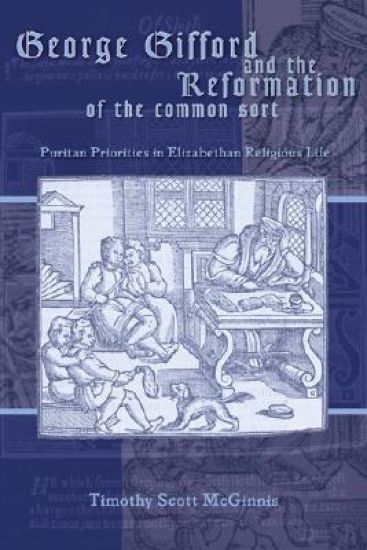
George Gifford & the Reformation of the Common Sort

George Gifford & the Reformation of the Common Sort

McGinnis Timothy Scott

Truman State University Press
2004
sidottu
This careful study explores puritan attitudes through the life and works of Elizabethan minister George Gifford. He was on the frontlines of religious controversies in a time when the English church was being shaped by Protestant evangelicals who felt compelled to carry their understanding of 'true religion' to all corners of England. Known among themselves as 'the godly' or 'gospellers' and to their enemies as 'puritans' or 'precisionists', these ministers believed the Church of England was only partially reformed. Gifford tried to convert the many parishioners who he believed to be Protestant in name only, or 'men indifferent' due to their acceptance of whatever religion was thrust upon them.
George Gifford and the Reformation of the Common Sort

George Gifford and the Reformation of the Common Sort

McGinnis Timothy Scott

Truman State University Press
2004
pokkari
This careful study explores puritan attitudes through the life and works of Elizabethan minister George Gifford. He was on the frontlines of religious controversies in a time when the English church was being shaped by Protestant evangelicals who felt compelled to carry their understanding of 'true religion' to all corners of England. Known among themselves as 'the godly' or 'gospellers' and to their enemies as 'puritans' or 'precisionists', these ministers believed the Church of England was only partially reformed. Gifford tried to convert the many parishioners who he believed to be Protestant in name only, or 'men indifferent' due to their acceptance of whatever religion was thrust upon them.
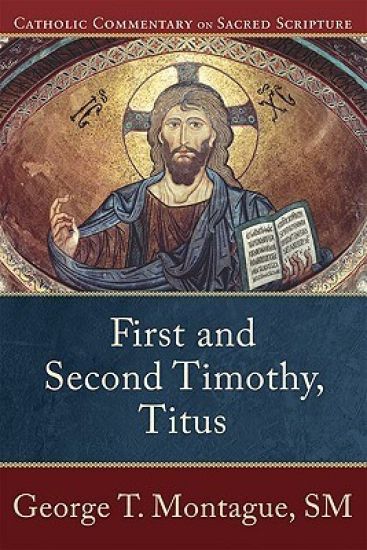
First and Second Timothy, Titus

First and Second Timothy, Titus

George T. Montague; Peter Williamson; Mary Healy

Baker Academic, Div of Baker Publishing Group
2008
nidottu
Examine the New Testament from within the living tradition of the Catholic ChurchIn the second volume of the Catholic Commentary on Sacred Scripture (CCSS), George Montague offers a Catholic pastoral commentary on the letters to Timothy and Titus, presenting sound exegesis followed by reflection on the pastoral, theological, and practical applications of the text.The CCSS relates Scripture to Christian life today, is faithfully Catholic, and is supplemented by features designed to help pastoral ministers, lay readers, and students better comprehend the Bible and use it more effectively.Commentary features include:? Biblical text from the New American Bible, Revised Edition (NABRE)? References to the Catechism, the Lectionary, and related biblical texts? Theological insights from Church fathers, saints, and popes? Reflection and application sections for daily Christian living? Suggested resources and an index of pastoral subjectsAttractively packaged and accessibly written, the CCSS aims to help readers understand their faith more deeply, nourish their spiritual life, and share the good news with others.
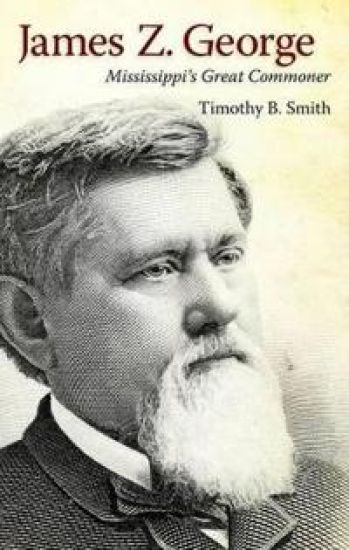
James Z. George

James Z. George

Timothy B. Smith

University Press of Mississippi
2012
sidottu
When the Mississippi school boy is asked who is called the 'Great Commoner' of public life in his State,"" wrote Mississippi's premier historian Dunbar Rowland in 1901, ""he will unhesitatingly answer James Z. George."" While George's prominence, along with his white supremacist views, have decreased through the decades since then, many modern historians still view him as a supremely important Mississippian, with one writing that George (1826-1897) was ""Mississippi's most important Democratic leader in the late nineteenth century."" Certainly, the Mexican War veteran, prominent lawyer and planter, Civil War officer, Reconstruction leader, state Supreme Court chief justice, and Mississippi's longest serving United States senator to that time deserves a full biography. And, George's importance was greater than just on the state level as other Southerners copied his tactics to secure white supremacy in their own states. That James Z. George has never had a full, academic biography is inexplicable. James Z. George: Mississippi's Great Commoner seeks to rectify the lack of attention to George's life. In doing so, this volume utilizes numerous sources never before or only slightly used, primarily a large collection of George's letters held by his descendents and never used by historians. Such wonderful sources allow a glimpse not only into the life and times of J. Z. George, but perhaps more importantly an exploration of the man himself, his traits, personality, and ideas. The result is a picture of an extremely commonplace individual on the surface, but an exceptionally complicated man underneath. James Z. George: Mississippi's Great Commoner will bring this important Mississippi leader of the nineteenth century back into the minds of twenty-first century Mississippians.