Kirjojen hintavertailu. Mukana 11 244 527 kirjaa ja 12 kauppaa.

Kirjahaku

Etsi kirjoja tekijän nimen, kirjan nimen tai ISBN:n perusteella.

1000 tulosta hakusanalla Timothy H. Lim

Race, Resistance, and the Boy Scout Movement in British Colonial Africa
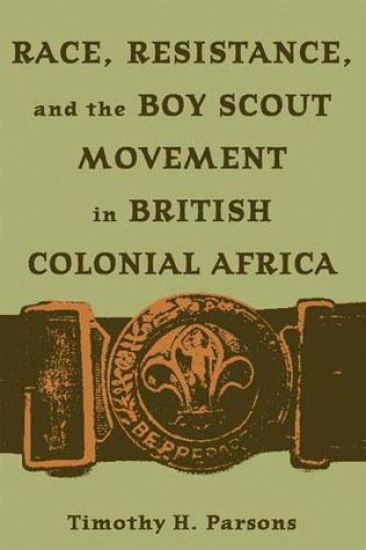
Conceived by General Sir Robert Baden-Powell as a way to reduce class tensions in Edwardian Britain, scouting evolved into an international youth movement. It offered a vision of romantic outdoor life as a cure for disruption caused by industrialization and urbanization. Scouting's global spread was due to its success in attaching itself to institutions of authority. As a result, scouting has become embroiled in controversies in the civil rights struggle in the American South, in nationalist resistance movements in India, and in the contemporary American debate over gay rights. In Race, Resistance, and the Boy Scout Movement in British Colonial Africa, Timothy Parsons uses scouting as an analytical tool to explore the tensions in colonial society. Introduced by British officials to strengthen their rule, the movement targeted the students, juvenile delinquents, and urban migrants who threatened the social stability of the regime. Yet Africans themselves used scouting to claim the rights of full imperial citizenship. They invoked the Fourth Scout Law, which declared that a scout was a brother to every other scout, to challenge racial discrimination. Parsons shows that African scouting was both an instrument of colonial authority and a subversive challenge to the legitimacy of the British Empire. His study of African scouting demonstrates the implications and far-reaching consequences of colonial authority in all its guises.
Race, Resistance, and the Boy Scout Movement in British Colonial Africa
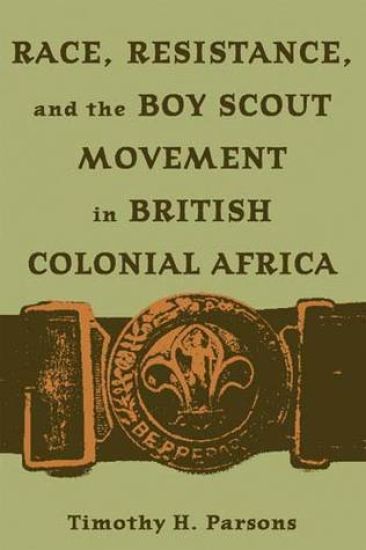
Conceived by General Sir Robert Baden-Powell as a way to reduce class tensions in Edwardian Britain, scouting evolved into an international youth movement. It offered a vision of romantic outdoor life as a cure for disruption caused by industrialization and urbanization. Scouting's global spread was due to its success in attaching itself to institutions of authority. As a result, scouting has become embroiled in controversies in the civil rights struggle in the American South, in nationalist resistance movements in India, and in the contemporary American debate over gay rights. In Race, Resistance, and the Boy Scout Movement in British Colonial Africa, Timothy Parsons uses scouting as an analytical tool to explore the tensions in colonial society. Introduced by British officials to strengthen their rule, the movement targeted the students, juvenile delinquents, and urban migrants who threatened the social stability of the regime. Yet Africans themselves used scouting to claim the rights of full imperial citizenship. They invoked the Fourth Scout Law, which declared that a scout was a brother to every other scout, to challenge racial discrimination. Parsons shows that African scouting was both an instrument of colonial authority and a subversive challenge to the legitimacy of the British Empire. His study of African scouting demonstrates the implications and far-reaching consequences of colonial authority in all its guises.
Storyteller's Catechism

Storyteller's Catechism

Timothy H Sherwood

Crossroad Publishing Co ,U.S.
2019
nidottu
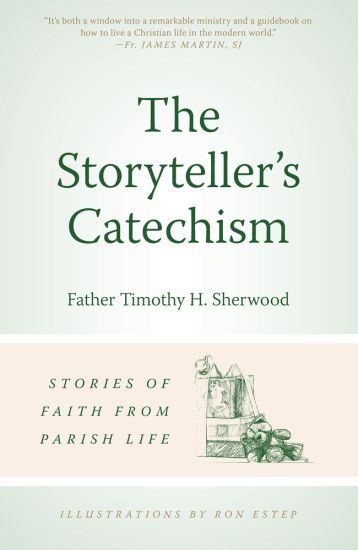
Following central chapters of the Catechism of the Catholic Church, Fr. Sherwood's stories bring its teachings alive and give new meaning to its core messages. Referring directly to CCC sections, this book makes for inspiring reading and wonderful teaching material, highlighting concrete human experiences of Catholic life. An increasingly secular world has made humanity's search for God more challenging. But the basic message of this little book is that God also searches for humanity; that the eyes and ears of faith reveal manifestations of the Divine Presence. Parish priests are privileged to have a front-row seat to observe Divine Presence in action. The true stories told here reflect just a few of the many experiences of God had by one priest in Florida. Meet Barnacle Bill, an old-time mariner, who restlessly searched for love and happiness, but the irresistible call of the Siren's song kept beckoning him to an ever elusive port. Read about a seven-foot alligator that made neighbourly visits to the parish office and taught a lesson on the natural habitat of sin. Find out why sand dollars were an occasional offering in the Sunday collection basket and were considered so valuable. These stories and others will touch the heart or give pause for thought -- but all of them will hopefully inspire and deepen faith.
Making Shiftwork Tolerable

Making Shiftwork Tolerable

Timothy H. Monk; Simon Folkard

Taylor Francis Ltd
1992
nidottu
This text guides the reader through the many forms of shiftwork, adopting a broad definition as being any regularly-taken employment outside the "day working window" 06.00 to 18.00. This excellent guide introduces the many and caried forms of shiftwork, adopting from the outset a broad definition of the term to embrace any regularly-taken employment outside the 'day-working window'. The authors, both internationally recognised experts in the field, describe in jargon-free language the diverse experiences of shift workers and identify the problems associated with abnormal hours. As shiftwork becomes more prevalent, prompted by economic considerations of employers in both traditional manufacturing and more recently, in the service sector, new shiftwork patterns are being introduced. The authors acknowledge the problems inherent in studying shiftwork, reviewing three classes of study: field, survey and laboratory simulation, and discuss the role of national culture in determining and limiting the applicability of 'generic' results.Topics covered include human, biological, economic, social and domestic influences; stress, strain and shiftwork; health and safety; shiftwork and task performance.
King of the Western Saddle

King of the Western Saddle

Timothy H. Evans; D. C. Young

University Press of Mississippi
1998
sidottu
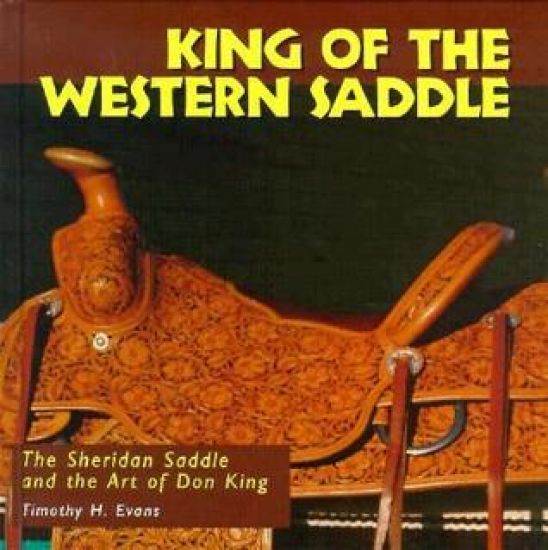
The saddle has become an American icon. Wranglers rely on saddles every day, but discerning outsiders favor them for image enhancement and self-expression. Thus saddles turn up in paintings, films, even advertisements for cigarettes and automobiles. In the marketplace of western memorabilia they have great value. Saddles--sometimes intricately and exquisitely carved--are no longer merely cowboy paraphernalia. At their most elaborate, they have a highly developed aesthetic. In America, saddlemaking can be regarded as one of the most complex and distinctly regional of western crafts. One of the most famous saddlemakers is Donald L. King of Sheridan, Wyoming. His Sheridan-style saddle, one of the finest of all western saddles in craftsmanship and beauty, is commissioned regularly for championship rodeo trophies and is prized by collectors. The son of an itinerant cowboy, King was immersed in the traditions of ranch life and crafts from an early age. Today he is acknowledged as the creator of the most influential style in western leathercraft. His intricate, hand-tooled works bear his signature emblem, the wild rose, and other floral elements. By the 1960s saddle aficionados had discovered him, and King's Saddlery became the center of a large community of saddlemakers. Within the following twenty years King had so profoundly influenced the aesthetics of his craft that he began to create saddles that were art objects for collectors, galleries, and museums. This fascinating study of the Sheridan saddle and its creator not only highlights King's contributions but also traces the origins of the western saddle to its roots in Mexico and Spain. Timothy H. Evans, former Wyoming state folklorist, is coauthor of The Wyoming Folk Arts Handbook.
Elizabeth Oakes Smith: Selected Writings, Volume I

Elizabeth Oakes Smith: Selected Writings, Volume I

Timothy H. Scherman

MERCER UNIVERSITY PRESS
2023
sidottu
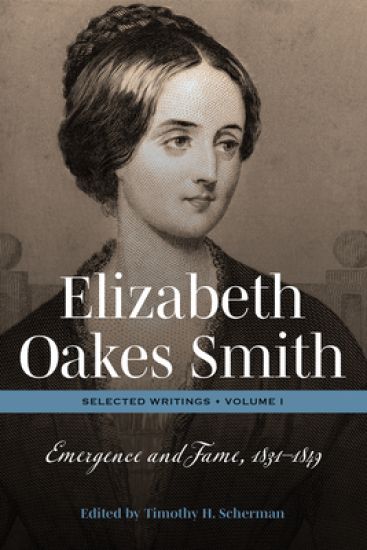
Timothy H. Scherman re-introduces modern readers to a nineteenth-century woman writer and political activist whose disappearance from literary history would seem impossible in light of the volume of her published writing and the visceral responses she elicited from readers in her own day. Collecting samples of her work in every genre--personal letters, short fiction, essays, lectures, editorial, memoir, excerpts from several novels and one of her plays--Scherman captures the full creative range of one of the earliest woman professionals in the literary field in three conveniently arranged volumes. Scherman's most intriguing admission in his editor's introduction constitutes the difference between this series and others like it in the recent recovery of women writers of Oakes Smith's era. While grounding the writer's life and work in the broad contours of U.S. and trans-Atlantic literary culture and suggesting thematic and political relations among Oakes Smith's variety of writings, these volumes advertise a still broadly open field of investigation, where even basic information that might lead to clearer understanding of Oakes Smith's success and latter-day disappearance await the scholar, the graduate student, or the amateur historian with access to a growing array of electronic archives at their fingertips, now including an expanded Oakes Smith website and EOS Log.
Curbing Catastrophe

Curbing Catastrophe

Timothy H. Dixon

Cambridge University Press
2017
sidottu
What does Japan's 2011 nuclear accident have in common with the 2005 flooding of New Orleans from Hurricane Katrina? This thought-provoking book presents a compelling account of recent and historical disasters, both natural and human-caused, drawing out common themes and providing a holistic understanding of hazards, disasters and mitigation, for anyone interested in this important and topical subject. Based on his on-the-ground experience with several major recent disasters, Timothy H. Dixon explores the science, politics and economics behind a variety of disasters and environmental issues, arguing that many of the worst effects are avoidable. He describes examples of planning and safety failures, provides forecasts of future disasters and proposes solutions for hazard mitigation. The book shows how billions of dollars and countless lives could be saved by adopting longer-term thinking for infrastructure planning and building, and argues that better communication is vital in reducing global risks and preventing future catastrophes.
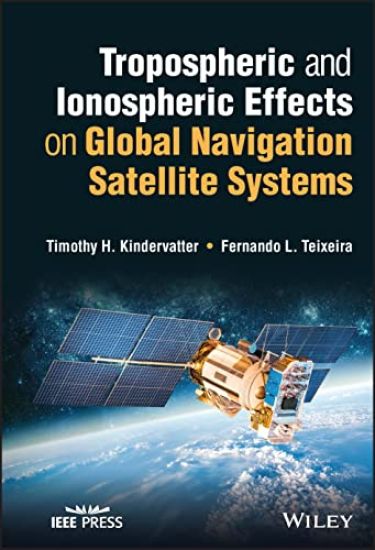
Tropospheric and Ionospheric Effects on Global Navigation Satellite Systems

Tropospheric and Ionospheric Effects on Global Navigation Satellite Systems

Timothy H. Kindervatter; Fernando L. Teixeira

JOHN WILEY SONS INC
2022
sidottu
Tropospheric and Ionospheric Effects on Global Navigation Satellite Systems Explore atmospheric effects on radio frequency propagation in the context of Global Navigation Satellite System communication In Tropospheric and Ionospheric Effects on Global Navigation Satellite Systems, a team of distinguished researchers deliver an accessible and authoritative introduction to all scientifically relevant effects caused by the ionosphere and troposphere on GNSS RF signals. The book explores the origin of each type of propagation effect and explains it from a fundamental physical perspective. Each of the major methods used for the measurement, prediction, and mitigation of ionospheric and tropospheric effects on GNSS are discussed in detail. The authors also provide the mechanisms that drive ionization and plasma transport in the ionosphere, propagation phenomena (including scattering, absorption, and scintillations), and the predominant predictive models used to predict ionospheric propagation effects. With an emphasis on global navigation satellite systems, the book discusses the US Standard Atmosphere, a general reference model for characteristics of the unionized atmosphere. It also considers: Thorough introductions to the Global Positioning System and the principles of GNSS positioningComprehensive explorations of tropospheric propagation and predictive models of the tropospherePractical discussions of the physics of the ionosphere, experimental observation of the ionosphere, and ionospheric propagationIn-depth examinations of predictive models of the ionosphere, including group delay models for single-frequency GNSS receivers Ideal for engineers and research scientists with a professional or personal interest in geophysics, RF propagation, and GNSS and GPS applications, Tropospheric and Ionospheric Effects on Global Navigation Satellite Systems will also earn a place in the libraries of undergraduate and graduate students studying RF propagation or GNSS.
Making Shiftwork Tolerable

Making Shiftwork Tolerable

Timothy H. Monk; Simon Folkard

CRC Press
2018
sidottu
This text guides the reader through the many forms of shiftwork, adopting a broad definition as being any regularly-taken employment outside the "day working window" 06.00 to 18.00. This excellent guide introduces the many and caried forms of shiftwork, adopting from the outset a broad definition of the term to embrace any regularly-taken employment outside the 'day-working window'. The authors, both internationally recognised experts in the field, describe in jargon-free language the diverse experiences of shift workers and identify the problems associated with abnormal hours. As shiftwork becomes more prevalent, prompted by economic considerations of employers in both traditional manufacturing and more recently, in the service sector, new shiftwork patterns are being introduced. The authors acknowledge the problems inherent in studying shiftwork, reviewing three classes of study: field, survey and laboratory simulation, and discuss the role of national culture in determining and limiting the applicability of 'generic' results. Topics covered include human, biological, economic, social and domestic influences; stress, strain and shiftwork; health and safety; shiftwork and task performance.
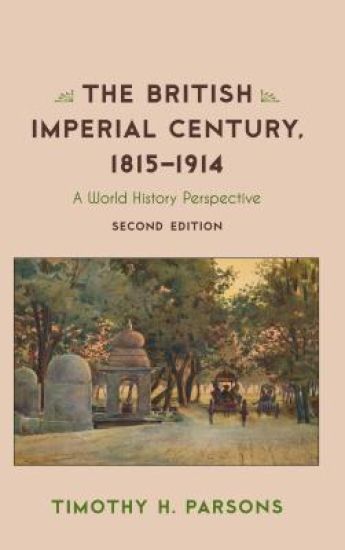
The British Imperial Century, 1815–1914

The British Imperial Century, 1815–1914

Timothy H. Parsons

Rowman Littlefield
2019
sidottu
The British Imperial Century provides a concise but comprehensive overview of the formation and administration of the empire from its origins in the early nineteenth century, to its climax at mid-century, to its denouement on the eve of the First World War. Considering the impact of British imperial rule and influence on subject peoples, Timothy H. Parsons explores the themes of cross-cultural social and environmental interaction from a world history perspective. He traces the transition from informal to formal empire, which broadened and intensified Britain's relations with Asia, Africa, and the western hemisphere. The establishment of extensive colonies and protectorates in Africa, the occupation of Egypt, the declaration of the Raj in India, and increased economic and political intervention in Latin America and in the Chinese and Ottoman empires brought ever-larger numbers of non-European peoples and cultures under either the influence or direct authority of the British Crown. By considering British imperialism through the lens of world history, Parsons moves beyond questions of Britain's motives in acquiring more territory to ask how it was able to acquire such an empire. As a global network of exchanges, the British Empire linked disparate regions in series of distinct but overlapping exchanges. This new “second” British Empire was also extremely fragile. Lacking the ability hold these possessions by force alone, empire builders needed to win the cooperation of at least a segment of the subject population. By co-opting and adapting the values and customs of their subjects imperial rulers strengthened their authority and legitimacy, but in doing so produced a hybrid culture that was largely British in style but not entirely British in substance. An ambitious and thoughtful contribution, The British Imperial Century will be invaluable for courses on world history and European history and as a supplement for courses on African, Asian, British, and Middle Eastern history.
The British Imperial Century, 1815–1914

The British Imperial Century, 1815–1914

Timothy H. Parsons

Rowman Littlefield
2019
nidottu
The British Imperial Century provides a concise but comprehensive overview of the formation and administration of the empire from its origins in the early nineteenth century, to its climax at mid-century, to its denouement on the eve of the First World War. Considering the impact of British imperial rule and influence on subject peoples, Timothy H. Parsons explores the themes of cross-cultural social and environmental interaction from a world history perspective. He traces the transition from informal to formal empire, which broadened and intensified Britain's relations with Asia, Africa, and the western hemisphere. The establishment of extensive colonies and protectorates in Africa, the occupation of Egypt, the declaration of the Raj in India, and increased economic and political intervention in Latin America and in the Chinese and Ottoman empires brought ever-larger numbers of non-European peoples and cultures under either the influence or direct authority of the British Crown. By considering British imperialism through the lens of world history, Parsons moves beyond questions of Britain's motives in acquiring more territory to ask how it was able to acquire such an empire. As a global network of exchanges, the British Empire linked disparate regions in series of distinct but overlapping exchanges. This new “second” British Empire was also extremely fragile. Lacking the ability hold these possessions by force alone, empire builders needed to win the cooperation of at least a segment of the subject population. By co-opting and adapting the values and customs of their subjects imperial rulers strengthened their authority and legitimacy, but in doing so produced a hybrid culture that was largely British in style but not entirely British in substance. An ambitious and thoughtful contribution, The British Imperial Century will be invaluable for courses on world history and European history and as a supplement for courses on African, Asian, British, and Middle Eastern history.