Kirjojen hintavertailu. Mukana 11 244 527 kirjaa ja 12 kauppaa.

Kirjahaku

Etsi kirjoja tekijän nimen, kirjan nimen tai ISBN:n perusteella.

1000 tulosta hakusanalla Timothy J. Cartwright

Karl Barth

Karl Barth

Timothy J. Gorringe

Clarendon Press
1999
sidottu
Karl Barth (1886-1968) was the most prolific theologian of the twentieth century. Avoiding simple paraphrasing, Dr Gorringe places the theology in its social and political context, from the First World War through to the Cold War by following Barth's intellectual development through the years that saw the rise of national socialism and the development of communism. Barth initiated a theological revolution in his two Commentaries on Romans, begun during the First World War. His attempt to deepen this during the turbulent years of the Weimar Republic made him a focus of theological resistance to Hitler after the rise to power of the Nazi party. Expelled from Germany, he continued to defy fashionable opinion by refusing to condemn communism after the Second World War. Drawing on a German debate largely ignored by Anglo-Saxon theology Dr Gorringe shows that Barth responds to the events of his time not just in his occasional writings, but in his magnum opus, the Church Dogmatics. In conclusion Dr Gorringe asks what this admittedly patriarchal author still has to contribute to contemporary theology, and in particular human liberation.
Karl Barth

Karl Barth

Timothy J. Gorringe

Clarendon Press
1999
nidottu
Karl Barth (1886-1968) was the most prolific theologian of the twentieth century. Avoiding simple paraphrasing, Dr Gorringe places the theology in its social and political context, from the First World War through to the Cold War by following Barth's intellectual development through the years that saw the rise of national socialism and the development of communism. Barth initiated a theological revolution in his two Commentaries on Romans, begun during the First World War. His attempt to deepen this during the turbulent years of the Weimar Republic made him a focus of theological resistance to Hitler after the rise to power of the Nazi party. Expelled from Germany, he continued to defy fashionable opinion by refusing to condemn communism after the Second World War. Drawing on a German debate largely ignored by Anglo-Saxon theology Dr Gorringe shows that Barth responds to the events of his time not just in his occasional writings, but in his magnum opus, the Church Dogmatics. In conclusion Dr Gorringe asks what this admittedly patriarchal author still has to contribute to contemporary theology, and in particular human liberation.
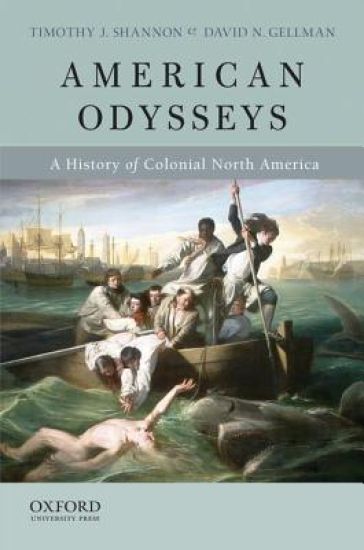
American Odysseys

American Odysseys

Timothy J Shannon; David N Gellman

Oxford University Press, USA
2013
pokkari
Written in an engaging and student-friendly style, American Odysseys examines the entire period between 1492 and 1763, covering important topics that shaped the colonial experience across time and in a variety of places. Authors Timothy J. Shannon and David N. Gellman use a thematic approach, focusing on colonial development and integration within a wider Atlantic world. Each chapter begins with the story of an individual who experienced the wonder and terror of colonization firsthand, so that students can feel a human connection to each of these topics and themes. Taken together, these figures--Indians, servants, slaves, explorers, planters--embody the full array of peoples and cultures that gave the colonial era a trans-Atlantic, multicultural character. Each chapter also features a chronology of events described in that chapter. Maps and images throughout the book help visually orient readers to the stories that comprise this concise yet broad-ranging narrative.
Russia

Russia

Timothy J. Colton

Oxford University Press Inc
2016
nidottu
Today's Russia, also known as the Russian Federation, is often viewed as less powerful than the Soviet Union of the past. When stacked against other major nations in the present, however, the new Russia is a formidable if flawed player. Russia: What Everyone Needs to Know® provides fundamental information about the origins, evolution, and current affairs of the Russian state and society. The story begins with Russia's geographic endowment, proceeds through its experiences as a kingdom and empire, and continues through the USSR's three-quarters of a century, and finally the shocking breakup of that regime a generation ago. Chapters on the failed attempt to reform Communism under Mikhail Gorbachev, the halting steps toward democratization under Boris Yeltsin, and the entrenchment of central controls under Vladimir Putin bring the reader into the contemporary scene and to headline-grabbing events such as Russia's annexation of the Crimean Peninsula from Ukraine and its military intervention in Syria. Drawing on trends within Russia and on ratings and rankings compiled by international organizations, Colton discusses the challenges facing the country--ranging from economic recession to demographic stress, political stagnation, and overextension in foreign policy--and to the realistic options for coping with them. The book shows that, although Russia is not imprisoned by its history, it is heavily influenced by it. Colton illustrates Russia's greatest strength and, ironically, its greatest weakness: the ability of its people to adapt themselves to difficult circumstances beyond their immediate control. Russia, as Putin has asserted, will not soon be a second edition of the United States or Britain. But, Colton shows, there are ways in which it could become a better version of itself.
Russia

Russia

Timothy J. Colton

Oxford University Press Inc
2016
sidottu
Today's Russia, also known as the Russian Federation, is often viewed as less powerful than the Soviet Union of the past. When stacked against other major nations in the present, however, the new Russia is a formidable if flawed player. Russia: What Everyone Needs to Know® provides fundamental information about the origins, evolution, and current affairs of the Russian state and society. The story begins with Russia's geographic endowment, proceeds through its experiences as a kingdom and empire, and continues through the USSR's three-quarters of a century, and finally the shocking breakup of that regime a generation ago. Chapters on the failed attempt to reform Communism under Mikhail Gorbachev, the halting steps toward democratization under Boris Yeltsin, and the entrenchment of central controls under Vladimir Putin bring the reader into the contemporary scene and to headline-grabbing events such as Russia's annexation of the Crimean Peninsula from Ukraine and its military intervention in Syria. Drawing on trends within Russia and on ratings and rankings compiled by international organizations, Colton discusses the challenges facing the country--ranging from economic recession to demographic stress, political stagnation, and overextension in foreign policy--and to the realistic options for coping with them. The book shows that, although Russia is not imprisoned by its history, it is heavily influenced by it. Colton illustrates Russia's greatest strength and, ironically, its greatest weakness: the ability of its people to adapt themselves to difficult circumstances beyond their immediate control. Russia, as Putin has asserted, will not soon be a second edition of the United States or Britain. But, Colton shows, there are ways in which it could become a better version of itself.
Millennium Park

Millennium Park

Timothy J. Gilfoyle

University of Chicago Press
2006
sidottu
A in-depth study of a distinctive architectural landmark discusses the design and construction of Chicago's Millennium Park, a unique combination of urban park, outdoor art museum, cultural center, and performance space, detailing every step in the planning and building process in more than five hundred photographic images.
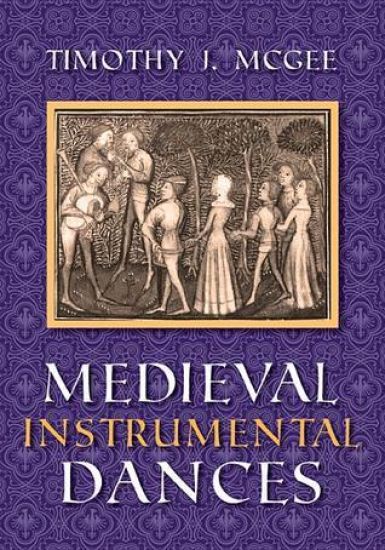
Medieval Instrumental Dances

Medieval Instrumental Dances

Timothy J. McGee

Indiana University Press
2014
pokkari
In Europe the tradition of secular dance has continued unbroken until the present. In the late Middle Ages it was an important and frequent event—for the nobility a gracious way to entertain guests, for the peasantry a welcome relaxation from the toils of the day. Now back in print, this collection presents compositions that are known or suspected to be instrumental dances from before ca. 1420. The 47 pieces vary in length and style and come from French, Italian, English, and Czech sources. Timothy McGee relates medieval dances to the descriptions found in literary, theoretical, and archival sources and to the depictions in the iconography of the Middle Ages. In a section on instrumental performance practices, he provides information about ornamenting the dances and improvising in a historically appropriate style. This comprehensive edition brings together in one volume a repertory that has been scattered over many years and countries.
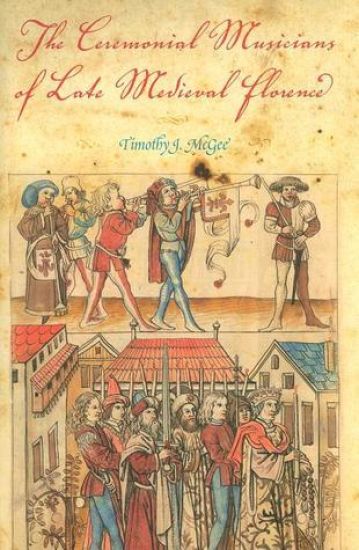
The Ceremonial Musicians of Late Medieval Florence

The Ceremonial Musicians of Late Medieval Florence

Timothy J. McGee

Indiana University Press
2009
sidottu
The Ceremonial Musicians of Late Medieval Florence follows the development of Florentine musical ensembles, describing their duties and repertories, placing them in their political and social context, and tracing their changes through the years of the Florentine Republic. From the 13th through the 16th centuries, the city of Florence was the most powerful in Europe. It was a center of finance and trade, as well as art and music. The Republic employed musicians to perform for the enormous number of ceremonial events each year. These musicians were the most visible (and audible) symbols of Florence, playing a major role in displaying the majestic image of the city. Their story, repertory, high-profile involvement in the daily life of the city, and close involvement with the Medici add a new dimension to the history of late-medieval Florence.
Bleak Houses

Bleak Houses

Timothy J. Brittain-Catlin

MIT Press
2016
pokkari
Why some architects fail to realize their ideal buildings, and what architecture critics can learn from novelists.The usual history of architecture is a grand narrative of soaring monuments and heroic makers. But it is also a false narrative in many ways, rarely acknowledging the personal failures and disappointments of architects. In Bleak Houses, Timothy Brittain-Catlin investigates the underside of architecture, the stories of losers and unfulfillment often ignored by an architectural criticism that values novelty, fame, and virility over fallibility and rejection. As architectural criticism promotes increasingly narrow values, dismissing certain styles wholesale and subjecting buildings to a Victorian litmus test of "real" versus "fake," Brittain-Catlin explains the effect this superficial criticality has had not only on architectural discourse but on the quality of buildings. The fact that most buildings receive no critical scrutiny at all has resulted in vast stretches of ugly modern housing and a pervasive public illiteracy about architecture.
Inventing Irish America

Inventing Irish America

Timothy J. Meagher

University of Notre Dame Press
2001
nidottu
Like many American cities, Worcester, Massachusetts, is an enclave of cultural tradition and ethnic pride. Through the intensive analysis of this Irish American community at the turn of the twentieth century, Timothy Meagher reveals how an ethnic group can endure and yet change when its first American-born generation takes control of its destiny. Meagher traces the chaotic and complicated passage of Irish Americans from their status as isolated immigrants, through accommodation in the 1880s and ethnocentric belligerence in the 1890s, to leadership of a pan-ethnic American Catholic people in the early twentieth century. He shows how these shifts resulted from both the initiatives of a new generation and changing relations with Yankee and ethnic neighbors, examining along the way such topics as women's prominence in the local nationalist movement, marriage patterns among the second generation, and cross-party coalitions that Irish Democrats forged with Yankee Republicans. A fourth-generation Worcester native, Meagher examines nearly every aspect of Irish American life in his city to discover how his family and others like them attempted to resolve the dilemma of identity. He analyzes the changing definitions of identities and boundaries over a crucial forty-year period and shows how the rise of a new generation to community leadership brought about a quiet but powerful revolution in people's everyday lives. Inventing Irish America focuses on the cultural transition of Irish Americans from one generation to the next and offers readers new insight into the creation of their identity. By studying one community in generational transition, it sheds new light on all places where ethnic and racial groups struggle to maintain their identities by reinventing themselves through time.
The Political Right in Postauthoritarian Brazil

The Political Right in Postauthoritarian Brazil

Timothy J. Power

Pennsylvania State University Press
2000
pokkari
Brazil was an early case of a “conservative transition” from authoritarian rule, wherein civilian elites associated with the outgoing military regime assumed a commanding role in the early years of democracy. When this phenomenon was first theorized in the mid-1980s, there were few other comparable cases, with Turkey and South Korea perhaps the best known. In the past decade the proliferation of new democracies in Eastern Europe has drawn attention to the impressive survival skills of ex-authoritarian elites. In this book Power examines this cohort of civilian politicians, showing how they adapted to competitive politics after the 1985 regime transition and how their socialization to politics in the 1960s and 1970s shaped their initially negative attitudes toward institution building in the 1980s and 1990s—with deleterious consequences for Brazil’s fledgling democracy. Power’s study sheds new light on the paradoxes, tradeoffs, and drawbacks of conservative transitions to democracy.
Blockading the Border and Human Rights

Blockading the Border and Human Rights

Timothy J. Dunn

University of Texas Press
2009
pokkari
To understand border enforcement and the shape it has taken, it is imperative to examine a groundbreaking Border Patrol operation begun in 1993 in El Paso, Texas, "Operation Blockade." The El Paso Border Patrol designed and implemented this radical new strategy, posting 400 agents directly on the banks of the Rio Grande in highly visible positions to deter unauthorized border crossings into the urban areas of El Paso from neighboring Ciudad JuÁrez-a marked departure from the traditional strategy of apprehending unauthorized crossers after entry. This approach, of "prevention through deterrence," became the foundation of the 1994 and 2004 National Border Patrol Strategies for the Southern Border. Politically popular overall, it has rendered unauthorized border crossing far less visible in many key urban areas. However, the real effectiveness of the strategy is debatable, at best. Its implementation has also led to a sharp rise in the number of deaths of unauthorized border crossers. Here, Dunn examines the paradigm-changing Operation Blockade and related border enforcement efforts in the El Paso region in great detail, as well as the local social and political situation that spawned the approach and has shaped it since. Dunn particularly spotlights the human rights abuses and enforcement excesses inflicted on local Mexican Americans and Mexican immigrants as well as the challenges to those abuses. Throughout the book, Dunn filters his research and fieldwork through two competing lenses, human rights versus the rights of national sovereignty and citizenship.
The Theater of Plautus

The Theater of Plautus

Timothy J. Moore

University of Texas Press
1999
pokkari
The relationship between actors and spectators has been of perennial interest to playwrights. The Roman playwright Plautus (ca. 200 BCE) was particularly adept at manipulating this relationship. Plautus allowed his actors to acknowledge freely the illusion in which they were taking part, to elicit laughter through humorous asides and monologues, and simultaneously to flatter and tease the spectators. These metatheatrical techniques are the focus of Timothy J. Moore's innovative study of the comedies of Plautus. The first part of the book examines Plautus' techniques in detail, while the second part explores how he used them in the plays Pseudolus, Amphitruo, Curculio, Truculentus, Casina, and Captivi. Moore shows that Plautus employed these dramatic devices not only to entertain his audience but also to satirize aspects of Roman society, such as shady business practices and extravagant spending on prostitutes, and to challenge his spectators' preconceptions about such issues as marriage and slavery. These findings forge new links between Roman comedy and the social and historical context of its performance.
Mojo Hand

Mojo Hand

Timothy J. O'Brien; David Ensminger

University of Texas Press
2013
nidottu
In a career that took him from the cotton fields of East Texas to the concert stage at Carnegie Hall and beyond, Lightnin’ Hopkins became one of America’s greatest bluesmen, renowned for songs whose topics effortlessly ranged from his African American roots to space exploration, the Vietnam War, and lesbianism, performed in a unique, eccentric, and spontaneous style of guitar playing that inspired a whole generation of rock guitarists. Hopkins’s music directly and indirectly influenced an amazing range of artists, including Jimi Hendrix, Stevie Ray Vaughan, Miles Davis, John Coltrane, Tom Waits, and Bob Dylan, as well as bands such as the Grateful Dead, Jefferson Airplane, and ZZ Top, with whom Hopkins performed.Mojo Hand follows Lightin’ Hopkins’s life and music from the acoustic country blues that he began performing in childhood, through the rise of 1950s rock ’n’ roll, which nearly derailed his career, to his reinvention and international success as a pioneer of electric folk blues from the 1960s to the 1980s. The authors draw on 130 vivid oral histories, as well as extensive archival and secondary sources, to provide the fullest account available of the development of Hopkins’s music; his idiosyncratic business practices, such as shunning professional bookers, managers, and publicists; and his durable and indelible influence on modern roots, blues, rock ’n’ roll, singer-songwriter, and folk music. Mojo Hand celebrates the spirit and style, intelligence and wit, and confounding musical mystique of a bluesman who shaped modern American music like no one else.
Lessons from the Northern Ireland Peace Process

Lessons from the Northern Ireland Peace Process

Timothy J. White; Martin Mansergh

University of Wisconsin Press
2014
nidottu
From the early 1970s through the mid-1990s, Northern Ireland was the site of bitter conflict between those struggling for reunification with the rest of Ireland and those wanting the region to remain a part of the United Kingdom. After years of strenuous negotiations, nationalists and unionists came together in 1998 to sign the Good Friday Agreement. Northern Ireland's peace process has been deemed largely successful. Yet remarkably little has been done to assess in a comprehensive fashion what can be learned from it.Lessons from the Northern Ireland Peace Process incorporates recent research that emphasises the need for civil society and a grassroots approach to peacebuilding while taking into account a variety of perspectives, including neoconservatism and revolutionary analysis. The contributions, which include the reflections of those involved in the negotiation and implementation of the Good Friday Agreement, also provide policy prescriptions for modern conflicts.This collection of essays fills a void by articulating the lessons learned and how—or whether—the peace processes can be applied to other regional conflicts.
Becoming Irish American

Becoming Irish American

Timothy J. Meagher

YALE UNIVERSITY PRESS
2024
sidottu
The origins and evolution of Irish American identity, from colonial times through the twentieth century “Subtly provocative. . . . [Meagher] traces the making and remaking of Irish America through several iterations and shows the impact of religion on each.”—Terry Golway, Wall Street Journal As millions of Irish immigrants and their descendants created community in the United States over the centuries, they neither remained Irish nor simply became American. Instead, they created a culture and defined an identity that was unique to their circumstances, a new people that they would continually reinvent: Irish Americans. Historian Timothy J. Meagher traces the Irish American experience from the first Irishman to step ashore at Roanoke in 1585 to John F. Kennedy’s election as president in 1960. As he chronicles how Irish American culture evolved, Meagher looks at how various groups adapted and thrived—Protestants and Catholics, immigrants and American born, those located in different geographic corners of the country. He describes how Irish Americans made a living, where they worshiped, and when they married, and how Irish American politicians found particular success, from ward bosses on the streets of New York, Boston, and Chicago to the presidency. In this sweeping history, Meagher reveals how the Irish American identity was forged, how it has transformed, and how it has held lasting influence on American culture.
Wyeth

Wyeth

Timothy J Standring

Yale University Press
2015
sidottu
An essential new look at the diverse work and artistic methods of beloved American realist painters Andrew and Jamie Wyeth Father and son artists Andrew Wyeth (1917–2009) and Jamie Wyeth (b. 1946) are among the most celebrated American realist painters of the 20th century. Despite their similar habits of mind, studio practice, and rural Pennsylvania upbringing, the two artists produced strikingly different work. However, they also employed a wide range of processes in works that parallel and complement each other. This artistic conversation is evident when considering the artists’ vast output of preliminary work—much of which has remained unpublished until now—alongside their iconic paintings. This groundbreaking publication takes a novel approach in exploring the Wyeths’ working methods and processes. Author Timothy J. Standring also provides the reader with a rare personal glimpse into the artists’ world by chronicling his visits to their studios in the Brandywine Valley and Midcoast Maine over the course of four years. With over 200 color illustrations showing works in a variety of media—including pen and ink, graphite, chalk, watercolor, dry brush, tempera, and oil—this handsome book situates each artist’s oeuvre in the context of their shared biographies, place, and artistic practices. Published in association with the Denver Art MuseumExhibition Schedule:Denver Art Museum (11/08/15–02/07/16)Thyssen-Bornemisza Museum, Madrid (03/01/16–06/19/16)