Kirjojen hintavertailu. Mukana 11 232 919 kirjaa ja 12 kauppaa.

Kirjahaku

Etsi kirjoja tekijän nimen, kirjan nimen tai ISBN:n perusteella.

1000 tulosta hakusanalla Timothy J. Stapleton

Iroquois Diplomacy on the Early American Frontier
The newest addition to the Penguin Library of American Indian History explores the most influential Native American Confederacy More than perhaps any other Native American group, the Iroquois found it to their advantage to interact with and adapt to white settlers. Despite being known as fierce warriors, the Iroquois were just as reliant on political prowess and sophisticated diplomacy to maintain their strategic position between New France and New York. Colonial observers marveled at what Benjamin Franklin called their "method of doing business" as Europeans learned to use Iroquois ceremonies and objects to remain in their good graces. Though the Iroquois negotiated with the colonial governments, they refused to be pawns of European empires, and their savvy kept them in control of much of the Northeast until the American Revolution. Iroquois Diplomacy and the Early American Frontier is a must-read for anyone fascinated by Native American history or interested in a unique perspective on the dawn of American government.
The Healthcare Professional Workforce

The Healthcare Professional Workforce

Timothy J. Hoff; Kathleen M. Sutcliffe; Gary J. Young

Oxford University Press Inc
2016
nidottu
As the U.S. healthcare industry undergoes sweeping changes to increase efficiency and reduce costs, the healthcare workforce is changing as well. In this new system of care, physicians work alongside health care teams, where nurses, pharmacists, and other professionals must collaborate to provide better, more affordable care to many more patients than ever before. The HEALTHCARE PROFESSIONAL WORKFORCE is the first book to codify the transformations underway across health professions in the U.S. and to situate these changes within a larger context for both healthcare and non-healthcare audiences. This volume provides an important guide to understanding how health professionals fit within the emerging model of healthcare, and serves as a vital resource for readers in health policy management, medicine, public health, and organizational studies. Comprising seven unique chapters alongside commentaries from heads of healthcare organizations and influential physicians, THE HEALTHCARE PROFESSIONAL WORKFORCE provides a theoretical and practical benchmark for understanding the next generation of human capital in one of society's most important labor sectors.
Next in Line

Next in Line

Timothy J. Hoff

Oxford University Press Inc
2017
nidottu
For all the political branding and rebranding of healthcare in the United States, its fundamental unit of currency remains the doctor-patient relationship. This relationship has undergone seismic changes during the twenty-first century, including the introduction of new players (the so-called healthcare "team") and care delivery in settings like big-box stores and bureaucratic health systems. But are any of us better off? Next in Line is the first book to examine the doctor-patient relationship in the context of its new environs, in particular the impact of efficiency-driven innovation and retail-care models on physician mindsets and the patient experience. The overall picture is one of lowered expectations-a transactional, impersonal, and institutionally-limited incarnation of the medical bedside that leaves all parties underwhelmed and overstressed. By first conducting a macro-analysis of key industry trends (including the widespread use of performance metrics and retail principles), then measuring these trends' impacts through interviews with physicians and patients, Next in Line^ is both an examination and a critique of a care system at a crossroads. It is essential reading for understanding why relational care matters -- and why it must be saved in a corporatized health system bent on using retail approaches to deliver care.
Human Freedom, Christian Righteousness

Human Freedom, Christian Righteousness

Timothy J. Wengert

Oxford University Press Inc
1998
sidottu
This book argues that Philip Melanchthon, conventionally pictured as hopelessly caught in the middle between Erasmus and Luther, and more "Erasmian" than a Lutheran theologian should have been, was, at least theologically, not Erasmian at all, but in fact sharply anti-Erasmus. Wengert draws largely on Melanchthon's Scholia on the Epistle of Paul to the Colossians as well as on a range of other contemporary sources to address a number of important questions, including the complicated and elusive relationship between humanism and the Reformation and the issues of proper biblical interpretation of free will, of divine and human righteousness, and of political order.
The Age of Mass Migration

The Age of Mass Migration

Timothy J. Hatton; Jeffrey G. Williamson

Oxford University Press Inc
1998
sidottu
About 55 million Europeans migrated to the New World between 1850 and 1914, landing in North and South America and in Australia. This movement, which marked a profound and permanent shift in global population and economic activity, is described in vivid detail by Timothy J. Hatton and Jeffrey G. Williamson, and the causes and effects relative to this great relocation are soundly analysed. The Age of Mass Migration offers a thorough treatment of a period of vital development in the economic history of the modern world and, moreover, devotes much objective consideration to certain economic questions that still baffle us today: Why does a nation's emigration rate typically rise with early industrialization? How do immigrants choose their destinations? Are international labour markets segmented? Do immigrants truly "rob" jobs from locals? What impact do immigrants have on wage rates and living standards in the host country? In addressing these issues, and many of others, this book takes a new and comprehensive view of mass migration. Although somewhat controversial in terms of method--it assigns to a social phenomenon an economic explanation and interpretation-- The Age of Mass Migration will be useful to all students of migration, historical or contemporary, and to anyone interested in international economic activities.
Sonochemistry

Sonochemistry

Timothy J. Mason

Oxford University Press
1999
nidottu
It has been recognised for many years that power ultrasound has great potential for uses in a wide variety of processes in the chemical and allied industries. Reported applications include cleaning, sterilisation, flotation, drying, degassing, defoaming, soldering, plastic welding, drilling, filtration, homogenisation, emulsification, dissolution, deaggregation of powder, biological cell disruption, extraction, crystallisation and, more recently, as a stimulus for chemical reactions. With the increasing use of power ultrasound in chemistry comes the need for specialist text books covering this emerging discipline. This book is suitable for chemists and chemical engineers at all levels who wish to gain a rapid insight into what is becoming a standard method in the chemical laboratory. It is designed to answer the following questions: What is sonochemistry? Why is it important? What systems are affected by sonochemistry? What are the major applications of this technique? What types of ultrasonic equipment are available? How do the different types of equipment compare? How is the equipment best configured for chemical applications? What parameters can be changed to optimise sonochemical results? What equipment is available for the scale-up of sonochemistry?
Oxidation and Reduction in Organic Synthesis

Oxidation and Reduction in Organic Synthesis

Timothy J. Donohoe

Oxford University Press
2000
nidottu
The manipulation of functional groups by oxidative or reductive processes is central to organic chemistry. Despite the importance of these reactions, no existing text has attempted to summarize them simply for students. Together with a later volume in the series, this book provides a clear and comprehensive summary of oxidative and reductive processes, emphasizing general principles and common factors, and showing the applications of these reactions in organic synthesis.
Animal Osmoregulation

Animal Osmoregulation

Timothy J. Bradley

Oxford University Press
2008
nidottu
Water is fundamental to life and all metabolic reactions are influenced by the aqueous environment in which they occur. Osmoregulation and water balance are therefore absolutely essential topics in animal physiology. Animal Osmoregulation collates a widely dispersed literature to produce a comprehensive and authoritative synthesis of the field, providing detailed examples of osmoregulatory processes at the organismal, organ and cellular level. It incorporates clear background information on ion regulation and transport (specifically in the light of recent molecular studies) and illustrates the physical principles to which each organism must adhere, as well as the phylogenetic constraints within which it must operate. As with other titles in the Oxford Animal Biology Series, the topic is addressed using examples from throughout the animal kingdom, identifying common themes that transcend taxonomy.
Karl Barth

Karl Barth

Timothy J. Gorringe

Clarendon Press
1999
sidottu
Karl Barth (1886-1968) was the most prolific theologian of the twentieth century. Avoiding simple paraphrasing, Dr Gorringe places the theology in its social and political context, from the First World War through to the Cold War by following Barth's intellectual development through the years that saw the rise of national socialism and the development of communism. Barth initiated a theological revolution in his two Commentaries on Romans, begun during the First World War. His attempt to deepen this during the turbulent years of the Weimar Republic made him a focus of theological resistance to Hitler after the rise to power of the Nazi party. Expelled from Germany, he continued to defy fashionable opinion by refusing to condemn communism after the Second World War. Drawing on a German debate largely ignored by Anglo-Saxon theology Dr Gorringe shows that Barth responds to the events of his time not just in his occasional writings, but in his magnum opus, the Church Dogmatics. In conclusion Dr Gorringe asks what this admittedly patriarchal author still has to contribute to contemporary theology, and in particular human liberation.
Karl Barth

Karl Barth

Timothy J. Gorringe

Clarendon Press
1999
nidottu
Karl Barth (1886-1968) was the most prolific theologian of the twentieth century. Avoiding simple paraphrasing, Dr Gorringe places the theology in its social and political context, from the First World War through to the Cold War by following Barth's intellectual development through the years that saw the rise of national socialism and the development of communism. Barth initiated a theological revolution in his two Commentaries on Romans, begun during the First World War. His attempt to deepen this during the turbulent years of the Weimar Republic made him a focus of theological resistance to Hitler after the rise to power of the Nazi party. Expelled from Germany, he continued to defy fashionable opinion by refusing to condemn communism after the Second World War. Drawing on a German debate largely ignored by Anglo-Saxon theology Dr Gorringe shows that Barth responds to the events of his time not just in his occasional writings, but in his magnum opus, the Church Dogmatics. In conclusion Dr Gorringe asks what this admittedly patriarchal author still has to contribute to contemporary theology, and in particular human liberation.
American Odysseys

American Odysseys

Timothy J Shannon; David N Gellman

Oxford University Press, USA
2013
pokkari
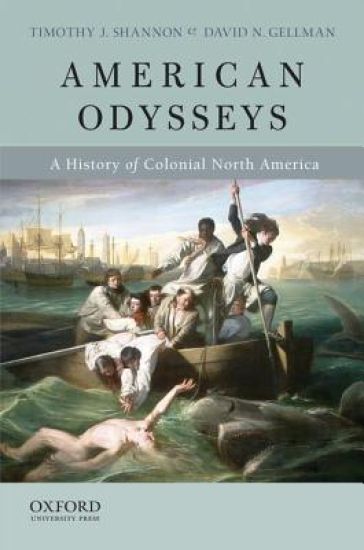
Written in an engaging and student-friendly style, American Odysseys examines the entire period between 1492 and 1763, covering important topics that shaped the colonial experience across time and in a variety of places. Authors Timothy J. Shannon and David N. Gellman use a thematic approach, focusing on colonial development and integration within a wider Atlantic world. Each chapter begins with the story of an individual who experienced the wonder and terror of colonization firsthand, so that students can feel a human connection to each of these topics and themes. Taken together, these figures--Indians, servants, slaves, explorers, planters--embody the full array of peoples and cultures that gave the colonial era a trans-Atlantic, multicultural character. Each chapter also features a chronology of events described in that chapter. Maps and images throughout the book help visually orient readers to the stories that comprise this concise yet broad-ranging narrative.
Russia

Russia

Timothy J. Colton

Oxford University Press Inc
2016
nidottu
Today's Russia, also known as the Russian Federation, is often viewed as less powerful than the Soviet Union of the past. When stacked against other major nations in the present, however, the new Russia is a formidable if flawed player. Russia: What Everyone Needs to Know® provides fundamental information about the origins, evolution, and current affairs of the Russian state and society. The story begins with Russia's geographic endowment, proceeds through its experiences as a kingdom and empire, and continues through the USSR's three-quarters of a century, and finally the shocking breakup of that regime a generation ago. Chapters on the failed attempt to reform Communism under Mikhail Gorbachev, the halting steps toward democratization under Boris Yeltsin, and the entrenchment of central controls under Vladimir Putin bring the reader into the contemporary scene and to headline-grabbing events such as Russia's annexation of the Crimean Peninsula from Ukraine and its military intervention in Syria. Drawing on trends within Russia and on ratings and rankings compiled by international organizations, Colton discusses the challenges facing the country--ranging from economic recession to demographic stress, political stagnation, and overextension in foreign policy--and to the realistic options for coping with them. The book shows that, although Russia is not imprisoned by its history, it is heavily influenced by it. Colton illustrates Russia's greatest strength and, ironically, its greatest weakness: the ability of its people to adapt themselves to difficult circumstances beyond their immediate control. Russia, as Putin has asserted, will not soon be a second edition of the United States or Britain. But, Colton shows, there are ways in which it could become a better version of itself.
Russia

Russia

Timothy J. Colton

Oxford University Press Inc
2016
sidottu
Today's Russia, also known as the Russian Federation, is often viewed as less powerful than the Soviet Union of the past. When stacked against other major nations in the present, however, the new Russia is a formidable if flawed player. Russia: What Everyone Needs to Know® provides fundamental information about the origins, evolution, and current affairs of the Russian state and society. The story begins with Russia's geographic endowment, proceeds through its experiences as a kingdom and empire, and continues through the USSR's three-quarters of a century, and finally the shocking breakup of that regime a generation ago. Chapters on the failed attempt to reform Communism under Mikhail Gorbachev, the halting steps toward democratization under Boris Yeltsin, and the entrenchment of central controls under Vladimir Putin bring the reader into the contemporary scene and to headline-grabbing events such as Russia's annexation of the Crimean Peninsula from Ukraine and its military intervention in Syria. Drawing on trends within Russia and on ratings and rankings compiled by international organizations, Colton discusses the challenges facing the country--ranging from economic recession to demographic stress, political stagnation, and overextension in foreign policy--and to the realistic options for coping with them. The book shows that, although Russia is not imprisoned by its history, it is heavily influenced by it. Colton illustrates Russia's greatest strength and, ironically, its greatest weakness: the ability of its people to adapt themselves to difficult circumstances beyond their immediate control. Russia, as Putin has asserted, will not soon be a second edition of the United States or Britain. But, Colton shows, there are ways in which it could become a better version of itself.
Millennium Park

Millennium Park

Timothy J. Gilfoyle

University of Chicago Press
2006
sidottu
A in-depth study of a distinctive architectural landmark discusses the design and construction of Chicago's Millennium Park, a unique combination of urban park, outdoor art museum, cultural center, and performance space, detailing every step in the planning and building process in more than five hundred photographic images.
Medieval Instrumental Dances

Medieval Instrumental Dances

Timothy J. McGee

Indiana University Press
2014
pokkari
In Europe the tradition of secular dance has continued unbroken until the present. In the late Middle Ages it was an important and frequent event—for the nobility a gracious way to entertain guests, for the peasantry a welcome relaxation from the toils of the day. Now back in print, this collection presents compositions that are known or suspected to be instrumental dances from before ca. 1420. The 47 pieces vary in length and style and come from French, Italian, English, and Czech sources. Timothy McGee relates medieval dances to the descriptions found in literary, theoretical, and archival sources and to the depictions in the iconography of the Middle Ages. In a section on instrumental performance practices, he provides information about ornamenting the dances and improvising in a historically appropriate style. This comprehensive edition brings together in one volume a repertory that has been scattered over many years and countries.
The Ceremonial Musicians of Late Medieval Florence

The Ceremonial Musicians of Late Medieval Florence

Timothy J. McGee

Indiana University Press
2009
sidottu
The Ceremonial Musicians of Late Medieval Florence follows the development of Florentine musical ensembles, describing their duties and repertories, placing them in their political and social context, and tracing their changes through the years of the Florentine Republic. From the 13th through the 16th centuries, the city of Florence was the most powerful in Europe. It was a center of finance and trade, as well as art and music. The Republic employed musicians to perform for the enormous number of ceremonial events each year. These musicians were the most visible (and audible) symbols of Florence, playing a major role in displaying the majestic image of the city. Their story, repertory, high-profile involvement in the daily life of the city, and close involvement with the Medici add a new dimension to the history of late-medieval Florence.