Kirjojen hintavertailu. Mukana 11 342 296 kirjaa ja 12 kauppaa.

Kirjahaku

Etsi kirjoja tekijän nimen, kirjan nimen tai ISBN:n perusteella.

1000 tulosta hakusanalla Timothy M. Shaw

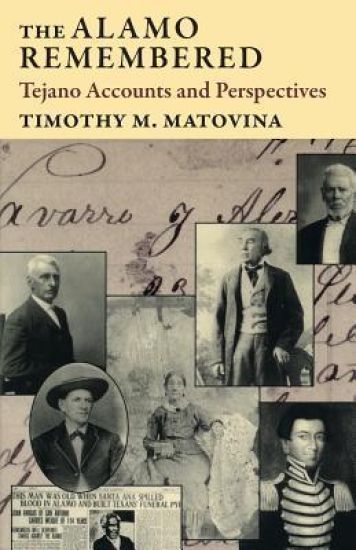
The Alamo Remembered

The Alamo Remembered

Timothy M. Matovina

University of Texas Press
1995
pokkari
As Mexican soldiers fought the mostly Anglo-American colonists and volunteers at the Alamo in 1836, San Antonio's Tejano population was caught in the crossfire, both literally and symbolically. Though their origins were in Mexico, the Tejanos had put down lasting roots in Texas and did not automatically identify with the Mexican cause. Indeed, as the accounts in this new collection demonstrate, their strongest allegiance was to their fellow San Antonians, with whom they shared a common history and a common plight as war raged in their hometown.Timothy M. Matovina here gathers all known Tejano accounts of the Battle of the Alamo. These accounts consist of first reports of the battle, including Juan N. Seguín's funeral oration at the interment ceremony of the Alamo defenders, conversations with local Tejanos, unpublished petitions and depositions, and published accounts from newspapers and other sources. This communal response to the legendary battle deepens our understanding of the formation of Mexican American consciousness and identity.

The Architecture of Paul Rudolph

The Architecture of Paul Rudolph

Timothy M. Rohan

Yale University Press
2014
sidottu
The first major study of one of the most important architects of the postwar era Equally admired and maligned for his remarkable Brutalist buildings, Paul Rudolph (1918–1997) shaped both late modernist architecture and a generation of architects while chairing Yale’s department of architecture from 1958 to 1965. Based on extensive archival research and unpublished materials, The ArchitectureofPaul Rudolph is the first in-depth study of the architect, neglected since his postwar zenith. Author Timothy M. Rohan unearths the ideas that informed Rudolph’s architecture, from his Florida beach houses of the 1940s to his concrete buildings of the 1960s to his lesser-known East Asian skyscrapers of the 1990s. Situating Rudolph within the architectural discourse of his day, Rohan shows how Rudolph countered the perceived monotony of mid-century modernism with a dramatically expressive architecture for postwar America, exemplified by his Yale Art and Architecture Building of 1963, famously clad in corrugated concrete. The fascinating story of Rudolph’s spectacular rise and fall considerably deepens longstanding conceptions about postwar architecture: Rudolph emerges as a pivotal figure who anticipated new directions for architecture, ranging from postmodernism to sustainability.
Loyalists and Community in North America

Loyalists and Community in North America

Timothy M. Barnes; Robert M Calhoon

Praeger Publishers Inc
1994
sidottu
This book is the first collection of Loyalist scholarship to span the 13 independent states and the Florida and Canadian provinces that remained loyal to the Crown in the American Revolution. The Loyalists disrupted the colonial communities in which they lived in ways that helped define the Revolution. Loyalist garrison towns became a pathological environment of violence and suspicion, which brought out the worst in patriot, British, and Loyalist behavior. In Canada, Loyalist exiles tried to create model Anglo-American communities, but in the end had to jettison Loyalist ideology to claim a new British North American identity.
Biliary Tract and Primary Liver Tumors, An Issue of Surgical Oncology Clinics of North America
This issue of Surgical Oncology Clinics of North America is devoted to "Biliary Tract and Primary Liver Tumors" and is edited by Timothy Pawlik, MD, of the Johns Hopkins Hospital in Baltimore. Expert authors in this issue review this topic in articles such as: Epidemiology and Risk Factors of Biliary Tract Tumors and Primary Liver Tumors; Imaging of the Patient with a Biliary Tract or Primary Liver Tumor; Percutaneous and Endoscopic Approaches to Biliary Tract Tumors and Primary Liver Tumors; Intrahepatic Cholangiocarcinoma; Hilar Cholangiocarcinoma; Distal Cholangiocarcinoma; Hepatocellular Carcinoma; Staging of Biliary Tract and Primary Liver Tumors; Intra-arterial Therapies: Primary Liver Tumors; Radiotherapy: Primary Liver Tumors; Systemic and Targeted Therapy; and Palliation: Treating Patients with Inoperable Biliary Tract and Primary Liver Tumors.
Aesthetics and Morals in the Philosophy of David Hume
The book has two aims. First, to examine the extent and significance of the connection between Hume's aesthetics and his moral philosophy; and, second, to consider how, in light of the connection, his moral philosophy answers central questions in ethics.The first aim is realized in chapters 1-4. Chapter 1 examines Hume's essay "Of the Standard of Taste" to understand his search for a "standard" and how this affects the scope of his aesthetics. Chapter 2 establishes that he treats beauty in nature and art and moral beauty as similar in kind, and applies the conclusions about his aesthetics to his moral thought. Chapter 3 solves a puzzle to which this gives rise, namely, how individuals both accept general standards that they also contravene in the course of aesthetic and moral activity. Chapter 4 takes up the normative aspect of Hume's approach by understanding moral character through his view of moral beauty.The second aim of the book is realized in chapters 5-7 by entertaining three objections against Hume's moral philosophy. First, if morality is an immediate reaction to the beauty of vice and the deformity of virtue, why is perfect virtue not the general condition of every human individual? Second, if morality consists of sentiments that arise in the subject, how can moral judgments be objective and claim universal validity? And third, if one can talk of "general standards" governing conduct, how does one account for the diversity of moral systems and their change over time? The first is answered by showing that like good taste in aesthetics, 'right taste' in morals requires that the sentiments are educated; the second, by arguing against the view that Hume is a subjectivist and a relativist, and the third (chapter 6), by showing that his approach contains a view of progress left untouched by any personal prejudices Hume himself might harbor. The book concludes in chapter 7 by showing how Hume's view of philosophy affects the scope of any normative ethics.
Aesthetics and Morals in the Philosophy of David Hume
The book has two aims. First, to examine the extent and significance of the connection between Hume's aesthetics and his moral philosophy; and, second, to consider how, in light of the connection, his moral philosophy answers central questions in ethics.The first aim is realized in chapters 1-4. Chapter 1 examines Hume's essay "Of the Standard of Taste" to understand his search for a "standard" and how this affects the scope of his aesthetics. Chapter 2 establishes that he treats beauty in nature and art and moral beauty as similar in kind, and applies the conclusions about his aesthetics to his moral thought. Chapter 3 solves a puzzle to which this gives rise, namely, how individuals both accept general standards that they also contravene in the course of aesthetic and moral activity. Chapter 4 takes up the normative aspect of Hume's approach by understanding moral character through his view of moral beauty.The second aim of the book is realized in chapters 5-7 by entertaining three objections against Hume's moral philosophy. First, if morality is an immediate reaction to the beauty of vice and the deformity of virtue, why is perfect virtue not the general condition of every human individual? Second, if morality consists of sentiments that arise in the subject, how can moral judgments be objective and claim universal validity? And third, if one can talk of "general standards" governing conduct, how does one account for the diversity of moral systems and their change over time? The first is answered by showing that like good taste in aesthetics, 'right taste' in morals requires that the sentiments are educated; the second, by arguing against the view that Hume is a subjectivist and a relativist, and the third (chapter 6), by showing that his approach contains a view of progress left untouched by any personal prejudices Hume himself might harbor. The book concludes in chapter 7 by showing how Hume's view of philosophy affects the scope of any normative ethics.
Savage Will

Savage Will

Timothy M. Gay

New American Library
2014
pokkari
In the tradition of incredible true stories from The Great Escape to Argo, Savage Will recounts a tale of survival, daring, and evasion behind enemy lines: that of American medics and nurses stranded for two months in Nazi-occupied Albania. In 1943, men and women of the 807th Medical Air Evacuation Squadron boarded a routine flight from Sicily to the Italian mainland to care for wounded soldiers. En route, their plane drifted hundreds of miles off course and crash-landed in remote mountainous Albania. The unarmed Americans were trapped hundreds of blizzard-plagued miles from Allied lines, in a country torn apart by rival bands of pro- and anti-German guerrillas. Hunted by German soldiers, the castaways relied on what one survivor called their "savage will" to elude their enemy and find their way to freedom. What followed is the most thrilling untold story of World War II--a saga reaching from President Roosevelt and top Allied intelligence officials to a host of brave Albanian Resistance fighters, the British and U.S. Mediterranean air forces, and the dashing English lieutenant and the tenacious American captain sent behind enemy lines to carry out a heroic rescue.
Brokers and Bureaucrats

Brokers and Bureaucrats

Timothy M. Frye

The University of Michigan Press
2000
nidottu
A classic problem of social order prompts the central questions of this book: Why are some groups better able to govern themselves than others? Why do state actors sometimes delegate governing power to other bodies? How do different organizations including the state, the business community, and protection rackets come to govern different markets? Scholars have used both sociological and economic approaches to study these questions; here Timothy Frye argues for a different approach. He seeks to extend the theoretical and empirical scope of theories of self-governance beyond groups that exist in isolation from the state and suggests that social order is primarily a political problem.Drawing on extensive interviews, surveys, and other sources, Frye addresses these question by studying five markets in contemporary Russia, including the currency futures, universal and specialized commodities, and equities markets. Using a model that depicts the effect of state policy on the prospects for self-governance, he tests theories of institutional performance and offers a political explanation for the creation of social capital, the formation of markets, and the source of legal institutions in the postcommunist world. In doing so, Frye makes a major contribution to the study of states and markets.The book will be important reading for academic political scientists, economists (especially those who study the New Institutional Economics), legal scholars, sociologists, business-people, journalists, and students interested in transitions.Timothy Frye is Assistant Professor of Political Science, The Ohio State University.
Brokers and Bureaucrats

Brokers and Bureaucrats

Timothy M. Frye

The University of Michigan Press
2000
sidottu
A classic problem of social order prompts the central questions of this book: Why are some groups better able to govern themselves than others? Why do state actors sometimes delegate governing power to other bodies? How do different organizations including the state, the business community, and protection rackets come to govern different markets? Scholars have used both sociological and economic approaches to study these questions; here Timothy Frye argues for a different approach. He seeks to extend the theoretical and empirical scope of theories of self-governance beyond groups that exist in isolation from the state and suggests that social order is primarily a political problem.Drawing on extensive interviews, surveys, and other sources, Frye addresses these question by studying five markets in contemporary Russia, including the currency futures, universal and specialized commodities, and equities markets. Using a model that depicts the effect of state policy on the prospects for self-governance, he tests theories of institutional performance and offers a political explanation for the creation of social capital, the formation of markets, and the source of legal institutions in the postcommunist world. In doing so, Frye makes a major contribution to the study of states and markets.The book will be important reading for academic political scientists, economists (especially those who study the New Institutional Economics), legal scholars, sociologists, business-people, journalists, and students interested in transitions.Timothy Frye is Assistant Professor of Political Science, The Ohio State University.
Parasitism

Parasitism

Timothy M. Goater; Cameron P. Goater; Gerald W. Esch

Cambridge University Press
2013
sidottu
Reflecting the enormous advances made in the field over the past ten years, this text synthesizes the latest developments in the ecology and evolution of animal parasites against a backdrop of parallel advances in parasite systematics, biodiversity and life cycles. This second edition has been thoroughly revised to meet the needs of a new generation of parasitology students. Balancing traditional approaches in parasitology with modern studies in parasite ecology and evolution, the authors present basic ecological principles as a unifying framework to help students understand the complex phenomenon of parasitism. Richly illustrated with over 250 figures, the text is accompanied by case study boxes designed to help students appreciate the complexity and diversity of parasites and the scientists who study them. This unique approach, presented clearly and with a minimum of jargon and mathematical detail, encourages students from diverse backgrounds to think generally and conceptually about parasites and parasitism.
The British Aesthetic Tradition

The British Aesthetic Tradition

Timothy M. Costelloe

Cambridge University Press
2013
sidottu
The British Aesthetic Tradition: From Shaftesbury to Wittgenstein is the first single volume to offer readers a comprehensive and systematic history of aesthetics in Britain from its inception in the early eighteenth century to major developments in Britain and beyond in the late twentieth century. The book consists of an introduction and eight chapters, and is divided into three parts. The first part, The Age of Taste, covers the eighteenth-century approaches of internal sense theorists, imagination theorists and associationists. The second, The Age of Romanticism, takes readers from debates over the picturesque through British Romanticism to late Victorian criticism. The third, The Age of Analysis, covers early twentieth-century theories of Formalism and Expressionism to conclude with Wittgenstein and a number of views inspired by his thought.
The British Aesthetic Tradition

The British Aesthetic Tradition

Timothy M. Costelloe

Cambridge University Press
2013
pokkari
The British Aesthetic Tradition: From Shaftesbury to Wittgenstein is the first single volume to offer readers a comprehensive and systematic history of aesthetics in Britain from its inception in the early eighteenth century to major developments in Britain and beyond in the late twentieth century. The book consists of an introduction and eight chapters, and is divided into three parts. The first part, The Age of Taste, covers the eighteenth-century approaches of internal sense theorists, imagination theorists and associationists. The second, The Age of Romanticism, takes readers from debates over the picturesque through British Romanticism to late Victorian criticism. The third, The Age of Analysis, covers early twentieth-century theories of Formalism and Expressionism to conclude with Wittgenstein and a number of views inspired by his thought.
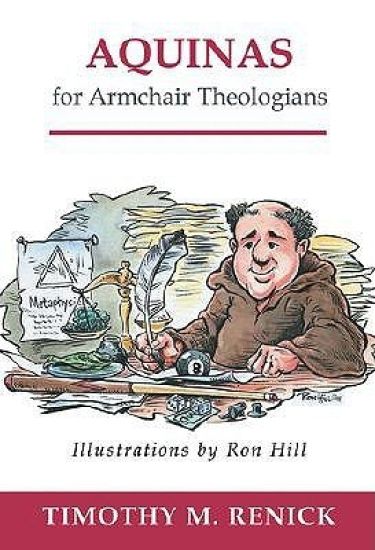
Aquinas for Armchair Theologians

Aquinas for Armchair Theologians

Timothy M. Renick

Westminster/John Knox Press,U.S.
2002
nidottu
Thomas Aquinas was one of the most influential thinkers in the history of Christianity and in western civilization. Yet his theological views are complex and presume acquaintance with technical philosophical language. Now Timothy Renick has produced an attractive and accessible account of Aquinas's life and thought that will make his views clear to nonspecialists. The topics dealt with include God, angels, evil, metaphysics, morality, sex, war, abortion, and politics. Illustrations are interspersed throughout the text and humorously illuminate key points providing an engaging introduction to an all-important theologian.Written by experts but designed for the novice, the Armchair series provides accurate, concise, and witty overviews of some of the most profound moments and theologians in Christian history. These books are essential supplements for first-time encounters with primary texts, lucid refreshers for scholars and clergy, and enjoyable reads for the theologically curious.
No-Nonsense Networking

No-Nonsense Networking

Timothy M Houston

Houston-CB Group, Incorporated
2016
pokkari
Are you struggling to make your networking work for you? Do you want to get more referrals, recommendations and endorsements from others? Do you HATE going to networking events and try to avoid them as much as you can? Do you feel like you're wasting time (or your time is being wasted) when you talk or meet the wrong people at networking events? Most businesspeople do and yet, they don't have a strategy or plan to make their networking effective. In No-Nonsense Networking, #1 International Bestselling author, speaker and entrepreneur, Tim Houston, teaches you what to do before, during and after your networking efforts to make productive, profitable and prosperous contacts and connections. In this straightforward, "down and dirty" guide, you will learn time-tested techniques and proven strategies that really work. No fluff. No hype.No untried theories. No-Nonsense. You will be able to implement many of these new skills and strategies right away to make your networking more productive, profitable and prosperous Includes a special contribution by Susan RoAne, speaker and author of the 1 Million+ bestseller, How To Work A Room.