

Kirjahaku
Etsi kirjoja tekijän nimen, kirjan nimen tai ISBN:n perusteella.
1000 tulosta hakusanalla Timothy Murphy
Gay Science is the first comprehensive examination of the ethical questions surrounding sexual orientation research. Bioethicist Timothy Murphy presents the views of many gay men and women who detect ominous motives behind this research. If a genetic marker were discovered for homosexual tendencies would genetic screening be used to further discriminate against gay people? If a method for changing sexual orientation were developed would it would be forced upon gay adults, or children whose parents suspected they might grow up to be gay? Given the potential for its misuse, is sexual orientation research fundamentally unethical? Murphy acknowledges that much of sexual orientation research to date has been bad science, questionable in its motives and methodologically unsound. He examines the social and historical conditions, from the 1880s to the present, that spawned this research and reviews the findings that have often perpetuated confusion about homosexuality. He assesses five major studies on sexual orientation undertaken in the 1990s, from neuroanatomist Simon leVay's study of certain brain structures in gay men to the work of psychologist Joseph Nicolosi. He questions the flawed and simplistic assumptions about sexuality made by much of this research, Murphy argues that a true science of sexual orientation would not be focused exclusively upon homosexuality nor presuppose its pathology. Throughout the book Murphy argues that concerns about the potential misuses of this research do not justify its prohibition. Tackling gay science's most troubling aspects, he contends that if this research leads to the development of effective sexual orientation therapies, informed adults should have the choice to undergo them; he also examines the factors that weigh in favor of a parental right to choose or attempt to influence the sexual orientation of a child, and the ethical limits to such a right. Pointing to the potential benefits of sexual orientation research as well as acknowledging its potential for harm, Murphy ultimately defends gay science in the name of free scientific inquiry. Gay Science argues that the way to ensure the future of gay people is not through censoring sexual orientation research but through working toward a society which uses reseach as a way of dinstinguishing myth from fact and not as an instrument of discrimination.
Gay Science is the first comprehensive examination of the ethical questions surrounding sexual orientation research. Bioethicist Timothy Murphy presents the views of many gay men and women who detect ominous motives behind this research. If a genetic marker were discovered for homosexual tendencies would genetic screening be used to further discriminate against gay people? If a method for changing sexual orientation were developed would it would be forced upon gay adults, or children whose parents suspected they might grow up to be gay? Given the potential for its misuse, is sexual orientation research fundamentally unethical? Murphy acknowledges that much of sexual orientation research to date has been bad science, questionable in its motives and methodologically unsound. He examines the social and historical conditions, from the 1880s to the present, that spawned this research and reviews the findings that have often perpetuated confusion about homosexuality. He assesses five major studies on sexual orientation undertaken in the 1990s, from neuroanatomist Simon leVay's study of certain brain structures in gay men to the work of psychologist Joseph Nicolosi. He questions the flawed and simplistic assumptions about sexuality made by much of this research, Murphy argues that a true science of sexual orientation would not be focused exclusively upon homosexuality nor presuppose its pathology. Throughout the book Murphy argues that concerns about the potential misuses of this research do not justify its prohibition. Tackling gay science's most troubling aspects, he contends that if this research leads to the development of effective sexual orientation therapies, informed adults should have the choice to undergo them; he also examines the factors that weigh in favor of a parental right to choose or attempt to influence the sexual orientation of a child, and the ethical limits to such a right. Pointing to the potential benefits of sexual orientation research as well as acknowledging its potential for harm, Murphy ultimately defends gay science in the name of free scientific inquiry. Gay Science argues that the way to ensure the future of gay people is not through censoring sexual orientation research but through working toward a society which uses reseach as a way of dinstinguishing myth from fact and not as an instrument of discrimination.
AIDS strikes most heavily at those already marginalized by conventional society. With no immediate prospect of vaccination or cure, how can liberty, dignity, and reasoned hope be preserved in the shadow of an epidemic? In this humane and graceful book, philosopher Timothy Murphy offers insight into our attempts - popular and academic, American and non-American, scientific and political - to make moral sense of pain. Murphy addresses the complex moral questions raised by AIDS for health-care workers, politicians, policy makers, and even people with AIDS themselves. He ranges widely, analyzing contrasting visions of the origin and the future of the epidemic, the moral and political functions of obituaries, the uncertain value of celebrity involvement in anti-AIDS education, the functional uses of AIDS in the discourse of presidential campaigns, the exclusionary function of HIV testing for immigrants, the priority given to AIDS on the national health agenda, and the hypnotic publicity given to 'innocent' victims. Murphy's discussions of the many social and political confusions about AIDS are unified by his attempt to articulate the moral assumptions framing our interpretations of the epidemic. By understanding those assumptions, we will be in a better position to resist self-serving and invidious moralizing, reckless political response, and social censure of the sick and the dying.
William S. Burroughs is one of the twentieth century's most visible, controversial, and baffling literary figures. In the first comprehensive study of the writer, Timothy S. Murphy places Burroughs in the company of the most significant intellectual minds of our time. In doing so, he gives us an immensely readable and convincing account of a man whose achievements continue to have a major influence on American art and culture. Murphy draws on the work of such philosophers as Gilles Deleuze, Felix Guattari, Theodor Adorno, and Jean-Paul Sartre, and also investigates the historical contexts from which Burroughs' writings arose. From the paranoid isolationism of the Cold War through the countercultural activism of the sixties to the resurgence of corporate and state control in the eighties, Burroughs' novels, films, and music hold a mirror to the American psyche. Murphy coins the term 'amodernism' as a way to describe Burroughs' contested relationship to the canon while acknowledging the writer's explicit desire for a destruction of such systems of classification. Despite the popular mythology that surrounds Burroughs, his work has been largely excluded from the academy of American letters. Finally here is a book that presents a solid portrait of a major artistic innovator, a writer who combines aesthetics and politics and who can perform as anthropologist, social goad, or media icon, all with consummate skill.

This book analyzes the ethics of men buying and selling sex to one another. It gathers in one place key ethical and legal issues that bear on the justification for the criminalization of male prostitution.At present, prostitution—the solicitation or offer of paid sexual encounters—is criminalized in virtually the entire United States. Male prostitution is poorly studied across academic disciplines, and this book represents the first sustained ethical analysis of the topic. First, it shows that paid sexual encounters among men belong on a spectrum of transactional sexual relationships, and that many of its features are not distinctive in a way that justifies condemnation. It shows as well that the sexuality involved—men having sex with men—does not involve relationships that are immoral in a way that might justify criminalization. The book also demonstrates that men buying and selling sexual encounters can consent in morally meaningful ways, without reinforcing status inequality, Finally, the book reviews key constitutional law cases to show that a certain interpretation of the relationship between the law and morality justifies decriminalization of male prostitution.Paid Sexual Encounters among Men will appeal to scholars and graduate students working in applied ethics, the philosophy of sex and gender, sociology, and law.

Anglo-American Life Insurance, 1800-1914 Volume 1
Timothy Alborn; Sharon Ann Murphy
Routledge
2016
nidottu
By the eve of the Great Depression, there existed in America the equivalent of a policy for every man, woman and child, and in Britain it grew from its narrow aristocratic base to cover all social classes. This primary resource collection is the first comparative history of British and American life insurance industries.

Anglo-American Life Insurance, 1800–1914 Volume 2
Timothy Alborn; Sharon Ann Murphy
Routledge
2016
nidottu
By the eve of the Great Depression, there existed in America the equivalent of a policy for every man, woman and child, and in Britain it grew from its narrow aristocratic base to cover all social classes. This primary resource collection is the first comparative history of British and American life insurance industries.

Anglo-American Life Insurance, 1800-1914 Volume 3
Timothy Alborn; Sharon Ann Murphy
Routledge
2016
nidottu
By the eve of the Great Depression, there existed in America the equivalent of a policy for every man, woman and child, and in Britain it grew from its narrow aristocratic base to cover all social classes. This primary resource collection is the first comparative history of British and American life insurance industries.

Anglo-American Life Insurance, 1800-1914 Volume 1
Timothy Alborn; Sharon Ann Murphy
Routledge
2013
sidottu
By the eve of the Great Depression, there existed in America the equivalent of a policy for every man, woman and child, and in Britain it grew from its narrow aristocratic base to cover all social classes. This primary resource collection is the first comparative history of British and American life insurance industries.

Anglo-American Life Insurance, 1800–1914 Volume 2
Timothy Alborn; Sharon Ann Murphy
Routledge
2013
sidottu
By the eve of the Great Depression, there existed in America the equivalent of a policy for every man, woman and child, and in Britain it grew from its narrow aristocratic base to cover all social classes. This primary resource collection is the first comparative history of British and American life insurance industries.

Anglo-American Life Insurance, 1800-1914 Volume 3
Timothy Alborn; Sharon Ann Murphy
Routledge
2013
sidottu
By the eve of the Great Depression, there existed in America the equivalent of a policy for every man, woman and child, and in Britain it grew from its narrow aristocratic base to cover all social classes. This primary resource collection is the first comparative history of British and American life insurance industries.
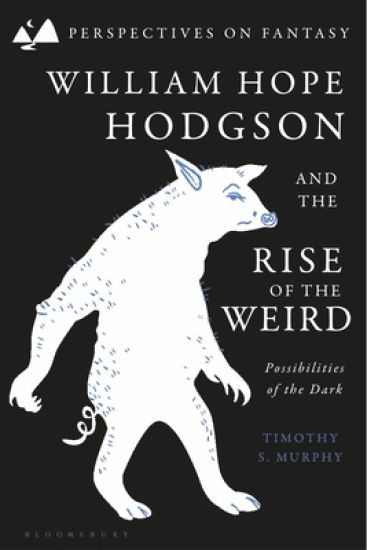
William Hope Hodgson and the Rise of the Weird
Timothy S. Murphy
BLOOMSBURY PUBLISHING PLC
2023
sidottu
The first comprehensive study of the works of William Hope Hodgson, one of the true innovators of Weird fiction, this book examines the Weird novels and stories upon which his posthumous reputation rests, his non-fantastic writing, identifiable literary influences, and the historical contexts in which he wrote. Focusing extensively upon major works such as The House on the Borderland (1908) and The Night Land (1912), Timothy S. Murphy surveys topics including Hodgson’s experiments with code switching and linguistic experimentation; his depictions of racial and ethnic differences and gender and sexuality; the function of space and place in his writing; the adaptation of his shipboard experiences; and his use of abyssal time. With special attention paid to his paradoxical nihilist humanism, this book explores what made Hodgson a respected precursor to later innovators such as H. P. Lovecraft and C.L. Moore, and what makes him an important ancestor to 21st-century writers such as China Miéville, Greg Bear, and Charlie Jane Anders. Demonstrating how his work is both of his time and ‘untimely’, Murphy recovers Hodgson as the most significant figure to precede the fantastically popular but deeply controversial Lovecraft, as well as a figure whose work challenges what has thus far been accepted about the genre and the interpretive perspectives from which we view it.
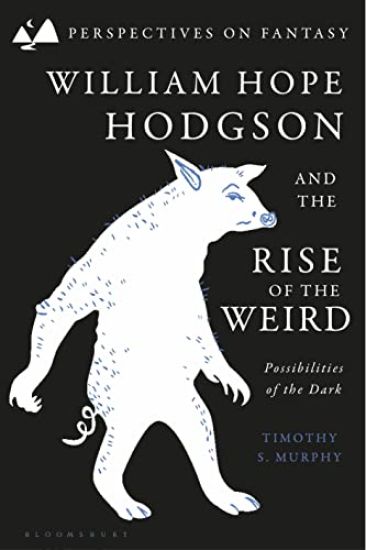
William Hope Hodgson and the Rise of the Weird
Timothy S. Murphy
BLOOMSBURY PUBLISHING PLC
2025
nidottu
The first comprehensive study of the works of William Hope Hodgson, one of the true innovators of Weird fiction, this book examines the Weird novels and stories upon which his posthumous reputation rests, his non-fantastic writing, identifiable literary influences, and the historical contexts in which he wrote. Focusing extensively upon major works such as The House on the Borderland (1908) and The Night Land (1912), Timothy S. Murphy surveys topics including Hodgson’s experiments with code switching and linguistic experimentation; his depictions of racial and ethnic differences and gender and sexuality; the function of space and place in his writing; the adaptation of his shipboard experiences; and his use of abyssal time. With special attention paid to his paradoxical nihilist humanism, this book explores what made Hodgson a respected precursor to later innovators such as H. P. Lovecraft and C.L. Moore, and what makes him an important ancestor to 21st-century writers such as China Miéville, Greg Bear, and Charlie Jane Anders. Demonstrating how his work is both of his time and ‘untimely’, Murphy recovers Hodgson as the most significant figure to precede the fantastically popular but deeply controversial Lovecraft, as well as a figure whose work challenges what has thus far been accepted about the genre and the interpretive perspectives from which we view it.

Section 27 and Freedman's Village in Arlington National Cemetery
Ric Murphy; Timothy Stephens
McFarland Co Inc
2020
pokkari
From its origination, Arlington National Cemetery's history has been compellingly intertwined with that of African Americans. This book explains how the grounds of Arlington House, formerly the home of Robert E. Lee and a plantation of the enslaved, became a military camp for Federal troops, a freedmen's village and farm, and America's most important burial ground. During the Civil War, the property served as a pauper's cemetery for men too poor to be returned to their families, and some of the very first war dead to be buried there include over 1,500 men who served in the United States Colored Troops. More than 3,800 former slaves are interred in section 27, the property's original cemetery.

Washington Urban League, Inc. V. Public Service Commission of the District of Columbia U.S. Supreme Court Transcript of Record with Supporting Pleadings
Timothy L Jenkins; John J Ross; C Francis Murphy
Gale Ecco, U.S. Supreme Court Records
2011
pokkari

This volume brings together in a single text meditations given by Cardinal Martini during two separate retreats based on the Second Letter to Timothy. We are shown the figure of Timothy, Paul's young and very faithful disciple who is carrying out his service as bishop in the Church at Ephesus in a community that is no longer as joyful and conquering as it was at the beginning. It is weary and caught up in a difficult and confused situation. Martini believes that this is the best choice for reflecting on what it means to evangelise today. He offers a continuous reading of one of the most important of Paul's Pastoral Letters. Cardinal Martini draws out fundamental teachings for today's Church and society from the Apostle's life experience and message: the Christian horizon of meaning, the need to preserve the 'deposit of faith', to proclaim the gospel of the primacy of grace over law, of the essential over the relative, of the mystery of the cross and the Eucharist, the relationship between the Pastoral Letters and 'pastoral work' in our times.


First Timothy is the first of three so-called "Pastoral Epistles" attributed to the Apostle Paul. The letter is called "pastoral" because the author offers guidance to Timothy, a young minister facing daunting pastoral challenges in his church. It provides a strikingly relevant look into building up believers and growing a church today. As we study 1 Timothy, we will address teaching and understanding the Bible, the character expected of a leader, training to be an example to others, and building relationships based on mutual respect.It's important to understand, however, that this letter isn't only for pastors. All who participate in the life of the church need to become better students of the Bible, members of a local congregation, and followers of Christ. Be open to how these texts speak to you. As you grapple with them, let your own personal journey be informed.This unit is also a good opportunity to give laypeople the chance to "peek behind the curtain" and see what church leadership really looks like. The more open we are to the text, the guidance of the Holy Spirit, and the insights of our fellow group members, the more likely that this will be a transformative experience for us all.NextSunday Resources offers Bible studies designed to help adults study Scripture seriously within the context of the larger Christian tradition and, through that process, find their faith renewed, challenged, and strengthened. We study the Scriptures because we believe they affect our current lives in important ways. Inside, you'll find a Study Guide and a Commentary for each Lesson. For more small group Bible studies like this one, visit nextsunday.com/nextsunday-studies/