Kirjojen hintavertailu. Mukana 11 717 486 kirjaa ja 12 kauppaa.

Kirjahaku

Etsi kirjoja tekijän nimen, kirjan nimen tai ISBN:n perusteella.

1000 tulosta hakusanalla Timothy W Hooker

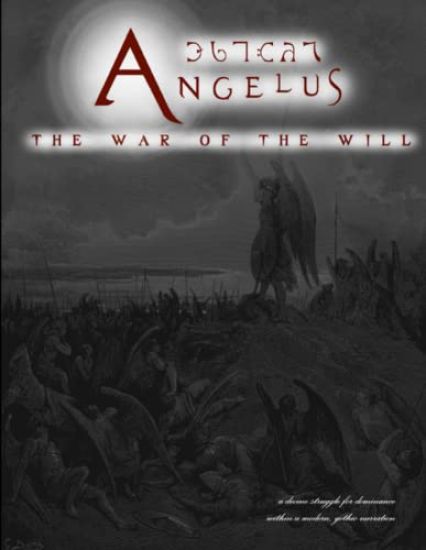
Angelus: The War of the Will

Angelus: The War of the Will

Timothy W. Young

Youngblood Publishing
2008
nidottu
Welcome to the other side of the looking glass. A dark, gothic conflict erodes and blankets Eden in a sinful war that has seen angels rip each other apart. Throughout the centuries, the immortal blood of the divine ones has rained down and seeped within the inner workings of mortal society. The poisonous influence by angels has not only formed a breeding ground for more treacherous warfare, but also an army of mortal puppets for angels to control. Who will you believe?; Who will you follow?; Angelus is a tabletop role-playing game focused on the strife between the angels of the Ascended and the Legion in a modern day, gothic horror setting. Players will experience an enriching background, filled with strife, conviction and fortitude when they step into the Planes of Divinity. This book includes the core rule set and the complete history and evolution of all 13 choirs, as well as a new and engaging combat system, referred to as Dynamic Combat. Angelus utilizes 10-sided dice for its gameplay.
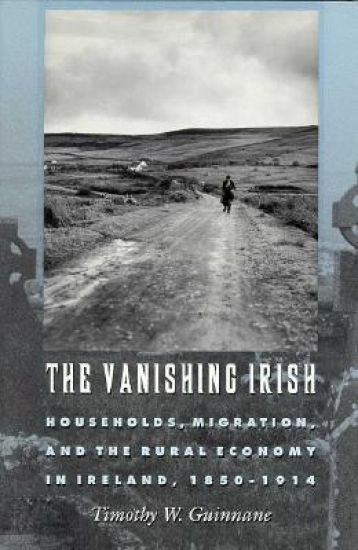
The Vanishing Irish

The Vanishing Irish

Timothy W. Guinnane

Princeton University Press
1997
sidottu
In the years between the Great Famine of the 1840s and the First World War, Ireland experienced a drastic drop in population: the percentage of adults who never married soared from 10 percent to 25 percent, while the overall population decreased by one third. What accounted for this? For many social analysts, the history of post-Famine Irish depopulation was a Malthusian morality tale where declining living standards led young people to postpone marriage out of concern for their ability to support a family. The problem here, argues Timothy Guinnane, is that living standards in post-Famine Ireland did not decline. Rather, other, more subtle economic changes influenced the decision to delay marriage or not marry at all. In this engaging inquiry into the "vanishing Irish," Guinnane explores the options that presented themselves to Ireland's younger generations, taking into account household structure, inheritance, religion, cultural influences on marriage and family life, and especially emigration. Guinnane focuses on rural Ireland, where the population changes were most profound, and explores the way the demographic patterns reflect the rural Irish economy, Ireland's place as a small part in a much larger English-speaking world, and the influence of earlier Irish history and culture. Particular effort is made to compare Irish demographic behavior to similar patterns elsewhere in Europe, revealing an Ireland anchored in European tradition and yet a distinctive society in its own right. Originally published in 1997. The Princeton Legacy Library uses the latest print-on-demand technology to again make available previously out-of-print books from the distinguished backlist of Princeton University Press. These editions preserve the original texts of these important books while presenting them in durable paperback and hardcover editions. The goal of the Princeton Legacy Library is to vastly increase access to the rich scholarly heritage found in the thousands of books published by Princeton University Press since its founding in 1905.
The Vanishing Irish

The Vanishing Irish

Timothy W. Guinnane

Princeton University Press
2015
pokkari
In the years between the Great Famine of the 1840s and the First World War, Ireland experienced a drastic drop in population: the percentage of adults who never married soared from 10 percent to 25 percent, while the overall population decreased by one third. What accounted for this? For many social analysts, the history of post-Famine Irish depopulation was a Malthusian morality tale where declining living standards led young people to postpone marriage out of concern for their ability to support a family. The problem here, argues Timothy Guinnane, is that living standards in post-Famine Ireland did not decline. Rather, other, more subtle economic changes influenced the decision to delay marriage or not marry at all. In this engaging inquiry into the "vanishing Irish," Guinnane explores the options that presented themselves to Ireland's younger generations, taking into account household structure, inheritance, religion, cultural influences on marriage and family life, and especially emigration. Guinnane focuses on rural Ireland, where the population changes were most profound, and explores the way the demographic patterns reflect the rural Irish economy, Ireland's place as a small part in a much larger English-speaking world, and the influence of earlier Irish history and culture. Particular effort is made to compare Irish demographic behavior to similar patterns elsewhere in Europe, revealing an Ireland anchored in European tradition and yet a distinctive society in its own right. Originally published in 1997. The Princeton Legacy Library uses the latest print-on-demand technology to again make available previously out-of-print books from the distinguished backlist of Princeton University Press. These editions preserve the original texts of these important books while presenting them in durable paperback and hardcover editions. The goal of the Princeton Legacy Library is to vastly increase access to the rich scholarly heritage found in the thousands of books published by Princeton University Press since its founding in 1905.
The Vanishing Irish

The Vanishing Irish

Timothy W. Guinnane

PRINCETON UNIVERSITY PRESS
2016
sidottu
In the years between the Great Famine of the 1840s and the First World War, Ireland experienced a drastic drop in population: the percentage of adults who never married soared from 10 percent to 25 percent, while the overall population decreased by one third. What accounted for this? For many social analysts, the history of post-Famine Irish depopulation was a Malthusian morality tale where declining living standards led young people to postpone marriage out of concern for their ability to support a family. The problem here, argues Timothy Guinnane, is that living standards in post-Famine Ireland did not decline. Rather, other, more subtle economic changes influenced the decision to delay marriage or not marry at all. In this engaging inquiry into the "vanishing Irish," Guinnane explores the options that presented themselves to Ireland's younger generations, taking into account household structure, inheritance, religion, cultural influences on marriage and family life, and especially emigration. Guinnane focuses on rural Ireland, where the population changes were most profound, and explores the way the demographic patterns reflect the rural Irish economy, Ireland's place as a small part in a much larger English-speaking world, and the influence of earlier Irish history and culture. Particular effort is made to compare Irish demographic behavior to similar patterns elsewhere in Europe, revealing an Ireland anchored in European tradition and yet a distinctive society in its own right. Originally published in 1997. The Princeton Legacy Library uses the latest print-on-demand technology to again make available previously out-of-print books from the distinguished backlist of Princeton University Press. These editions preserve the original texts of these important books while presenting them in durable paperback and hardcover editions. The goal of the Princeton Legacy Library is to vastly increase access to the rich scholarly heritage found in the thousands of books published by Princeton University Press since its founding in 1905.
Recovering the Ancient View of Founding

Recovering the Ancient View of Founding

Timothy W. Caspar

Lexington Books
2010
sidottu
Recovering the Ancient View of Founding questions the consensus view of contemporary scholars who view Cicero as an eclectic and unoriginal political thinker. For them, De Legibus is perhaps the most striking example of this eclecticism. They say that Cicero claims a universal ground for laws that would restore the political privileges of his own aristocratic class. Yet Timothy Caspar shows that Cicero offers a unified, coherent, and original teaching about politics whose aim is justice for the entire republic, not just a part of it. Contrary to the prevailing view, Cicero does not embrace but rejects Stoicism—and any philosophy that culminates in a community of the wise—as a standard for politics. Instead, nature serves as the foundation of Cicero's laws, and he elucidates a political standard grounded in nature and applicable to all citizens. Thus, the law codes of De Legibus are not only in harmony with but required by Cicero's natural law principles. Caspar's Recovering the Ancient View of Founding is a reinterpretation of a key work of ancient Roman political philosophy and belongs on the bookshelf of anyone interested in philosophy, politics, or ancient Rome.
Imagining the Gospels

Imagining the Gospels

Timothy W Ayers

CSS Publishing Company
2017
pokkari
Imagining the Gospels: Cycle B Sermons for Lent and Easter Based on the Gospel Texts is the latest from Rev. Timothy W. Ayers. As a pastor who writes his messages while also writing novels, children's books, and short dramas, Rev. Ayers found himself working hard to visually create the picture of what was hap-pening in the gospel accounts. Why? These were people lis-tening to Jesus. They would have had emotions about the topics. They would have had little things they recognized when Jesus spoke about lambs, shepherds, and vines. Much like our congregants, there would be nods of recognition toward experiences in their lives. His goal was to get the listener to imagine themselves, with their feelings, and their rea-sons for being in church, to better use their cognitive skills, inside the stories.At other times, Ayers sought to take them on a week by week journey through the Easter season. He didn't assume they have a relationship with Christ. He didn't assume they are vibrant, serving members of the congregation. He only assumed that the listener is seeking something they do not have. He was attempting to take them one step further on a journey from week to week. At times Rev. Ayers brings humor to the scene in order to lighten the mood of the listener. The body relaxes when we laugh and that helps us to hear the message. Imagining the Gospels hopefully will achieve this.This book will make life easier for any busy pastor during the Lent and Easter season, by providing a sermon for each and every Sunday, when attendance is likely to be at its highest. This book has several intended uses: Sermon ideas Inspirational reading Bible study with individuals or groups Some Sermon Titles Include: Beginning The Lenten Journey (Matthew 6:1-6, 16-21) Tearing The Sky To Get To You (Mark 1:9-15) Did I Say That Out Loud? (Mark 8:31-38, Mark 9:2-9) The Road To The Passover (John 2:13-22) A Nod Of Recognition (John 3:14-21) Rev. Timothy W. Ayers recently pastored a small church in western New York. It was his first time working with a smaller body of Christians. After planting churches and working with several larger congregations, he felt the call to minister in a completely different setting. He learned a lot about the limitations of a small congregation. Tim merged two of his past literary mediums of short plays for contemporary churches and children's literature. He combined the styles of his short plays, Living Parables, written to illustrate the Sunday service messages (published by CSS Publishing), and his middle reader series, Spinechillers Mysteries. From these two loves came Five Little Christmas Dramas for Today's Kids. It is Ayers' desire that churches around the world can tell this marvelous story of the birth of our Savior through relevant, fun, and easy-to-produce holiday plays.
Pivotal Deterrence

Pivotal Deterrence

Timothy W. Crawford

Cornell University Press
2003
sidottu
As the preponderant world power, the United States is a potential arbiter of war and peace between such feuding rivals as India and Pakistan, Turkey and Greece, China and Taiwan. How can it deter them from going to war and impel them to accept compromise without firmly choosing sides? This age-old strategic dilemma, which Timothy W. Crawford calls "pivotal deterrence," has become a central challenge of international security in today's unipolar world.Crawford explains the political dynamics of pivotal deterrence and the conditions under which it is likely to succeed, while examining some of its most impressive feats and failures. German Chancellor Otto von Bismarck's agile approach to the 1870s Eastern Crisis, which prevented war between Russia and Austria-Hungary, is contrasted with Britain's ambiguous and ill-fated maneuvers to deter Germany and France in July 1914. Shifting to the 1960s Cold War, Crawford explores the successes and setbacks in U.S. efforts to prevent NATO allies Greece and Turkey from fighting over Cyprus and to defuse the Kashmir conflict between India and Pakistan. Capping the analysis is a rich look at similar U.S. efforts in the 1990s in South Asia, the Aegean, the Balkans, and East Asia. Crawford concludes with an assessment of the prospects for American pivotal deterrence in the years ahead and its implications for international relations theory.
Social Theory and Modernity

Social Theory and Modernity

Timothy W. Luke

SAGE Publications Inc
1991
nidottu
Social Theory and Modernity combines the analytical techniques of political theory and comparative politics as a method for conducting innovative inquiry and research in political science. The focus of political theory, for example, results in new issues for historical and cross-national comparative analysis--whereas comparative analysis provides new parameters for analyzing the ideology of social institutions. In presenting this method, Luke elaborates upon Rousseau's discursive style and critical methods, Marx's historical materialism, Gramsci's theoretical tactics, Marcuse's instrumental rationality, Cabral's theories of critique and revolution, Weber's interpretive method, and Foucault's system of political and social analysis. It concludes by offering an incisive analysis of the moral and ideological influence of behavior and the link between ideology and political economy, especially in modern society. Social Theory and Modernity is essential reading for professionals and students in the fields of political theory, history, comparative politics, sociology, anthropology, social philosophy, and cultural studies. "Luke's book is a tour de force. He writes critical theory in the best sense, applying the ideas of the Frankfurt School, Gramsci, and postmodernism to real social and political issues today. Social Theory and Modernity avoids arid exegesis in favor of engaged and lucid analysis of the global problematics of late capitalism. Not content simply to rehearse the masters of critical theory, Luke refreshes and extends their ideas by developing his own important theoretical voice. Luke is witty and pulls no punches. This accessible book will appeal to readers in a wide range of social-science disciplines, notably including political science and sociology. This book reinforces Luke's reputation as one of the two or three leading critical theorists working today." --Ben Agger, SUNY, University at Buffalo "This collection of essays provides a rich reading for it collates a lot of innovative ideas in the present day Marxist theory." --Financial Express
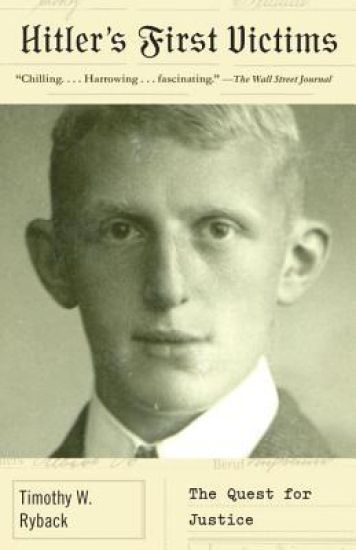
Hitler's First Victims: The Quest for Justice
The remarkable story of Josef Hartinger, the German prosecutor who risked everything to bring to justice the first killers of the Holocaust and whose efforts would play a key role in the Nuremberg tribunal. At 9 am on April 13, 1933, deputy prosecutor Josef Hartinger received a telephone call summoning him to the newly established concentration camp of Dachau. Four prisoners had been shot. The SS guards claimed that the men had been trying to escape. But what Hartinger found when he arrived convinced him that something was terribly wrong. All four victims were Jews. Before Germany was engulfed by Nazi dictatorship, it was a constitutional republic. And just before Dachau became a site of Nazi genocide, it was a legal state detention center for political prisoners. In 1933, that began to change. In Hitler's First Victims, Timothy W. Ryback evokes a society on the brink--one in which civil liberties are sacrificed to national security, in which citizens increasingly turn a blind eye to injustice, in which the bedrock of judicial accountability chillingly dissolves into the martial caprice of the Third Reich. This is an astonishing portrait of Hitler's first moments in power, and the true story of one man's race to expose the Nazis as murderers on the eve of the Holocaust.
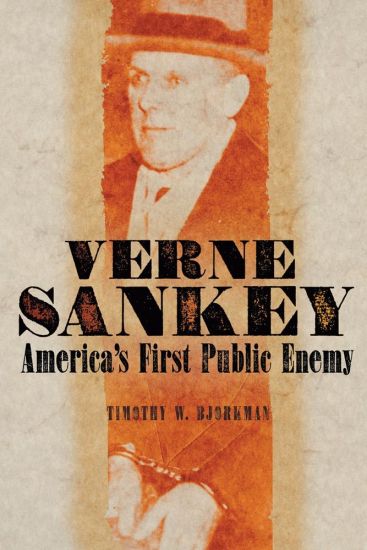
Verne Sankey

Verne Sankey

Timothy W. Bjorkman

University of Oklahoma Press
2016
nidottu
In late January of 1934, as authorities delivered John Dillinger to an Indiana jail, the United States Justice Department announced, for the first time, that the Federal Bureau of Investigation had just captured America's Public Enemy No. 1. It was not Dillinger the Justice Department was referring to, but an affable railroader turned outlaw, Verne Sankey. Now Timothy W. Bjorkman has written the first full-length biography of this overlooked criminal, relating how a South Dakota family man became a bootlegger, a bank robber, and eventually, a kidnapper whose deeds heralded a nationwide crime spree.In the early days of Prohibition, Sankey, then a locomotive engineer, was drawn to the easy money he could make bootlegging. When crime syndicates monopolized the trade and Prohibition's end was in sight, he turned to the occasional bank robbery and eventually to a ransom scheme. In tracing the life of Sankey - and his demure wife, Fern - Bjorkman depicts a good-natured man, friendly neighbor, and gentleman rumrunner catering to the banker and broker trade. He also explores Sankey's motivations, his identification as America's first Public Enemy, and his ultimate descent into oblivion.Verne Sankey: America's First Public Enemy is a riveting narrative set amid the Great Depression. Bjorkman's research painstakingly reveals the life of Verne Sankey and his times, delving into the intriguing story of the family of his kidnapping victim, Charles Boettcher II, and the stark contrast between wealth and poverty during some of America's most harrowing days.
Kenneth Burke and the Conversation After Philosophy

Kenneth Burke and the Conversation After Philosophy

Timothy W. Crusius

Southern Illinois University Press
1999
nidottu
This study of Kenneth Burke's writings traces the critic's commitment and contribution to philosophy prior to 1945. The author contends that rather than belonging to the late-modernist tradition, Burke actually starts from a position closely akin to such postmodern figures as Michel Foucault.
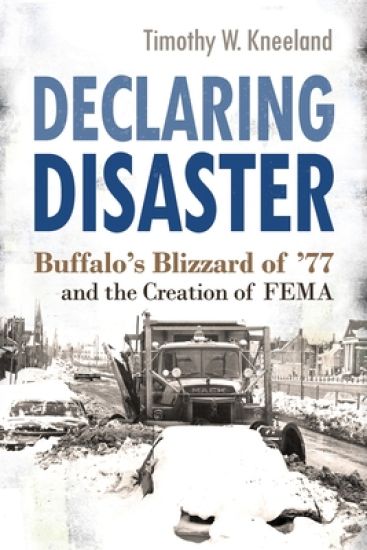
Declaring Disaster

Declaring Disaster

Timothy W. Kneeland

Syracuse University Press
2021
nidottu
On Friday, January 28, 1977, it began to snow in Buffalo. The second largest city in New York State, located directly in line with the Great Lakes' snowbelt, was no stranger to this kind of winter weather. With their city averaging ninety-four inches of snow per year, the citizens of Buffalo knew how to survive a snowstorm. But the blizzard that engulfed the city for the next four days was about to make history.Between the subzero wind chill and whiteout conditions, hundreds of people were trapped when the snow began to fall. Twenty- to thirty-foot-high snow drifts isolated residents in their offices and homes, and even in their cars on the highway. With a dependency on rubber-tire vehicles, which lost all traction in the heavily blanketed urban streets, they were cut off from food, fuel, and even electricity. This one unexpected snow disaster stranded tens of thousands of people, froze public utilities and transportation, and cost Buffalo hundreds of millions of dollars in economic losses and property damages.The destruction wrought by this snowstorm, like the destruction brought on by other natural disasters, was from a combination of weather-related hazards and the public policies meant to mitigate them. Buffalo's 1977 blizzard, the first snowstorm to be declared a disaster in US history, came after a century of automobility, suburbanization, and snow removal guidelines like the bare-pavement policy. Kneeland offers a compelling examination of whether the 1977 storm was an anomaly or the inevitable outcome of years of city planning. From the local to the state and federal levels, Kneeland discusses governmental response and disaster relief, showing how this regional event had national implications for environmental policy and how its effects have resounded through the complexities of disaster politics long after the snow fell.
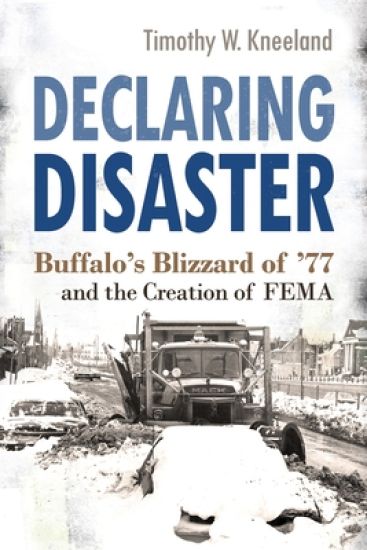
Declaring Disaster

Declaring Disaster

Timothy W. Kneeland

Syracuse University Press
2021
sidottu
On Friday, January 28, 1977, it began to snow in Buffalo. The second largest city in New York State, located directly in line with the Great Lakes' snowbelt, was no stranger to this kind of winter weather. With their city averaging ninety-four inches of snow per year, the citizens of Buffalo knew how to survive a snowstorm. But the blizzard that engulfed the city for the next four days was about to make history.Between the subzero wind chill and whiteout conditions, hundreds of people were trapped when the snow began to fall. Twenty- to thirty-foot-high snow drifts isolated residents in their offices and homes, and even in their cars on the highway. With a dependency on rubber-tire vehicles, which lost all traction in the heavily blanketed urban streets, they were cut off from food, fuel, and even electricity. This one unexpected snow disaster stranded tens of thousands of people, froze public utilities and transportation, and cost Buffalo hundreds of millions of dollars in economic losses and property damages.The destruction wrought by this snowstorm, like the destruction brought on by other natural disasters, was from a combination of weather-related hazards and the public policies meant to mitigate them. Buffalo's 1977 blizzard, the first snowstorm to be declared a disaster in US history, came after a century of automobility, suburbanization, and snow removal guidelines like the bare-pavement policy. Kneeland offers a compelling examination of whether the 1977 storm was an anomaly or the inevitable outcome of years of city planning. From the local to the state and federal levels, Kneeland discusses governmental response and disaster relief, showing how this regional event had national implications for environmental policy and how its effects have resounded through the complexities of disaster politics long after the snow fell.
Museum Politics

Museum Politics

Timothy W. Luke

University of Minnesota Press
2002
nidottu
The first sustained critique of the ways museum exhibits shape cultural assumptions and political valuesEach year the more than seven thousand museums in the United States attract more attendees than either movies or sports. Yet until recently, museums have escaped serious political analysis. The past decade, however, has witnessed a series of unusually acrimonious debates about the social, political, and moral implications of museum exhibitions as varied as the Enola Gay display at the Smithsonian’s Air and Space Museum and the Sensation exhibit at the Brooklyn Museum of Art. In this important volume, Timothy W. Luke explores museums’s power to shape collective values and social understandings, and argues persuasively that museum exhibitions have a profound effect on the body politic. Through discussions of topics ranging from how the National Holocaust Museum and the Museum of Tolerance in Los Angeles have interpreted the Holocaust to the ways in which the American Museum of Natural History, the Missouri Botanical Gardens, and Tucson’s Arizona-Sonora Desert Museum have depicted the natural world, Luke exposes the processes through which museums challenge but more often affirm key cultural and social realities.
Shows of Force

Shows of Force

Timothy W. Luke

Duke University Press
1992
pokkari
It has long been considered a mark of naÏvetÉ to ask of a work of art: What does it say? But as Timothy W. Luke demonstrates in Shows of Force, artwork is capable of saying plenty, and much of the message resides in the way it is exhibited. By critically examining the exhibition of art in contemporary American museums, Luke identifies how art showings are elaborate works of theater that reveal underlying political, social, and economic agendas.The first section, “Envisioning a Past, Imagining the West,” looks at art exhibitions devoted to artworks about or from the American West. Luke shows how these exhibitions-displaying nineteenth- and early-twentieth century works by artists such as George Caleb Bingham, Frederic Remington, Frederic Edwin Church, and Georgia O’Keefe-express contemporary political agendas in the way the portray “the past” and shape new visions of “the West.”In “Developing the Present, Defining a World,” Luke considers artists from the post-1945 era, including Ilya Kabokov, Hans Haacke, Sue Coe, Roger Brown, and Robert Longo. Recent art exhibits, his analysis reveals, attempt to develop politically charged conceptions of the present, which in turn struggle to define the changing contemporary world and art’s various roles within it.Luke brings to light the contradictions encoded in the exhibition of art and, in doing so, illuminates the political realities and cultural ideologies of the present. Shows of Force offers a timely and surely controversial contribution to current discussions of the politics of exhibiting art.
The Front: Red Devils

The Front: Red Devils

Timothy W. Long; Craig Dilouie; David Moody

INFECTED BOOKS
2017
nidottu
THE UNDEAD NAZI ARMY CONTINUES ITS MARCH ACROSS EUROPE IN THE THRILLING SEQUEL TO SCREAMING EAGLES The German stranglehold on the town of Bastogne has been released, only for the living dead to rise up and take their place. A ragtag group of men fight their way out of the chaos and make a frantic escape from the rubble and ruin. One of them, British soldier Lieutenant Robert Wilkins, uncovers crucial information about the source of the zombie scourge. Along with a crack team, Wilkins is dispatched to where the outbreak began - the ominously silent concentration camp at Polonezk y, Poland - to try and find a way to halt the undead advance. The fate of the entire world rests on the shoulders of just a handful of men. THE FRONT: SCREAMING EAGLESTHE FRONT: RED DEVILSTHE FRONT: BERLIN OR BUST